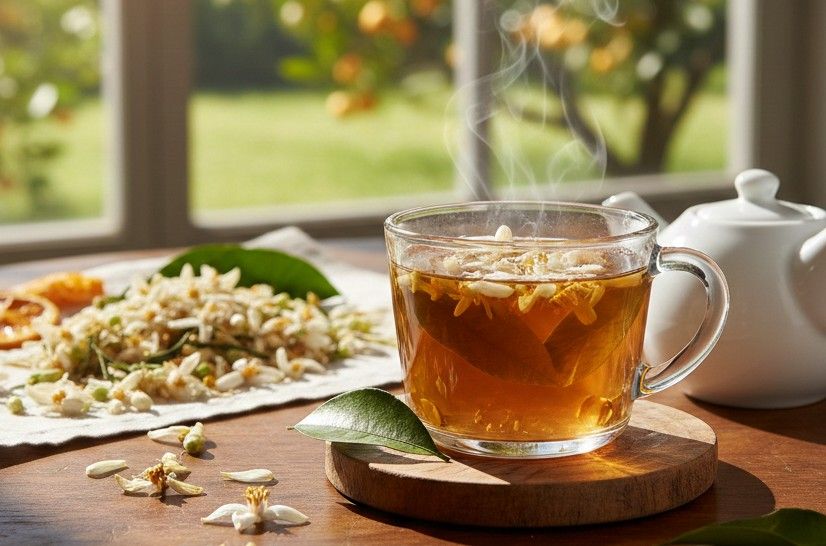
Orange Blossom Tea is a delicate, fragrant herbal infusion made from the blossoms of the orange tree. Known for its calming aroma and subtle citrus flavor, this tea has been cherished for centuries in traditional Mediterranean and Middle Eastern cultures. Beyond its pleasant taste, Orange Blossom Tea is valued for its soothing, digestive, and mood-enhancing properties. In this guide, we will explore everything you need to know about Orange Blossom Tea, including its proven health benefits, side effects, preparation methods, ideal consumption timing, and safety precautions.
What Is Orange Blossom Tea?
Orange Blossom Tea is an herbal tea prepared from the dried flowers of the bitter orange tree, scientifically known as Citrus aurantium. The blossoms are white, aromatic, and highly prized for their essential oils, especially neroli oil.
This tea is caffeine-free and has a light floral taste with subtle citrus undertones. It has been traditionally used in herbal medicine systems for:
- Reducing anxiety and stress
- Supporting digestion
- Improving sleep quality
- Relieving mild headaches
- Promoting relaxation
The blossoms are also used to make orange flower water and neroli essential oil, which are widely used in culinary and cosmetic applications.
Nutritional Facts of Orange Blossom Tea
Orange Blossom Tea is very low in calories but contains beneficial plant compounds such as flavonoids, essential oils, and antioxidants. Below is an approximate nutritional profile per 1 cup (240 ml) of brewed Orange Blossom Tea (unsweetened):
| Nutrient | Amount per Cup |
|---|---|
| Calories | 2–5 kcal |
| Carbohydrates | <1 g |
| Protein | 0 g |
| Fat | 0 g |
| Fiber | 0 g |
| Vitamin C | Trace amounts |
| Flavonoids | Present |
| Essential oils (Neroli compounds) | Present |
| Antioxidants | Moderate |
| Caffeine | 0 mg |
Note: Nutrient values vary depending on the amount of blossoms used and steeping time.
20 Science-Backed Benefits of Orange Blossom Tea
Orange Blossom Tea is prepared from the fragrant blossoms of Citrus aurantium and is valued for its calming and digestive-supporting properties.
- Reduces Stress: It helps calm the nervous system and may lower everyday stress levels.
- Promotes Better Sleep: It may improve sleep quality due to its gentle relaxing effects.
- Supports Digestive Health: It helps relax digestive muscles and ease indigestion.
- Relieves Bloating: It may reduce gas and abdominal discomfort after meals.
- Rich in Antioxidants: It contains plant compounds that help fight oxidative stress.
- Supports Heart Health: Its antioxidants may contribute to cardiovascular wellness.
- Eases Mild Anxiety: It may help reduce nervous tension and promote emotional calm.
- Relieves Tension Headaches: Its soothing properties may ease stress-related headaches.
- Caffeine-Free Relaxation: It offers a calming beverage option without caffeine.
- May Help Regulate Blood Pressure: It may support healthy blood pressure through relaxation.
- Enhances Mood: Its pleasant aroma may positively influence emotional balance.
- Reduces Menstrual Discomfort: It may help ease mild cramps by relaxing muscles.
- Supports Immune Function: Its natural compounds may provide mild immune support.
- Calms Nervous Digestion: It may soothe digestive discomfort triggered by stress.
- Promotes Hydration: It contributes to daily fluid intake while offering herbal benefits.
- Encourages Relaxation: It can support overall relaxation when included in a calming routine.
- Improves Post-Meal Comfort: It may reduce feelings of heaviness after eating.
- Soothes the Throat: Warm tea may gently relieve mild throat irritation.
- Supports Mental Calmness: It may help quiet mental restlessness.
- Supports Overall Well-Being: Regular moderate consumption may promote general balance and relaxation.
10 Side Effects of Orange Blossom Tea
Although generally safe when consumed in moderation, Orange Blossom Tea may cause side effects in some individuals.
- Allergic Reactions: It may cause itching, rash, or swelling in individuals sensitive to citrus plants.
- Excessive Drowsiness: Large amounts may cause increased sleepiness.
- Low Blood Pressure: It may lower blood pressure too much in people with hypotension.
- Interaction with Sedatives: It may enhance the effects of sedative medications.
- Mild Stomach Upset: Overconsumption may lead to digestive discomfort.
- Headache in Sensitive Individuals: Strong floral aromas may trigger headaches in some people.
- Blood Sugar Changes: It may slightly influence blood sugar levels in sensitive individuals.
- Photosensitivity: Rarely, citrus compounds may increase sensitivity to sunlight.
- Pregnancy Concerns: It may not be advisable during pregnancy without medical guidance.
- Medication Interactions: It may interact with blood pressure or antidepressant medications.
How to Make Orange Blossom Tea?
Ingredients:
- 1–2 teaspoons dried orange blossoms
- 1 cup hot water (not boiling; about 85–90°C)
- Honey (optional)
Instructions:
- Bring water to a gentle boil and allow it to cool slightly.
- Add dried orange blossoms to a teapot or cup.
- Pour hot water over the blossoms.
- Cover and steep for 5–10 minutes.
- Strain and serve warm.
Optional additions include lemon peel, chamomile, or mint for enhanced flavor.
Other Uses of Orange Blossom Tea
- As a base for iced herbal beverages
- Mixed with green tea for floral notes
- Used in homemade facial steam treatments
- Added to bath water for relaxation
- Used as a natural room fragrance
- Incorporated into desserts via orange blossom water
How Much Orange Blossom Tea Can You Drink a Day?
For most healthy adults:
- 1–3 cups per day is generally considered safe.
- Start with 1 cup daily to assess tolerance.
- Avoid excessive intake (more than 4 cups daily).
Consult a healthcare provider if pregnant, breastfeeding, or on medication.
Tips for Consuming Orange Blossom Tea
- Use high-quality, food-grade dried blossoms.
- Store in an airtight container away from sunlight.
- Avoid boiling the blossoms directly to preserve delicate oils.
- Drink unsweetened to maximize health benefits.
- Pair with calming routines such as meditation or journaling.
Best Time to Drink Orange Blossom Tea
- Evening: Ideal for relaxation and sleep support.
- After Meals: Helps digestion.
- During Stressful Periods: Promotes calmness.
Avoid drinking in large amounts before driving if you are sensitive to sedative effects.
Who Should Drink Orange Blossom Tea?
- Individuals experiencing mild stress or anxiety
- Those seeking caffeine-free alternatives
- People with occasional digestive discomfort
- Individuals with mild sleep disturbances
- Those looking for a gentle herbal relaxation drink
Who Should Not Drink Orange Blossom Tea?
- Individuals allergic to citrus flowers
- People with very low blood pressure
- Those on sedative medications without medical approval
- Pregnant or breastfeeding women without doctor consultation
- Individuals preparing for surgery
Precautions and Interactions
- Consult a doctor if you are taking antidepressants, sedatives, or blood pressure medications.
- Discontinue use if allergic symptoms appear.
- Avoid combining with alcohol due to additive sedative effects.
- Use cautiously if you have chronic health conditions.
- Do not replace prescribed treatment with herbal tea.
Final Thoughts
Orange Blossom Tea is a fragrant, calming herbal infusion made from the blossoms of Citrus aurantium. It offers potential benefits for relaxation, digestion, and overall well-being while remaining caffeine-free and gentle on the body. When consumed in moderation, it can be a soothing addition to your daily routine. However, like all herbal remedies, it should be used responsibly and with awareness of possible interactions and side effects.
FAQ’s
What is Orange Blossom Tea made from?
Orange Blossom Tea is made from the dried flowers of the bitter orange tree, scientifically known as Citrus aurantium.
Does Orange Blossom Tea contain caffeine?
No, Orange Blossom Tea is completely caffeine-free, making it suitable for evening consumption.
What does Orange Blossom Tea taste like?
It has a light floral flavor with subtle citrus notes and a naturally soothing aroma.
Is Orange Blossom Tea good for sleep?
Yes, its mild calming properties may help promote relaxation and improve sleep quality when consumed before bedtime.
Can Orange Blossom Tea help with anxiety?
It may help reduce mild anxiety and nervous tension due to its natural relaxing compounds.
Is Orange Blossom Tea safe during pregnancy?
Pregnant women should consult a healthcare provider before consuming it, as safety data is limited.
Can Orange Blossom Tea lower blood pressure?
It may have a mild blood pressure-lowering effect, so individuals with low blood pressure should use caution.
How should Orange Blossom Tea be stored?
Store dried orange blossoms in an airtight container away from heat, moisture, and direct sunlight.
Can children drink Orange Blossom Tea?
In small amounts, it is generally considered safe, but it is best to consult a pediatrician before giving herbal teas to children.
Is Orange Blossom Tea the same as orange peel tea?
No, Orange Blossom Tea is made from the flowers of the orange tree, while orange peel tea is made from the dried fruit peel.
Can I drink Orange Blossom Tea every day?
Yes, moderate daily consumption is generally safe for healthy adults, but long-term heavy intake should be avoided.
Can Orange Blossom Tea help digestion?
Yes, it may help relieve mild bloating, indigestion, and stomach discomfort.
How long does it take for Orange Blossom Tea to work?
Orange Blossom Tea typically begins to work within 15 to 30 minutes, especially when used for relaxation or mild stress relief, though digestive benefits may be noticed shortly after drinking a warm cup.
What is Orange Blossom Tea good for?
Orange Blossom Tea is commonly used to support relaxation, improve sleep quality, ease mild anxiety, promote digestive comfort, reduce bloating, and provide a natural caffeine-free calming beverage made from the blossoms of Citrus aurantium.
Also Read: