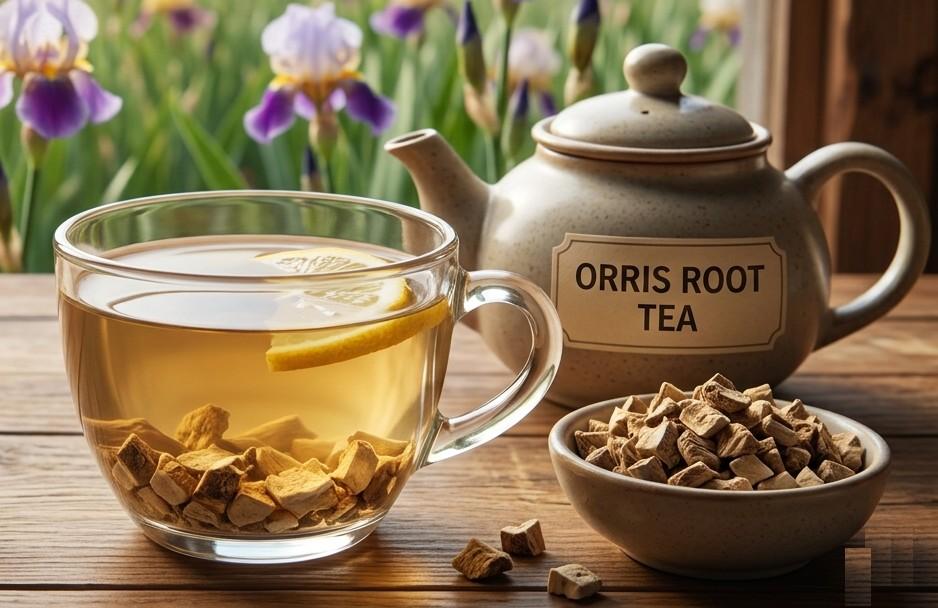
Orris Root Tea is an ancient herbal infusion made from the dried root of the iris plant, traditionally valued in herbal medicine, perfumery, and natural healing practices. While orris root is more commonly known for its aromatic use in perfumes and potpourri, it also holds a place in traditional herbal remedies for digestive, respiratory, and skin health. In this guide, you will learn everything about Orris Root Tea — from its proven health benefits to preparation methods, safety precautions, and who should or should not consume it.
What is Orris Root Tea?
Orris Root Tea is an herbal tea prepared from the dried and powdered rhizome (underground stem) of the iris plant, most commonly Iris germanica, Iris florentina, or Iris pallida.
The root is harvested, peeled, dried for several years to develop its characteristic violet-like fragrance, and then powdered or cut for use. Traditionally, orris root has been used as:
- A mild expectorant
- A digestive stimulant
- A diuretic
- A natural remedy for cough and congestion
- A skin-supporting herb in folk medicine
The tea has a mildly bitter, earthy, and slightly floral taste. Due to its potent compounds, it is typically consumed in small quantities.
Components of Orris Root Tea
Below is an approximate nutritional and phytochemical profile per 1 cup (240 ml) of weakly brewed Orris Root Tea:
| Nutrient / Compound | Approximate Amount | Function |
|---|---|---|
| Calories | 2–5 kcal | Minimal energy contribution |
| Carbohydrates | <1 g | Trace amounts from plant matter |
| Fiber | 0 g | Not significant in tea form |
| Essential Oils | Trace | Aromatic and therapeutic properties |
| Flavonoids | Present | Antioxidant activity |
| Tannins | Present | Astringent and antimicrobial effects |
| Isoflavones | Trace | Potential hormonal modulation |
| Starch | Small amounts | Root storage carbohydrate |
| Iron | Trace | Supports blood health |
| Potassium | Trace | Fluid balance support |
Note: Exact nutritional values vary depending on preparation strength and root quality.
20 Science-Backed Benefits of Orris Root Tea
- Supports Respiratory Health: Orris Root Tea contains expectorant compounds that may help loosen mucus and ease cough and bronchial congestion.
- Acts as a Mild Expectorant: The volatile oils in orris root may stimulate mucus expulsion from the respiratory tract.
- Promotes Digestive Stimulation: Bitter compounds in the root can stimulate digestive juices and improve appetite.
- Relieves Bloating: Traditional use suggests it may reduce gas formation and abdominal discomfort.
- Supports Liver Function: Certain plant compounds may assist mild detoxification processes in the liver.
- Provides Antioxidant Protection: Flavonoids present in orris root help combat oxidative stress in the body.
- Offers Anti-Inflammatory Effects: Bioactive constituents may help reduce mild inflammation in tissues.
- Acts as a Mild Diuretic: Orris Root Tea may promote increased urination and reduce water retention.
- Supports Oral Health: Historically used in tooth powders, orris root may help reduce oral bacteria.
- Helps Soothe Sore Throat: Its mild astringent properties may ease throat irritation.
- May Support Skin Health: Antioxidant and antimicrobial properties may help improve skin clarity.
- Potential Hormonal Support: Isoflavone-like compounds may mildly influence hormone balance.
- May Reduce Mild Headaches: Traditional herbal practices use it for tension-related discomfort.
- Supports Immune Function: Plant antioxidants contribute to immune defense mechanisms.
- Promotes Mild Detoxification: Diuretic and liver-supporting effects may assist natural cleansing.
- May Help with Mild Fluid Retention: Increased urination can help reduce temporary swelling.
- Supports Circulatory Health: Antioxidants may assist in protecting blood vessels.
- Mild Antimicrobial Properties: Tannins may help inhibit certain harmful microbes.
- May Calm Mild Nervous Tension: The subtle aroma may have a gentle calming effect.
- Traditionally Used for Menstrual Discomfort: Folk medicine suggests mild support for menstrual regulation.
Note: Scientific research on orris root specifically is limited; many benefits are based on traditional use and phytochemical analysis rather than large-scale clinical trials.
10 Side Effects of Orris Root Tea
- Gastrointestinal Irritation: Large doses may cause nausea, vomiting, or stomach upset.
- Skin Irritation: Direct contact with fresh root may cause dermatitis in sensitive individuals.
- Allergic Reactions: Individuals allergic to iris plants may experience itching or swelling.
- Diarrhea: Excessive consumption may stimulate bowel movements excessively.
- Headache: Overuse may trigger mild headaches in some individuals.
- Kidney Strain: Strong diuretic effects in large amounts may stress the kidneys.
- Hormonal Effects: Isoflavone-like compounds may interfere with hormone-sensitive conditions.
- Low Blood Pressure: Diuretic action may contribute to reduced blood pressure in susceptible individuals.
- Pregnancy Risk: Certain iris species may stimulate uterine contractions.
- Drug Interactions: May interact with diuretics, blood pressure medications, or hormonal treatments.
How to Make Orris Root Tea?
Ingredients:
- ½ teaspoon dried orris root (powdered or chopped)
- 1 cup water (240 ml)
Method:
- Bring water to a gentle boil.
- Add the dried orris root.
- Reduce heat and simmer for 5–10 minutes.
- Turn off heat and let steep for another 5 minutes.
- Strain thoroughly.
- Drink warm.
Optional: Add honey or ginger to balance bitterness.
Important: Do not use high amounts. Always strain carefully to avoid root particles.
Other Uses of Orris Root Tea
Beyond drinking, orris root has multiple traditional applications:
- Used as a natural breath freshener
- Added to homemade tooth powders
- Used in skincare rinses
- Incorporated into herbal hair rinses
- Used in spiritual or aromatic rituals
- Added to potpourri and perfumes
Its violet-like scent develops after long drying periods.
How Much Orris Root Tea Can You Drink a Day?
Due to limited safety data, moderation is essential.
- Recommended: 1 cup per day
- Maximum (short-term use): 1–2 cups daily
- Avoid long-term continuous use
Herbalists typically recommend using it for short durations (1–2 weeks) unless supervised by a qualified practitioner.
Tips for Consuming Orris Root Tea
- Use only properly dried, food-grade orris root.
- Start with small quantities to test tolerance.
- Avoid strong decoctions.
- Do not combine with other strong diuretic herbs.
- Store dried root in an airtight container away from moisture.
- Consult a healthcare professional if taking medications.
Best Time to Drink Orris Root Tea
- For digestion: 20–30 minutes before meals
- For respiratory support: In the morning or afternoon
- Avoid before bedtime due to mild diuretic effects
Who Should Drink Orris Root Tea?
- Adults seeking mild digestive stimulation
- Individuals with occasional cough and mucus buildup
- Those interested in traditional herbal remedies
- People looking for mild detox support
- Individuals exploring natural oral health support
Who Should Not Drink Orris Root Tea?
- Pregnant women
- Breastfeeding mothers
- Children
- Individuals with kidney disorders
- People with hormone-sensitive conditions
- Those allergic to iris plants
- Individuals on diuretic or blood pressure medication
Precautions and Interactions
- Avoid high doses due to potential toxicity.
- Do not use fresh or improperly processed root.
- Consult a doctor if you have chronic illness.
- Discontinue use if nausea or rash develops.
- Avoid combining with pharmaceutical diuretics.
- Not recommended for long-term daily use.
Final Thoughts
Orris Root Tea is a traditional herbal infusion with a long history in natural medicine and aromatherapy. While modern scientific research is limited, phytochemical analysis suggests antioxidant, digestive, respiratory, and mild diuretic benefits.
However, it is not a mainstream herbal tea and should be used cautiously and in moderation. Its potent compounds mean it is better suited for occasional therapeutic use rather than daily consumption. If you are considering adding Orris Root Tea to your wellness routine, consult a qualified healthcare provider — especially if you have existing medical conditions or take medications.
FAQ’s
What is Orris Root Tea good for?
Orris Root Tea is traditionally used to support digestion, relieve mild bloating, and stimulate appetite due to its natural bitter compounds. It is also valued for its mild expectorant and diuretic properties, which may help ease cough, congestion, and temporary water retention.
What does Orris Root Tea taste like?
Orris Root Tea has a mildly bitter, earthy flavor with subtle floral undertones similar to violets. The taste can be strong if brewed too concentrated.
Is Orris Root Tea safe to drink daily?
It is generally recommended for short-term use only. Drinking it occasionally in small amounts is safer than long-term daily consumption.
Can Orris Root Tea help with cough?
Traditionally, it has been used as a mild expectorant to help loosen mucus. However, strong scientific clinical evidence is limited.
Does Orris Root Tea help digestion?
Yes, its bitter compounds may stimulate digestive enzymes and improve appetite. It may also help relieve mild bloating and gas.
Is Orris Root Tea good for skin health?
Its antioxidant and antimicrobial properties may support skin health when consumed moderately. Some people also use it in topical rinses.
Can pregnant women drink Orris Root Tea?
No, it is not recommended during pregnancy. Certain compounds may potentially stimulate uterine contractions.
Is Orris Root Tea caffeine-free?
Yes, Orris Root Tea is completely caffeine-free because it is made from a plant root, not tea leaves.
How long does it take for Orris Root Tea to work?
Digestive effects may be noticed within a few hours. Respiratory or detox-related effects may take several days of short-term use.
Can children drink Orris Root Tea?
It is not recommended for children due to limited safety data and potential gastrointestinal irritation.
Can Orris Root Tea help with water retention?
Its mild diuretic properties may help reduce temporary fluid retention. However, it should not replace medical treatment for edema.
Is Orris Root Tea the same as iris flower tea?
No, it is made from the dried root (rhizome) of the iris plant, not the flower. The root contains different active compounds than the petals.
Can Orris Root Tea support hormonal balance?
It contains isoflavone-like compounds that may have mild hormonal effects. People with hormone-sensitive conditions should avoid it unless advised by a doctor.
How should Orris Root Tea be stored?
Store dried orris root in an airtight container in a cool, dry place away from sunlight. Proper storage helps maintain potency and prevents moisture contamination.
Can Orris Root Tea be combined with other herbs?
Yes, it is sometimes blended with ginger or licorice to improve taste. However, avoid combining it with strong diuretic herbs without professional guidance.
Is Orris Root Tea detoxifying?
It may support natural detox processes through mild liver stimulation and increased urination. However, the body already has effective detox systems in place.
Does Orris Root Tea help with sore throat?
Its mild astringent properties may temporarily soothe throat irritation. Warm preparation may enhance comfort.
Is Orris Root Tea backed by scientific research?
There is limited modern clinical research specifically on orris root tea. Most benefits are based on traditional use and known phytochemical properties.
Also Read: