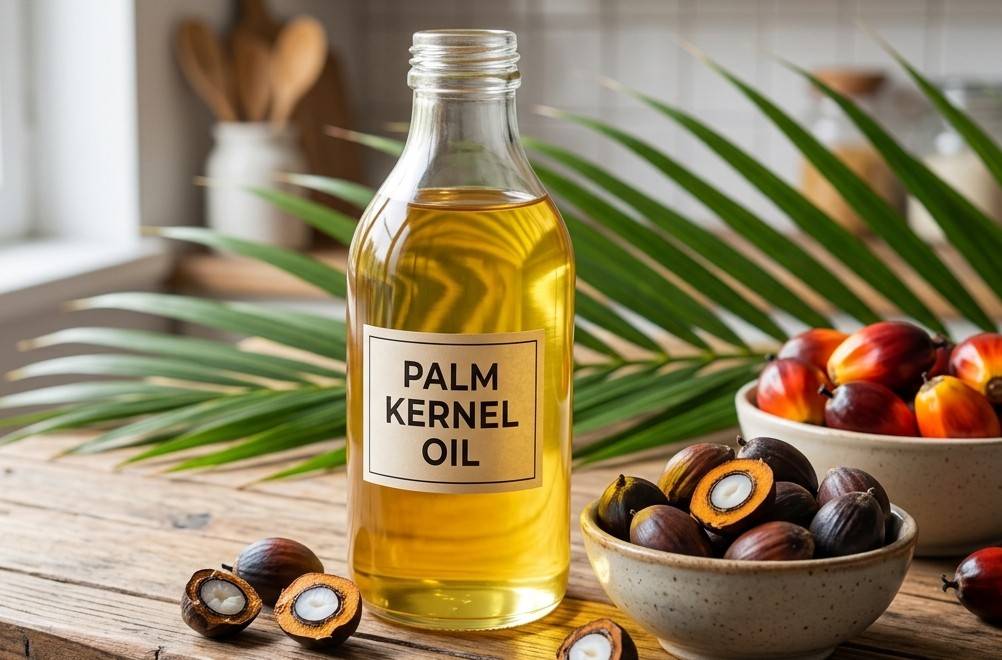
Palm Kernel Oil is a versatile tropical oil widely used in cooking, skincare, haircare, and traditional remedies. Extracted from the kernel (seed) of the oil palm fruit, this oil has a unique fatty acid profile that sets it apart from regular palm oil. While palm oil is extracted from the fleshy fruit, palm kernel oil comes from the hard inner seed, making it compositionally closer to coconut oil.
In this guide, you’ll learn everything about Palm Kernel Oil — its nutrition facts, science-backed health benefits, side effects, usage methods, dosage guidelines, precautions, and more.
What is Palm Kernel Oil?
Palm Kernel Oil is a vegetable oil derived from the kernel of the oil palm fruit (Elaeis guineensis). It is commonly produced in tropical regions such as West Africa, Indonesia, and Malaysia.
Unlike palm oil, which is reddish in color due to beta-carotene content, palm kernel oil is usually pale yellow or colorless. It is rich in saturated fats, especially medium-chain fatty acids like lauric acid, which makes it semi-solid at room temperature.
Because of its stability and long shelf life, it is widely used in:
- Cooking and frying
- Soap and cosmetic production
- Hair conditioners
- Processed foods
- Traditional medicine
Its high lauric acid content gives it antimicrobial and moisturizing properties, making it popular in both dietary and topical applications.
Nutrition Facts of Palm Kernel Oil
| Nutrient | Amount (Per 1 Tablespoon – 14g) |
|---|---|
| Calories | 120 kcal |
| Total Fat | 14 g |
| Saturated Fat | 11-12 g |
| Monounsaturated Fat | 1.5 g |
| Polyunsaturated Fat | 0.2 g |
| Lauric Acid | 45-50% of total fat |
| Myristic Acid | 14-18% |
| Palmitic Acid | 8-10% |
| Vitamin E (trace) | Small amount |
| Cholesterol | 0 mg |
| Carbohydrates | 0 g |
| Protein | 0 g |
Palm Kernel Oil contains no carbohydrates or protein. Its nutritional value comes entirely from fats, particularly saturated fats.
20 Proven Benefits of Palm Kernel Oil
- Rich in Lauric Acid – Oil contains high levels of lauric acid, which has antimicrobial and antiviral properties.
- Supports Immune Function – The fatty acids in palm kernel oil may help strengthen the body’s natural defense system.
- Boosts Energy Levels – Medium-chain fatty acids are quickly metabolized by the liver and used as an immediate energy source.
- Improves Skin Moisture – Palm Kernel Oil deeply hydrates dry and flaky skin due to its emollient properties.
- Enhances Hair Health – It nourishes the scalp and reduces dryness, promoting shinier and stronger hair.
- Supports Heart Health in Moderation – When consumed responsibly, it may help maintain balanced cholesterol levels.
- Promotes Gut Health – Its antimicrobial properties may help reduce harmful bacteria in the digestive tract.
- Helps in Wound Healing – Traditional uses suggest it supports minor wound healing when applied topically.
- Acts as Natural Skin Cleanser – It helps remove dirt and excess oil without stripping natural moisture.
- May Support Weight Management – Medium-chain triglycerides may increase satiety and metabolic rate.
- Improves Skin Elasticity – Regular topical use can make skin feel firmer and smoother.
- Supports Oral Health – It can be used for oil pulling to help reduce harmful oral bacteria.
- Reduces Scalp Infections – Its antimicrobial nature may help manage dandruff and scalp irritation.
- Enhances Cooking Stability – Its high saturated fat content makes it stable at high cooking temperatures.
- Long Shelf Life – It resists oxidation better than many polyunsaturated oils.
- Natural Makeup Remover – It effectively dissolves oil-based cosmetics.
- Softens Cuticles and Nails – It hydrates brittle nails and dry cuticles.
- Supports Traditional Remedies – Used in some cultures for digestive and skin issues.
- May Help Reduce Inflammation – Certain fatty acids may provide mild anti-inflammatory effects.
- Industrial and Cosmetic Value – Widely used in soap making due to its excellent lathering properties.
10 Side Effects of Palm Kernel Oil
- High Saturated Fat Content – Excessive consumption may increase LDL cholesterol levels.
- Weight Gain Risk – High calorie density can contribute to weight gain if consumed in large amounts.
- Heart Disease Concerns – Overconsumption may increase cardiovascular risk in susceptible individuals.
- Digestive Discomfort – Some people may experience stomach upset or diarrhea.
- Allergic Reactions – Rarely, sensitive individuals may develop skin irritation.
- May Worsen Lipid Profile – Individuals with high cholesterol should use caution.
- Acne Trigger – In some skin types, heavy oils may clog pores.
- Environmental Concerns – Unsustainable palm production contributes to deforestation.
- Oxidation When Improperly Stored – Poor storage can lead to rancidity.
- Interaction with Certain Diets – Not suitable for low-fat or heart-restricted diets without medical supervision.
How to Use Palm Kernel Oil?
Palm Kernel Oil can be used in several ways:
For Cooking:
- Use for shallow frying or sautéing.
- Add to baked goods as a butter substitute.
- Blend into smoothies (small amounts).
For Skin:
- Apply directly as a moisturizer.
- Use as a massage oil.
- Mix with essential oils for enhanced benefits.
For Hair:
- Warm slightly and massage into scalp.
- Leave for 30 minutes before washing.
- Use as deep conditioning treatment.
Other Uses of Palm Kernel Oil
- Soap and detergent manufacturing
- Candle making
- Cosmetic creams and lotions
- Lip balms and body butters
- Industrial lubricants
- Biofuel production
Tips for Consuming Palm Kernel Oil
- Use in moderation due to high saturated fat.
- Choose cold-pressed, unrefined varieties.
- Avoid overheating repeatedly.
- Combine with unsaturated oils like olive oil.
- Consult a doctor if you have heart disease.
How to Take Palm Kernel Oil?
For internal use:
- Start with ½ teaspoon daily.
- Gradually increase to 1 tablespoon if tolerated.
- Consume with meals to avoid digestive discomfort.
For topical use:
- Apply small amount to clean skin.
- Perform patch test before full application.
How to Make Palm Kernel Oil at Home?
Traditional method:
- Collect dried palm kernels.
- Crack open shells and extract kernels.
- Dry kernels thoroughly.
- Grind into paste.
- Heat paste gently to release oil.
- Strain using clean cloth.
- Store in airtight container.
Note: Homemade extraction requires proper hygiene and care to prevent contamination.
How Much Palm Kernel Oil Can You Use Per Day?
For healthy adults, 1 to 2 tablespoons per day is generally considered moderate intake. However, due to high saturated fat content, it is advisable to limit regular daily consumption.
Dietary guidelines typically recommend limiting saturated fat to less than 10% of daily calories.
Palm Kernel Oil Dosage
- General wellness: ½ to 1 tablespoon daily.
- Cooking use: Replace small portion of cooking oil.
- Skin application: As needed externally.
Always adjust based on individual tolerance and medical condition.
Best Time to Use Palm Kernel Oil
- Morning: For energy support.
- Before workouts: As quick energy source.
- After shower: For skin hydration.
- Before hair wash: For deep conditioning.
Who Should Use Palm Kernel Oil?
- Individuals needing high-energy diets.
- People with dry skin or scalp.
- Those seeking natural hair conditioning.
- Soap and cosmetic makers.
- People looking for stable high-heat cooking oil.
Who Should Not Use Palm Kernel Oil?
- Individuals with high LDL cholesterol.
- People with heart disease risk factors.
- Those on low-fat medical diets.
- Individuals with oil-sensitive acne-prone skin.
- Anyone allergic to palm derivatives.
How to Store Palm Kernel Oil?
- Store in airtight container.
- Keep in cool, dark place.
- Avoid moisture exposure.
- Refrigeration extends shelf life.
- Discard if rancid smell develops.
Proper storage can keep it fresh for 12–24 months.
Precautions and Interactions
- Consult healthcare provider if you have cardiovascular disease.
- Avoid excessive intake.
- Monitor cholesterol levels regularly.
- Not recommended for infants without medical guidance.
- Combine with balanced diet rich in fruits and vegetables.
Oil is energy-dense and highly saturated, so moderation is key.
Final Thoughts
Palm Kernel Oil is a powerful tropical oil with wide-ranging applications in cooking, skincare, haircare, and industry. Its high lauric acid content gives it antimicrobial and moisturizing properties, making it both functional and versatile.
However, its high saturated fat content means it should be consumed carefully, especially by individuals concerned about heart health. Used responsibly and in moderation, oil can be a beneficial addition to both your kitchen and personal care routine.
FAQ’s
What is Palm Kernel Oil made from?
Oil is made from the kernel (inner seed) of the oil palm fruit (Elaeis guineensis), not from the fleshy outer part of the fruit.
Can I use Palm Kernel Oil every day?
Yes, it can be used daily in small amounts, but due to its high saturated fat content, dietary use should be moderate.
How long does it take for Palm Kernel Oil to work?
Topical benefits like skin moisturization may be noticeable within a few days, while internal effects depend on overall diet and consistency of use.
Is Palm Kernel Oil safe for children?
Small amounts used in food are generally safe, but regular supplementation should only be given under medical guidance.
Is Palm Kernel Oil good or bad for you?
It can offer benefits like antimicrobial and moisturizing properties, but excessive consumption may increase cholesterol due to high saturated fat levels.
What is Palm Kernel Oil used for?
It is used in cooking, baking, soap making, skincare products, hair treatments, and traditional remedies.
Is Palm Kernel Oil safe on skin?
Yes, it is generally safe for most skin types, but people with acne-prone or sensitive skin should perform a patch test first.
Is Palm Kernel Oil the same as Palm Oil?
No, Oil is extracted from the seed (kernel) of the oil palm fruit, while palm oil is extracted from the fleshy part of the fruit, and they differ in composition and fatty acid profile.
Is Palm Kernel Oil healthy?
Oil can be beneficial in moderation, but due to its high saturated fat content, it should be consumed carefully, especially by individuals with heart concerns.
Can Palm Kernel Oil increase cholesterol?
Yes, excessive intake may raise LDL (bad) cholesterol levels because it is rich in saturated fats.
Can Palm Kernel Oil help with hair growth?
It may support healthier hair by moisturizing the scalp and reducing dryness, but it does not directly stimulate new hair growth.
Can you cook with Palm Kernel Oil?
Yes, it is stable at high temperatures and suitable for frying and baking.
Is Palm Kernel Oil safe during pregnancy?
Small dietary amounts are usually safe, but pregnant women should consult a healthcare provider before regular use.
Does Palm Kernel Oil cause weight gain?
It can contribute to weight gain if consumed in excess because it is calorie-dense.
Is Palm Kernel Oil good for oil pulling?
Yes, due to its antimicrobial fatty acids, it can be used for oil pulling to support oral hygiene.
Can Palm Kernel Oil clog pores?
Yes, it may clog pores in acne-prone or oily skin types.
How long does Palm Kernel Oil last?
When stored properly in a cool, dark place, it can last 12 to 24 months.
Is Palm Kernel Oil vegan?
Yes, it is plant-based and suitable for vegan diets.
What does Palm Kernel Oil taste like?
It has a mild, slightly nutty flavor when unrefined and a neutral taste when refined.
Can people with heart disease use Palm Kernel Oil?
People with heart conditions should use it cautiously and consult their doctor due to its high saturated fat content.
Also Read: