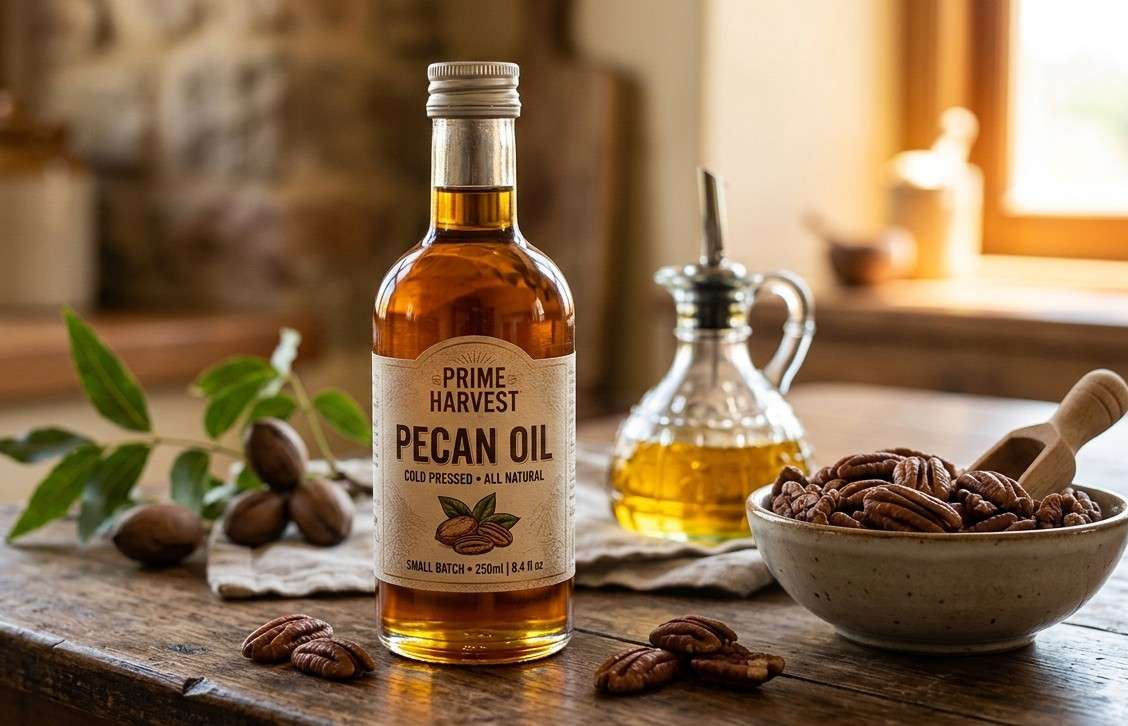
Pecan oil is one of the most underrated yet incredibly nutritious oils derived from nature. Extracted from pecan nuts, this golden, mildly sweet oil is packed with heart-healthy fats, antioxidants, and essential nutrients. While olive oil and coconut oil often steal the spotlight, pecan nut oil deserves equal attention for its culinary versatility and potential health benefits. In this guide, you will learn everything about pecan oil — from its nutrition profile and science-backed health benefits to side effects, dosage, and storage tips.
What is Pecan Oil?
Pecan oil is a plant-based edible oil extracted from pecans, the buttery, nutrient-dense nuts harvested from the pecan tree. Scientifically known as Carya illinoinensis, the pecan tree is native to North America and is widely cultivated in the southern United States and parts of Mexico.
The oil is typically obtained through cold-pressing or expeller-pressing methods, which help preserve its nutrients and natural flavor. High-quality pecan oil has:
- A light golden color
- A mild, nutty aroma
- A slightly sweet and buttery taste
- A relatively high smoke point
Because of its smooth texture and stability, pecan oil is used in cooking, salad dressings, baking, and even skincare formulations.
Nutrition Facts of Pecan Oil
Below is the approximate nutritional profile of 1 tablespoon (about 14 grams) of pecan oil:
| Nutrient | Amount per 1 tbsp (14g) |
|---|---|
| Calories | 120 kcal |
| Total Fat | 14 g |
| Saturated Fat | 1.2 g |
| Monounsaturated Fat | 8.5–9 g |
| Polyunsaturated Fat | 3.5–4 g |
| Omega-6 Fatty Acids | ~3.5 g |
| Omega-3 Fatty Acids | Trace |
| Vitamin E | 1–2 mg |
| Cholesterol | 0 mg |
| Carbohydrates | 0 g |
| Protein | 0 g |
Pecan oil is primarily composed of monounsaturated fats, similar to olive oil, which are associated with heart health and reduced inflammation.
20 Proven Benefits of Pecan Oil
- Supports Heart Health – Oil is rich in monounsaturated fats that help reduce bad cholesterol and support overall cardiovascular health.
- Helps Lower LDL Cholesterol – The healthy fats in pecan nut oil may help reduce LDL (bad) cholesterol levels in the bloodstream.
- Improves HDL Levels – Regular use may help increase HDL (good) cholesterol, which protects the heart.
- Rich in Antioxidants – Oil contains vitamin E and plant compounds that help fight oxidative stress.
- Reduces Inflammation – Its healthy fat profile may help reduce inflammation in the body.
- Supports Brain Function – Healthy fats are essential for cognitive performance and long-term brain health.
- May Improve Blood Sugar Balance – Replacing refined oils with pecan oil may support better insulin sensitivity.
- Promotes Healthy Skin – Vitamin E helps protect skin from damage and supports hydration.
- Encourages Hair Health – The nourishing fats in pecan oil may help strengthen and condition hair.
- Boosts Immune Function – Antioxidants in oil support the immune system.
- Supports Weight Management – Healthy fats increase satiety and may reduce overeating.
- Improves Nutrient Absorption – Fat-soluble vitamins like A, D, E, and K are better absorbed when consumed with healthy oils.
- May Protect Against Oxidative Damage – Its antioxidant compounds may protect cells from free radical damage.
- Supports Hormonal Balance – Healthy dietary fats play a role in hormone production.
- May Improve Digestive Health – Moderate intake of healthy oils can support smoother digestion.
- Helps Maintain Healthy Blood Vessels – Monounsaturated fats support flexible and healthy arteries.
- Provides Energy – As a calorie-dense oil, pecan nut oil provides quick and sustained energy.
- Supports Joint Health – Anti-inflammatory properties may contribute to better joint comfort.
- May Support Eye Health – Vitamin E contributes to protecting eye tissues from oxidative stress.
- Promotes Overall Wellness – When used as part of a balanced diet, oil supports general health and vitality.
10 Side Effects of Pecan Oil
While pecan nut oil is generally safe for most people, it can cause side effects in certain situations.
- Nut Allergy Reactions – Individuals allergic to pecans or tree nuts may experience serious allergic reactions.
- Digestive Upset – Consuming large amounts may cause bloating or diarrhea.
- High Calorie Intake – Overuse can contribute to unwanted weight gain due to its calorie density.
- Omega-6 Imbalance – Excessive intake may disrupt the omega-6 to omega-3 ratio if not balanced properly.
- Skin Reactions (Topical Use) – Some individuals may develop irritation when applied to the skin.
- Possible Blood Thinning Effect – High vitamin E intake may slightly affect blood clotting.
- Rancidity Risk – Improperly stored oil may oxidize and cause digestive discomfort.
- Not Suitable for Severe Nut Sensitivity – Even trace exposure may trigger symptoms in sensitive individuals.
- May Interact with Medications – Those on anticoagulants should consult a doctor before high intake.
- Potential Overheating Degradation – Repeated overheating may produce harmful compounds.
How to Use Pecan Oil?
Oil is versatile and can be used in multiple ways:
- Salad dressings and vinaigrettes
- Drizzling over roasted vegetables
- Light sautéing and stir-frying
- Baking cakes and muffins
- As a finishing oil over soups
- Mixing into smoothies
- Homemade mayonnaise
Because of its nutty flavor, pecan nut oil enhances both savory and sweet recipes.
Other Uses of Pecan Oil
Beyond cooking, pecan nut oil has additional applications:
- Hair conditioning treatment
- Massage oil
- Moisturizing dry skin
- Cuticle care
- Homemade lip balm base
- Natural makeup remover
- Carrier oil for essential oils
Tips for Consuming Pecan Oil
- Use cold-pressed pecan nut oil for maximum nutrition.
- Avoid overheating repeatedly.
- Combine with omega-3 rich foods to balance fatty acids.
- Use as a replacement for refined vegetable oils.
- Keep portions moderate due to high calorie content.
How to Take Pecan Oil?
You can take oil in the following ways:
- 1 tablespoon mixed into salads
- Added to cooked dishes after cooking
- Blended into smoothies
- Used as a cooking oil substitute
- Taken directly in small amounts (if preferred)
Most people consume it as part of meals rather than as a supplement.
How to Make Pecan Oil?
Making oil at home requires effort but is possible:
- Shell and clean high-quality pecans.
- Lightly roast them to release oils.
- Grind into a paste using a powerful blender.
- Press the paste using a mechanical oil press.
- Strain the extracted oil through cheesecloth.
- Store in a dark glass bottle.
Home extraction yields small quantities and may not be as refined as commercial cold-pressed oil.
How Much Pecan Oil Can You Use Per Day?
For most healthy adults:
- 1–2 tablespoons per day is generally considered moderate.
- It should replace other fats rather than be added on top of them.
- Total daily fat intake should remain balanced.
Always consider overall calorie needs.
Pecan Oil Dosage
- General wellness: 1 tablespoon daily
- Cooking replacement: Use instead of other oils
- Topical application: Small amount applied externally
There is no official therapeutic dosage, as it is a food oil rather than a medication.
Best Time to Use Pecan Oil
- With meals for better nutrient absorption
- In the morning smoothie for energy
- As a finishing oil at lunch or dinner
- After shower for skin hydration (topical)
Timing depends on how you intend to use it.
Who Should Use Pecan Oil?
- Individuals seeking heart-healthy fats
- Those replacing refined vegetable oils
- People following Mediterranean-style diets
- Individuals looking for plant-based oils
- Those seeking natural skin moisturizers
Who Should Not Use Pecan Oil?
- Individuals with tree nut allergies
- People advised to limit fat intake strictly
- Those on certain blood-thinning medications
- Individuals prone to severe allergic reactions
Consult a healthcare provider if unsure.
How to Store Pecan Oil?
Proper storage is essential to prevent rancidity:
- Store in a dark glass bottle
- Keep in a cool, dry place
- Refrigerate after opening (recommended)
- Keep tightly sealed
- Avoid exposure to heat and sunlight
Properly stored oil can last 6–12 months.
Precautions and Interactions
- Consult a healthcare professional if pregnant or breastfeeding.
- Those on anticoagulant medications should seek advice before high intake.
- Monitor for allergic reactions.
- Do not use rancid oil.
- Balance with omega-3 rich foods like flaxseed or walnuts.
Final Thoughts
Pecan oil is a nutrient-rich, flavorful oil that can easily become part of a healthy lifestyle. Its high monounsaturated fat content, antioxidant properties, and versatility make it suitable for cooking, skincare, and overall wellness. Like any oil, moderation is key. When used wisely as part of a balanced diet, oil can support heart health, skin vitality, and general well-being.
FAQ’s
Is pecan oil good for heart health?
Yes, oil is rich in monounsaturated fats, which may help reduce LDL (bad) cholesterol and support overall cardiovascular health when used in moderation.
Can pecan oil be used for cooking?
Yes, oil has a relatively high smoke point, making it suitable for sautéing, roasting, grilling, and even light frying.
What does pecan oil taste like?
Oil has a mild, slightly sweet, and nutty flavor that enhances both savory and sweet dishes without overpowering them.
Can people with nut allergies use pecan oil?
No, individuals with tree nut allergies should avoid pecan nut oil as it may trigger allergic reactions.
Is pecan oil good for skin?
Yes, oil contains vitamin E and healthy fats that may help moisturize dry skin and protect against environmental damage.
Can pecan oil help with hair growth?
While it may not directly stimulate hair growth, pecan oil can nourish the scalp and strengthen hair strands due to its moisturizing properties.
Can pecan oil help with weight loss?
Oil may support weight management when used in moderation, as healthy fats can promote satiety and reduce overeating.
Does pecan oil contain omega-3 fatty acids?
Oil contains mostly monounsaturated and omega-6 fats, with only trace amounts of omega-3 fatty acids.
Is pecan oil safe during pregnancy?
In normal food amounts, oil is generally considered safe, but pregnant women should consult a healthcare professional before making significant dietary changes.
Can pecan oil go bad?
Yes, like all oils, pecan oil can become rancid if exposed to heat, light, or air for prolonged periods.
Should pecan oil be refrigerated?
Refrigeration after opening is recommended to extend shelf life and maintain freshness.
Can pecan oil be taken directly by spoon?
Yes, some people consume it directly in small amounts, but it is more commonly used as part of meals.
Is pecan oil good for people with diabetes?
When used to replace unhealthy fats, pecan nut oil may support better metabolic health, but individuals with diabetes should monitor total calorie intake and consult their doctor.
Can pecan oil be used for deep frying?
Although it has a decent smoke point, it is best suited for light frying and sautéing rather than repeated deep frying at very high temperatures.
Does pecan oil contain cholesterol?
No, oil is plant-based and contains zero cholesterol.
Is cold-pressed pecan oil better?
Yes, cold-pressed pecan nut oil retains more nutrients and natural flavor compared to heavily refined versions.
Can pecan oil cause digestive problems?
Excessive consumption may cause bloating or diarrhea, especially in individuals sensitive to high-fat foods.
How long does pecan oil last?
When stored properly in a cool, dark place or refrigerated, oil typically lasts 6 to 12 months.
Can I use Pecan Oil every day?
Yes, oil can be used daily in moderate amounts, typically 1–2 tablespoons per day, especially when replacing less healthy fats in your diet.
How long does it take for Pecan Oil to work?
As a dietary oil, pecan nut oil does not produce instant results; potential benefits such as improved cholesterol levels or skin hydration may take several weeks of consistent use as part of a balanced lifestyle.
Is Pecan Oil safe for children?
Oil is generally safe for children when used in normal food amounts, but it should be avoided in children with tree nut allergies.
What is pecan oil good for?
Oil is commonly used for supporting heart health, improving cholesterol balance, nourishing skin and hair, enhancing nutrient absorption, and as a flavorful cooking oil.
Is pecan oil healthier than olive oil?
Both pecan nut oil and olive oil are rich in monounsaturated fats and offer similar heart benefits, but olive oil has more research supporting its health effects, while pecan nut oil provides a milder, nutty flavor.
Does pecan nut oil tighten skin?
Oil does not directly tighten skin, but its vitamin E and moisturizing properties may help improve skin elasticity and reduce dryness, making skin appear smoother and healthier over time.
Also Read: