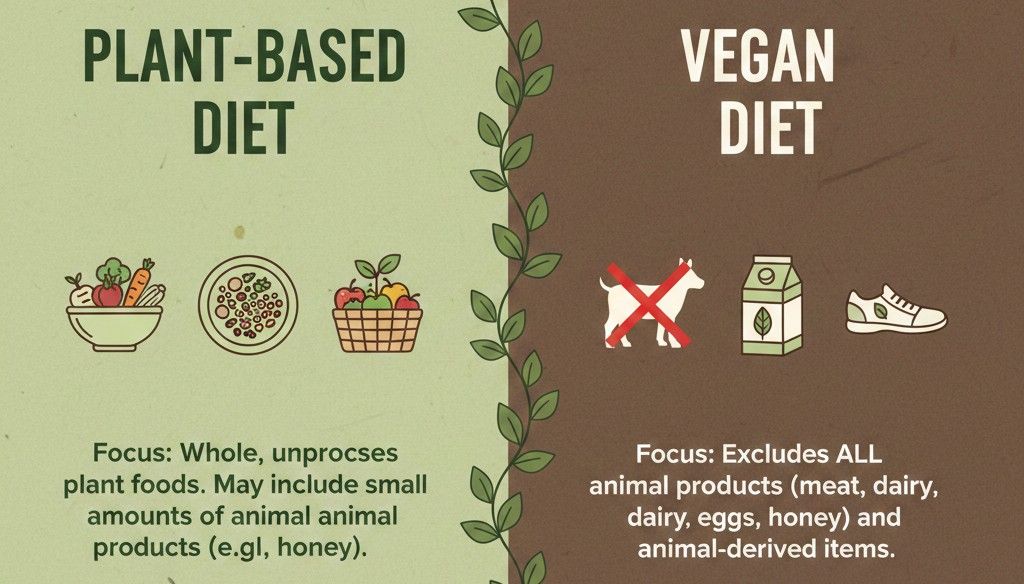
Choosing the right dietary approach can feel overwhelming with so many options available today. Two popular choices that often get confused are the plant-based diet and the vegan diet. While both focus heavily on plant foods, they differ in philosophy, purpose, and flexibility. Understanding these differences can help you decide which approach aligns best with your health goals, lifestyle, and ethical values. In this guide, we’ll break down the key distinctions, benefits, and considerations of each, so you can make an informed choice about which path is right for you.
What Is a Plant-Based Diet?
A plant-based diet focuses primarily on foods derived from plants, including fruits, vegetables, grains, nuts, seeds, and legumes. The main goal of a plant-based diet is to optimize health by emphasizing nutrient-dense, whole foods.
Key Points of a Plant-Based Diet:
- Prioritizes whole, minimally processed plant foods.
- May include small amounts of animal products, though not necessarily.
- Emphasizes nutrient quality rather than strict exclusion of animal products.
The plant-based diet is more flexible compared to a strict vegan diet. Some people may include occasional fish, eggs, or dairy, while still considering their diet plant-based because the majority of calories come from plants.
What Is a Vegan Diet?
A vegan diet is a lifestyle and dietary choice that excludes all animal products. This includes meat, poultry, fish, dairy, eggs, and often honey. Veganism is often motivated by ethical concerns about animal welfare, environmental sustainability, or health reasons.
Key Points of a Vegan Diet:
- Eliminates all animal products.
- Can include highly processed vegan foods such as vegan cheese, meat alternatives, and desserts.
- Often linked to broader ethical and environmental principles.
Veganism is less flexible than a plant-based diet because the exclusion of animal products is strict. People following a vegan diet rely entirely on plant sources for their nutrition, which requires careful planning to ensure adequate intake of certain nutrients.
Plant-Based Diet vs Vegan Diet: The Main Differences
The differences between plant-based and vegan diets can be subtle but significant. Understanding these distinctions can help you choose the approach that aligns with your goals, lifestyle, and values.
| Feature | Plant-Based Diet | Vegan Diet |
|---|---|---|
| Primary Focus | Health and nutrition | Ethics, environment, and lifestyle |
| Animal Products | May include small amounts occasionally | Completely avoids all animal products |
| Flexibility | Flexible; allows occasional inclusion of animal foods | Strict; no animal foods allowed |
| Food Quality Emphasis | High emphasis on whole, minimally processed foods | Can include highly processed vegan foods |
| Motivation | Health optimization | Ethics, animal welfare, environmental concerns |
| Nutrient Considerations | Usually rich in fiber, vitamins, and antioxidants | Requires careful planning for protein, vitamin B12, iron, omega-3 fatty acids |
| Lifestyle Integration | Focused on eating habits; may not extend to clothing, cosmetics, etc. | Often extends to vegan lifestyle, including clothing, cosmetics, and household products |
| Common Examples | Whole grains, beans, lentils, vegetables, fruits, nuts | Vegan meat substitutes, plant-based milks, fortified foods, fruits, vegetables, grains |
Health Benefits of a Plant-Based Diet
- Heart Health: A plant-based diet rich in fruits, vegetables, and whole grains has been linked to lower risks of heart disease due to lower saturated fat intake and higher fiber content.
- Weight Management: Plant-based diets often lead to lower body mass index (BMI) and reduced risk of obesity.
- Lower Risk of Chronic Diseases: Diets high in plant foods can reduce the risk of type 2 diabetes, hypertension, and certain cancers.
- Improved Digestion: High fiber intake from whole grains, fruits, and vegetables improves gut health and prevents constipation.
- Better Nutrient Intake: Emphasis on whole, minimally processed foods provides vitamins, minerals, and antioxidants critical for overall health.
Health Benefits of a Vegan Diet
- Ethical and Environmental Impact: Avoiding all animal products reduces demand for factory farming and can lower your carbon footprint.
- Reduced Risk of Heart Disease: Vegan diets are typically lower in cholesterol and saturated fat, contributing to better heart health.
- Weight Management: Vegans often have lower BMI and reduced risk of obesity-related conditions.
- Cancer Prevention: High intake of fruits, vegetables, and legumes is associated with reduced risk of certain cancers.
- Blood Sugar Control: A vegan diet can help improve insulin sensitivity and reduce the risk of type 2 diabetes.
Plant-Based Diet vs Vegan Diet: Nutritional Considerations
While both diets offer numerous health benefits, there are some nutrients you need to pay attention to, especially in a vegan diet.
| Nutrient | Plant-Based Diet | Vegan Diet | How to Ensure Adequate Intake |
|---|---|---|---|
| Protein | Usually sufficient with beans, lentils, nuts | Needs careful planning with legumes, tofu, tempeh, seitan | Include a variety of protein-rich plant foods daily |
| Vitamin B12 | May include some animal sources | Must supplement or consume fortified foods | Use B12 supplements or fortified plant-based milks/cereals |
| Iron | Adequate from plant and small animal sources | Needs careful planning | Eat iron-rich plant foods with vitamin C to enhance absorption |
| Calcium | Dairy may be included | Must rely on fortified plant milks, tofu, leafy greens | Include fortified products and leafy greens |
| Omega-3 Fatty Acids | May include fish occasionally | Needs plant sources like flaxseeds, chia seeds, walnuts | Include ALA-rich foods or consider algae-based DHA/EPA supplements |
| Zinc | Can include small amounts of meat | Needs careful planning | Eat beans, lentils, nuts, seeds, whole grains |
Flexibility and Sustainability: Plant-Based Diet vs Vegan Diet
Plant-Based Diet:
The flexibility of a plant-based diet makes it easier to maintain long-term. Individuals can gradually increase plant intake while still including occasional animal products, making the transition sustainable.
Vegan Diet:
A vegan diet requires strict adherence to the exclusion of animal products. While sustainable and rewarding for many, it can be challenging for newcomers due to social situations, limited options in some areas, and the need for supplementation.
Common Misconceptions
1. Vegan Means Healthy
While a vegan diet eliminates animal products, it does not automatically guarantee health. Processed vegan foods, sweets, and fried items can still lead to poor nutrition if consumed excessively.
2. Plant-Based Diet Excludes All Animal Foods
Not necessarily. The plant-based diet emphasizes plants but does not mandate strict exclusion of animal products. Small amounts of fish, dairy, or eggs can be included while still maintaining the core focus on plants.
3. Both Diets Are Protein-Deficient
Both diets can meet protein needs if properly planned. Beans, lentils, tofu, nuts, seeds, and whole grains provide adequate protein in plant-based diets.
Choosing the Right Diet for You
When deciding between a plant-based and vegan diet, consider the following:
- Motivation:
- If your primary goal is health optimization, a plant-based diet may be more flexible and sustainable.
- If ethics, environmental impact, and animal welfare are top priorities, a vegan diet may be the better choice.
- Lifestyle Compatibility:
- Plant-based diets allow more flexibility in social settings and cultural meals.
- Vegan diets may require more planning when dining out or traveling.
- Nutritional Awareness:
- Plant-based diets can rely on some animal products for easier nutrient intake.
- Vegan diets require careful planning or supplementation to avoid deficiencies in B12, iron, calcium, and omega-3 fatty acids.
Tips for Transitioning to a Plant-Based or Vegan Diet
- Start Gradually:
Replace one meal a day with plant-based options and gradually increase. - Plan Your Meals:
Ensure meals are balanced with protein, healthy fats, and complex carbohydrates. - Incorporate Variety:
Eat a wide range of fruits, vegetables, grains, nuts, and seeds to cover micronutrient needs. - Learn to Cook:
Homemade meals allow better control over ingredients and nutrient quality. - Read Labels:
For vegan diets, check for hidden animal ingredients like gelatin, casein, and whey. - Consider Supplements:
Vitamin B12 is essential for vegans. Omega-3 supplements from algae may also be beneficial.
Conclusion
While plant-based and vegan diets both emphasize plant foods, their focus, flexibility, and motivations differ significantly. The plant-based diet prioritizes health and whole foods, allowing occasional animal products, while the vegan diet strictly avoids all animal products, often for ethical or environmental reasons.
Both diets can provide substantial health benefits, including improved heart health, weight management, and reduced risk of chronic diseases. The key to success is planning, variety, and understanding your personal goals and lifestyle preferences. Whether you choose a plant-based or vegan path, embracing more plant foods in your diet can lead to a healthier, more sustainable, and fulfilling lifestyle.
FAQ’s
Can a plant-based diet include animal products?
Yes. A plant-based diet focuses on plant foods but may include small amounts of fish, eggs, or dairy occasionally.
Is veganism healthier than a plant-based diet?
Not necessarily. Both can be healthy if properly planned. Vegan diets may require supplementation of vitamin B12, calcium, and omega-3s.
Can I lose weight on a plant-based or vegan diet?
Yes. Both diets emphasize nutrient-dense foods, which can support weight management, but balanced portions are important.
Which diet is easier to maintain long-term?
A plant-based diet is generally more flexible and easier to sustain, while veganism requires strict adherence to avoid all animal products.
Do I need supplements on a plant-based diet?
Not always. If you include small amounts of animal products, most nutrients can be obtained from food. Vegans usually need vitamin B12 supplementation.
Can children follow a plant-based or vegan diet?
Yes, with careful planning to ensure adequate protein, vitamins, and minerals, both diets can be safe for children.
What is the main difference between plant-based and vegan diets?
A plant-based diet focuses on health and whole foods and may include occasional animal products, whereas a vegan diet strictly excludes all animal products, often for ethical or environmental reasons.
Also Read: