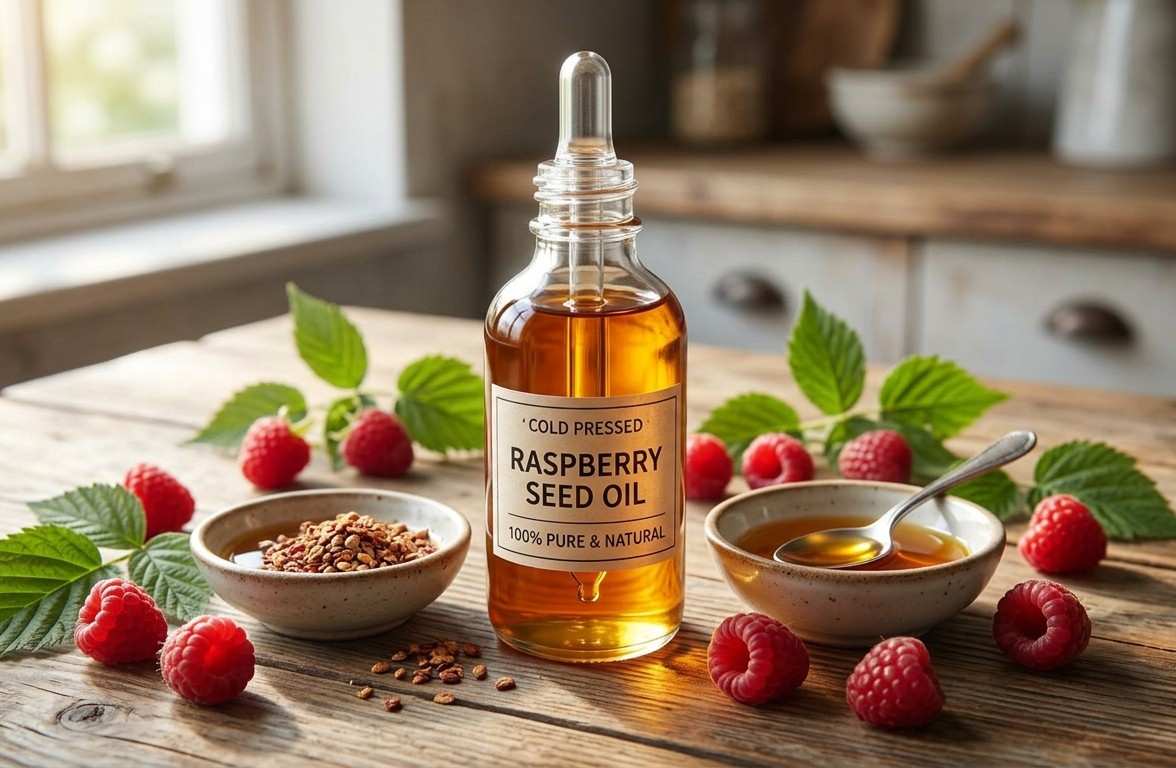
Raspberry Seed Oil is quickly becoming one of the most talked-about natural oils in skincare and wellness circles. Extracted from the tiny seeds of red raspberries, this nutrient-rich oil is packed with essential fatty acids, antioxidants, and skin-loving compounds that support beauty from the inside out.
Unlike heavier oils, Raspberry Seed Oil is lightweight, non-greasy, and easily absorbed by the skin. It has a mild, slightly nutty aroma and a golden to reddish hue depending on the extraction method. From anti-aging benefits to hair nourishment and potential dietary support, this oil offers a surprisingly wide range of uses. In this guide, you’ll learn everything about Raspberry Seed Oil — from its science-backed health benefits to side effects, dosage, storage tips, and more.
What is Raspberry Seed Oil?
Raspberry Seed Oil is a cold-pressed oil extracted from the seeds of red raspberries (Rubus idaeus). These seeds are a byproduct of juice and jam production, making the oil both sustainable and environmentally friendly.
The oil is rich in:
- Omega-3 fatty acids (alpha-linolenic acid)
- Omega-6 fatty acids (linoleic acid)
- Vitamin E (tocopherols and tocotrienols)
- Polyphenols
- Phytosterols
- Carotenoids
Because of its impressive antioxidant profile, Raspberry Seed Oil is commonly used in:
- Skincare products
- Anti-aging serums
- Sunscreen formulations
- Hair oils
- Dietary supplements (in capsule form)
It is considered a dry oil, meaning it absorbs quickly without leaving a heavy residue.
Nutrition Facts of Raspberry Seed Oil
Below is an approximate nutritional breakdown per 1 tablespoon (14 grams) of cold-pressed Raspberry Seed Oil:
| Nutrient | Approximate Amount |
|---|---|
| Calories | 120 kcal |
| Total Fat | 14 g |
| Saturated Fat | 1 g |
| Monounsaturated Fat | 2–3 g |
| Polyunsaturated Fat | 9–10 g |
| Omega-3 (ALA) | 3–4 g |
| Omega-6 (Linoleic Acid) | 6–8 g |
| Vitamin E | 10–20 mg |
| Phytosterols | Present |
| Carotenoids | Present |
| Antioxidants | High |
Note: Values may vary depending on extraction method and processing.
20 Proven Benefits of Raspberry Seed Oil
- Skin Moisturizing Power – Raspberry Seed Oil deeply hydrates the skin without clogging pores due to its high essential fatty acid content.
- Anti-Aging Support – The antioxidants in Raspberry Seed Oil help reduce fine lines and protect skin from premature aging.
- Natural UV Protection – Raspberry Seed Oil may offer mild natural UV-blocking properties that support sun protection when combined with sunscreen.
- Reduces Inflammation – Its omega-3 content helps calm redness, irritation, and inflammatory skin conditions.
- Supports Acne-Prone Skin – The high linoleic acid content helps balance sebum production and may reduce breakouts.
- Boosts Skin Elasticity – Vitamin E and essential fatty acids improve skin firmness and elasticity over time.
- Soothes Eczema Symptoms – Its anti-inflammatory and moisturizing properties may help relieve dry, itchy skin.
- Strengthens Skin Barrier – Raspberry Seed Oil supports the skin’s natural lipid barrier, preventing moisture loss.
- Promotes Wound Healing – Antioxidants assist in faster skin repair and healing.
- Protects Against Free Radicals – The oil neutralizes oxidative stress caused by pollution and environmental toxins.
- Improves Hair Health – When applied to hair, it nourishes dry strands and enhances shine.
- Reduces Dandruff – Its soothing properties help calm scalp irritation and dryness.
- Supports Heart Health – When consumed in moderation, its omega fatty acids may contribute to cardiovascular wellness.
- Balances Hormones – Essential fatty acids may assist in maintaining hormonal balance.
- Enhances Lip Care – Raspberry Seed Oil is excellent for softening and protecting chapped lips.
- Improves Skin Tone – Regular use may help brighten dull skin and improve texture.
- Anti-Inflammatory for Joint Support – Dietary use may help reduce inflammation-related discomfort.
- Supports Immune Health – Antioxidants and fatty acids may contribute to stronger immune defense.
- Lightweight Makeup Base – It can act as a natural primer due to its quick absorption.
- Safe for Sensitive Skin – Its gentle composition makes it suitable for most skin types.
10 Side Effects of Raspberry Seed Oil
Although generally safe, oil may cause side effects in certain individuals.
- Allergic Reaction Risk – Individuals allergic to berries may experience itching, swelling, or rash.
- Skin Irritation – Sensitive skin types may develop mild redness if used in high concentration.
- Breakouts in Oily Skin – Overuse may clog pores in extremely oily skin types.
- Digestive Upset – Consuming large amounts may cause nausea or diarrhea.
- Hormonal Sensitivity – People with hormone-sensitive conditions should consult a doctor before use.
- Blood Thinning Effect – High omega content may mildly affect blood clotting.
- Low Blood Pressure – Excess consumption may contribute to lowered blood pressure.
- Interaction with Medications – It may interact with blood thinners or anti-inflammatory drugs.
- Oxidation Risk – Rancid oil may cause skin irritation if not stored properly.
- Pregnancy Sensitivity – Pregnant women should consult a healthcare provider before consuming it.
How to Use Raspberry Seed Oil?
Raspberry Seed Oil is extremely versatile. Here are the most common ways to use it:
For Skin:
- Apply 2–3 drops directly to clean, damp skin.
- Mix with moisturizer or serum.
- Use as a facial oil at night.
For Hair:
- Warm a few drops and massage into scalp.
- Apply to hair ends to reduce dryness.
- Add to conditioner.
For Lips:
- Apply a small drop directly for hydration.
For Body:
- Use after showering as a lightweight body oil.
Other Uses of Raspberry Seed Oil
- Natural lip balm ingredient
- Massage oil
- Cuticle treatment
- Beard oil
- Makeup remover
- Stretch mark care
- After-sun soothing oil
- Baby massage oil (patch test recommended)
Tips for Consuming Raspberry Seed Oil
- Choose cold-pressed, unrefined oil.
- Start with small amounts.
- Store in a cool, dark place.
- Avoid overheating to preserve nutrients.
- Consult a healthcare professional before regular use.
How to Take Raspberry Seed Oil?
Oil is typically available in:
- Liquid oil form
- Softgel capsules
You can:
- Add 1 teaspoon to smoothies.
- Mix into salad dressings.
- Take capsules as directed on packaging.
Always follow manufacturer dosage instructions.
How to Make Raspberry Seed Oil at Home?
Making true cold-pressed Raspberry Seed Oil at home is difficult because it requires mechanical pressing equipment.
However, you can create an infused oil:
- Collect dried raspberry seeds.
- Crush lightly.
- Soak in carrier oil (like jojoba or almond oil).
- Store in a sealed jar for 3–4 weeks.
- Strain and store.
This is not pure seed oil but a raspberry-infused oil.
How Much Raspberry Seed Oil Can You Use Per Day?
For topical use:
- 2–5 drops for face daily is generally sufficient.
For dietary use:
- 1 teaspoon per day is commonly recommended unless otherwise advised by a healthcare professional.
Avoid excessive intake.
Raspberry Seed Oil Dosage
Topical Dosage:
- Face: 2–3 drops
- Body: 1–2 teaspoons
- Hair: 5–10 drops
Oral Dosage:
- 500–1000 mg capsules daily
- 1 teaspoon liquid form
Consult a medical professional for personalized dosage.
Best Time to Use Raspberry Seed Oil
For Skin:
- Nighttime is ideal for repair and absorption.
For Hair:
- Before shampooing or overnight treatment.
For Oral Use:
- With meals to improve absorption.
Who Should Use Raspberry Seed Oil?
- People with dry or sensitive skin
- Individuals seeking natural anti-aging support
- Those with inflammatory skin conditions
- People looking for plant-based omega sources
- Individuals wanting lightweight facial oils
Who Should Not Use Raspberry Seed Oil?
- People allergic to raspberries
- Individuals on blood-thinning medication
- Those with severe berry allergies
- People with hormone-sensitive medical conditions (without medical advice)
- Anyone experiencing persistent irritation
How to Store Raspberry Seed Oil?
Proper storage ensures longevity and effectiveness.
- Store in dark glass bottles.
- Keep away from sunlight.
- Refrigerate after opening if possible.
- Ensure lid is tightly closed.
- Use within 6–12 months.
Rancid oil has a sharp or sour smell and should not be used.
Precautions and Interactions
- Perform a patch test before first topical use.
- Consult a doctor before oral consumption.
- Avoid mixing with strong active skincare ingredients initially.
- Do not replace sunscreen entirely with oil.
- Keep out of reach of children.
If you are pregnant, breastfeeding, or managing a medical condition, always consult a qualified healthcare provider before use.
Final Thoughts
Raspberry Seed Oil is a powerful yet gentle natural oil that supports skin health, hair nourishment, and overall wellness. Rich in essential fatty acids, antioxidants, and vitamin E, it offers impressive benefits ranging from anti-aging support to inflammation control. While generally safe, proper usage, correct dosage, and mindful storage are essential to maximize benefits and avoid side effects.
FAQ’s
Is raspberry seed oil a natural SPF?
Oil contains antioxidants and compounds that may offer mild natural UV protection, but it is not a reliable substitute for broad-spectrum sunscreen. It should be used alongside a properly tested SPF product for adequate sun protection.
Is raspberry seed oil good for hair growth?
Oil may support healthier hair growth by nourishing the scalp, reducing inflammation, and improving moisture balance, but it does not directly stimulate new hair growth like medical treatments. Regular scalp massage with the oil can help improve overall hair health.
What is Raspberry Seed Oil good for?
Oil is mainly used for moisturizing the skin, reducing inflammation, supporting anti-aging, improving skin elasticity, nourishing hair, and providing antioxidant protection.
Can I use Raspberry Seed Oil every day?
Yes, oil can be used daily on the skin in small amounts, typically 2–3 drops for the face, as long as you do not experience irritation.
Is Raspberry Seed Oil safe for sensitive skin?
Oil is generally safe for sensitive skin because it is lightweight and non-comedogenic, but a patch test is recommended before regular use.
Does Raspberry Seed Oil clog pores?
Oil has a low comedogenic rating and is unlikely to clog pores, making it suitable for acne-prone skin when used in moderation.
Can Raspberry Seed Oil help with acne?
Yes, its high linoleic acid content may help balance oil production and reduce acne breakouts.
Is Raspberry Seed Oil edible?
Yes, cold-pressed oil is edible and can be consumed in small amounts, such as 1 teaspoon daily, if approved by a healthcare provider.
Can Raspberry Seed Oil help with wrinkles?
Yes, the antioxidants and vitamin E in oil may help reduce the appearance of fine lines and wrinkles over time.
How long does it take to see results?
Visible skin improvements may appear within 2–4 weeks of consistent use, depending on skin type and concern.
Is Raspberry Seed Oil safe during pregnancy?
Topical use is generally considered safe, but pregnant women should consult a healthcare professional before consuming it.
Can children use Raspberry Seed Oil?
Topical use in small amounts may be safe for children, but always consult a pediatrician before regular application.
Does Raspberry Seed Oil expire?
Yes, it typically lasts 6–12 months when stored properly in a cool, dark place.
What does Raspberry Seed Oil smell like?
It has a mild, slightly nutty aroma rather than a strong raspberry fragrance.
Can I mix Raspberry Seed Oil with other oils?
Yes, it blends well with carrier oils like jojoba, argan, and almond oil for enhanced benefits.
Is Raspberry Seed Oil good for lips?
Yes, it helps moisturize, protect, and soften dry or chapped lips.
Can Raspberry Seed Oil lighten skin?
It does not bleach the skin but may improve skin tone and brightness due to its antioxidant content.
What skin types benefit most from Raspberry Seed Oil?
Dry, sensitive, mature, and acne-prone skin types often benefit the most.
Also Read: