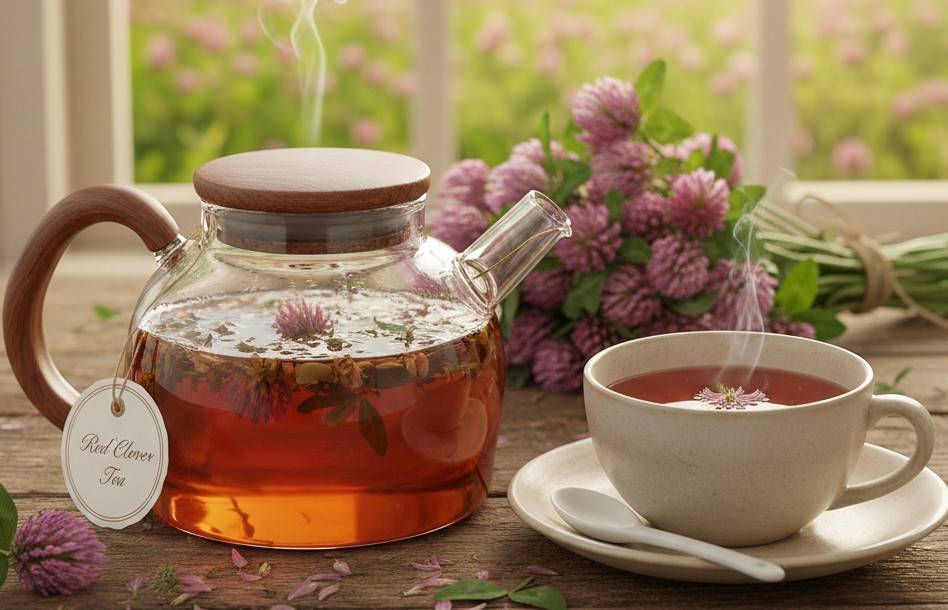
Red Clover Tea is a traditional herbal infusion made from the blossoms of the red clover plant. Known for its rich content of plant compounds, especially isoflavones, this tea has been used for centuries in folk medicine for hormonal balance, skin health, detoxification, and overall wellness. Today, modern research is exploring many of its traditional claims. In this detailed guide, you’ll learn everything about Red Clover Tea — from its proven health benefits to possible side effects, preparation methods, and safety precautions.
What is Red Clover Tea?
Red Clover Tea is made from the dried flowers of Trifolium pratense, a flowering plant in the legume family. Native to Europe, Western Asia, and parts of Africa, it is now widely grown across North America and other temperate regions.
The plant produces pink to reddish-purple blossoms that are rich in bioactive compounds. Traditionally, red clover has been used in herbal medicine systems to support:
- Women’s hormonal health
- Respiratory wellness
- Skin conditions
- Detoxification
Red Clover Tea has a mild, slightly sweet, grassy flavor and can be consumed hot or cold.
Components of Red Clover Tea
Red Clover Tea contains several important plant-based compounds rather than high amounts of vitamins or minerals. Its health benefits are primarily attributed to phytonutrients. Below is an approximate nutritional and phytochemical profile per 1 cup (240 ml) of brewed tea:
| Nutrient / Compound | Approximate Amount | Function |
|---|---|---|
| Calories | 2–5 kcal | Minimal energy |
| Protein | Trace | From plant compounds |
| Carbohydrates | <1 g | Very low |
| Isoflavones (Genistein, Daidzein, Formononetin, Biochanin A) | 20–50 mg | Phytoestrogen activity |
| Flavonoids | Present | Antioxidant support |
| Coumarins | Trace | Blood-thinning properties |
| Phenolic acids | Present | Anti-inflammatory effects |
| Calcium | Small amounts | Bone support |
| Magnesium | Small amounts | Muscle & nerve function |
| Potassium | Small amounts | Electrolyte balance |
Values may vary depending on the quality of flowers, steeping time, and preparation method.
20 Science-Backed Benefits of Red Clover Tea
- Supports Menopausal Symptom Relief: The isoflavones in Red Clover Tea may help reduce hot flashes and night sweats in menopausal women by mimicking mild estrogen activity.
- Helps Balance Hormones Naturally: Its phytoestrogens can gently support hormonal balance in women experiencing PMS or perimenopause.
- May Improve Bone Density: Isoflavones may help reduce bone loss and support bone mineral density in postmenopausal women.
- Promotes Heart Health: Red Clover Tea may help improve cholesterol levels by reducing LDL and increasing HDL cholesterol.
- Supports Blood Circulation: Traditional use suggests it helps improve circulation and vascular health.
- Rich in Antioxidants: The flavonoids and phenolic compounds help neutralize free radicals and reduce oxidative stress.
- May Improve Skin Health: Red Clover Tea may support clearer skin and reduce inflammatory skin conditions like eczema.
- Supports Detoxification: Traditionally considered a “blood purifier,” it may support liver detox pathways.
- May Reduce Inflammation: Plant compounds in red clover may help decrease inflammatory markers in the body.
- Supports Respiratory Health: Traditionally used to ease coughs, bronchitis, and mild respiratory discomfort.
- May Help with PMS Symptoms: Its mild estrogenic activity may reduce mood swings, cramps, and breast tenderness.
- Supports Arterial Flexibility: Isoflavones may improve arterial elasticity, reducing cardiovascular risk factors.
- May Assist in Prostate Health: Some research suggests red clover isoflavones may support prostate function in men.
- Supports Hair Health: Traditional use includes promoting scalp circulation and reducing hair thinning.
- May Aid Weight Management: Hormonal balancing effects may indirectly support metabolism.
- Supports Immune Function: Antioxidants may help strengthen immune response.
- May Help Reduce Anxiety: Some users report mild calming effects due to hormonal stabilization.
- Supports Liver Function: Traditionally used in herbal detox blends for liver support.
- May Improve Sleep Quality: Hormonal balance and calming effects may contribute to better sleep.
- Supports Overall Women’s Wellness: Its combined effects on hormones, bones, and heart health make it particularly supportive for women over 40.
10 Side Effects of Red Clover Tea
While generally safe in moderate amounts, Red Clover Tea may cause side effects in certain individuals.
- May Increase Bleeding Risk: Due to natural coumarins, it may increase bleeding tendencies.
- Hormone-Sensitive Conditions Risk: Its phytoestrogens may worsen estrogen-sensitive conditions like certain cancers.
- Possible Allergic Reactions: Some individuals may experience rash or itching.
- Headaches: Hormonal changes may trigger mild headaches.
- Nausea or Digestive Upset: Overconsumption may cause stomach discomfort.
- Menstrual Changes: It may alter menstrual cycles in some women.
- Drug Interactions: May interact with blood thinners, hormone therapy, or birth control pills.
- Low Blood Pressure Risk: It may slightly lower blood pressure.
- Liver Stress (Rare): Excessive use may affect liver function.
- Not Recommended During Pregnancy: Phytoestrogen effects may not be safe during pregnancy.
How to Make Red Clover Tea?
Making Red Clover Tea is simple and requires only dried red clover blossoms.
Ingredients:
- 1–2 teaspoons dried red clover flowers
- 1 cup hot water (not boiling)
Instructions:
- Bring water to a near boil (around 90–95°C).
- Place dried blossoms in a cup or teapot.
- Pour hot water over the herbs.
- Cover and steep for 10–15 minutes.
- Strain and drink warm.
Optional additions: Honey, lemon, or mint.
Other Uses of Red Clover Tea
Red Clover Tea is not just for drinking. It has additional uses:
- Skin Toner: Cooled tea can be applied to irritated skin.
- Hair Rinse: May help soothe scalp and reduce dandruff.
- Bath Soak: Added to bathwater for skin soothing.
- Compress for Inflammation: Used externally on minor skin irritations.
- Herbal Blends: Combined with nettle, raspberry leaf, or chamomile.
How Much Red Clover Tea Can You Drink a Day?
For most healthy adults:
- 1 to 3 cups per day is generally considered safe.
- Limit use to 8–12 weeks unless supervised by a healthcare provider.
- Avoid excessive daily consumption due to phytoestrogen content.
Always consult a healthcare professional if using for hormonal therapy support.
Tips for Consuming Red Clover Tea
- Use high-quality, organic dried blossoms.
- Steep covered to preserve volatile compounds.
- Start with 1 cup daily to assess tolerance.
- Avoid combining with other strong phytoestrogen herbs without guidance.
- Store dried flowers in an airtight container away from sunlight.
Best Time to Drink Red Clover Tea
- Morning: For detox and circulation support.
- Afternoon: To maintain hormonal balance.
- Evening: If using for calming or sleep support.
Women using it for menopause symptoms may benefit from consistent daily intake.
Who Should Drink Red Clover Tea?
Red Clover Tea may be especially helpful for:
- Women experiencing menopause
- Women with PMS symptoms
- Individuals seeking natural heart support
- Those looking for antioxidant-rich herbal tea
- Adults interested in mild detox support
Who Should Not Drink Red Clover Tea?
Avoid or consult a healthcare provider if you:
- Are pregnant or breastfeeding
- Have estrogen-sensitive cancer
- Have bleeding disorders
- Are taking blood thinners
- Are on hormone replacement therapy
- Have upcoming surgery
Precautions and Interactions
Red Clover Tea may interact with:
- Anticoagulants (warfarin, aspirin)
- Hormone therapy medications
- Birth control pills
- Blood pressure medications
Precautionary measures include:
- Stop use 2 weeks before surgery
- Avoid long-term unsupervised use
- Monitor for unusual bleeding
- Discuss with your doctor if you have chronic health conditions
Final Thoughts
Red Clover Tea is a nutrient-rich herbal infusion with a long history of traditional use, particularly for women’s health. Its isoflavones and antioxidant compounds make it especially popular for menopausal support, bone health, heart wellness, and skin benefits.
While it offers many potential advantages, it should be consumed responsibly, especially by individuals with hormone-sensitive conditions or those taking medications. When used in moderation and under proper guidance, Red Clover Tea can be a valuable addition to a balanced, health-conscious lifestyle. If you are considering using it therapeutically, consult a qualified healthcare professional to ensure it is appropriate for your specific health needs.
FAQ’s
What is Red Clover Tea made from?
Red Clover Tea is made from the dried blossoms of Trifolium pratense, a flowering plant known for its isoflavone content.
What is Red Clover Tea good for?
Red Clover Tea is commonly used to support menopausal symptoms, hormonal balance, heart health, bone strength, and skin wellness.
Does Red Clover Tea help with menopause?
Yes, its natural phytoestrogens (isoflavones) may help reduce hot flashes, night sweats, and mood swings associated with menopause.
Can Red Clover Tea balance hormones?
It may help gently support hormonal balance due to its mild estrogen-like activity, particularly in women.
How long does it take for Red Clover Tea to work?
Some people notice improvements within 2–4 weeks, especially for menopausal symptoms, but results vary depending on the individual.
Is Red Clover Tea safe to drink daily?
For most healthy adults, 1–3 cups per day is generally considered safe for short-term use (up to 8–12 weeks).
Can men drink Red Clover Tea?
Yes, men can drink it, but due to its phytoestrogen content, long-term daily use should be discussed with a healthcare provider.
Does Red Clover Tea thin the blood?
It may have mild blood-thinning effects due to natural coumarins, so people taking anticoagulants should consult a doctor.
Is Red Clover Tea good for skin?
Traditionally, it has been used to support skin conditions such as eczema and acne due to its anti-inflammatory and antioxidant properties.
Can Red Clover Tea help with PMS?
It may help reduce PMS symptoms such as cramps, mood swings, and breast tenderness by supporting hormonal balance.
Is Red Clover Tea safe during pregnancy?
No, it is generally not recommended during pregnancy due to its hormone-like effects.
Does Red Clover Tea contain caffeine?
No, Red Clover Tea is naturally caffeine-free.
Can Red Clover Tea improve bone health?
Some research suggests its isoflavones may help support bone density in postmenopausal women.
How should Red Clover Tea be stored?
Dried Red Clover Tea should be stored in an airtight container in a cool, dry place away from direct sunlight and moisture; properly stored dried blossoms of Trifolium pratense can last up to one year while maintaining potency.
Is Red Clover Tea safe for children?
Red Clover Tea is generally not recommended for children without medical supervision due to its natural phytoestrogen content, which may influence hormonal balance.
What does Red Clover Tea taste like?
Red Clover Tea has a mild, slightly sweet, and grassy flavor with subtle floral notes, making it pleasant and easy to drink on its own or blended with other herbs.
Does Red Clover Tea help fertility?
There is limited scientific evidence supporting Red Clover Tea for fertility; while its hormone-balancing properties may support reproductive health in some women, it should only be used under professional guidance when trying to conceive.
Also Read: