Skin Cycling is one of the most talked-about skincare trends in recent years—and for good reason. It simplifies complicated routines, prevents over-exfoliation, supports skin barrier repair, and delivers visible results without overwhelming your skin.
If you feel confused about when to exfoliate, how often to use retinol, or why your skin is suddenly irritated, this guide to Skin Cycling will walk you through everything you need to know. From the science behind the method to step-by-step instructions, product layering, skin type customization, and expert tips, this guide covers it all.
What Is Skin Cycling?
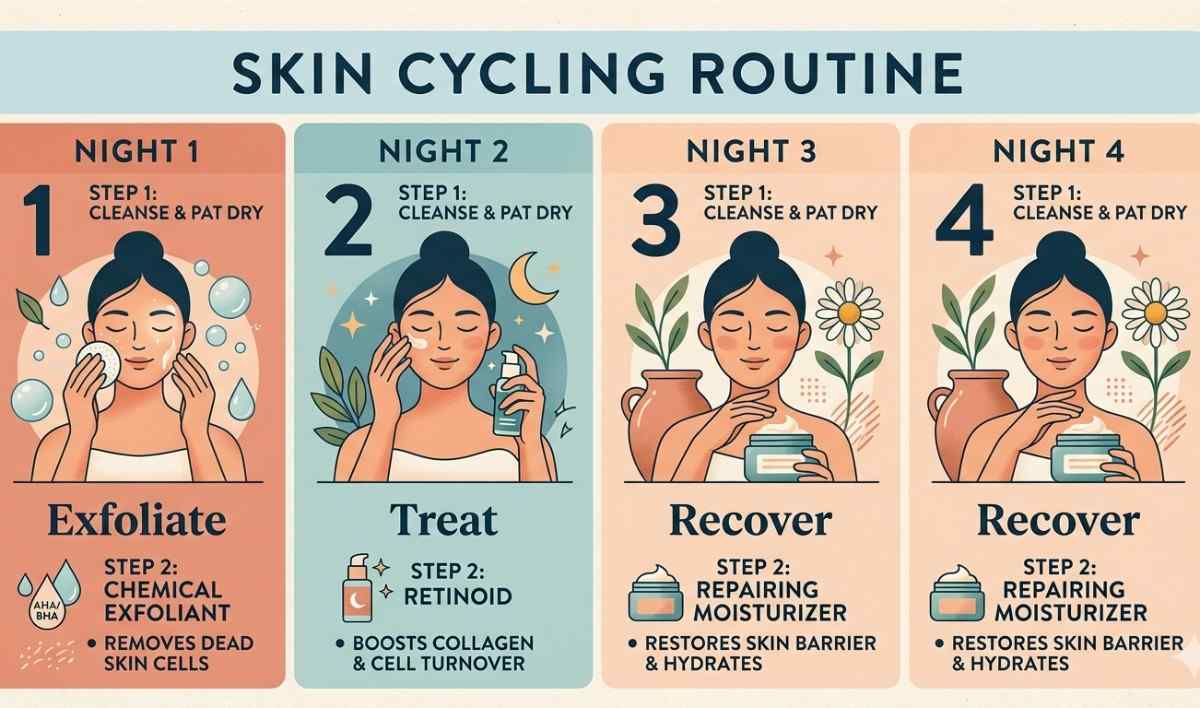
Skin Cycling is a structured nighttime skincare routine that rotates active ingredients over a multi-day cycle. Instead of using exfoliants, retinoids, and treatment products every night, you apply them on designated days followed by recovery days.
The traditional Skin Cycling schedule follows a 4-night cycle:
- Night 1: Exfoliation
- Night 2: Retinoid
- Night 3: Recovery
- Night 4: Recovery
Then the cycle repeats.
The core philosophy behind Skin Cycling is simple: stimulate, treat, recover, repeat.
This method helps prevent irritation, dryness, and skin barrier damage that often occurs when powerful actives are used too frequently.
Why Skin Cycling Works
Modern skincare is filled with potent ingredients such as:
- Alpha Hydroxy Acids (AHAs)
- Beta Hydroxy Acids (BHAs)
- Retinol and retinoids
- Vitamin C
- Peptides
- Niacinamide
While these ingredients are highly effective, overusing them can lead to:
- Redness
- Peeling
- Increased sensitivity
- Breakouts
- Compromised skin barrier
Skin Cycling works because it:
- Allows skin time to recover
- Reduces inflammation
- Prevents over-exfoliation
- Strengthens the moisture barrier
- Improves tolerance to retinoids
The recovery days are just as important as the treatment days.
The Science Behind Skin Cycling
Your skin barrier, also known as the stratum corneum, protects against environmental stressors and prevents water loss. When this barrier becomes damaged due to excessive exfoliation or retinoid use, it can trigger irritation and inflammation.
Scientific principles that support Skin Cycling include:
- Skin cell turnover takes approximately 28 days in adults.
- Retinoids increase cell turnover and collagen production.
- Chemical exfoliants dissolve dead skin cells.
- The skin requires time to repair after active treatments.
By spacing out active ingredients, Skin Cycling aligns with your skin’s natural regeneration process.
The Standard 4-Night Skin Cycling Routine
Below is a structured breakdown of how a traditional Skin Cycling routine works.
Skin Cycling Schedule
| Night | Focus | Key Ingredients | Purpose | Suitable For |
|---|---|---|---|---|
| Night 1 | Exfoliation | AHA, BHA, PHA | Remove dead skin cells, unclog pores | Dull, congested skin |
| Night 2 | Retinoid | Retinol, retinal, adapalene | Boost collagen, improve texture | Aging, acne-prone skin |
| Night 3 | Recovery | Ceramides, hyaluronic acid | Repair barrier, hydrate | All skin types |
| Night 4 | Recovery | Peptides, niacinamide | Soothe, strengthen | Sensitive, dry skin |
Repeat the cycle after Night 4.
Step-by-Step Skin Cycling Routine
Night 1: Exfoliation Night
Goal: Remove dead skin cells and prep skin for retinoid.
Steps:
- Gentle cleanser
- Chemical exfoliant (AHA or BHA)
- Moisturizer
- Optional hydrating serum
Avoid:
- Physical scrubs
- Using retinol on the same night
- Strong acids if you are a beginner
Tip: Start with low concentrations such as 5–7% glycolic acid or 1–2% salicylic acid.
Night 2: Retinoid Night
Goal: Stimulate collagen and improve skin texture.
Steps:
- Cleanser
- Dry skin completely
- Apply pea-sized amount of retinol
- Moisturizer
Optional: Use the “sandwich method” (moisturizer before and after retinol) if you are sensitive.
Benefits of retinoids:
- Reduce fine lines
- Treat acne
- Improve hyperpigmentation
- Boost skin firmness
Night 3 and 4: Recovery Nights
Goal: Repair and hydrate.
Focus on:
- Ceramides
- Hyaluronic acid
- Peptides
- Panthenol
- Niacinamide
Avoid:
- Exfoliating acids
- Retinol
- Harsh treatments
These nights help rebuild your skin barrier and reduce inflammation.
Benefits of Skin Cycling
1. Reduces Irritation
Spacing out actives minimizes redness and peeling.
2. Improves Retinol Tolerance
Gradual exposure helps skin adjust.
3. Strengthens Skin Barrier
Recovery days allow lipid layers to repair.
4. Prevents Over-Exfoliation
Protects against micro-tears and inflammation.
5. Simplifies Skincare Routine
No more guessing what to use each night.
6. Suitable for Beginners
Ideal for those new to retinoids.
Skin Cycling for Different Skin Types
Oily and Acne-Prone Skin
- Use BHA on exfoliation night.
- Consider adapalene as retinoid.
- You may shorten recovery to one night once skin builds tolerance.
Dry Skin
- Choose PHA instead of AHA.
- Use richer moisturizers.
- Maintain two recovery nights.
Sensitive Skin
- Extend cycle to 5 nights.
- Lower retinol strength.
- Avoid strong exfoliants.
Mature Skin
- Focus on retinoids and peptides.
- Maintain hydration during recovery.
Common Skin Cycling Mistakes
- Using high-strength acids immediately
- Applying too much retinol
- Skipping sunscreen during the day
- Ignoring recovery nights
- Mixing too many actives
Remember: Skin Cycling is about balance.
How Long Does Skin Cycling Take to Show Results?
- Improved glow: 1–2 weeks
- Reduced breakouts: 3–4 weeks
- Texture improvement: 4–6 weeks
- Fine line reduction: 8–12 weeks
Consistency is key.
Morning Routine During Skin Cycling
Your morning routine should stay simple:
- Gentle cleanser
- Vitamin C (optional)
- Moisturizer
- Broad-spectrum SPF 30 or higher
Sunscreen is non-negotiable, especially when using exfoliants and retinoids.
Who Should Avoid Skin Cycling?
- Pregnant individuals (avoid retinoids)
- People with active eczema or rosacea flare-ups
- Those undergoing certain dermatological treatments
Always consult a dermatologist if unsure.
Can You Customize Skin Cycling?
Yes. Here are advanced variations:
3-Night Cycle (Experienced Users)
- Exfoliate
- Retinoid
- Recovery
5-Night Cycle (Sensitive Skin)
- Exfoliate
- Recovery
- Retinoid
- Recovery
- Recovery
Customization depends on skin tolerance.
Ingredients That Work Well in Skin Cycling
Best Exfoliants
- Glycolic acid
- Lactic acid
- Salicylic acid
- Mandelic acid
Best Retinoids
- Retinol
- Retinaldehyde
- Adapalene
Best Recovery Ingredients
- Ceramides
- Cholesterol
- Fatty acids
- Niacinamide
- Peptides
Skin Cycling vs Traditional Skincare
| Feature | Skin Cycling | Traditional Routine |
|---|---|---|
| Active usage | Rotated | Often daily |
| Risk of irritation | Lower | Higher |
| Barrier repair | Built-in recovery | Often neglected |
| Simplicity | Structured | Can be confusing |
Skin Cycling offers a more controlled, science-aligned approach.
Signs Your Skin Cycling Routine Is Working
- Fewer breakouts
- Brighter complexion
- Smoother texture
- Reduced redness
- Improved product absorption
Signs You Need to Adjust
- Persistent peeling
- Burning sensation
- Increased sensitivity
- Sudden breakouts
In such cases, extend recovery days.
Dermatologist Tips for Success
- Always patch test new products
- Start slow
- Avoid mixing actives
- Wear sunscreen daily
- Be patient
Final Thoughts: Is Skin Cycling Worth It?
Skin Cycling is not just a trend—it’s a strategic skincare method grounded in dermatological science. By alternating exfoliation, retinoids, and recovery, you give your skin exactly what it needs: stimulation followed by restoration.
If you struggle with irritation, inconsistent routines, or confusion about active ingredients, Skin Cycling provides structure and simplicity. It promotes long-term skin health rather than short-term results. When done correctly, Skin Cycling can transform your skin—making it smoother, clearer, stronger, and more radiant.
FAQ’s
Can beginners try Skin Cycling?
Yes, Skin Cycling is especially suitable for beginners because it reduces the risk of irritation from overusing active ingredients.
Is Skin Cycling good for acne-prone skin?
Yes, especially when using a salicylic acid exfoliant and a retinoid like adapalene, as it helps unclog pores and reduce breakouts while preventing over-drying.
Can I use retinol every night during Skin Cycling?
No, the method is designed to use retinol only on designated nights to minimize irritation and allow recovery time.
Do I need two recovery nights?
Most skin types benefit from two recovery nights, but experienced users may reduce to one recovery night if their skin tolerates actives well.
What products should I use on recovery nights?
Focus on hydrating and barrier-repair ingredients such as ceramides, hyaluronic acid, peptides, niacinamide, and panthenol.
Can I use Vitamin C while doing Skin Cycling?
Yes, Vitamin C is typically used in the morning routine and does not interfere with the nighttime Skin Cycling schedule.
Should I wear sunscreen during Skin Cycling?
Yes, daily sunscreen with SPF 30 or higher is essential because exfoliants and retinoids increase sun sensitivity.
Is Skin Cycling safe for sensitive skin?
Yes, but sensitive skin types may need to extend the cycle to five nights and use lower-strength exfoliants and retinoids.
Can I use face masks during Skin Cycling?
Hydrating masks are best used on recovery nights, while exfoliating masks should not be used in addition to exfoliation night.
Can Skin Cycling help with anti-aging?
Yes, retinoids stimulate collagen production, helping reduce fine lines, improve texture, and enhance overall skin firmness.
What happens if my skin becomes irritated?
If irritation occurs, stop active ingredients temporarily and increase recovery nights until your skin barrier stabilizes.
Can men follow Skin Cycling?
Yes, Skin Cycling is suitable for all genders and works effectively regardless of skin type.
Is Skin Cycling suitable during pregnancy?
Retinoids should be avoided during pregnancy, so consult a healthcare professional before starting Skin Cycling.
Can I combine Skin Cycling with other treatments?
It depends on the treatment. If you are undergoing professional procedures like chemical peels or laser treatments, consult a dermatologist first.
Do I need expensive products for Skin Cycling?
No, Skin Cycling is about ingredient rotation and consistency, not product price. Effective routines can be built with affordable skincare products.
Also Read: