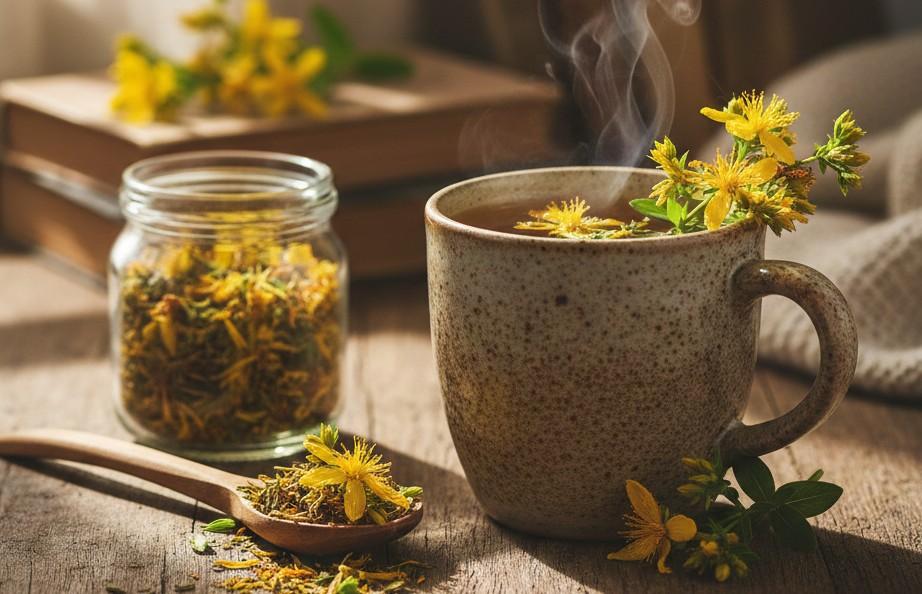
Herbal teas have been used for centuries to support mental and physical well-being. Among the most talked-about medicinal herbs is Hypericum perforatum, commonly known as St. John’s Wort. While capsules and tinctures are widely available, St. John’s Wort tea offers a more traditional and gentle way to experience its potential benefits. This guide explores everything you need to know about St. John’s Wort tea — from its proven health benefits to side effects, dosage, and safety precautions.
What Is St. John’s Wort Tea?
St. John’s Wort tea is an herbal infusion made from the dried flowers, leaves, and sometimes stems of the St. John’s Wort plant (Hypericum perforatum). The plant is native to Europe but now grows in many parts of the world.
Historically, it has been used in traditional European herbal medicine to support emotional balance, wound healing, and nerve health. The tea form is milder than concentrated extracts and is often consumed for:
- Mood support
- Mild depression
- Stress relief
- Nervous tension
- Sleep support
The active compounds responsible for its effects include hypericin, hyperforin, and flavonoids, which are believed to influence neurotransmitters like serotonin, dopamine, and norepinephrine.
Components of St. John’s Wort Tea
St. John’s Wort tea is very low in calories and contains small amounts of plant-based compounds rather than traditional macronutrients. Below is an approximate nutritional profile per 1 cup (240 ml) of brewed tea:
| Nutrient / Compound | Approximate Amount |
|---|---|
| Calories | 2–5 kcal |
| Carbohydrates | <1 g |
| Protein | 0 g |
| Fat | 0 g |
| Fiber | 0 g |
| Vitamin C | Trace amounts |
| Flavonoids | Present |
| Hypericin | Small amounts |
| Hyperforin | Small amounts |
| Tannins | Present |
| Essential oils | Trace |
The real value of this tea lies in its bioactive compounds rather than calories or vitamins.
20 Science-Backed Benefits of St. John’s Wort Tea
- Supports Mild Depression – St. John’s Wort tea may help reduce symptoms of mild to moderate depression by influencing serotonin levels.
- Enhances Mood Stability – It may promote balanced emotional health by regulating neurotransmitters linked to mood.
- Reduces Anxiety – The tea may help calm nervous tension and ease mild anxiety symptoms.
- Improves Sleep Quality – It may support better sleep when insomnia is related to stress or low mood.
- Eases PMS Symptoms – St. John’s Wort tea may help reduce mood swings and irritability associated with premenstrual syndrome.
- Supports Menopausal Mood Changes – It may help manage emotional fluctuations during menopause.
- Helps with Seasonal Mood Changes – The herb may assist in reducing symptoms linked to seasonal affective patterns.
- Provides Antioxidant Protection – It contains plant compounds that help protect cells from oxidative stress.
- Reduces Inflammation – Its flavonoids may contribute to mild anti-inflammatory effects in the body.
- Supports Nervous System Health – It may help calm and nourish the nervous system.
- May Relieve Nerve Pain – Some evidence suggests it may reduce mild nerve-related discomfort.
- Boosts Emotional Resilience – Regular consumption may help the body adapt to emotional stress.
- Improves Mental Clarity – Balanced neurotransmitters may enhance focus and cognitive function.
- May Reduce Fatigue – By supporting mood balance, it may indirectly decrease mental fatigue.
- Supports Digestive Comfort – It may soothe stress-related digestive discomfort.
- Promotes Relaxation – The tea may encourage calmness without causing heavy sedation.
- May Help Mild OCD Symptoms – Preliminary studies suggest potential support for mild obsessive-compulsive tendencies.
- Supports Immune Function – Certain plant compounds may stimulate immune activity.
- Enhances Overall Well-Being – Consistent use may contribute to improved emotional wellness.
- Offers Natural Mood Support – As a traditional herbal remedy, it provides plant-based emotional support.
10 Side Effects of St. John’s Wort Tea
Though natural, St. John’s Wort can cause side effects, especially when combined with medications.
- Increases Sun Sensitivity – It may cause photosensitivity, making skin more prone to sunburn.
- Causes Digestive Upset – Some individuals may experience nausea or stomach discomfort.
- Leads to Dry Mouth – Mild dryness in the mouth can occur after consumption.
- May Cause Dizziness – Occasional lightheadedness may develop, especially when starting use.
- Triggers Headaches – Some users report mild headaches.
- Can Cause Fatigue – It may lead to unusual tiredness in certain individuals.
- May Cause Restlessness – High intake may result in agitation or nervousness.
- May Trigger Allergic Reactions – Rare skin irritation or allergic responses may occur.
- Increases Risk of Serotonin Syndrome – When combined with antidepressants, it may dangerously elevate serotonin levels.
- Interacts with Medications – It can reduce the effectiveness of birth control pills, blood thinners, and other medications.
How to Make St. John’s Wort Tea?
Ingredients:
- 1–2 teaspoons dried St. John’s Wort flowers
- 1 cup hot water
Instructions:
- Bring water to a boil and let it cool slightly.
- Place dried herb in a cup.
- Pour hot water over the herb.
- Cover and steep for 10–15 minutes.
- Strain and drink warm.
Optional: Add honey or lemon for taste.
Other Uses of St. John’s Wort Tea
Beyond drinking, St. John’s Wort tea can be used:
- As a skin rinse for minor wounds
- As a compress for muscle soreness
- As a hair rinse for scalp health
- In sitz baths for soothing irritation
Traditionally, it has also been infused in oil for topical applications.
How Much St. John’s Wort Tea Can You Drink a Day?
For general wellness:
- 1–3 cups per day is commonly recommended.
However, since the tea contains active compounds that affect neurotransmitters, it should not be consumed in large amounts or for prolonged periods without medical guidance.
Most studies on depression use standardized extracts rather than tea, so dosage in tea form is milder and less predictable.
Tips for Consuming St. John’s Wort Tea
- Start with 1 cup daily to assess tolerance.
- Avoid combining with antidepressants or SSRIs.
- Drink consistently for 2–4 weeks for noticeable effects.
- Store dried herb in an airtight container away from sunlight.
- Consult a healthcare provider if taking medications.
Best Time to Drink St. John’s Wort Tea
The best time depends on your goal:
- Morning: For mood support and mental clarity.
- Afternoon: For stress relief.
- Evening: For sleep support, if it does not cause alertness.
Avoid drinking large amounts late at night if it affects sleep patterns.
Who Should Drink St. John’s Wort Tea?
St. John’s Wort tea may benefit:
- Adults with mild depression
- Individuals experiencing mild anxiety
- People with PMS-related mood changes
- Those seeking natural mood support
- Individuals under professional guidance for emotional wellness
Who Should Not Drink St. John’s Wort Tea?
Avoid or consult a doctor if you:
- Take antidepressants
- Use birth control pills
- Take blood thinners
- Have bipolar disorder
- Are pregnant or breastfeeding
- Take anti-HIV medications
- Take chemotherapy drugs
Precautions and Interactions
St. John’s Wort is known for interacting with many medications because it affects liver enzymes responsible for drug metabolism.
It may reduce the effectiveness of:
- Oral contraceptives
- Antidepressants
- Anti-anxiety medications
- Heart medications
- Blood thinners
- Immunosuppressants
Serotonin syndrome is a serious risk when combined with other serotonin-enhancing drugs. Long-term use without supervision is not recommended.
Final Thoughts
St. John’s Wort tea, made from Hypericum perforatum, is a powerful traditional herbal remedy primarily used for mood support and mild depression. It contains bioactive compounds that influence neurotransmitters and may offer numerous benefits ranging from emotional balance to anti-inflammatory effects. However, despite being natural, it is not risk-free. Its strong interaction potential with medications makes medical consultation essential before regular use.
FAQ’s
Is St. John’s Wort Tea safe for children?
St. John’s Wort tea is generally not recommended for children unless prescribed or supervised by a qualified healthcare professional, as it can affect brain chemistry and interact with medications.
Does St. John’s Wort tea make you sleepy?
St. John’s Wort tea does not act as a strong sedative, but it may promote relaxation and improve sleep quality in people whose insomnia is linked to stress or mild depression.
What is the spiritual benefit of St. John’s Wort tea?
Traditionally, St. John’s Wort has been associated with emotional cleansing, protection, and uplifting energy in folk and spiritual practices, symbolizing light, positivity, and inner strength.
What is St. John’s Wort tea made from?
St. John’s Wort tea is made from the dried flowers, leaves, and sometimes stems of the plant Hypericum perforatum.
What is St. John’s Wort tea good for?
It is commonly used for mild to moderate depression, anxiety, mood swings, stress relief, and sleep support.
How long does St. John’s Wort tea take to work?
Most people may begin noticing mood improvements after 2 to 4 weeks of consistent use, though results vary.
Is St. John’s Wort tea as effective as supplements?
Tea is generally milder than standardized extracts or capsules, which contain more concentrated amounts of active compounds like hypericin and hyperforin.
Can I drink St. John’s Wort tea every day?
Yes, many people drink 1–3 cups daily, but long-term use should be monitored by a healthcare professional due to potential drug interactions.
Does St. John’s Wort tea help with anxiety?
It may help reduce mild anxiety and nervous tension by supporting serotonin balance in the brain.
Is St. John’s Wort tea safe during pregnancy?
No, it is not recommended during pregnancy or breastfeeding unless specifically advised by a healthcare provider.
What does St. John’s Wort tea taste like?
It has a slightly bitter, earthy, and mildly floral flavor, which can be softened by adding honey or lemon.
Is St. John’s Wort tea safe for long-term use?
Long-term use should be supervised by a healthcare provider due to its impact on neurotransmitters and liver enzymes.
Can teenagers drink St. John’s Wort tea?
It is not generally recommended for children or teenagers without medical supervision.
Does St. John’s Wort tea increase serotonin?
Yes, it may influence serotonin levels by affecting how the brain processes certain neurotransmitters.
Can St. John’s Wort tea help with PMS?
Some evidence suggests it may reduce mood-related symptoms of premenstrual syndrome.
Can I combine St. John’s Wort tea with other herbal teas?
It is best to avoid combining it with other mood-altering herbs without professional guidance.
Does St. John’s Wort tea work for severe depression?
It is generally used for mild to moderate depression; severe depression requires medical treatment and professional care.
How should I store St. John’s Wort for tea?
Store dried St. John’s Wort in an airtight container in a cool, dark place to preserve its potency.
Can St. John’s Wort tea cause weight gain?
Weight changes are not commonly reported, but mood improvements may indirectly affect appetite.
Should I stop drinking it suddenly?
If used regularly for mood support, consult a healthcare provider before discontinuing, especially if you are also taking other medications.
Also Read: