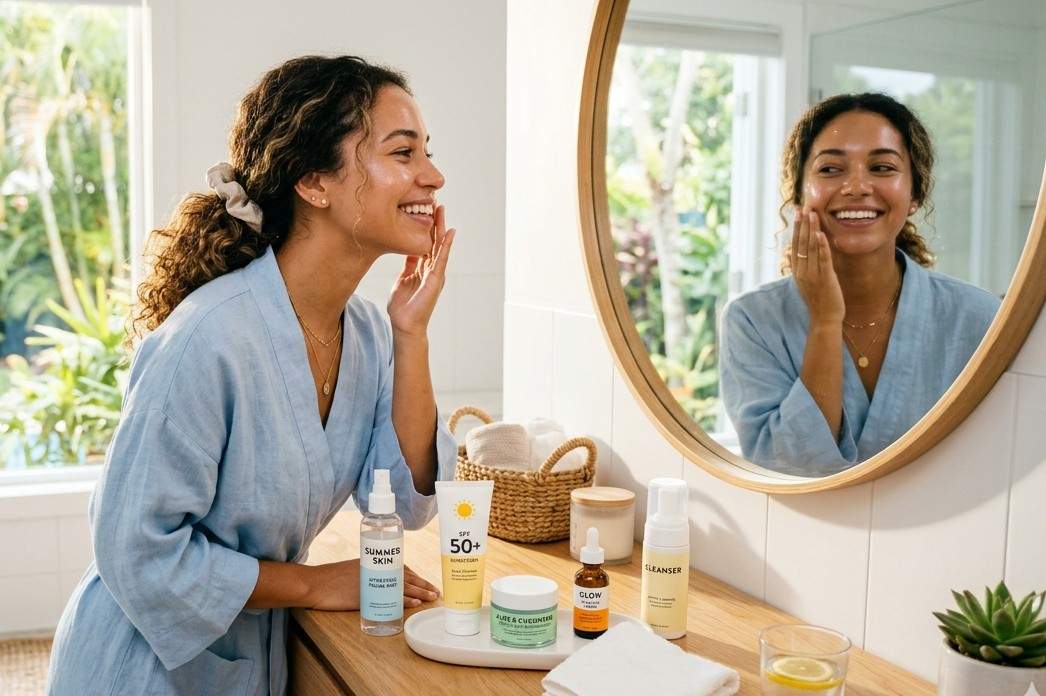
Summer brings sunshine, beach days, vacations, and outdoor fun. But along with it comes intense heat, humidity, sweat, excess oil production, sunburn, clogged pores, tanning, and breakouts. Your winter skincare routine will not work the same way in summer. The season demands a lighter, protective, and more breathable approach to keep your skin balanced and radiant.
In this guide, you will learn everything about building an effective summer skincare routine — from understanding how heat affects your skin to choosing the right products for different skin types. Whether you have oily, dry, sensitive, combination, or acne-prone skin, this guide will help you protect your skin and maintain a healthy glow throughout the season.
Why Your Skin Needs a Different Routine in Summer
Summer affects the skin in several ways:
- Increased oil production due to heat
- Excess sweating leading to clogged pores
- Higher risk of sunburn and UV damage
- Dehydration caused by sun exposure and air conditioning
- Increased pigmentation and tanning
- More frequent breakouts
The skin’s barrier can become compromised if not cared for properly. Excess sebum mixed with sweat and sunscreen can clog pores, while UV rays can cause premature aging, hyperpigmentation, and even skin cancer.
A proper summer skincare routine focuses on three key goals:
- Protection from sun damage
- Hydration without heaviness
- Oil and sweat control
Dermatologist-Approved Summer Skincare Routine
1. Gentle Cleansing (Morning and Night)
Cleansing is the foundation of summer skincare. During hot weather, your skin collects more oil, dirt, sweat, and sunscreen residue.
How to Choose the Right Cleanser
- Oily skin: Gel-based or foaming cleanser
- Dry skin: Hydrating, cream-based cleanser
- Sensitive skin: Fragrance-free, mild cleanser
- Acne-prone skin: Salicylic acid-based cleanser
Tips
- Wash your face twice daily
- Avoid over-cleansing as it can strip natural oils
- Use lukewarm water, not hot water
If you sweat excessively, you may rinse your face with water mid-day, but avoid using harsh cleansers repeatedly.
2. Toning for Balance
Toners help remove leftover impurities and balance the skin’s pH level.
Look for Ingredients Like:
- Witch hazel for oil control
- Rose water for soothing
- Niacinamide for pore tightening
- Green tea for calming inflammation
Avoid alcohol-heavy toners, as they can dehydrate your skin and trigger more oil production.
3. Lightweight Serum for Targeted Care
Summer is not the time for heavy creams, but serums are still essential.
Best Summer Serums
- Vitamin C for brightening and sun damage protection
- Hyaluronic acid for hydration
- Niacinamide for oil control and pore refinement
- Alpha arbutin for pigmentation
Use serum after toner and before moisturizer.
4. Moisturizer: Yes, Even in Summer
Many people skip moisturizer in summer, especially those with oily skin. This is a mistake. Skipping moisturizer can cause dehydration, which may trigger even more oil production.
Choose:
- Gel-based moisturizer for oily skin
- Water-based lotion for combination skin
- Lightweight cream for dry skin
Look for non-comedogenic formulas that won’t clog pores.
5. Sunscreen: The Most Important Step
If you do only one thing for your skin in summer, make it sunscreen.
UV rays cause:
- Sunburn
- Premature aging
- Hyperpigmentation
- Fine lines and wrinkles
- Increased risk of skin cancer
How to Choose Sunscreen
- SPF 30 or higher
- Broad-spectrum protection (UVA + UVB)
- Water-resistant formula
- Gel-based or matte finish for oily skin
Application Tips
- Apply 15–20 minutes before sun exposure
- Use two fingers’ length for face and neck
- Reapply every 2–3 hours outdoors
- Don’t forget ears, neck, hands, and feet
Even on cloudy days, sunscreen is necessary.
Weekly Summer Skincare Additions
1. Exfoliation (1–2 Times Per Week)
Exfoliating removes dead skin cells, prevents clogged pores, and improves skin texture.
Choose:
- Chemical exfoliants (AHA for dry skin, BHA for oily/acne-prone skin)
- Gentle physical scrubs (avoid harsh particles)
Do not over-exfoliate. It can damage your skin barrier and increase sensitivity to sunlight.
2. Face Masks for Extra Care
Face masks can refresh and detoxify your skin.
Summer-Friendly Masks:
- Clay mask for oily skin
- Aloe vera mask for sun-soothing
- Cucumber mask for hydration
- Charcoal mask for deep cleansing
Use once or twice weekly.
Morning Summer Skincare Routine
- Cleanser
- Toner
- Vitamin C serum
- Lightweight moisturizer
- Sunscreen
Optional: Lip balm with SPF
Night Summer Skincare Routine
- Double cleanse (especially if wearing sunscreen or makeup)
- Toner
- Treatment serum (niacinamide, retinol, or hydrating serum)
- Lightweight moisturizer
Night is the best time for repair and hydration.
Summer Skincare Routine for Different Skin Types
Oily Skin
- Use gel cleanser
- Apply oil-free moisturizer
- Use mattifying sunscreen
- Include salicylic acid products
- Blot excess oil instead of washing repeatedly
Dry Skin
- Use hydrating cleanser
- Apply hyaluronic acid serum
- Choose cream-based moisturizer
- Avoid over-exfoliation
- Drink plenty of water
Combination Skin
- Use balanced gel cleanser
- Apply lightweight lotion
- Spot-treat oily areas
- Use clay mask only on T-zone
Sensitive Skin
- Avoid fragrance
- Use mineral sunscreen
- Keep routine simple
- Patch-test new products
Acne-Prone Skin
- Use salicylic acid cleanser
- Avoid heavy oils
- Use non-comedogenic sunscreen
- Don’t skip moisturizer
Body Skincare in Summer
Facial care is important, but body care matters too.
1. Body Cleansing
Use mild body wash. If you sweat heavily, choose antibacterial formulas.
2. Body Exfoliation
Exfoliate once weekly to prevent ingrown hair and dullness.
3. Body Sunscreen
Apply sunscreen to exposed areas like arms, legs, neck, and feet.
4. After-Sun Care
Use aloe vera gel or soothing lotion after sun exposure.
Common Summer Skin Problems and Solutions
1. Sunburn
- Apply aloe vera gel
- Use cold compress
- Avoid further sun exposure
- Drink water
2. Heat Rash
- Keep skin dry
- Wear loose cotton clothes
- Avoid heavy creams
3. Excess Tanning
- Use Vitamin C serum
- Apply sunscreen regularly
- Use mild exfoliation
4. Breakouts
- Cleanse regularly
- Avoid touching face
- Use oil-free products
Diet and Hydration for Summer Skin
Healthy skin starts from within.
Eat
- Watermelon
- Cucumber
- Citrus fruits
- Coconut water
- Leafy greens
Avoid Excess
- Fried foods
- Sugary drinks
- Excess caffeine
Drink at least 2–3 liters of water daily.
Summer Skincare Mistakes to Avoid
- Skipping sunscreen
- Over-exfoliating
- Using heavy winter creams
- Not reapplying sunscreen
- Using expired sunscreen
- Ignoring lip and eye protection
- Washing face too often
Natural Remedies for Summer Skincare
Aloe Vera
Soothes sunburn and irritation.
Cucumber Juice
Hydrates and cools the skin.
Rose Water
Refreshes and tones skin.
Yogurt and Turmeric Mask
Brightens and calms skin.
Always patch-test natural remedies before full application.
Travel Summer Skincare Tips
- Carry travel-size sunscreen
- Use micellar water
- Avoid hotel soap on face
- Keep facial mist for refreshment
- Stay hydrated during flights
Minimalist Summer Skincare Routine
If you prefer simple routines:
Morning:
Cleanser + Moisturizer + Sunscreen
Night:
Cleanser + Treatment Serum + Moisturizer
Consistency matters more than complexity.
Signs Your Summer Skincare Routine Is Working
- Balanced oil production
- Fewer breakouts
- Even skin tone
- Reduced tanning
- Skin feels hydrated but not greasy
FAQ’s
How often should I wash my face in summer?
Twice daily is enough. Overwashing can increase oil production and irritate the skin.
Can I skip moisturizer if my skin is oily?
No. Skipping moisturizer can cause dehydration and make your skin produce more oil.
Is SPF 30 enough for summer?
Yes, SPF 30 is sufficient for daily use if applied properly and reapplied every 2–3 hours.
Should I use sunscreen indoors?
Yes, especially if you sit near windows or use screens for long hours.
Can I use retinol in summer?
Yes, but only at night and always wear sunscreen during the day.
How can I prevent tanning in summer?
Use sunscreen regularly, wear protective clothing, and avoid peak sun hours between 10 AM and 4 PM.
What is the best ingredient for summer glow?
Vitamin C is excellent for brightening and protecting against sun damage.
How do I control sweating on my face?
Use blotting papers, lightweight products, and avoid heavy creams.
How often should I apply sunscreen in summer?
Sunscreen should be reapplied every 2–3 hours when outdoors. If swimming or sweating heavily, reapply immediately after drying your skin.
Is gel moisturizer better for summer?
Yes, gel-based moisturizers are lightweight, absorb quickly, and are ideal for oily and combination skin in hot weather.
How can I prevent breakouts in summer?
Cleanse twice daily, avoid heavy creams, use oil-free sunscreen, and exfoliate 1–2 times per week to prevent clogged pores.
Should I exfoliate more in summer?
Exfoliate only 1–2 times weekly. Over-exfoliating can damage the skin barrier and increase sun sensitivity.
Can I use Vitamin C serum in summer?
Yes, Vitamin C helps brighten skin and provides antioxidant protection against sun damage. Always apply sunscreen afterward.
What causes oily skin in summer?
Heat and humidity stimulate sebaceous glands to produce more oil, leading to greasy skin and clogged pores.
How can I soothe sunburned skin?
Apply aloe vera gel, use cool compresses, stay hydrated, and avoid further sun exposure until your skin heals.
How much water should I drink for healthy summer skin?
Aim for at least 2–3 liters of water daily to keep your skin hydrated and maintain elasticity.
What ingredients should I avoid in summer?
Avoid heavy oils, thick creams, and high-alcohol products that can clog pores or dehydrate the skin.
Also Read: