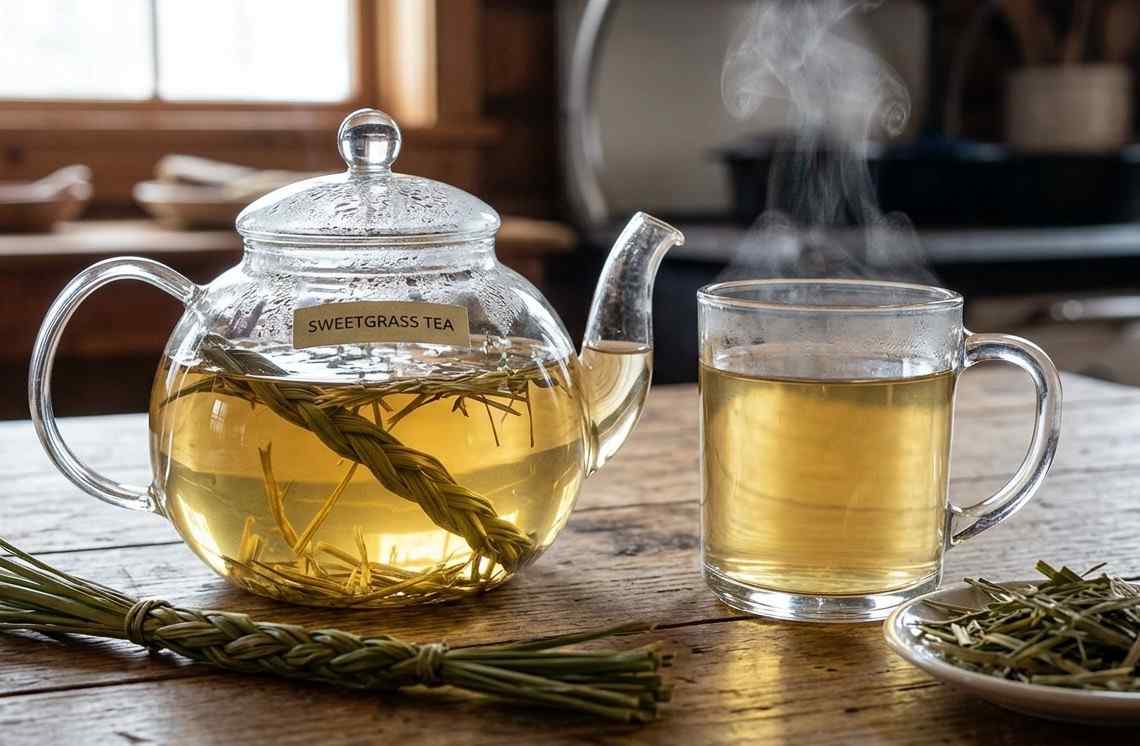
Sweetgrass Tea is a traditional herbal infusion made from the dried leaves of sweetgrass, a fragrant plant known for its vanilla-like aroma and ceremonial significance in Indigenous cultures of North America and parts of Europe. Revered for centuries for spiritual purification and healing, sweetgrass is now gaining attention as a calming herbal tea with potential wellness benefits. This guide explores everything you need to know about Sweetgrass Tea — from its nutritional profile and proven health benefits to preparation methods, side effects, dosage, and safety precautions.
What is Sweetgrass Tea?
Sweetgrass Tea is an herbal beverage prepared by steeping dried sweetgrass leaves (commonly from Hierochloe odorata) in hot water. Sweetgrass is often called “holy grass” and has long been used in traditional medicine and spiritual ceremonies, particularly by Native American tribes.
The plant contains coumarin, a naturally occurring aromatic compound responsible for its sweet scent. Sweetgrass Tea is caffeine-free and typically consumed for relaxation, digestive support, and spiritual grounding. Its flavor is mild, slightly sweet, earthy, and reminiscent of fresh hay or vanilla. Unlike green or black tea, Sweetgrass Tea is not derived from the Camellia sinensis plant, making it a true herbal infusion.
Components of Sweetgrass Tea
Sweetgrass Tea is low in calories and consumed primarily for its phytochemical content rather than macronutrients.
| Nutrient | Amount per 1 Cup (240 ml) | Notes |
|---|---|---|
| Calories | 0–2 kcal | Negligible |
| Carbohydrates | 0 g | Minimal |
| Protein | 0 g | None |
| Fat | 0 g | None |
| Fiber | 0 g | None |
| Caffeine | 0 mg | Naturally caffeine-free |
| Coumarin | Trace amounts | Aromatic compound |
| Flavonoids | Small amounts | Antioxidant properties |
| Volatile oils | Present | Contribute to aroma and potential benefits |
| Micronutrients | Trace levels | Varies by soil and harvest |
Note: Exact nutritional values vary depending on plant source, harvest time, and preparation method.
20 Science-Backed Benefits of Sweetgrass Tea
- Supports Relaxation and Reduces Stress: The natural coumarin compounds in sweetgrass may help promote calming effects on the nervous system and reduce stress levels.
- Promotes Better Sleep Quality: Sweetgrass Tea may support restful sleep due to its mild sedative properties.
- Contains Antioxidant Compounds: Flavonoids and plant polyphenols in sweetgrass may help combat oxidative stress.
- May Support Digestive Health: Traditional use suggests sweetgrass may help relieve bloating and mild digestive discomfort.
- Mild Anti-Inflammatory Properties: Plant phytochemicals may help reduce minor inflammatory responses.
- Supports Respiratory Comfort: Historically, sweetgrass has been used to soothe mild respiratory irritation.
- May Help Relieve Headaches: Traditional herbal practices suggest it may ease tension-related headaches.
- Promotes Emotional Balance: Aromatic compounds may support mood regulation and emotional calmness.
- May Support Immune Function: Antioxidant properties may contribute to overall immune support.
- Supports Spiritual Well-Being: Sweetgrass has been used ceremonially to promote mental clarity and grounding.
- Mild Antimicrobial Potential: Some plant compounds show antimicrobial properties in laboratory studies.
- May Aid Mild Muscle Relaxation: Sweetgrass Tea may help reduce muscle tension due to calming effects.
- Supports Cardiovascular Health: Antioxidant compounds may help protect blood vessels from oxidative damage.
- May Help Reduce Anxiety Symptoms: Herbal infusions with calming phytochemicals may ease mild anxiety.
- Supports Detoxification Pathways: Herbal teas can encourage hydration, which supports natural detox processes.
- May Improve Circulation: Traditional medicine associates sweetgrass with circulation support.
- Supports Mental Clarity: Gentle relaxation may enhance focus and reduce mental fatigue.
- May Help with Mild Nausea: Herbal teas often help soothe minor stomach discomfort.
- Supports Hormonal Balance Indirectly: Stress reduction may positively influence hormonal equilibrium.
- Promotes Overall Wellness: As a caffeine-free herbal beverage, it supports hydration and relaxation without stimulation.
10 Side Effects of Sweetgrass Tea
While generally considered safe in moderate amounts, Sweetgrass Tea may cause side effects in certain individuals.
- May Cause Liver Toxicity in Excess: High amounts of coumarin may stress the liver if consumed excessively.
- Not Safe During Pregnancy: Coumarin compounds may pose risks during pregnancy.
- May Increase Bleeding Risk: Coumarin has blood-thinning properties that may interact with anticoagulants.
- Possible Allergic Reactions: Individuals sensitive to grasses may experience allergic symptoms.
- May Cause Headaches in Sensitive Individuals: Some people may react to aromatic compounds.
- Digestive Upset in High Doses: Excess consumption may cause nausea or stomach irritation.
- May Interact with Medications: Blood thinners and liver-metabolized drugs may interact with coumarin.
- Drowsiness: Its calming effects may cause mild sedation.
- Potential Skin Sensitivity: Handling fresh sweetgrass may cause contact irritation in rare cases.
- Unknown Long-Term Safety: Limited clinical research means long-term safety is not fully established.
How to Make Sweetgrass Tea?
Ingredients:
- 1–2 teaspoons dried sweetgrass (cut pieces)
- 1 cup hot water (not boiling, around 90–95°C)
- Optional: honey or lemon
Instructions:
- Place dried sweetgrass in a teapot or cup.
- Pour hot water over the herb.
- Cover and steep for 10–15 minutes.
- Strain the tea.
- Add honey or lemon if desired.
- Serve warm.
For a stronger infusion, steep slightly longer, but avoid boiling the grass directly to preserve delicate compounds.
Other Uses of Sweetgrass Tea
Sweetgrass is traditionally valued beyond its use as tea.
- Aromatherapy infusion for relaxation
- Spiritual cleansing rituals
- Natural air freshener
- Bath infusion for calming baths
- Ingredient in herbal blends
- Mild hair rinse infusion
- Natural insect repellent when burned
How Much Sweetgrass Tea Can You Drink a Day?
Because sweetgrass contains coumarin, moderation is important.
General recommendation:
- 1 cup per day for occasional use
- Up to 2 cups daily for short-term use
- Avoid long-term heavy consumption
Always consult a healthcare provider before daily use, especially if you have liver conditions or take medications.
Tips for Consuming Sweetgrass Tea
- Use organically sourced sweetgrass to avoid contaminants.
- Start with small amounts to assess tolerance.
- Avoid combining with alcohol.
- Do not exceed recommended intake.
- Store dried sweetgrass in an airtight container.
- Avoid boiling directly; steep gently instead.
- Consult a professional if using medicinally.
Best Time to Drink Sweetgrass Tea
- Evening: To promote relaxation and sleep.
- During meditation: To enhance calmness.
- After meals: For mild digestive support.
- Stressful days: For calming effects.
Avoid drinking before driving if you feel drowsy.
Who Should Drink Sweetgrass Tea?
- Individuals seeking caffeine-free relaxation
- Those looking for mild sleep support
- People interested in traditional herbal remedies
- Individuals practicing meditation or mindfulness
- Those wanting antioxidant-rich herbal infusions
Who Should Not Drink Sweetgrass Tea?
- Pregnant or breastfeeding women
- Individuals with liver disease
- People taking anticoagulant medications
- Those allergic to grasses
- Individuals with bleeding disorders
- Children without medical supervision
Precautions and Interactions
Sweetgrass Tea contains coumarin, which can interact with certain medications and health conditions.
Potential Interactions:
- Blood thinners (such as warfarin)
- Liver-metabolized medications
- Sedatives or sleep medications
- Anti-platelet drugs
Safety Precautions:
- Avoid long-term high-dose use.
- Discontinue if unusual symptoms appear.
- Monitor liver health if consuming regularly.
- Consult a healthcare provider before combining with medications.
Conclusion
Sweetgrass Tea is a fragrant, caffeine-free herbal infusion deeply rooted in traditional medicine and spiritual practices. With potential calming, antioxidant, and digestive-supporting properties, it offers a gentle way to promote relaxation and holistic wellness. However, due to its coumarin content, moderation is key. While it may offer benefits such as stress relief and sleep support, excessive intake can pose health risks, particularly to the liver and those on certain medications.
When consumed responsibly and sourced from quality suppliers, Sweetgrass Tea can be a soothing addition to a balanced lifestyle. If you are considering incorporating Sweetgrass Tea into your routine for therapeutic purposes, consult a healthcare professional to ensure it aligns with your health needs.
FAQ’s
How long does it take for Sweetgrass Tea to work?
It may promote relaxation within 15–30 minutes, depending on individual sensitivity.
What is Sweetgrass Tea good for?
It is commonly used for relaxation, stress relief, mild digestive support, and emotional balance.
What does Sweetgrass Tea taste like?
Sweetgrass Tea has a mild, naturally sweet, earthy flavor with subtle vanilla and fresh hay notes due to its natural coumarin content.
Is Sweetgrass Tea caffeine-free?
Yes, Sweetgrass Tea is completely caffeine-free, making it suitable for evening consumption and for people avoiding stimulants.
Is Sweetgrass Tea safe to drink daily?
It can be consumed occasionally in moderate amounts, but daily long-term use should be discussed with a healthcare provider because of its coumarin content.
Does Sweetgrass Tea help with sleep?
Sweetgrass Tea may promote relaxation and calmness, which can indirectly support better sleep quality.
Can Sweetgrass Tea support digestion?
Traditionally, Sweetgrass Tea has been used to ease mild bloating and digestive discomfort.
Is Sweetgrass Tea safe during pregnancy?
Sweetgrass Tea is generally not recommended during pregnancy due to the presence of coumarin compounds.
Does Sweetgrass Tea have antioxidants?
Yes, sweetgrass contains plant compounds such as flavonoids that may provide antioxidant effects.
Can children drink Sweetgrass Tea?
Children should only consume Sweetgrass Tea under medical supervision because safety research is limited.
Can Sweetgrass Tea affect the liver?
Excessive intake may place stress on the liver due to its natural coumarin content.
How long should Sweetgrass Tea be steeped?
Sweetgrass Tea should typically be steeped for 10 to 15 minutes in hot water that is not boiling.
Can Sweetgrass Tea help reduce anxiety?
Its calming aroma and mild sedative properties may help ease mild stress and anxiety symptoms.
Is Sweetgrass Tea good for detox?
While it does not directly detox the body, staying hydrated with herbal teas supports natural detoxification processes.
Can Sweetgrass Tea cause allergic reactions?
Individuals sensitive to grasses may experience allergic symptoms such as itching or mild irritation.
Does Sweetgrass Tea thin the blood?
Coumarin compounds may have mild blood-thinning effects, which can increase bleeding risk when combined with certain medications.
Can Sweetgrass Tea be combined with other herbs?
Yes, it can be blended with calming herbs such as chamomile or mint, but combinations should be used cautiously.
How should Sweetgrass Tea be stored?
Dried sweetgrass should be kept in an airtight container in a cool, dry place away from direct sunlight.
Is there strong scientific research on Sweetgrass Tea?
Scientific research on sweetgrass itself is limited, and many of its uses are based on traditional knowledge and preliminary studies on its plant compounds.
Also Read: