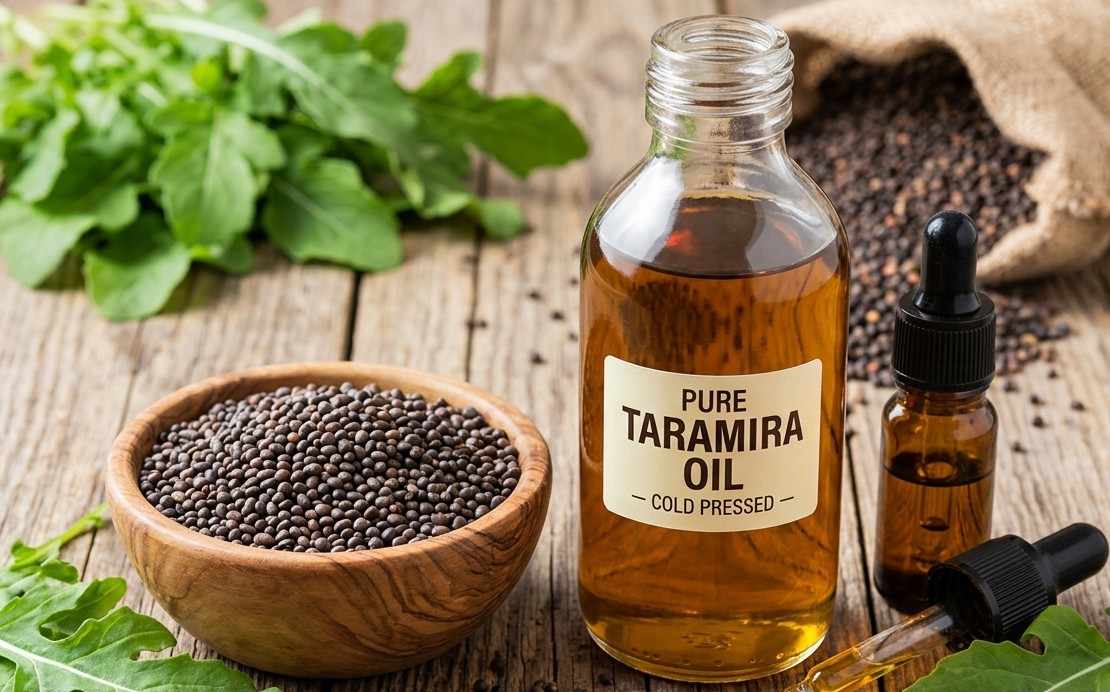
Taramira oil (Jamba oil or Arugula seed oil) is one of India’s lesser-known traditional oils, yet it has been used for generations in rural households for cooking, massage, and natural remedies. Extracted from the seeds of the taramira plant, this pungent oil is often compared to mustard oil due to its sharp aroma and warming nature.
In recent years, as people return to traditional, cold-pressed oils for better health, taramira oil is slowly regaining attention. But what exactly is it? Is it safe for daily use? What are its health benefits and side effects? This guide will answer everything you need to know about taramira oil, including nutrition facts, science-backed health benefits, dosage, storage, and precautions.
What is Taramira Oil?
Taramira oil is extracted from the seeds of Taramira (Eruca sativa or Eruca vesicaria), commonly known as rocket salad or arugula in English. In India, taramira is grown mainly in Rajasthan, Haryana, and parts of Uttar Pradesh.
The oil is typically obtained through cold pressing or traditional wooden churn methods. It has a strong, sharp smell and a slightly bitter, pungent taste. Because of its warming properties, it has been widely used in colder regions for body massage and winter cooking.
Traditionally, taramira oil has been valued for:
- Joint and muscle pain relief
- Skin nourishment
- Hair strengthening
- Digestive stimulation
- Anti-inflammatory support
Though it is not as widely commercialized as mustard or coconut oil, Jamba oil holds an important place in traditional Indian remedies.
Nutrition Facts of Taramira Oil
Taramira oil is rich in essential fatty acids and plant-based compounds. Below is an approximate nutritional profile per 100 grams:
| Nutrient | Approximate Amount per 100g |
|---|---|
| Calories | 884 kcal |
| Total Fat | 100 g |
| Saturated Fat | 6–8 g |
| Monounsaturated Fat | 45–50 g |
| Polyunsaturated Fat | 30–35 g |
| Omega-3 Fatty Acids | Moderate amount |
| Omega-6 Fatty Acids | High |
| Vitamin E | Small to moderate amount |
| Phytosterols | Present |
| Erucic Acid | Present (varies by variety) |
Note: Nutritional composition may vary depending on soil, processing method, and seed quality.
20 Proven Benefits of Taramira Oil
- Supports Joint Health – Oil’s warming and anti-inflammatory properties may help relieve joint stiffness and arthritis pain when used for massage.
- Improves Blood Circulation – Its pungent nature stimulates blood flow, which can enhance overall circulation and reduce cold extremities.
- Boosts Digestion – Traditionally used in cooking, taramira oil may stimulate digestive enzymes and improve appetite.
- Relieves Muscle Pain – Regular massage with warm Jamba oil may ease muscle soreness and body aches.
- Promotes Heart Health – The presence of unsaturated fats may support cardiovascular health when used in moderation.
- Strengthens Immunity – Its antimicrobial compounds may help protect against minor infections.
- Improves Skin Texture – Applied externally, taramira oil can moisturize dry and rough skin.
- Helps with Winter Dryness – Its warming nature makes it ideal for preventing cracked skin during cold weather.
- Supports Hair Growth – Regular scalp massage may nourish hair roots and reduce dryness.
- Reduces Dandruff – Antimicrobial properties may help control scalp infections and flaking.
- Relieves Cold and Congestion – Chest massage with warm taramira oil may provide relief from mild congestion.
- May Reduce Inflammation – Natural plant compounds in taramira oil may help lower inflammation in the body.
- Enhances Metabolism – Its warming effect may mildly stimulate metabolic processes.
- Acts as a Natural Pain Reliever – Traditional use suggests it may help ease minor aches and pains.
- Supports Respiratory Health – Inhalation during massage may help open nasal passages.
- Improves Skin Elasticity – Regular use may keep skin supple and less prone to dryness.
- May Help with Mild Fungal Infections – Topical application may reduce fungal growth due to antimicrobial compounds.
- Helps Reduce Cracked Heels – Daily application can soften thickened skin.
- Supports Liver Function – Traditional medicine suggests mild detox-supporting properties when consumed in moderation.
- May Aid Weight Management – When used instead of refined oils, it may support healthier fat intake patterns.
10 Side Effects of Taramira Oil
- May Cause Skin Irritation – Sensitive skin may react with redness or burning due to its pungency.
- High Erucic Acid Content – Excessive consumption may pose heart risks in large quantities.
- Digestive Discomfort – Overuse may cause stomach upset or acidity.
- Allergic Reactions – Some individuals may experience itching or rash.
- Not Suitable for Infants – Strong oil may irritate delicate skin.
- May Worsen Acid Reflux – Its pungent nature could aggravate reflux symptoms.
- Can Cause Burning Sensation – Undiluted application may cause temporary skin burning.
- May Interact with Medications – Especially blood pressure or heart medicines.
- Not Ideal for High Heat Cooking – Overheating may degrade nutrients and produce harmful compounds.
- Pregnancy Caution – Excess internal consumption should be avoided during pregnancy.
How to Use Taramira Oil?
Taramira oil can be used in several ways:
1. Cooking
- Use in small quantities for sautéing vegetables.
- Add to traditional winter dishes.
- Mix with other oils to reduce pungency.
2. Massage Oil
- Warm slightly before application.
- Massage into joints and muscles.
- Leave for 30–60 minutes before bathing.
3. Hair Oil
- Apply to scalp once or twice a week.
- Mix with coconut or almond oil if too strong.
4. Skin Care
- Use for cracked heels and dry elbows.
- Dilute for facial use.
Other Uses of Taramira Oil
- Used as animal feed supplement (in some rural areas).
- Traditionally used as a natural pesticide.
- Applied to wooden tools for preservation.
- Used in Ayurvedic oil blends.
Tips for Consuming Taramira Oil
- Always use cold-pressed, high-quality oil.
- Start with small quantities to test tolerance.
- Do not deep fry in taramira oil.
- Store in a cool, dark place.
- Mix with other cooking oils if taste is too strong.
How to Take Taramira Oil?
For internal use:
- Use 1–2 teaspoons in cooking per day.
- Do not consume raw in large quantities.
- Best used as part of meals, not on an empty stomach.
For external use:
- Warm slightly before massage.
- Perform patch test before first use.
How to Make Taramira Oil at Home?
Traditional method:
- Clean and dry taramira seeds thoroughly.
- Lightly roast (optional) to enhance aroma.
- Crush seeds using a wooden press or grinder.
- Extract oil using cold press technique.
- Filter using muslin cloth.
- Store in airtight glass bottle.
Home extraction yields small amounts, so commercial cold-pressed oil is often preferred.
How Much Taramira Oil Can You Use Per Day?
For adults:
- 1–2 teaspoons (5–10 ml) per day for cooking is generally considered moderate.
For external use:
- Apply as needed for massage, 2–3 times weekly.
Avoid excessive daily consumption due to erucic acid content.
Taramira Oil Dosage
| Use Type | Recommended Dosage |
|---|---|
| Cooking | 5–10 ml daily |
| Massage | 1–2 tablespoons per session |
| Hair Oil | 1–2 tablespoons weekly |
| Skin Application | Small quantity as needed |
Always consult a healthcare provider if using regularly for medicinal purposes.
Best Time to Use Taramira Oil
- For massage: Evening or before bath.
- For cooking: During main meals.
- For winter care: Best used in colder months due to warming properties.
Who Should Use Taramira Oil?
- Individuals with joint stiffness.
- People living in cold climates.
- Those seeking traditional, unrefined oils.
- People with dry skin issues.
- Adults looking for alternative cooking oils.
Who Should Not Use Taramira Oil?
- Pregnant or breastfeeding women without medical advice.
- People with heart conditions (without consultation).
- Individuals allergic to mustard-family plants.
- Those with severe acid reflux.
- Infants and young children (for internal use).
How to Store Taramira Oil?
- Store in dark glass bottles.
- Keep away from direct sunlight.
- Close lid tightly after use.
- Store in cool, dry place.
- Use within 6–9 months of opening.
Proper storage prevents oxidation and rancidity.
Precautions and Interactions
- Perform patch test before skin use.
- Avoid overheating during cooking.
- Consult doctor if on blood pressure or heart medications.
- Do not exceed recommended dosage.
- Stop use if irritation occurs.
Final Thoughts
Taramira oil is a traditional Indian oil with warming, stimulating, and nourishing properties. While it offers potential benefits for joints, skin, hair, and digestion, it must be used in moderation due to its pungency and erucic acid content. When sourced properly and used responsibly, Jamba oil can be a valuable addition to a natural lifestyle. As with any oil or supplement, balance and awareness are key.
FAQ’s
Is taramira oil the same as mustard oil?
No, oil is different from mustard oil, although both belong to the same plant family and have a similar pungent aroma. Taramira oil is extracted from Eruca sativa seeds, while mustard oil comes from mustard seeds.
Can taramira oil be used for cooking daily?
Yes, it can be used in small amounts for daily cooking, but moderation is important due to its erucic acid content. It is better used as part of a balanced oil rotation rather than the only cooking oil.
Is taramira oil good for joint pain?
Yes, oil is traditionally used for joint massage because of its warming and anti-inflammatory properties. Regular external application may help reduce stiffness and discomfort.
Can taramira oil help with hair growth?
It may support hair growth when used for scalp massage, as it improves circulation and nourishes hair roots. However, results vary depending on individual scalp condition and consistency of use.
Is taramira oil safe for sensitive skin?
It may cause irritation in people with sensitive skin due to its pungent nature. A patch test is recommended before applying it to larger areas.
Can pregnant women use taramira oil?
External use in small amounts may be safe, but internal consumption during pregnancy should only be done after consulting a healthcare professional.
Does taramira oil contain omega fatty acids?
Yes, oil contains monounsaturated and polyunsaturated fatty acids, including omega-6 and small amounts of omega-3 fatty acids.
Can taramira oil be used in winter?
Yes, it is especially popular in winter because of its warming properties that help improve circulation and prevent dry skin.
How long does taramira oil last after opening?
When stored properly in a cool, dark place, Jamba oil can last about 6 to 9 months after opening.
Can taramira oil cause heart problems?
Excessive consumption may not be advisable due to its erucic acid content, which in large amounts has been associated with heart concerns. Moderate use is generally considered safer.
Is taramira oil good for digestion?
In small quantities, it may stimulate digestive enzymes and improve appetite, but overuse can cause stomach discomfort.
Can children use taramira oil?
External use in diluted form may be acceptable for older children, but internal consumption is generally not recommended without medical advice.
Does taramira oil help with dandruff?
Yes, its antimicrobial properties may help reduce dandruff when used regularly as a scalp oil.
Can taramira oil be used for deep frying?
It is not recommended for deep frying because high heat may degrade its beneficial compounds and alter its flavor.
How often should I use taramira oil for massage?
For best results, it can be used 2 to 3 times per week for massage, depending on your skin type and comfort level.
Can I use Taramira Oil every day?
Yes, oil can be used daily in small amounts for cooking or occasionally for massage. However, internal use should be moderate due to its erucic acid content, and it is best not to rely on it as your only cooking oil.
How long does it take for Taramira Oil to work?
For external uses like joint pain or dry skin, some people may notice relief within a few days to a couple of weeks with regular use. For hair or long-term health benefits, consistent use over several weeks is usually required.
What is Taramira oil used for?
Oil is commonly used for cooking, body massage, joint pain relief, skin nourishment, and scalp care. Traditionally, it is also used during winter to improve circulation and reduce dryness.
Can Taramira oil regrow hair?
Oil may support hair growth by improving scalp circulation and reducing dryness, but it does not guarantee regrowth in cases of genetic hair loss. It works best as part of a consistent hair care routine.
Is Taramira oil available in India?
Yes, oil is available in India, especially in Rajasthan, Haryana, and nearby regions. It can be found in local markets, traditional oil mills, and some online stores selling cold-pressed oils.
Also Read: