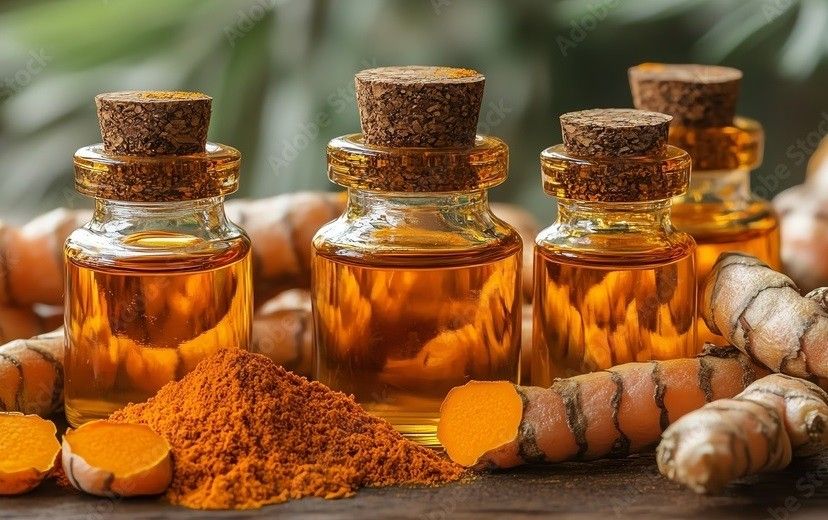
Turmeric has been part of Indian kitchens, Ayurvedic remedies, and family traditions for centuries. From adding a pinch of haldi to milk when you catch a cold to applying turmeric paste on small cuts, most of us have grown up trusting this golden spice. But beyond turmeric powder lies a more concentrated and powerful form that many people are only now discovering — turmeric oil.
Turmeric oil captures the essence of turmeric in a potent, aromatic oil that is used for health, skincare, hair care, and even emotional well-being. However, because it is highly concentrated, it must be used with care and proper knowledge. In this guide, we will explore everything you need to know about turmeric oil — from its components and science-backed health benefits to dosage, side effects, and safe usage.
What is Turmeric Oil?
Turmeric oil is an essential oil extracted from the rhizomes (roots) of the turmeric plant, scientifically known as Curcuma longa. Unlike turmeric powder, which contains curcumin and other compounds in small amounts, turmeric oil is obtained through steam distillation, making it far more concentrated.
This oil has a warm, spicy, slightly woody aroma and contains powerful bioactive compounds that offer anti-inflammatory, antioxidant, antimicrobial, and soothing properties. Because of its strength, turmeric oil is usually used in diluted form — mixed with carrier oils, creams, or other formulations.
Components of Turmeric Oil
| Component | Description |
|---|---|
| Turmerone (ar-turmerone) | Supports anti-inflammatory and antioxidant activity |
| Alpha-turmerone | Helps with immune support and brain health |
| Beta-turmerone | Contributes to antimicrobial properties |
| Curcumene | Supports digestion and reduces inflammation |
| Zingiberene | Aids in gut health and aroma |
| Borneol | Known for calming and circulation-enhancing effects |
| Cineole | Supports respiratory health |
These natural compounds work together, giving turmeric oil its wide range of therapeutic benefits.
20 Proven Benefits of Turmeric Oil
1. Reduces Inflammation Naturally
Oil is rich in turmerones, which help calm inflammation in the body. This makes it helpful for joint pain, muscle stiffness, and inflammatory conditions.
2. Supports Joint and Muscle Health
When applied topically (diluted), turmeric oil may ease discomfort from arthritis, back pain, and post-workout soreness.
3. Boosts Immune Function
Its antimicrobial and antioxidant properties support the immune system, helping the body defend itself against infections.
4. Improves Skin Health
Oil can help reduce acne, redness, and uneven skin tone by fighting bacteria and calming irritated skin.
5. Helps With Wound Healing
Diluted turmeric oil applied to minor cuts may support faster healing due to its antibacterial nature.
6. Supports Digestive Health
Oil may help relieve bloating, indigestion, and gas by stimulating digestive enzymes.
7. Aids Respiratory Health
In aromatherapy or steam inhalation (with care), turmeric oil may help clear congestion and ease breathing.
8. Enhances Mood and Emotional Balance
The warm aroma of turmeric oil is known to have calming effects that may reduce stress and mental fatigue.
9. Supports Brain Health
Some studies suggest turmerones may support brain cell regeneration and cognitive function.
10. Acts as a Natural Antioxidant
Oil helps neutralize free radicals that contribute to aging and chronic disease.
11. Promotes Hair Growth
When mixed with carrier oils, turmeric oil may help strengthen hair roots and reduce scalp issues.
12. Reduces Dandruff and Scalp Inflammation
Its antifungal properties can help soothe an itchy, flaky scalp.
13. Supports Oral Health
Diluted turmeric oil may help reduce harmful bacteria in the mouth when used cautiously.
14. Helps With Menstrual Discomfort
Its anti-inflammatory nature may help ease cramps when massaged onto the lower abdomen.
15. Supports Liver Function
Oil may assist the liver in detoxifying harmful substances.
16. Helps Control Skin Infections
It may be useful in managing minor fungal or bacterial skin issues.
17. Supports Heart Health
By reducing inflammation and oxidative stress, turmeric oil may support overall cardiovascular health.
18. Helps With Cold and Cough
Inhaling steam with oil may help relieve chest congestion.
19. Supports Healthy Aging
Antioxidants in turmeric oil may slow cellular damage linked to aging.
20. Enhances Overall Wellness
Used responsibly, oil supports physical, mental, and emotional well-being.
10 Side Effects of Turmeric Oil
Despite its benefits, turmeric oil is not risk-free, especially when misused.
1. Skin Irritation
Applying undiluted oil may cause redness, burning, or rashes.
2. Allergic Reactions
Some individuals may experience itching or swelling due to sensitivity.
3. Stomach Discomfort
Ingesting turmeric oil in excess may lead to nausea or digestive upset.
4. Hormonal Effects
Turmeric oil may influence hormones, so caution is advised.
5. Blood Thinning Effects
It may enhance blood-thinning action, increasing bleeding risk.
6. Low Blood Sugar
May lower blood sugar levels, especially in diabetics.
7. Headaches
Strong aroma may trigger headaches in sensitive individuals.
8. Photosensitivity
Topical use may increase skin sensitivity to sunlight.
9. Drug Interactions
Oil may interact with anticoagulants or medications.
10. Unsafe for Internal Use Without Guidance
Ingesting essential oils without professional advice can be harmful.
How to Use Turmeric Oil?
Oil can be used in several ways:
- Topical application (always diluted)
- Aromatherapy using a diffuser
- Massage blends
- Steam inhalation
- Added to skincare products
Other Uses of Turmeric Oil
- Natural insect repellent
- Aromatherapy blends
- Homemade soaps and creams
- Massage therapy
- Spiritual or relaxation practices
Tips for Consuming Turmeric Oil
- Always dilute before use
- Perform a patch test
- Use food-grade oil only if ingesting
- Follow recommended dosage
- Consult a healthcare professional
How to Take Turmeric Oil?
- Topical: Mix 1–2 drops with carrier oil
- Aromatherapy: Add 3–4 drops to a diffuser
- Internal (only if advised): Extremely small doses under expert supervision
How to Make Turmeric Oil at Home?
Ingredients:
- Fresh turmeric roots
- Carrier oil (coconut or sesame oil)
Method:
- Wash, peel, and grate turmeric roots
- Heat gently with carrier oil on low flame
- Simmer for 30–45 minutes
- Strain and cool
- Store in a glass bottle
Note: This is infused oil, not essential oil.
How Much Turmeric Oil Can You Use Per Day?
- Topical use: 1–2 applications daily
- Aromatherapy: 15–30 minutes
- Internal use: Only under professional guidance
Turmeric Oil Dosage
| Usage Type | Recommended Dosage |
|---|---|
| Topical | 1–2 drops diluted |
| Diffuser | 3–5 drops |
| Massage | 5 drops per 30 ml carrier oil |
Best Time to Use Turmeric Oil
- Morning for energy and focus
- Evening for relaxation and pain relief
- Before sleep for stress reduction
Who Should Use Turmeric Oil?
- People with joint pain
- Those seeking natural skincare solutions
- Individuals under stress
- People looking for immune support
Who Should Not Use Turmeric Oil?
- Pregnant or breastfeeding women
- People on blood thinners
- Those with sensitive skin
- Individuals with gallbladder issues
How to Store Turmeric Oil?
- Store in a dark glass bottle
- Keep away from sunlight and heat
- Seal tightly after use
- Keep out of children’s reach
Precautions and Interactions
- Do not apply undiluted oil
- Avoid contact with eyes
- Consult a doctor if on medication
- Discontinue if irritation occurs
Final Thoughts
Turmeric oil is a powerful natural remedy with deep roots in traditional healing systems. When used responsibly, it can support health, beauty, and overall wellness. However, its potency demands respect, proper dilution, and informed use. As with any natural remedy, listening to your body and seeking professional guidance is key to safe and effective results.
FAQ’s
What is turmeric oil used for?
Oil is used to reduce inflammation, support joint health, improve skin conditions, boost immunity, aid digestion, and promote overall wellness. It is also commonly used in aromatherapy and massage therapy.
Is turmeric oil safe for daily use?
Oil can be used daily in small, diluted amounts for topical or aromatherapy purposes. Internal use should only be done under professional guidance.
Can turmeric oil be applied directly to the skin?
No, oil should always be diluted with a carrier oil before applying to the skin to avoid irritation or allergic reactions.
Is turmeric oil good for skin problems?
Yes, oil may help with acne, redness, uneven skin tone, and minor infections due to its antibacterial and anti-inflammatory properties.
Can turmeric oil help with joint pain?
When diluted and massaged onto affected areas, oil may help reduce stiffness, swelling, and joint discomfort.
Is turmeric oil safe during pregnancy?
Oil is generally not recommended during pregnancy or breastfeeding unless approved by a healthcare professional.
Can turmeric oil be ingested?
Essential oils are highly concentrated. Oil should not be ingested unless it is food-grade and prescribed by a qualified healthcare provider.
What does turmeric oil smell like?
Oil has a warm, spicy, earthy aroma with slightly woody undertones.
What is turmeric oil good for?
Oil is mainly used to reduce inflammation, ease joint and muscle pain, support skin health, boost immunity, aid digestion, and promote relaxation. It is also popular in aromatherapy, massage therapy, and natural skincare for its antibacterial and antioxidant properties.
Is turmeric oil safe for children?
Oil should be used very cautiously for children. It is not recommended for internal use, and even for topical use it must be highly diluted and used only after consulting a healthcare professional. Infants and young children should generally avoid essential oils.
What does turmeric oil taste like?
Oil has a strong, bitter, spicy, and slightly pungent taste. Because it is highly concentrated, it is not meant to be tasted directly and should never be consumed without professional guidance.
Does turmeric oil lighten the skin?
Oil does not bleach or permanently lighten the skin, but it may help brighten the complexion over time by reducing inflammation, calming redness, and improving overall skin tone when used properly in diluted skincare formulations.
Does turmeric oil work on arthritis?
Oil may help manage arthritis symptoms due to its anti-inflammatory and pain-relieving properties. When diluted and massaged onto affected joints, it may reduce stiffness, swelling, and discomfort, especially when used consistently as part of a broader care routine.
Also Read: