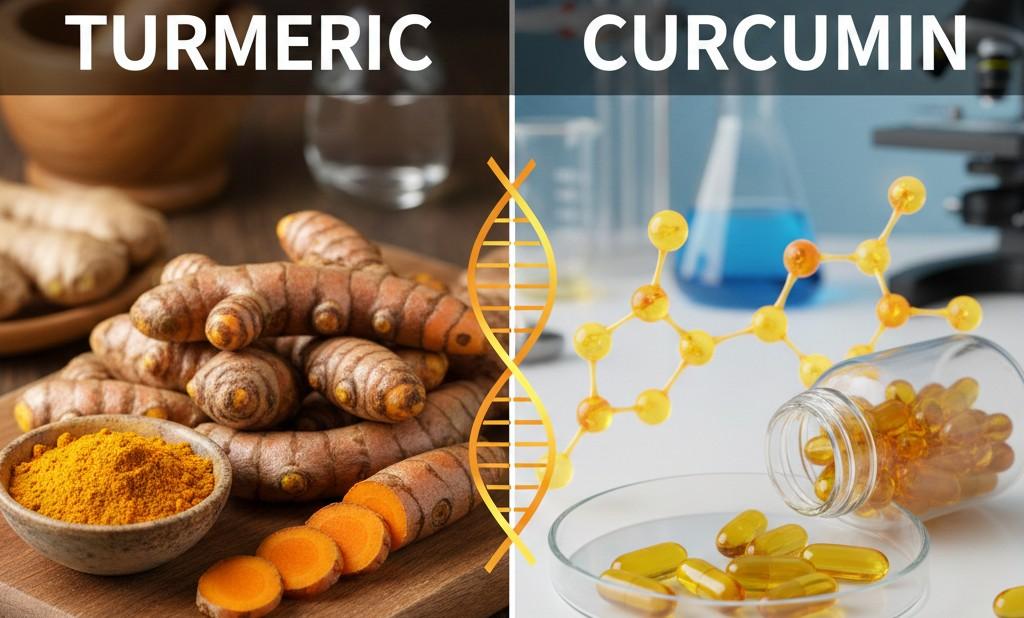
If you’ve ever stood in the spice aisle holding a packet of turmeric powder and then scrolled through an online store seeing expensive curcumin supplements, you might have wondered: Aren’t these basically the same thing? After all, both come from the same plant, both are praised for their health benefits, and both are often linked to inflammation relief and immunity support.
The truth is, while turmeric and curcumin are closely related, they are not the same. Understanding the difference can help you make smarter choices for your cooking, wellness routine, or supplementation needs. In this guide, we’ll break down what turmeric vs curcumin really are, how they differ, their benefits, limitations, absorption issues, side effects, and which one might be better for you depending on your lifestyle and health goals.
What Is Turmeric?
Turmeric is a bright yellow-orange spice that comes from the root of the Curcuma longa plant, a member of the ginger family. It has been used for thousands of years, especially in Indian, Southeast Asian, and Middle Eastern cultures.
A Staple in Traditional Medicine
In Ayurveda and traditional Chinese medicine, turmeric has long been valued for its warming properties and its role in balancing the body. It has been traditionally used to support digestion, joint health, skin healing, and overall vitality.
Turmeric in Everyday Life
For many households, especially in India, turmeric is not a “supplement” but a daily ingredient. It’s added to curries, lentils, vegetables, rice dishes, and even milk. Turmeric is also used topically in traditional skincare rituals and home remedies.
What’s Inside Turmeric?
Turmeric contains more than 300 natural compounds, including:
- Curcuminoids (the most important group)
- Essential oils
- Vitamins and minerals
- Antioxidants
Among these compounds, curcumin is the most studied and most powerful active ingredient.
What Is Curcumin?
Curcumin is a natural compound found within turmeric. It belongs to a group of compounds called curcuminoids and is responsible for turmeric’s vibrant color and many of its health-promoting properties.
Curcumin Is Not the Whole Spice
One important thing to understand is that curcumin makes up only about 2–5% of turmeric by weight. That means when you consume turmeric powder, you’re getting a relatively small amount of curcumin along with many other beneficial compounds.
Why Curcumin Gets So Much Attention
Curcumin has been extensively researched for its:
- Anti-inflammatory properties
- Antioxidant effects
- Potential role in joint, brain, and heart health
- Immune-supporting benefits
Because of this, curcumin is often extracted from turmeric and concentrated into supplements.
Turmeric vs Curcumin: The Core Difference
At its simplest:
- Turmeric is the whole root or spice
- Curcumin is one specific compound found inside turmeric
Think of turmeric as an orange, and curcumin as vitamin C. The orange contains vitamin C, but it also contains fiber, water, and many other nutrients.
| Aspect | Turmeric | Curcumin |
|---|---|---|
| What it is | A natural spice made from the dried root of the Curcuma longa plant | A bioactive compound extracted from turmeric |
| Type | Whole food / spice | Isolated active ingredient |
| Source | Comes directly from turmeric root | Found inside turmeric (about 2–5% of turmeric) |
| Color | Bright yellow-orange | Deep yellow pigment |
| Primary role | Provides overall nutritional and traditional health benefits | Provides targeted therapeutic benefits |
| Main active compounds | Curcuminoids, essential oils, antioxidants, minerals | Primarily curcumin |
| Curcumin content | Low (naturally occurring in small amounts) | High (concentrated extract) |
| Nutritional value | Contains fiber, iron, potassium, manganese, vitamin B6 | Minimal nutritional value beyond curcumin |
| Anti-inflammatory effect | Mild to moderate with regular use | Strong and well-researched |
| Antioxidant power | Moderate due to multiple compounds | Very high and concentrated |
| Absorption in body | Low but improves when cooked with fat and black pepper | Poor on its own; enhanced with piperine or special formulations |
| Common form | Powder, fresh root, paste | Capsules, tablets, liquid extracts |
| Usage | Daily cooking, traditional remedies, skincare | Supplements for targeted health support |
| Speed of results | Gradual, long-term benefits | Faster, noticeable effects for specific issues |
| Best for | General wellness, digestion, immunity, daily nutrition | Joint health, inflammation, muscle recovery, focused therapy |
| Safety | Very safe in food quantities | Safe in recommended doses; caution at high doses |
| Side effects | Rare; possible stomach upset if overused | Digestive issues, headaches, possible drug interactions |
| Cost | Affordable and widely available | More expensive due to extraction process |
| Suitability for long-term use | Ideal for daily, lifelong use | Better for short- to medium-term use |
| Traditional use | Used for thousands of years in Ayurveda and cooking | Modern, research-driven application |
| Convenience | Requires cooking or preparation | Easy to consume as a supplement |
| Whole-body benefits | Yes, due to multiple nutrients and compounds | More targeted rather than holistic |
| Works best with | Black pepper, healthy fats | Black pepper extract, phospholipids |
| Who should avoid | Rarely restricted except in excess | People on blood thinners or with gallbladder issues (consult doctor) |
Nutritional Comparison: Turmeric vs Curcumin
Turmeric (Whole Spice)
Turmeric offers:
- Small amounts of fiber
- Iron
- Potassium
- Vitamin B6
- Manganese
- Antioxidants beyond curcumin
Because it’s a whole food, turmeric provides a broader nutritional profile.
Curcumin (Isolated Compound)
Curcumin supplements provide:
- Highly concentrated curcumin
- Often standardized extracts
- Sometimes combined with black pepper extract for absorption
Curcumin supplements focus on potency rather than nutritional diversity.
Health Benefits of Turmeric
Turmeric’s benefits come from its combination of curcumin and other compounds working together.
1. Supports Digestion
Turmeric has traditionally been used to support digestive comfort and bile production, which helps the body digest fats more efficiently.
2. Natural Anti-Inflammatory Support
Turmeric is widely used in daily diets to help maintain a healthy inflammatory response, especially when consumed regularly over time.
3. Rich in Antioxidants
Turmeric helps neutralize free radicals, which may protect cells from damage and support overall health.
4. Immune System Support
Regular use of turmeric in cooking has been associated with immune resilience, especially during seasonal changes.
5. Skin Health
Turmeric has long been used in traditional skincare for its cleansing and soothing properties.
6. Gentle and Food-Based
Because turmeric is a food, it’s generally well tolerated when consumed in normal culinary amounts.
Health Benefits of Curcumin
Curcumin offers more targeted and potent benefits due to its concentration.
1. Powerful Anti-Inflammatory Effects
Curcumin interacts with multiple inflammatory pathways in the body, making it one of the most researched natural anti-inflammatory compounds.
2. Strong Antioxidant Action
Curcumin not only neutralizes free radicals but also boosts the body’s own antioxidant enzymes.
3. Joint and Muscle Support
Many people take curcumin supplements to support joint comfort, especially during aging or physically demanding lifestyles.
4. Brain Health Support
Research suggests curcumin may support cognitive health by influencing brain-derived neurotrophic factor (BDNF).
5. Heart Health
Curcumin may help support healthy blood vessel function and overall cardiovascular wellness.
Absorption: Why It Matters So Much
One of the biggest differences between turmeric and curcumin lies in how well they are absorbed by the body.
Turmeric Absorption
When turmeric is consumed as part of a meal:
- Absorption is naturally low
- Fat and black pepper can enhance uptake
- Long-term, regular consumption may still offer benefits
Curcumin Absorption Challenges
Curcumin on its own is poorly absorbed. To address this, supplements often include:
- Black pepper extract (piperine)
- Liposomal formulations
- Curcumin-phospholipid complexes
Without these, much of the curcumin may pass through the body unused.
Turmeric in Food vs Curcumin Supplements
Turmeric as a Daily Ingredient
Pros:
- Whole-food approach
- Affordable and accessible
- Adds flavor and color
- Gentle on the body
Cons:
- Lower curcumin content
- Benefits may take longer to notice
Curcumin Supplements
Pros:
- Highly concentrated
- Faster, targeted effects
- Convenient for therapeutic use
Cons:
- More expensive
- Not all supplements are equally effective
- Potential side effects at high doses
Side Effects and Safety Considerations
Turmeric Side Effects
In normal food amounts, turmeric is very safe. However, excessive consumption may cause:
- Stomach upset
- Nausea in sensitive individuals
Curcumin Side Effects
High-dose curcumin supplements may cause:
- Digestive discomfort
- Headaches
- Interaction with blood-thinning medications
People with gallbladder issues or those on medication should consult a healthcare professional before using curcumin supplements.
Which One Is Better: Turmeric or Curcumin?
The answer depends on your goal.
Choose Turmeric If:
- You want a natural, food-based approach
- You enjoy cooking and traditional diets
- You’re looking for long-term wellness support
- You prefer gentle, daily nutrition
Choose Curcumin If:
- You need targeted anti-inflammatory support
- You’re dealing with joint discomfort or stiffness
- You want a more potent, research-backed option
- You prefer convenience over cooking
Can You Use Both Together?
Yes, many people benefit from using both turmeric and curcumin.
For example:
- Turmeric in daily meals for overall health
- Curcumin supplements during periods of increased physical stress or inflammation
This balanced approach allows you to enjoy the best of both worlds.
Turmeric vs Curcumin in Traditional and Modern Medicine
Turmeric has centuries of traditional use behind it, while curcumin represents a modern, science-driven extraction of turmeric’s most powerful compound. Neither replaces the other; instead, they serve different purposes.
Traditional wisdom emphasizes balance and daily use, while modern supplementation focuses on precision and potency.
How to Get the Most Out of Turmeric and Curcumin
Tips for Using Turmeric
- Combine with black pepper
- Cook with healthy fats
- Use consistently rather than occasionally
- Choose high-quality, organic turmeric powder
Tips for Choosing Curcumin Supplements
- Look for standardized extracts
- Check for absorption enhancers
- Avoid unnecessary fillers
- Follow recommended dosages
Final Thoughts: Understanding the Difference Matters
Turmeric and curcumin are closely connected but serve different roles in health and wellness. Turmeric is a whole, nourishing spice that fits beautifully into everyday life, while curcumin is a concentrated compound designed for targeted support.
Rather than choosing one over the other, the real takeaway is understanding how each works and using them thoughtfully. When used correctly, both turmeric and curcumin can be valuable allies in a balanced, health-conscious lifestyle.
FAQ’s
Is curcumin stronger than turmeric?
Yes, curcumin is more concentrated and potent than turmeric. While turmeric contains many beneficial compounds, curcumin is the most active one and is often extracted and concentrated in supplement form.
Can I get enough curcumin from turmeric alone?
For general wellness, turmeric used regularly in food may be enough. However, if you are seeking targeted anti-inflammatory or joint support, curcumin supplements may provide higher and more noticeable benefits.
Why is black pepper often added to turmeric or curcumin?
Black pepper contains piperine, which significantly improves the absorption of curcumin in the body. Without it, much of the curcumin may not be effectively absorbed.
Is it safe to take curcumin every day?
Curcumin is generally safe for daily use when taken in recommended doses. However, high doses may cause digestive discomfort, and people on medications should consult a healthcare professional.
Which is better for daily use: turmeric or curcumin?
Turmeric is better suited for daily use as a food ingredient, while curcumin is ideal for short-term or targeted support such as joint discomfort or inflammation.
Can turmeric and curcumin be used together?
Yes, they can be used together. Many people use turmeric in their daily diet and take curcumin supplements when additional support is needed.
Does cooking reduce the benefits of turmeric?
Cooking turmeric with healthy fats and spices like black pepper can actually improve curcumin absorption, making it more beneficial rather than less.
Is turmeric the same as curcumin supplements?
No, turmeric is a natural spice with many compounds, while curcumin supplements contain a concentrated extract of one specific compound from turmeric.
Also Read: