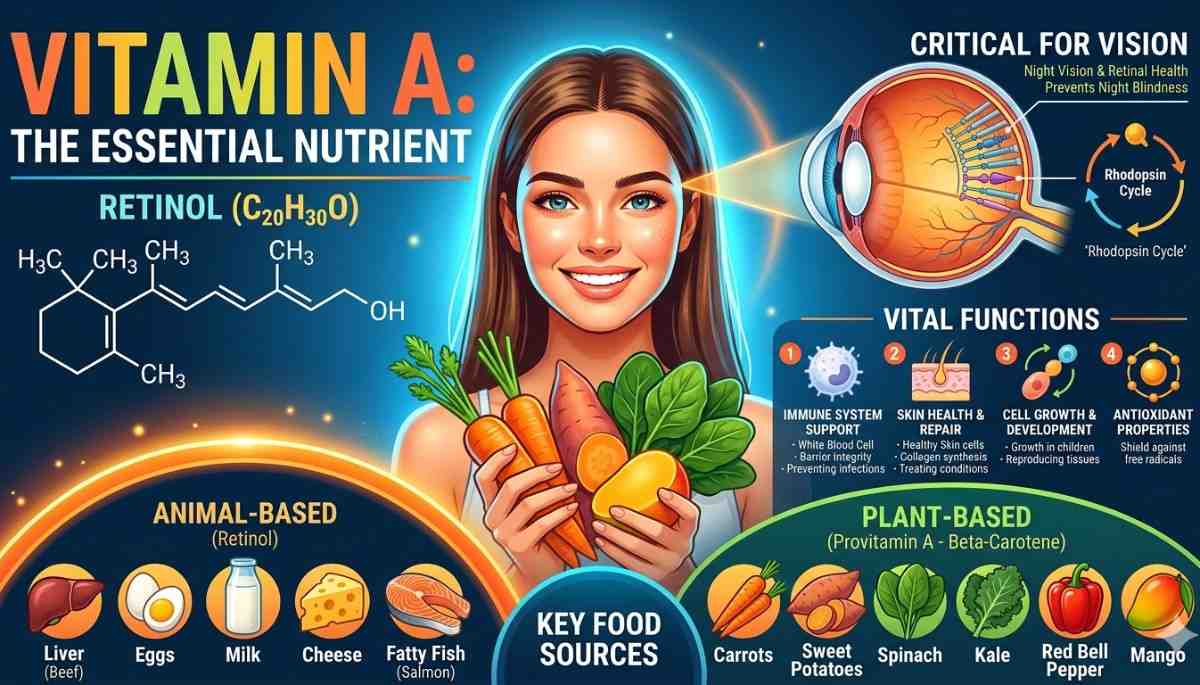
Vitamin A is one of the most essential fat-soluble vitamins required for maintaining vision, immunity, skin health, reproduction, and overall growth. Although it is needed in small amounts, its impact on the human body is enormous. From supporting healthy eyesight to strengthening the immune system and promoting glowing skin, Vitamin A plays a foundational role in daily health.
In this guide, you will learn everything about Vitamin A (most commonly known as retinol)— what it is, its types, nutrition facts, health benefits, deficiency symptoms, food sources, dosage recommendations, side effects, and much more.
What is Vitamin A?
Vitamin A is a fat-soluble vitamin that the body stores in the liver and uses when needed. It exists in two primary forms:
- Preformed Vitamin A (Retinoids): Found in animal-based foods such as liver, dairy, fish, and eggs. The active forms include retinol, retinal, and retinoic acid.
- Provitamin A (Carotenoids): Found in plant-based foods like carrots, sweet potatoes, spinach, and mangoes. The most common carotenoid is beta-carotene, which the body converts into Vitamin A.
Because it is fat-soluble, Vitamin A is best absorbed when consumed with healthy fats.
Vitamin A Dosage
Vitamin A dosage depends on age, gender, and life stage. It is measured in micrograms (mcg) of Retinol Activity Equivalents (RAE).
Recommended Daily Intake of Vitamin A
| Age Group | Recommended Intake (mcg RAE/day) |
|---|---|
| Infants (0–6 months) | 400 |
| Infants (7–12 months) | 500 |
| Children (1–3 years) | 300 |
| Children (4–8 years) | 400 |
| Children (9–13 years) | 600 |
| Adult Men | 900 |
| Adult Women | 700 |
| Pregnant Women | 770 |
| Breastfeeding Women | 1,300 |
Upper Intake Level (UL)
| Group | Maximum Safe Limit (mcg/day) |
|---|---|
| Adults | 3,000 |
| Children (varies by age) | 600–2,800 |
Important: The upper limit applies to preformed retinol from supplements and animal sources—not beta-carotene from fruits and vegetables.
Supplement Dosage Guidance
- Mild deficiency: Doctor-supervised supplementation
- Severe deficiency: High-dose treatment under medical supervision
- General health: Meet needs primarily through diet
Never exceed recommended doses without medical advice.
20 Benefits of Vitamin A
1. Supports Healthy Vision
It is crucial for maintaining good eyesight. It helps form rhodopsin, a pigment in the retina that allows vision in low light conditions.
2. Prevents Night Blindness
One of the earliest signs of Vitamin A deficiency is night blindness. Adequate intake prevents difficulty seeing in dim light.
3. Protects Eye Surface
Vitamin A keeps the cornea moist and healthy, preventing dryness and infections.
4. Boosts Immune System
Retinol strengthens the immune response by supporting white blood cell production and function.
5. Reduces Risk of Infections
It protects mucous membranes in the respiratory and digestive systems, acting as a barrier against pathogens.
6. Promotes Healthy Skin
Vitamin A stimulates skin cell production and repair, keeping skin smooth and youthful.
7. Reduces Acne
Retinoids derived from Vitamin A are commonly used in acne treatments.
8. Supports Bone Growth
Retinol plays a role in bone remodeling and skeletal development.
9. Enhances Reproductive Health
It is essential for sperm production in men and proper fetal development during pregnancy.
10. Promotes Healthy Pregnancy
It supports embryonic growth and organ formation.
11. Supports Lung Health
Adequate Vitamin A may reduce the severity of respiratory infections.
12. Acts as a Powerful Antioxidant
Carotenoids neutralize free radicals and reduce oxidative stress.
13. Reduces Risk of Certain Cancers
Some studies suggest beta-carotene may reduce the risk of certain cancers, though results vary.
14. Maintains Healthy Teeth and Gums
Vitamin A contributes to the formation of dentin, a protective layer in teeth.
15. Supports Brain Function
Vitamin A plays a role in cognitive development and neurological health.
16. Improves Hair Health
It supports sebum production, keeping the scalp moisturized.
17. Aids in Cell Growth
It is essential for cell division and differentiation.
18. Reduces Inflammation
It helps regulate inflammatory responses in the body.
19. Supports Thyroid Function
Vitamin A assists in proper thyroid hormone regulation.
20. Improves Overall Growth in Children
It is vital for normal growth and development during childhood.
Signs and Symptoms of Vitamin A Deficiency
Vitamin A deficiency is more common in developing countries but can occur anywhere due to poor diet.
Early Symptoms:
- Night blindness
- Dry eyes
- Frequent infections
- Dry skin
Severe Symptoms:
- Bitot’s spots (white patches on the eye)
- Corneal damage
- Stunted growth in children
- Infertility
- Increased risk of mortality from infections
Children and pregnant women are at higher risk.
Causes of Vitamin A Deficiency
- Poor dietary intake
- Fat malabsorption disorders
- Liver diseases
- Chronic diarrhea
- Alcohol abuse
- Strict low-fat diets
Best Food Sources of Vitamin A
Animal-Based Sources (Retinol)
- Liver
- Fish liver oil
- Egg yolks
- Whole milk
- Butter
- Cheese
Plant-Based Sources (Beta-Carotene)
- Carrots
- Sweet potatoes
- Spinach
- Kale
- Pumpkin
- Mango
- Papaya
- Red bell peppers
For better absorption, combine plant sources with healthy fats like olive oil or nuts.
Who is at Risk of Vitamin A Deficiency?
Although Vitamin A deficiency is more common in developing regions, certain groups worldwide remain at higher risk due to dietary, medical, or lifestyle factors.
1. Infants and Young Children
Children under five years of age are at the highest risk, especially in areas where diets lack animal products and fortified foods. Rapid growth increases their Vitamin A requirements.
2. Pregnant and Breastfeeding Women
Women need more Vitamin during pregnancy and lactation to support fetal development and breast milk production. Inadequate intake may affect both mother and baby.
3. People with Malabsorption Disorders
Conditions that interfere with fat absorption reduce Vitamin uptake. These include:
- Celiac disease
- Crohn’s disease
- Cystic fibrosis
- Chronic pancreatitis
Since retinol is fat-soluble, any fat absorption issue increases deficiency risk.
4. Individuals with Liver Disease
The liver stores Vitamin A. Liver disorders can reduce storage capacity and impair proper regulation.
5. People on Strict Low-Fat Diets
Extremely low-fat diets may reduce absorption of fat-soluble vitamins.
6. Alcohol Dependence
Chronic alcohol consumption interferes with retinol metabolism and increases liver damage risk.
7. People with Poor Dietary Intake
Diets lacking colorful vegetables, fruits, dairy, eggs, and animal protein can result in inadequate Vitamin A levels.
Side Effects of Excess Vitamin A
It is essential, but excessive intake—especially from supplements—can cause harmful effects. Since it is fat-soluble, the body stores excess amounts, increasing toxicity risk.
Common Side Effects of Excess Vitamin A
- Nausea
- Vomiting
- Dizziness
- Headache
- Blurred vision
- Dry or peeling skin
- Joint and bone pain
- Irritability
- Hair thinning or hair loss
- Fatigue
Severe Side Effects (Vitamin A Toxicity)
- Liver enlargement
- Liver damage
- Increased intracranial pressure
- Severe birth defects (if excessive intake during pregnancy)
- Bone fractures due to weakened bones
Acute vs Chronic Toxicity
- Acute toxicity occurs from taking a very high dose in a short period.
- Chronic toxicity develops gradually from long-term excessive supplementation.
The tolerable upper intake level (UL) for adults is 3,000 mcg per day of preformed retinol.
Beta-carotene from food rarely causes toxicity because the body converts only what it needs.
Complications of Vitamin A Deficiency
Untreated Vitamin A deficiency can lead to serious health complications, particularly in children.
1. Xerophthalmia
A progressive eye disorder caused by severe deficiency. It begins with dryness and can lead to blindness if untreated.
2. Night Blindness
Inability to see properly in low light conditions.
3. Permanent Vision Loss
Severe deficiency can damage the cornea and cause irreversible blindness.
4. Weakened Immunity
Increased susceptibility to infections such as measles, respiratory infections, and diarrhea.
5. Stunted Growth
Children may experience delayed growth and development.
6. Increased Child Mortality
Vitamin A deficiency significantly raises the risk of death from infectious diseases in children under five.
7. Fertility Issues
Retinol plays a role in reproductive health. Deficiency may affect fertility in both men and women.
8. Pregnancy Complications
Low Vitamin A levels may impair fetal development and increase complications during pregnancy.
Preventing Vitamin A Deficiency
Preventing Vitamin A deficiency involves dietary planning, supplementation when needed, and public health measures.
1. Eat a Balanced Diet
Include both animal and plant sources of Vitamin A:
- Carrots
- Sweet potatoes
- Spinach
- Mangoes
- Egg yolks
- Dairy products
- Liver
2. Combine with Healthy Fats
Since Vitamin A is fat-soluble, eat it with sources like:
- Nuts
- Seeds
- Olive oil
- Ghee
3. Breastfeeding
Breast milk provides adequate retinol for infants when the mother’s intake is sufficient.
4. Food Fortification
Many countries fortify foods like milk, oil, and cereals with retinol to prevent deficiency.
5. Supplementation Programs
In high-risk regions, Vitamin A supplements are distributed to children as part of public health initiatives.
6. Treat Underlying Medical Conditions
Managing digestive disorders improves fat and retinol absorption.
Vitamin A and Skin Health
It is widely used in skincare products in the form of retinol and retinoids. These compounds:
- Stimulate collagen production
- Reduce fine lines and wrinkles
- Treat acne
- Improve skin texture
- Reduce hyperpigmentation
However, excessive topical use may cause dryness and irritation.
Vitamin A and Eye Health
Retinol plays a central role in:
- Night vision
- Tear production
- Preventing dry eye syndrome
- Reducing risk of age-related macular degeneration
A lack of retinol can lead to xerophthalmia, a serious eye disorder.
Vitamin A and Immune Function
Retinol enhances immune function by:
- Supporting white blood cells
- Maintaining integrity of mucosal barriers
- Reducing severity of infections
Children with adequate Vitamin A levels have lower mortality from measles and diarrhea.
Vitamin A Supplements
Vitamin A supplements are available in forms such as:
- Retinyl palmitate
- Retinyl acetate
- Beta-carotene capsules
- Multivitamins
Supplementation may be recommended for individuals with diagnosed deficiency. However, high doses can be harmful.
Can You Take Too Much Vitamin A?
Yes. Since Vitamin A is fat-soluble, excess amounts accumulate in the liver and may cause toxicity.
Symptoms of Vitamin A Toxicity (Hypervitaminosis A)
- Nausea
- Vomiting
- Dizziness
- Blurred vision
- Headache
- Joint pain
- Liver damage
- Birth defects (if excessive during pregnancy)
Vitamin A for Children
It is critical for:
- Proper growth
- Immune development
- Preventing childhood blindness
Many public health programs provide Vitamin A supplementation in high-risk regions.
Vitamin A During Pregnancy
Pregnant women need adequate Vitamin A, but excessive intake of preformed retinol can cause birth defects. It is safer to obtain retinol from food sources or prenatal vitamins prescribed by a doctor.
Vitamin A and Hair Health
Vitamin A supports sebum production in the scalp, keeping hair moisturized. However, too much retinol can lead to hair loss. Balance is essential.
Vitamin A vs Beta-Carotene
| Feature | Vitamin A (Retinol) | Beta-Carotene |
|---|---|---|
| Source | Animal foods | Plant foods |
| Active form | Yes | Converted by body |
| Toxicity risk | Higher | Lower |
| Storage | Stored in liver | Converted as needed |
Beta-carotene is considered safer because the body regulates its conversion into active Vitamin A.
How to Maintain Healthy Vitamin A Levels
- Eat a balanced diet rich in colorful fruits and vegetables
- Include healthy fats for absorption
- Avoid excessive supplementation
- Get regular health check-ups if at risk
- Follow recommended dietary allowances
Conclusion
Vitamin A is a vital nutrient that supports vision, immunity, skin health, reproduction, and overall growth. Both animal-based retinol and plant-based beta-carotene contribute to meeting daily requirements. While deficiency can lead to serious health issues, excessive intake can also cause toxicity.
The best way to maintain healthy retinol levels is through a balanced diet rich in colorful vegetables, fruits, dairy, and lean proteins. Supplements should only be taken when necessary and under professional guidance.
FAQ’s
What happens if vitamin A is too low?
It can cause night blindness, dry eyes, weak immunity, and in severe cases, vision loss.
How do I get 100% vitamin A?
Eat foods like carrots, sweet potatoes, spinach, eggs, dairy, and liver to meet daily needs.
What does vitamin A do for our body?
It supports vision, immunity, skin health, growth, and reproduction.
Can I eat vitamin A daily?
Yes, in recommended amounts through food. Avoid high-dose supplements without medical advice.
Is 2 eggs a day enough vitamin A?
No. Two eggs provide only about 15–20% of daily needs, so other sources are required.
Can I take Vitamin A supplements daily?
Yes, but only within the recommended daily allowance. Long-term high-dose supplementation can cause toxicity, so supplements should be taken under medical guidance.
What happens if I take too much Vitamin A?
Excess retinol can cause nausea, dizziness, headaches, liver damage, bone pain, and in severe cases, birth defects during pregnancy.
Is Vitamin A good for skin?
Yes. It helps improve acne, reduce wrinkles, boost collagen production, and promote smoother skin. It is commonly used in skincare products as retinol.
Is Vitamin A safe during pregnancy?
It is essential during pregnancy, but high doses of preformed retinol can cause birth defects. Pregnant women should avoid high-dose supplements unless prescribed.
What is the difference between Vitamin A and beta-carotene?
Vitamin A is the active form found in animal foods, while beta-carotene is a plant compound that the body converts into retinol as needed.
Can Vitamin A improve immunity?
Yes. It supports the production and function of white blood cells and maintains healthy mucous membranes, helping the body fight infections.
Is Vitamin A good for hair growth?
It helps produce sebum, which keeps the scalp moisturized. However, too much retinol may lead to hair loss.
Can children take Vitamin A supplements?
Children can take supplements if prescribed by a healthcare professional. Excess intake should be avoided.
Does cooking destroy Vitamin A?
It is relatively stable during cooking, but prolonged exposure to heat and light may reduce some of its content. Light steaming helps preserve nutrients.
Is Vitamin A good for the eyes?
Yes. It is essential for night vision, prevents dry eyes, and reduces the risk of certain eye disorders.
How long does it take to correct Vitamin A deficiency?
Mild deficiency may improve within weeks of proper supplementation, while severe cases require medical treatment and monitoring.
Can vegetarians get enough Vitamin A?
Yes. Vegetarians can obtain adequate retinol by consuming beta-carotene-rich vegetables like carrots, spinach, sweet potatoes, and pumpkin.
Does Vitamin A help with acne?
Yes. Retinoids derived from retinol are commonly used to treat acne by promoting skin cell turnover and reducing clogged pores.
Can Vitamin A cause weight gain?
Retinol itself does not cause weight gain. However, excessive supplementation can lead to health complications.
Also Read: