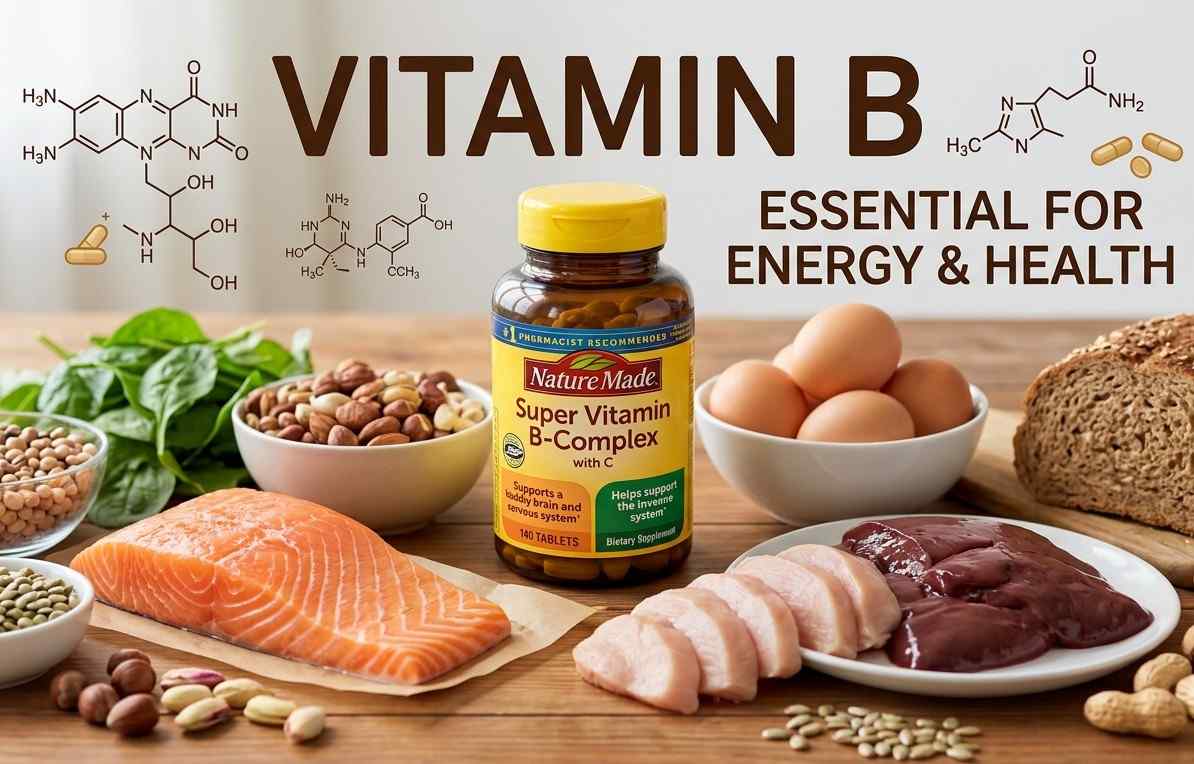
Vitamin B is not just one nutrient — it is a group of essential water-soluble vitamins that play a vital role in energy production, brain function, red blood cell formation, metabolism, and overall cellular health. Because the body does not store most B vitamins in large amounts, they must be consumed regularly through food or supplements.
In this guide, we will explore everything you need to know about Vitamin B, including recommended dosage, powerful benefits, deficiency signs, food sources, toxicity risks, and how to maintain healthy levels.
What is Vitamin B?
Vitamin B refers to a group of eight essential water-soluble vitamins known collectively as the B-complex vitamins. Each B vitamin has a specific function in the body, but they often work together to support metabolism and overall health.
The eight B vitamins include:
- Vitamin B1 (Thiamine)
- Vitamin B2 (Riboflavin)
- Vitamin B3 (Niacin)
- Vitamin B5 (Pantothenic Acid)
- Vitamin B6 (Pyridoxine)
- Vitamin B7 (Biotin)
- Vitamin B9 (Folate or Folic Acid)
- Vitamin B12 (Cobalamin)
These vitamins help convert food into energy, support the nervous system, maintain healthy skin, produce red blood cells, and regulate hormones.
Because they are water-soluble, excess amounts are generally excreted in urine, reducing the risk of toxicity compared to fat-soluble vitamins. However, high-dose supplements can still cause side effects.
Vitamin B Dosage
The recommended daily intake varies depending on age, sex, and life stage (such as pregnancy). Below is a general guideline for adults:
Recommended Daily Intake
| Vitamin | Recommended Daily Intake (Adults) | Upper Intake Limit (Adults) |
|---|---|---|
| B1 (Thiamine) | 1.1–1.2 mg | No established UL |
| B2 (Riboflavin) | 1.1–1.3 mg | No established UL |
| B3 (Niacin) | 14–16 mg | 35 mg |
| B5 (Pantothenic Acid) | 5 mg | No established UL |
| B6 (Pyridoxine) | 1.3–1.7 mg | 100 mg |
| B7 (Biotin) | 30 mcg | No established UL |
| B9 (Folate) | 400 mcg | 1,000 mcg |
| B12 (Cobalamin) | 2.4 mcg | No established UL |
Pregnant and breastfeeding women may require higher amounts, especially of folate and B12.
20 Benefits of Vitamin B
- Boosts Energy Production – It helps convert carbohydrates, fats, and proteins into usable energy for the body.
- Supports Brain Function – B vitamins play a critical role in neurotransmitter production and cognitive performance.
- Improves Mood – Vitamin B6, B9, and B12 help regulate serotonin and dopamine levels.
- Promotes Heart Health – Folate and B12 reduce homocysteine levels, lowering heart disease risk.
- Enhances Red Blood Cell Formation – Vitamin B12 and folate are essential for healthy red blood cell production.
- Supports Nervous System Health – B vitamins maintain nerve signaling and prevent nerve damage.
- Strengthens Immune System – Vitamin B6 supports immune cell production and function.
- Improves Skin Health – Biotin and riboflavin promote healthy skin and prevent dryness.
- Promotes Healthy Hair Growth – Biotin supports keratin production and hair strength.
- Supports Pregnancy Health – Folate prevents neural tube defects in developing babies.
- Aids Digestion – B vitamins assist enzymes that help break down food efficiently.
- Reduces Fatigue – Vitamin B12 helps prevent anemia-related tiredness.
- Supports Metabolism – B-complex vitamins regulate metabolic pathways in cells.
- Enhances Muscle Function – B vitamins help maintain proper muscle contraction and recovery.
- Improves Eye Health – Riboflavin may reduce the risk of cataracts.
- Supports Hormone Regulation – Vitamin B6 plays a role in hormone balance.
- May Reduce PMS Symptoms – B6 may help alleviate premenstrual mood changes.
- Supports Liver Health – B vitamins aid detoxification processes.
- Improves Cognitive Aging – B12 and folate may help slow age-related memory decline.
- Supports DNA Production – Folate and B12 are crucial for DNA synthesis and repair.
10 Side Effects of Excess Vitamin B
Although most B vitamins are safe, excessive supplementation can cause side effects.
- Skin Flushing – High doses of niacin can cause redness and warmth in the face and chest.
- Liver Damage – Excessive niacin intake may harm liver function.
- Nerve Damage – Very high doses of vitamin B6 can lead to nerve toxicity.
- Digestive Upset – Large doses may cause nausea or diarrhea.
- Headaches – Over-supplementation may trigger headaches.
- Low Blood Pressure – High niacin doses may lower blood pressure excessively.
- Insomnia – High doses of certain B vitamins may disturb sleep.
- Allergic Reactions – Rare cases of rash or itching may occur.
- Masking B12 Deficiency – High folate intake can hide signs of B12 deficiency.
- Kidney Stress – Extremely high doses may burden kidney function.
Symptoms of Vitamin B Deficiency
Deficiency symptoms depend on which B vitamin is lacking.
Common symptoms include:
- Fatigue and weakness
- Pale or yellowish skin
- Shortness of breath
- Tingling or numbness in hands and feet
- Poor concentration
- Memory problems
- Depression or mood swings
- Mouth ulcers
- Cracked lips
- Hair thinning
- Skin rashes
- Muscle cramps
Severe deficiencies, especially of B12, can cause permanent nerve damage if untreated.
Causes of Vitamin B Deficiency
Several factors may lead to deficiency:
- Poor diet lacking whole grains, meat, or vegetables
- Strict vegetarian or vegan diet (risk of B12 deficiency)
- Alcohol abuse
- Digestive disorders such as Crohn’s disease
- Celiac disease
- Gastric surgery
- Certain medications (like metformin or proton pump inhibitors)
- Aging (reduced B12 absorption)
- Pregnancy (increased folate needs)
- Chronic illness
Best Food Sources of Vitamin B
| Food | B Vitamins Present |
|---|---|
| Whole grains | B1, B2, B3 |
| Brown rice | B1, B3 |
| Eggs | B2, B7, B12 |
| Milk | B2, B12 |
| Chicken | B3, B6 |
| Fish (salmon, tuna) | B3, B6, B12 |
| Liver | B12, B2, B3 |
| Leafy greens | B9 |
| Legumes | B1, B9 |
| Nuts and seeds | B1, B7 |
| Bananas | B6 |
| Fortified cereals | B9, B12 |
A balanced diet usually provides adequate B vitamins.
Who is at Risk of Vitamin B Deficiency?
Certain groups are more vulnerable:
- Older adults
- Vegetarians and vegans
- Pregnant women
- People with digestive disorders
- Alcoholics
- People on restrictive diets
- Individuals with autoimmune conditions
- Those who have had bariatric surgery
Complications of Vitamin B Deficiency
Untreated deficiency can lead to:
- Anemia
- Nerve damage
- Depression
- Heart problems
- Birth defects
- Cognitive decline
- Muscle weakness
- Vision problems
Early diagnosis and treatment are essential.
Preventing Vitamin B Deficiency
You can prevent deficiency by:
- Eating a balanced diet rich in whole foods
- Including animal products or fortified foods for B12
- Taking prenatal vitamins during pregnancy
- Limiting alcohol intake
- Managing digestive disorders
- Taking supplements if advised by a doctor
Can You Take Too Much Vitamin B?
Because B vitamins are water-soluble, excess amounts are usually excreted. However, taking high-dose supplements, especially niacin and B6, can lead to toxicity. Long-term megadoses should be avoided unless medically supervised.
Symptoms of Vitamin B Toxicity (Hypervitaminosis B)
Toxicity symptoms may include:
- Skin flushing (niacin)
- Liver damage (high-dose niacin)
- Nerve pain or numbness (excess B6)
- Gastrointestinal upset
- Headache
- Fatigue
Always follow recommended dosage guidelines.
How to Maintain Healthy Vitamin B Levels
Maintaining healthy levels is simple with proper nutrition and lifestyle habits.
- Eat a varied diet rich in whole grains, lean proteins, vegetables, and dairy.
- Include fortified foods if you follow a vegetarian or vegan diet.
- Get regular health checkups.
- Take supplements only when necessary.
- Avoid excessive alcohol consumption.
- Manage digestive health conditions promptly.
Final Thoughts
Vitamin B is essential for energy production, brain function, heart health, metabolism, and overall well-being. Since it is a group of vitamins rather than a single nutrient, each B vitamin plays a unique yet interconnected role in keeping the body functioning properly. Most people can meet their needs through a balanced diet. However, certain populations may require supplementation, particularly for Vitamin B12 and folate.
FAQ’s
What is Vitamin B good for?
It helps convert food into energy, supports brain and nerve function, promotes red blood cell production, and maintains healthy skin, hair, and metabolism.
Is Vitamin B the same as Vitamin B complex?
No, Vitamin B refers to a group of eight different vitamins, while Vitamin B complex is a supplement that contains all or most of these B vitamins together.
Can I take Vitamin B every day?
Yes, most people can safely take Vitamin B daily within the recommended dosage, especially since it is water-soluble and excess amounts are usually excreted.
Which Vitamin B is best for energy?
Vitamin B12, B6, and B1 are especially important for energy production and reducing fatigue.
How long does it take for Vitamin B supplements to work?
Some people notice improved energy within a few days to weeks, but correcting a deficiency may take several weeks or months.
Can Vitamin B help with hair growth?
Yes, especially Biotin (B7), which supports keratin production and healthy hair growth.
Is Vitamin B12 only found in animal foods?
Yes, it is naturally found in animal products like meat, eggs, dairy, and fish, but it can also be obtained from fortified foods and supplements.
Can too much Vitamin B be harmful?
Yes, high doses of certain B vitamins like niacin (B3) and vitamin B6 can cause side effects if taken in excess.
Does Vitamin B help with stress?
B vitamins support the nervous system and may help the body cope better with stress.
Who should take Vitamin B supplements?
People at risk of deficiency, such as older adults, vegetarians, pregnant women, and those with digestive disorders, may benefit from supplementation.
Is it better to take Vitamin B in the morning or at night?
It is usually best taken in the morning because it supports energy production and may interfere with sleep if taken late at night.
Can children take Vitamin B?
Yes, children need B vitamins for growth and development, but dosage should be age-appropriate and guided by a healthcare professional.
Does Vitamin B improve memory?
Certain B vitamins, especially B12 and folate, support brain health and may help maintain cognitive function.
Can I get enough Vitamin B from food alone?
Yes, most people can meet their needs through a balanced diet that includes whole grains, lean proteins, dairy, legumes, and vegetables.
Can Vitamin B help with burning feet?
Yes, especially Vitamin B12, if the burning is caused by a B-vitamin deficiency affecting the nerves.
Which B-vitamin is best for nerve pain?
Vitamin B12 is best for nerve pain, as it supports nerve repair and protection.
Also Read: