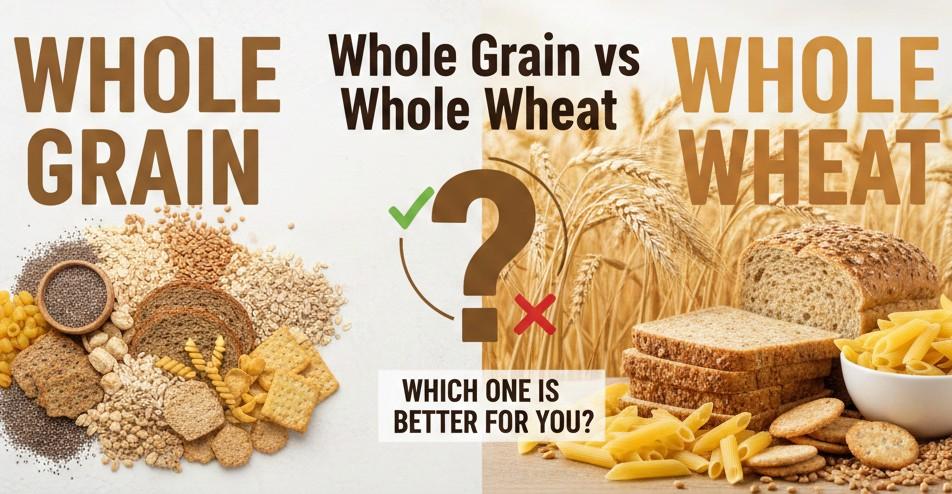
If you have ever stood in a grocery store aisle staring at bread labels, cereal boxes, or pasta packets, you have probably seen the words whole grain and whole wheat everywhere. They sound healthy, they look similar, and many people assume they mean the same thing. But do they?
The truth is, while whole grain and whole wheat are closely related, they are not exactly identical. Understanding the difference can help you make smarter food choices, improve digestion, manage weight, and support long-term health. In this guide, we will break down everything you need to know about whole grain vs whole wheat.
What Are Whole Grains?
Whole grains are grains that contain all three parts of the grain kernel in their natural proportions. These three parts are:
- Bran – The outer layer
- Germ – The nutrient-rich core
- Endosperm – The starchy middle
When a grain keeps all three parts intact, it is considered a whole grain.
Why This Matters
Each part of the grain plays a unique role in nutrition:
- The bran provides fiber, which supports digestion and keeps you feeling full.
- The germ contains vitamins, minerals, healthy fats, and antioxidants.
- The endosperm supplies carbohydrates and protein for energy.
When grains are refined, the bran and germ are removed. This strips away much of the fiber and nutrients, leaving mostly starch behind.
Examples of Whole Grains
Whole grains come in many forms, not just wheat. Common examples include:
- Brown rice
- Oats
- Barley
- Quinoa
- Millet
- Whole corn
- Buckwheat
- Rye
- Sorghum
- Whole wheat
So, whole wheat is actually a type of whole grain, but not all whole grains are wheat.
What Is Whole Wheat?
Whole wheat specifically refers to wheat grains that still contain the bran, germ, and endosperm. It is made from the entire wheat kernel, just like other whole grains, but it comes only from wheat.
Whole Wheat vs Refined Wheat
Refined wheat products, such as white bread or maida, are processed to remove the bran and germ. This makes the flour lighter in color and softer in texture, but it also removes fiber and many nutrients.
Whole wheat flour, on the other hand, is made by grinding the entire wheat kernel. This results in:
- A darker color
- A denser texture
- Higher fiber content
- More vitamins and minerals
Whole Grain vs Whole Wheat: The Key Differences
Although whole wheat is a type of whole grain, the two terms are not interchangeable. Here’s a clear comparison.
| Feature | Whole Grain | Whole Wheat |
|---|---|---|
| Meaning | Grains that contain all three parts of the kernel: bran, germ, and endosperm | Wheat that contains all three parts of the wheat kernel |
| Source | Can come from different grains like rice, oats, barley, millet, quinoa, or wheat | Comes only from wheat |
| Category | A broad category that includes many grains | A specific type of whole grain |
| Nutrient Content | Varies depending on the grain used | Consistently high in fiber, B vitamins, iron, and minerals |
| Fiber Content | High, but depends on the type of grain | Generally high, especially in insoluble fiber |
| Taste | Can be mild, nutty, or earthy depending on the grain | Slightly strong, nutty, and earthy flavor |
| Texture | Can be soft, chewy, or firm | Dense and hearty |
| Common Examples | Brown rice, oats, barley, quinoa, millet, rye | Whole wheat flour, whole wheat bread, whole wheat pasta |
| Gluten Content | May be gluten-free or contain gluten | Always contains gluten |
| Best For | People looking for variety and diverse nutrition | People who prefer wheat-based foods like rotis and bread |
| Suitability for Diabetes | Helps manage blood sugar when eaten in moderation | Good choice due to slow digestion and fiber content |
| Availability in India | Widely available in traditional grains and millets | Easily available as whole wheat atta |
Source
- Whole grain: Can come from any grain, such as rice, oats, barley, or wheat
- Whole wheat: Comes only from wheat
Variety
- Whole grain: Includes many grains, offering more dietary diversity
- Whole wheat: Limited to wheat-based products
Nutritional Profile
- Whole grain: Nutrition varies depending on the grain used
- Whole wheat: Consistently high in fiber, B vitamins, iron, magnesium, and selenium
Taste and Texture
- Whole grain: Can be nutty, chewy, or mild depending on the grain
- Whole wheat: Typically has a stronger, earthier flavor and denser texture
Nutritional Value of Whole Grains
Whole grains are packed with essential nutrients that support overall health.
Key Nutrients Found in Whole Grains
- Dietary fiber for digestion and gut health
- B vitamins for energy metabolism
- Iron for oxygen transport in the blood
- Magnesium for muscle and nerve function
- Zinc for immunity
- Antioxidants that protect cells from damage
These nutrients work together to support heart health, digestive health, and long-term wellness.
Nutritional Value of Whole Wheat
Whole wheat is especially valued for its high fiber and nutrient density.
What Whole Wheat Provides
- High levels of insoluble fiber, which promotes regular bowel movements
- Complex carbohydrates that release energy slowly
- Plant-based protein
- Important minerals like iron, phosphorus, and magnesium
- Natural antioxidants from the wheat bran
This makes whole wheat a strong option for people looking to improve digestion and maintain steady energy levels.
Health Benefits of Whole Grains
Supports Digestive Health
The fiber in whole grains adds bulk to stool and helps food move smoothly through the digestive system. This can reduce constipation and support a healthy gut microbiome.
Helps Manage Weight
Whole grains keep you full for longer because they take more time to digest. This helps reduce unnecessary snacking and overeating.
Improves Heart Health
Regular consumption of whole grains is linked to lower cholesterol levels and better heart health. Fiber helps reduce bad cholesterol while antioxidants protect blood vessels.
Supports Blood Sugar Control
Whole grains slow down the absorption of sugar into the bloodstream, preventing sharp spikes in blood sugar levels. This is especially beneficial for people with diabetes or insulin resistance.
Reduces Risk of Chronic Diseases
Studies show that diets rich in whole grains are associated with a lower risk of heart disease, type 2 diabetes, and certain cancers.
Health Benefits of Whole Wheat
Promotes Regular Bowel Movements
Whole wheat is particularly rich in insoluble fiber, which supports regular digestion and prevents constipation.
Helps Maintain Energy Levels
Whole wheat carbohydrates are digested slowly, providing steady energy instead of quick spikes and crashes.
Supports Heart Health
The fiber and antioxidants in whole wheat help reduce cholesterol and support healthy blood circulation.
Aids in Weight Management
Whole wheat foods are more filling than refined wheat products, helping control appetite naturally.
Whole Grain and Whole Wheat for Digestive Health
Digestive health is one of the biggest reasons people switch to whole grains or whole wheat.
Whole grains feed beneficial gut bacteria, which play a key role in digestion, immunity, and even mental health. Whole wheat, with its high fiber content, is particularly effective at improving bowel regularity.
However, it is important to increase fiber intake gradually. A sudden jump can cause bloating or gas, especially if your diet previously lacked fiber.
Whole Grain and Whole Wheat for Weight Loss
Neither whole grain nor whole wheat is a magic weight-loss food, but both can support healthy weight management.
They help by:
- Keeping you full for longer
- Reducing cravings
- Preventing blood sugar crashes
- Encouraging mindful eating
Whole grains also make meals more satisfying, which can naturally reduce portion sizes over time.
Whole Grain and Whole Wheat for Diabetes
Whole grains and whole wheat are better choices than refined grains for people with diabetes.
Their fiber content slows carbohydrate absorption, leading to:
- More stable blood sugar levels
- Reduced insulin spikes
- Better long-term glucose control
Whole grains like oats, barley, and brown rice may be especially helpful because of their soluble fiber content.
Whole Grain and Whole Wheat in Indian Diets
In Indian households, whole grains have always been part of traditional diets.
Examples include:
- Whole wheat atta for rotis
- Brown rice instead of polished white rice
- Millets like jowar, bajra, and ragi
- Barley in soups and porridges
Modern processed foods often replace these with refined grains, but returning to traditional whole grains can significantly improve health.
How to Identify Real Whole Grain and Whole Wheat Products
Food labels can be misleading. Here’s how to choose correctly.
Check the Ingredients List
- Look for the words “100% whole grain” or “100% whole wheat” as the first ingredient
- Avoid products where refined flour or maida is listed first
Watch Out for Misleading Terms
- Multigrain does not always mean whole grain
- Wheat flour does not always mean whole wheat
- Brown-colored bread is not always whole wheat
Always rely on ingredient lists, not packaging claims.
Whole Grain vs Whole Wheat: Which One Should You Choose?
The answer depends on your goals.
- Choose whole grains if you want variety and a broader nutrient profile
- Choose whole wheat if you prefer wheat-based foods like rotis, bread, and pasta
Ideally, your diet should include both.
Are There Any Side Effects?
While whole grains and whole wheat are healthy, they may not suit everyone.
Possible Side Effects
- Bloating or gas if consumed suddenly in large amounts
- Gluten sensitivity or celiac disease issues with wheat
- Digestive discomfort if not well-hydrated
Drinking enough water and introducing fiber slowly can reduce most side effects.
How Much Whole Grain and Whole Wheat Should You Eat?
Most health experts recommend that at least half of your daily grain intake should come from whole grains.
For an average adult, this may look like:
- 2–3 whole wheat rotis
- 1 bowl of brown rice or quinoa
- A serving of oats or barley
Balance is key.
Simple Ways to Add More Whole Grains and Whole Wheat
- Switch from white rice to brown rice
- Use whole wheat atta for rotis
- Choose oats or millet for breakfast
- Replace refined pasta with whole wheat pasta
- Add barley or quinoa to soups and salads
Small changes add up over time.
Final Thoughts
Whole grain and whole wheat are not just health trends. They are traditional, time-tested foods that support digestion, heart health, weight management, and overall well-being.
Whole wheat is a powerful whole grain, especially common in everyday meals, while whole grains as a group offer variety and broader nutritional benefits. Instead of choosing one over the other, aim to include both in your daily diet. Eating whole is not about restriction. It is about nourishment, balance, and long-term health. When you understand what your food really contains, making better choices becomes easier and more natural.
FAQ’s
Are whole grain and whole wheat the same?
No, they are not the same. Whole wheat is a type of whole grain, but whole grains include many other grains such as oats, brown rice, barley, and millet. All whole wheat is whole grain, but not all whole grains are wheat.
Which is healthier: whole grain or whole wheat?
Both are healthy choices. Whole grains offer more variety and different nutrients depending on the grain, while whole wheat is especially high in fiber and commonly used in daily foods like bread and rotis. Including a mix of both is ideal.
Is whole wheat better than white flour?
Yes, whole wheat is healthier than white flour because it contains the bran and germ, which provide fiber, vitamins, and minerals. White flour is refined and lacks many essential nutrients.
Can people with diabetes eat whole grains and whole wheat?
Yes, in moderate portions. Whole grains and whole wheat digest more slowly and help prevent sudden blood sugar spikes. However, portion control and overall meal balance are important.
Are whole grains good for weight loss?
Whole grains can support weight loss because they keep you full longer, reduce cravings, and help control appetite. They work best as part of a balanced diet.
Does whole wheat contain gluten?
Yes, whole wheat contains gluten. People with celiac disease or gluten intolerance should avoid whole wheat and choose gluten-free whole grains like rice, quinoa, or millet.
How can I tell if a product is truly whole grain or whole wheat?
Check the ingredient list. Look for “100% whole grain” or “100% whole wheat” as the first ingredient. Avoid products where refined flour or maida is listed first.
Can children eat whole grains and whole wheat?
Yes, whole grains and whole wheat are safe and beneficial for children. They support digestion, energy levels, and overall growth when included in age-appropriate portions.
Is it safe to eat whole grains every day?
Yes, eating whole grains daily is generally safe and recommended. Just increase intake gradually and drink enough water to avoid digestive discomfort.
Which whole grains are best for daily consumption?
Some of the best whole grains for daily meals include whole wheat, oats, brown rice, barley, millets, and quinoa. Rotating different grains helps ensure balanced nutrition.
Also Read: