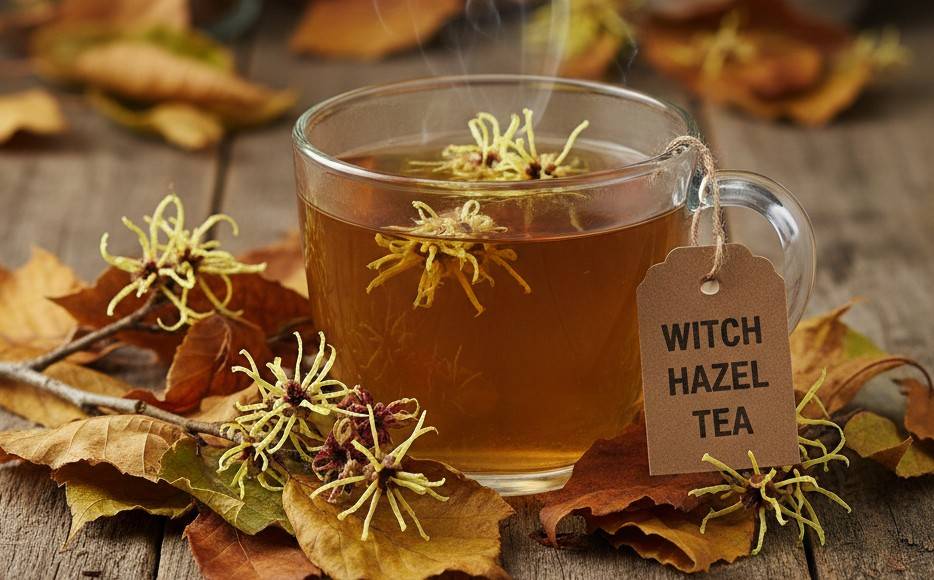
Herbal teas have been used for centuries as natural remedies for a wide range of health concerns. From chamomile for sleep to ginger for digestion, each herb plays a unique role in supporting wellness. One lesser-known but powerful herbal infusion is Witch Hazel Tea. While witch hazel is more commonly used as a topical solution in skincare, its tea form also holds several therapeutic properties when prepared and consumed correctly.
In this guide, we will explore what witch hazel tea is, its nutritional profile, proven health benefits, potential side effects, how to prepare it, and who should (or shouldn’t) drink it.
What is Witch Hazel Tea?
Witch hazel tea is a herbal infusion made from the dried bark, leaves, or twigs of the witch hazel plant (Hamamelis virginiana). This flowering shrub is native to North America and has been used in Native American and traditional herbal medicine for hundreds of years.
The plant is rich in tannins, flavonoids, and polyphenols, which give it powerful anti-inflammatory, antioxidant, and astringent properties. While witch hazel is most famous for its use in cosmetic and skincare products, the tea form is traditionally used for internal issues such as digestive discomfort, mild diarrhea, sore throat, inflammation, and water retention. Witch hazel tea has a slightly bitter and earthy taste, so it is often combined with milder herbs like chamomile or mint to improve flavor.
Nutritional Facts of Witch Hazel Tea
Although witch hazel tea is not consumed for its calorie content or macronutrients, it contains several important bioactive compounds that contribute to its benefits.
| Nutrient / Compound | Approximate Amount (per cup) | Health Role |
|---|---|---|
| Calories | 2–5 kcal | Very low in calories |
| Carbohydrates | <1 g | Minimal energy contribution |
| Tannins | High | Astringent, anti-inflammatory |
| Flavonoids | Moderate | Antioxidant and anti-inflammatory |
| Polyphenols | Moderate | Protect cells from damage |
| Gallic acid | Small amount | Supports immune function |
| Essential oils | Trace amounts | Contribute to aroma and effect |
| Water | ~99% | Hydration |
Its main strength lies in its plant compounds, not vitamins or minerals.
20 Science-Backed Benefits of Witch Hazel Tea
1. Helps Reduce Inflammation
Witch hazel is rich in tannins that help reduce internal inflammation. This can be helpful for people dealing with joint pain, mild arthritis, or chronic inflammatory conditions.
2. Supports Digestive Health
Traditionally used to soothe an upset stomach, witch hazel tea helps calm irritation in the digestive tract and may reduce bloating and cramps.
3. May Help with Diarrhea
Due to its natural astringent properties, witch hazel tea can help tighten intestinal tissues and reduce excessive bowel movements.
4. Soothes Sore Throat
When taken warm, it can help reduce throat inflammation and irritation, making it useful during colds or minor infections.
5. Supports Oral Health
Its antibacterial properties may help reduce harmful bacteria in the mouth and support healthier gums when used as a mouth rinse or tea.
6. Helps Detox the Body
Witch hazel tea promotes gentle cleansing by helping the body eliminate toxins through the urinary system.
7. Reduces Water Retention
It works as a mild diuretic, helping the body flush out excess water and reduce bloating or puffiness.
8. Boosts Immune Function
With its antioxidant compounds, witch hazel tea may support the immune system in fighting infections and cellular damage.
9. May Help With Hemorrhoids (Internal Support)
Traditionally, witch hazel has been used to treat hemorrhoids. Drinking the tea may help reduce internal swelling and discomfort.
10. Supports Skin Health from Within
Antioxidants in the tea can help fight free radicals, which contribute to premature aging and dull skin.
11. Helps Balance Menstrual Discomfort
Some women find relief from menstrual heaviness and cramping due to its tissue-tightening properties.
12. Aids in Wound Healing (Internal Support)
While best used topically, consuming witch hazel tea may support the body’s natural process of healing tissue.
13. Combats Bacterial Activity
Its antimicrobial compounds can help reduce harmful bacteria inside the body.
14. May Lower Mild Fever
Witch hazel tea cools the body slightly and may help regulate body temperature during mild fever.
15. Assists in Managing Varicose Veins
It supports vein strength and may improve blood circulation with regular, moderate intake.
16. Supports Liver Function
By reducing oxidative stress, it helps the liver in its natural detox role.
17. May Help with Weight Management
Its diuretic and digestion-improving properties help reduce bloating and water weight.
18. Reduces Mucus Production
It can help dry excess mucus, making it useful during colds, sinus congestion, or allergies.
19. Helps Calm Minor Internal Bleeding
Traditionally used for nosebleeds and minor internal bleeding disorders due to its astringency.
20. Improves Overall Gut Health
Regular, safe intake can help balance the gut lining and maintain digestive strength.
10 Side Effects of Witch Hazel Tea
Though natural, witch hazel tea should be consumed carefully.
1. Upset Stomach
In high doses, it can irritate the stomach lining.
2. Nausea
Some people may feel nauseous due to its strong compounds.
3. Liver Stress (with misuse)
Overuse may burden the liver due to high tannin content.
4. Constipation
Excessive consumption may slow bowel movements.
5. Allergic Reactions
Possible in people sensitive to witch hazel.
6. Dry Mouth and Throat
Due to its drying nature.
7. Interaction with Medications
May affect how some medications are absorbed.
8. Dizziness
If consumed too much at one time.
9. Low Blood Pressure
It may slightly reduce blood pressure in some individuals.
10. Kidney Strain (over long-term misuse)
Must not be consumed in large amounts for a prolonged time.
How to Make Witch Hazel Tea?
Ingredients:
- 1 teaspoon dried witch hazel bark or leaves
- 1 cup hot water
- Optional: honey or lemon
Method:
- Boil water and remove from heat.
- Add dried witch hazel to a cup.
- Pour hot water over the herb.
- Cover and steep for 10–15 minutes.
- Strain and drink warm.
For milder taste, mix with mint or chamomile.
Other Uses of Witch Hazel Tea
- Can be used as a skin toner
- Good as a hair rinse for scalp health
- Helpful as a mouth rinse
- Used for eye wash (very diluted)
- Helps clean minor cuts and insect bites
Always use separate batches for internal and external use.
How Much Witch Hazel Tea Can You Drink a Day?
It is generally considered safe to drink 1 cup per day, occasionally up to 2 cups if properly diluted.
Drinking large quantities regularly is not recommended due to its concentrated tannins.
Tips for Consuming Witch Hazel Tea
- Start with a small amount
- Always use properly dried, food-safe witch hazel
- Combine with other herbs to reduce bitterness
- Drink after meals for best digestive effect
- Avoid long-term continuous use
- Take breaks between weeks of use
- Store dried witch hazel in an airtight container
- Do not sweeten with artificial sweeteners
- Always strain well
- Use glass or ceramic cups
Best Time to Drink Witch Hazel Tea
- Morning after breakfast to improve digestion
- Afternoon for bloating or inflammation
- Avoid at night because it may increase urination
Who Should Drink Witch Hazel Tea?
- People with mild digestive problems
- Those suffering from sore throat or mild cold
- Individuals looking for natural detox support
- People with water retention and bloating
- Those interested in herbal wellness
- Adults with minor inflammation or joint discomfort
Who Should Not Drink Witch Hazel Tea?
- Pregnant women
- Breastfeeding mothers
- People with liver disease
- Patients with kidney problems
- Children under 12
- Individuals on strong medication
- People with known allergies to witch hazel
- Those with chronic digestive disorders
Always consult a healthcare professional first.
Precautions and Interactions
- Do not consume for more than 7–10 consecutive days
- Avoid combining with other strong herbal laxatives or diuretics
- Do not replace prescribed medication with this tea
- Stop use if any discomfort occurs
- Avoid if preparing for surgery
- Consult a doctor if you’re on blood pressure or liver medication
- Do not mix with alcohol
- Use only food-grade witch hazel
Final Thoughts
Witch hazel tea is a powerful herbal drink with impressive anti-inflammatory, detoxifying, and digestive properties. However, it is also very potent and must be used carefully and responsibly. When consumed in moderation and under the right conditions, it can become a valuable part of a natural wellness routine. If you are new to herbal teas, begin slow, observe how your body reacts, and consult a healthcare professional before making it part of your daily lifestyle.
FAQ’s
What is witch hazel tea good for?
Witch hazel tea is commonly used to reduce inflammation, soothe digestive problems, ease sore throat irritation, reduce water retention, and support the body’s natural detox process. It also contains antioxidants that help protect the body from free radical damage.
Can I drink witch hazel tea every day?
It is not recommended to drink witch hazel tea daily for long periods. Due to its high tannin content, it is safer to consume it in moderation, around 1 cup per day, and not for more than 7 to 10 consecutive days without a break.
Is witch hazel tea safe for the liver?
In small and occasional doses, witch hazel tea is generally safe for healthy individuals. However, excessive or long-term use may strain the liver. People with existing liver conditions should avoid drinking it unless advised by a healthcare professional.
Can witch hazel tea help with weight loss?
Witch hazel tea may support weight management indirectly by reducing bloating, improving digestion, and flushing out excess water from the body. However, it should not be used as a primary weight-loss method.
Is witch hazel tea good for the kidneys?
In moderation, witch hazel tea may help the kidneys flush out excess fluids because of its mild diuretic effect. But large or regular doses can strain kidney function. People with kidney problems should avoid it or seek medical advice first.
Can pregnant or breastfeeding women drink witch hazel tea?
No, witch hazel tea is not recommended for pregnant or breastfeeding women because of its strong astringent and medicinal compounds, which may be unsafe for both mother and baby.
Can children drink witch hazel tea?
Witch hazel tea is not recommended for children, especially those under 12 years of age. The herb is very strong and contains high levels of tannins, which may cause stomach irritation or other side effects in young bodies. If a child is dealing with a health issue, it is always safer to choose milder herbal teas or consult a pediatrician first.
What does witch hazel tea taste like?
Witch hazel tea has a bitter, earthy, and slightly woody taste. It is not naturally sweet, which is why many people mix it with gentler herbs like chamomile, mint, or a little honey to make it more pleasant to drink.
What does witch hazel tea do?
Witch hazel tea works mainly as a natural anti-inflammatory, astringent, and mild detoxifier. It can help reduce bloating, support digestion, soothe sore throat irritation, reduce excess water retention, and support overall internal healing when consumed carefully and in moderation.
Also Read: