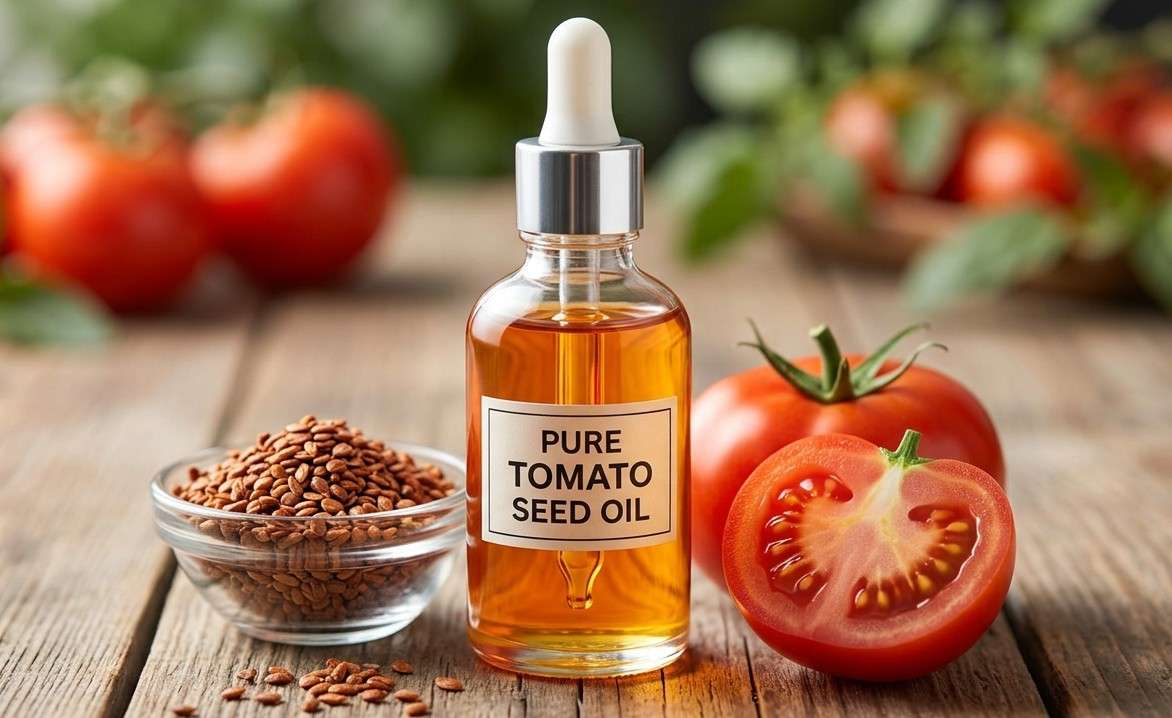
Tomatoes are one of the most loved foods in kitchens around the world, but did you know that the tiny seeds inside tomatoes produce a powerful and nutrient-rich oil? Tomato Seed Oil is slowly gaining attention in both the wellness and skincare world for its impressive fatty acid profile, antioxidant content, and versatility.
In this guide, we will explore everything you need to know about Tomato Seed Oil — from nutrition facts and science-backed health benefits to side effects, dosage, and how to use it safely.
What is Tomato Seed Oil?
Tomato Seed Oil is a cold-pressed oil extracted from the seeds of ripe tomatoes (Solanum lycopersicum). These seeds are usually a by-product of tomato processing industries, making the oil a sustainable and eco-friendly ingredient.
The oil has a light texture, a mild earthy scent, and a golden to reddish color. It is rich in essential fatty acids, especially linoleic acid (omega-6), along with antioxidants like lycopene, vitamin E, and phytosterols.
Tomato Seed Oil is widely used in:
- Skincare products
- Hair care formulations
- Massage oils
- Functional food applications
- Nutritional supplements
Because of its balanced fatty acid composition and antioxidant content, it supports both internal and external health.
Nutrition Facts of Tomato Seed Oil
Below is the approximate nutritional composition of Tomato Seed Oil per 100 grams:
| Nutrient | Amount (Approx.) |
|---|---|
| Calories | 884 kcal |
| Total Fat | 100 g |
| Saturated Fat | 14–16 g |
| Monounsaturated Fat | 22–25 g |
| Polyunsaturated Fat | 55–60 g |
| Linoleic Acid (Omega-6) | 50–55 g |
| Oleic Acid (Omega-9) | 20–25 g |
| Palmitic Acid | 10–14 g |
| Stearic Acid | 3–5 g |
| Vitamin E (Tocopherols) | 80–120 mg |
| Lycopene | Trace to moderate amounts |
| Phytosterols | Present |
Values may vary depending on extraction method and tomato variety.
20 Proven Benefits of Tomato Seed Oil
- Rich in Essential Fatty Acids – Tomato Seed Oil supplies omega-6 and omega-9 fatty acids that help maintain healthy cell membranes and skin barrier function.
- Powerful Antioxidant Support – The presence of vitamin E and lycopene helps neutralize free radicals and reduce oxidative stress.
- Supports Skin Hydration – Its high linoleic acid content helps retain moisture and improve skin elasticity.
- Improves Skin Texture – Regular topical use may smooth rough patches and enhance skin softness.
- Helps Reduce Signs of Aging – Antioxidants in the oil may reduce the appearance of fine lines and wrinkles.
- Promotes Even Skin Tone – Lycopene may support a brighter and more uniform complexion.
- Supports Heart Health – When consumed in moderation, its unsaturated fats may support cardiovascular wellness.
- Anti-Inflammatory Properties – Essential fatty acids may help reduce mild inflammatory responses in the body.
- Supports Hair Health – The oil nourishes the scalp and may reduce dryness and flakiness.
- Strengthens Skin Barrier – Phytosterols help improve the skin’s natural protective layer.
- May Help with Acne-Prone Skin – Its lightweight texture does not heavily clog pores and may balance sebum production.
- Supports Immune Function – Antioxidant compounds contribute to immune system protection.
- Enhances Wound Healing – Vitamin E may assist in minor skin repair and recovery.
- Improves Skin Elasticity – Fatty acids help maintain supple and flexible skin.
- May Protect Against UV Damage – Lycopene offers mild protective antioxidant support against sun-related damage.
- Supports Brain Health – Healthy fats play a role in maintaining optimal brain function.
- Helps Manage Dry Scalp – Regular application may reduce itchiness and dryness.
- Supports Joint Comfort – Anti-inflammatory compounds may support joint flexibility when included in a balanced diet.
- Improves Lip Care – The oil can soften dry and cracked lips.
- Sustainable and Eco-Friendly – Produced from tomato seed by-products, it supports sustainable agriculture practices.
10 Side Effects of Tomato Seed Oil
Although generally considered safe, excessive or improper use may lead to certain side effects.
- Allergic Reactions – People allergic to tomatoes may experience skin irritation or allergic symptoms.
- Skin Sensitivity – Some individuals may develop redness or mild irritation with topical use.
- Digestive Upset – Overconsumption may cause bloating or mild stomach discomfort.
- High Omega-6 Intake – Excessive intake without balancing omega-3 may promote inflammatory imbalance.
- Acne Flare-Ups – In rare cases, it may clog pores if used excessively on oily skin.
- Oxidation Risk – Improperly stored oil may turn rancid and cause digestive discomfort.
- Blood Thinning Effects – High vitamin E content may mildly influence blood clotting in sensitive individuals.
- Interaction with Medications – May interact with anticoagulant or lipid-lowering drugs.
- Nausea from Overdose – Large oral doses may cause nausea.
- Not Suitable for Infants – Internal use in infants is not recommended without medical supervision.
How to Use Tomato Seed Oil?
Tomato Seed Oil can be used both topically and internally.
Topical Use:
- Apply 2–3 drops directly to clean skin.
- Mix with moisturizer or serum.
- Use as a facial oil before bedtime.
- Massage into scalp once or twice weekly.
Internal Use:
- Add 1 teaspoon to salads.
- Mix into smoothies.
- Use as a finishing oil over cooked vegetables.
- Blend into salad dressings.
Avoid using it for deep frying, as high heat can destroy its nutrients.
Other Uses of Tomato Seed Oil
- Ingredient in anti-aging creams
- Used in natural soaps
- Massage oil blends
- Lip balm formulations
- Hair serums
- Body oils
- Nail and cuticle care
Its light texture makes it suitable for cosmetic formulations.
Tips for Consuming Tomato Seed Oil
- Always choose cold-pressed, unrefined oil.
- Start with small amounts.
- Do not overheat.
- Store properly to prevent rancidity.
- Combine with omega-3 sources like flaxseed or walnuts for balance.
How to Take Tomato Seed Oil?
You can take Tomato Seed Oil in the following ways:
- 1 teaspoon directly with meals.
- Mixed in salad dressing.
- Added to soups after cooking.
- As part of a supplement capsule (if available).
Consistency matters more than quantity.
How to Make Tomato Seed Oil?
Commercial production requires specialized cold-press equipment, but small-scale preparation is possible.
Steps:
- Collect and wash tomato seeds.
- Dry seeds thoroughly in sunlight.
- Grind lightly.
- Use a small oil press machine.
- Filter through cheesecloth.
- Store in dark glass bottles.
Traditional home extraction yields very little oil, so it is usually more practical to buy high-quality cold-pressed oil.
How Much Tomato Seed Oil Can You Use Per Day?
For internal use, 1–2 teaspoons per day is generally considered safe for healthy adults.
For topical use, a few drops are sufficient per application.
Excessive consumption is not recommended.
Tomato Seed Oil Dosage
General guideline:
- Adults: 5–10 ml per day (internal use).
- Topical: 2–5 drops per use.
- Hair: 1–2 teaspoons for scalp massage once weekly.
Consult a healthcare provider if you have medical conditions.
Best Time to Use Tomato Seed Oil
- For skin: Nighttime for better absorption.
- For hair: Before shampooing.
- For internal use: With meals for better digestion and absorption of fat-soluble nutrients.
Who Should Use Tomato Seed Oil?
- People with dry or mature skin.
- Individuals seeking antioxidant-rich oils.
- Those looking for plant-based vitamin E sources.
- Individuals interested in heart-friendly oils.
- People with dry scalp issues.
Who Should Not Use Tomato Seed Oil?
- Individuals allergic to tomatoes.
- People on strong blood-thinning medications without medical advice.
- Those with severe acne if oil worsens condition.
- Infants and toddlers (internal use).
- People with digestive sensitivity to high-fat foods.
How to Store Tomato Seed Oil?
Proper storage ensures quality and safety.
- Store in dark glass bottles.
- Keep in a cool, dry place.
- Avoid direct sunlight.
- Refrigeration can extend shelf life.
- Use within 6–12 months of opening.
If the oil smells rancid or sour, discard it.
Precautions and Interactions
- Consult a healthcare professional before starting if pregnant or breastfeeding.
- Avoid combining large amounts with anticoagulant medications.
- Do a patch test before applying to face.
- Do not exceed recommended dosage.
- Stop use if irritation occurs.
Final Thoughts
Tomato Seed Oil is a nutrient-dense, sustainable oil packed with essential fatty acids and antioxidants. Whether used in skincare routines or added to meals, it offers multiple health and cosmetic benefits. Like all natural oils, moderation and proper usage are key.
FAQ’s
What is Tomato Seed Oil good for?
Oil is mainly used for improving skin hydration, supporting heart health, nourishing hair, and providing antioxidant protection due to its high vitamin E and essential fatty acid content.
Can I use Tomato Seed Oil on my face every day?
Yes, most people can use oil daily in small amounts, especially at night, but those with oily or acne-prone skin should start with a patch test.
Is Tomato Seed Oil edible?
Yes, cold-pressed and food-grade Tomato Seed Oil is edible and can be added to salads, smoothies, or used as a finishing oil.
Does Tomato Seed Oil clog pores?
Oil is lightweight and rich in linoleic acid, which generally makes it less likely to clog pores compared to heavier oils, but individual reactions may vary.
Is Tomato Seed Oil good for acne-prone skin?
It may help balance sebum production because of its linoleic acid content, but results depend on skin type and overall skincare routine.
Can Tomato Seed Oil lighten skin?
Oil does not bleach the skin, but its antioxidants may promote a brighter and more even complexion over time.
How long does it take to see results from Tomato Seed Oil?
Topical results such as improved hydration may be noticeable within 1–2 weeks, while internal health benefits may take several weeks of consistent use.
Is Tomato Seed Oil safe during pregnancy?
Small dietary amounts are generally considered safe, but pregnant or breastfeeding women should consult a healthcare professional before regular use.
Can Tomato Seed Oil help with hair growth?
It may support scalp health and reduce dryness, which can indirectly promote healthier hair growth, but it is not a direct hair growth treatment.
What does Tomato Seed Oil smell like?
Oil has a mild, slightly earthy, and subtly nutty aroma that is not overpowering.
Can people with tomato allergies use Tomato Seed Oil?
Individuals with tomato allergies should avoid using oil unless approved by a healthcare professional, as allergic reactions are possible.
Can Tomato Seed Oil be used for cooking?
It is best used as a finishing oil rather than for high-heat cooking because heat can damage its delicate nutrients.
Does Tomato Seed Oil expire?
Yes, like all natural oils, it can become rancid over time; proper storage in a cool, dark place can extend its shelf life to about 6–12 months.
Is Tomato Seed Oil suitable for sensitive skin?
Many people with sensitive skin tolerate it well, but a patch test is recommended before full application.
Can Tomato Seed Oil help reduce wrinkles?
Its vitamin E and antioxidant content may help minimize the appearance of fine lines by supporting skin elasticity and hydration.
Is Tomato Seed Oil vegan and natural?
Yes, Oil is plant-based, vegan, and typically produced through cold-press extraction methods.
Can I mix Tomato Seed Oil with other oils?
Yes, it blends well with oils like jojoba, argan, or rosehip oil for enhanced skincare benefits.
Is Tomato Seed Oil good for dry lips?
Yes, it can be applied directly to dry lips to improve softness and prevent cracking.
Where can I buy Tomato Seed Oil?
Oil is available in health stores, organic markets, and online retailers that sell cold-pressed or cosmetic-grade plant oils.
Is Tomato Seed Oil safe for children?
Topical use in small amounts may be safe for older children after a patch test. Internal use should only be given with a doctor’s advice, and children with tomato allergies should avoid it.
Also Read: