Walking has always been one of the simplest and most effective ways to stay active. Recently, a new fitness routine known as the 6-6-6 Walking Trend has gained popularity across social media, wellness blogs, and fitness communities. Unlike complicated workout plans that require expensive equipment or gym memberships, the 6-6-6 walking method focuses on consistency, routine, and achievable daily movement.
Many people are turning to this walking schedule because it fits into busy lifestyles while supporting weight management, cardiovascular health, mental well-being, and overall fitness. The method is easy enough for beginners yet flexible enough for experienced walkers looking to maintain an active lifestyle.
But does it actually work? Is there scientific evidence behind it? Who should try it, and what precautions should you take? This guide explains everything you need to know about the 6-6-6 Walking Trend, including how it works, its health benefits, potential drawbacks, and practical tips to make it part of your daily routine.
What Is the 6-6-6 Walking Trend?
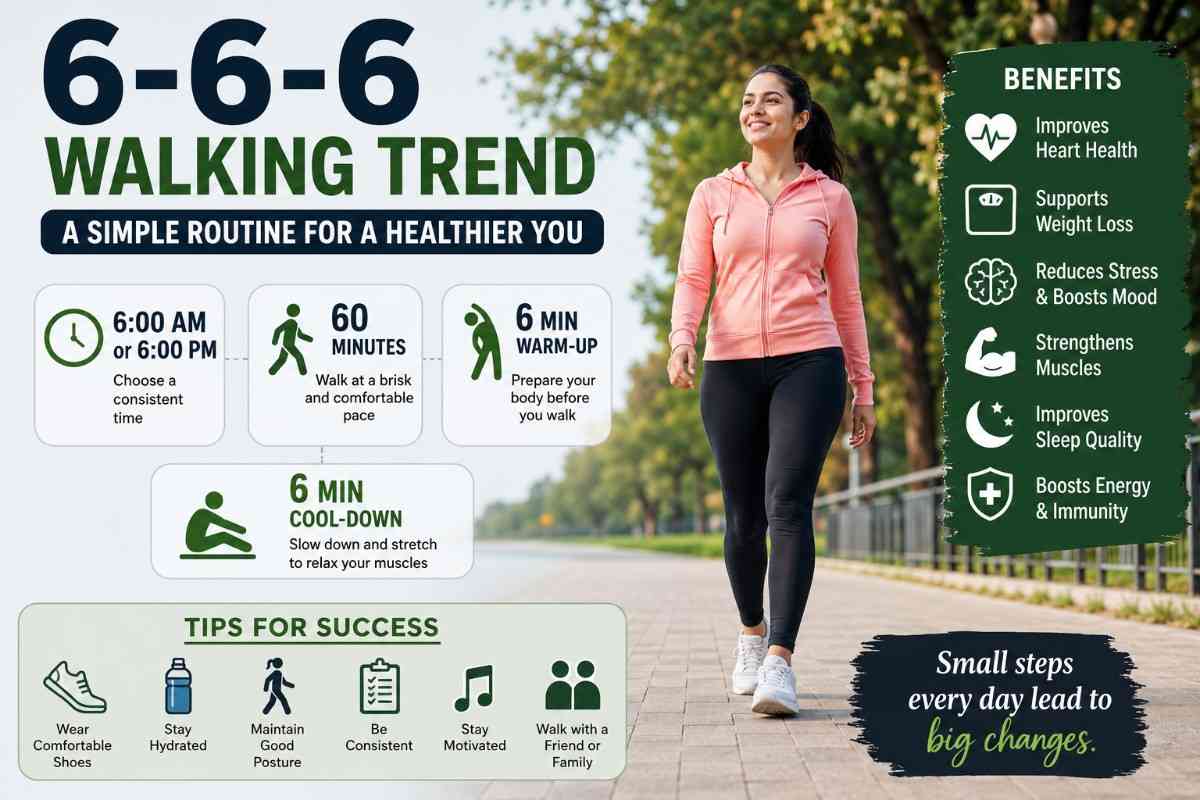
The 6-6-6 Walking Trend is a structured walking routine that generally involves:
- Walking at 6:00 AM or 6:00 PM
- Walking for 60 minutes
- Spending 6 minutes warming up before the walk
- Spending 6 minutes cooling down afterward
The exact interpretation varies slightly across social media platforms, but the core idea remains the same: dedicate one hour to walking at a consistent time each day while including proper warm-up and cool-down sessions.
Rather than promoting intense exercise, the trend encourages building a sustainable daily habit that supports long-term health.
Why Has the 6-6-6 Walking Trend Become So Popular?
Several factors have contributed to its growing popularity:
- Easy for beginners
- Requires no gym membership
- Suitable for most age groups
- Can be done almost anywhere
- Supports weight-loss goals
- Improves daily physical activity
- Encourages routine and consistency
- Easy to remember
Unlike complicated workout challenges, the 6-6-6 method is realistic enough that many people can stick with it over time.
How to Do the 6-6-6 Walking Routine?
The 6-6-6 Walking Trend is simple to follow and requires only a comfortable pair of walking shoes and a safe place to walk. The routine follows four simple stages.
Step 1: Warm Up for 6 Minutes
Begin with slow walking while gradually increasing your pace.
Include gentle movements such as:
- Shoulder rolls
- Neck stretches
- Arm swings
- Hip rotations
- Ankle circles
The warm-up prepares muscles, joints, and your cardiovascular system for exercise.
Step 2: Walk for 60 Minutes
Maintain a brisk but comfortable pace where you can still hold a conversation.
A moderate walking pace usually falls between:
- 4.5–6 km/hour
- 100–130 steps per minute
The goal is consistency rather than speed.
Step 3: Cool Down for 6 Minutes
Gradually slow your walking pace.
Finish with gentle stretching for:
- Calves
- Hamstrings
- Quadriceps
- Hip flexors
- Lower back
Cooling down helps reduce muscle stiffness and gradually lowers your heart rate.
Step 4: Repeat Consistently
Try to perform the walk most days of the week.
Consistency matters more than perfection.
20 Health Benefits of the 6-6-6 Walking Trend
1. Supports Heart Health
Walking strengthens the heart and improves circulation.
2. Helps Manage Weight
A one-hour brisk walk burns calories and contributes to a calorie deficit when paired with healthy eating.
3. Improves Blood Sugar Control
Walking after meals may help reduce blood sugar spikes.
4. Boosts Mental Health
Walking encourages the release of endorphins, which may improve mood.
5. Reduces Stress
Daily walking provides a calming break from work and digital screens.
6. Improves Sleep Quality
Morning or evening walks may help regulate your body’s natural sleep cycle.
7. Strengthens Muscles
Walking works the legs, hips, and core muscles.
8. Supports Joint Mobility
Regular movement helps lubricate joints and reduce stiffness.
9. Improves Balance
Walking strengthens stabilizing muscles that help prevent falls.
10. Enhances Lung Function
Brisk walking increases breathing efficiency.
11. Boosts Energy Levels
Regular physical activity often reduces fatigue over time.
12. Improves Endurance
Walking consistently builds cardiovascular stamina.
13. Supports Healthy Blood Pressure
Moderate aerobic exercise can help lower blood pressure in many adults.
14. Improves Cholesterol Levels
Walking may help increase HDL (“good”) cholesterol while reducing LDL (“bad”) cholesterol when combined with a healthy lifestyle.
15. Strengthens Bones
Weight-bearing exercise helps maintain bone density.
16. Supports Brain Health
Walking increases blood flow to the brain and may support cognitive function.
17. Encourages Better Digestion
Gentle walking after meals may improve digestion.
18. Boosts Immune Function
Regular moderate exercise is associated with improved immune health.
19. Reduces Sedentary Time
Replacing inactivity with daily walking supports long-term wellness.
20. Builds Healthy Habits
Following a structured routine often makes exercise easier to maintain.
Related Articles:
- How Many Steps Should You Walk Daily? A Guide by Age
- Walking Before or After a Meal: Which is Better for Your Health?
- What is Proper Walking Form? Foot Placement, Posture & Breathing
Potential Drawbacks of the 6-6-6 Walking Trend
Although the 6-6-6 Walking Trend is safe for most people, it isn’t the perfect fit for everyone. Here are some potential drawbacks to consider:
- May be time-consuming: Walking for a full 60 minutes every day can be difficult for people with busy schedules.
- Not ideal for everyone: Individuals with severe joint pain, mobility issues, or certain medical conditions may need a modified routine.
- Limited muscle-building benefits: Walking improves endurance and cardiovascular health but doesn’t provide enough resistance to build significant muscle mass.
- Weight loss varies: Results depend on your diet, metabolism, activity level, and consistency. Walking alone may not lead to substantial weight loss.
- Risk of overuse injuries: Walking long distances every day without proper footwear or recovery may contribute to foot, ankle, knee, or hip discomfort.
- Weather can be a barrier: Extreme heat, cold, rain, or poor air quality may make outdoor walking challenging.
- Can become repetitive: Doing the same walking routine daily may feel monotonous, making it harder to stay motivated over time.
- Requires consistency: Missing walks occasionally is normal, but long-term benefits depend on maintaining the habit.
- May not provide enough intensity: People with advanced fitness levels may need higher-intensity exercise or strength training to continue improving fitness.
- Warm-up and cool-down are often skipped: Skipping these important steps can increase the risk of muscle stiffness or minor injuries.
How to Minimize These Drawbacks?
You can make the 6-6-6 Walking Trend more effective by:
- Wearing supportive walking shoes.
- Walking on safe, even surfaces.
- Staying hydrated before and after your walk.
- Adding strength training 2–3 times per week.
- Taking rest or recovery days when needed.
- Adjusting the walking duration if you’re a beginner.
- Listening to your body and stopping if you experience chest pain, dizziness, or severe joint pain.
Can the 6-6-6 Walking Trend Help with Weight Loss?
Yes—but it is not a magic solution.
Weight loss occurs when you consistently burn more calories than you consume.
A 60-minute brisk walk may burn approximately:
| Body Weight | Estimated Calories Burned |
|---|---|
| 55 kg | 220–280 calories |
| 70 kg | 280–360 calories |
| 85 kg | 340–450 calories |
| 100 kg | 400–520 calories |
Actual calorie burn depends on walking speed, terrain, age, fitness level, and metabolism.
For best results:
- Eat a balanced diet
- Stay hydrated
- Prioritize protein intake
- Get enough sleep
- Include strength training two to three times per week
Who Can Try the 6-6-6 Walking Trend?
Most healthy adults can benefit from this routine.
It may be especially suitable for:
- Beginners
- Office workers
- Older adults
- Individuals restarting exercise
- People managing mild obesity
- Anyone wanting a low-impact fitness routine
Always consult a healthcare professional before starting a new exercise program if you have chronic health conditions or concerns.
Who Should Be Careful?
Speak with your healthcare provider before beginning if you have:
- Severe arthritis
- Heart disease
- Recent surgery
- Uncontrolled high blood pressure
- Chronic lung disease
- Significant balance problems
- Severe joint pain
Pregnant individuals should also discuss appropriate activity levels with their healthcare provider.
Morning vs Evening Walking
Morning Walk (6 AM)
Advantages:
- Cooler temperatures
- Boosts energy for the day
- Encourages consistency
- May improve sleep patterns
Disadvantages:
- Requires waking up earlier
- Muscles may feel stiffer initially
Evening Walk (6 PM)
Advantages:
- Muscles are naturally warmer
- Helps relieve work-related stress
- Easier for some schedules
Disadvantages:
- Busy evenings may interrupt consistency
- Hot weather may still be an issue in some regions
The best time is the one you can maintain consistently.
Common Mistakes to Avoid
Many beginners unknowingly reduce the effectiveness of their walks.
Avoid these common mistakes:
- Skipping the warm-up
- Wearing unsuitable footwear
- Walking too fast too soon
- Poor posture
- Not drinking enough water
- Ignoring pain
- Looking down at your phone constantly
- Walking only occasionally instead of consistently
Tips for Success
To make the most of the 6-6-6 Walking Trend:
- Wear supportive walking shoes.
- Maintain an upright posture.
- Swing your arms naturally.
- Keep a steady pace.
- Drink water before and after your walk.
- Track your progress using a fitness app or journal.
- Listen to music or podcasts if it helps you stay motivated.
- Walk with a friend or family member for accountability.
Sample Weekly 6-6-6 Walking Schedule
| Day | Activity |
| Monday | 6-minute warm-up + 60-minute walk + 6-minute cool-down |
| Tuesday | Same routine |
| Wednesday | Same routine |
| Thursday | Same routine |
| Friday | Same routine |
| Saturday | Same routine or nature walk |
| Sunday | Light recovery walk or rest |
Is the 6-6-6 Walking Trend Backed by Science?
The specific “6-6-6” format has not been extensively studied in scientific research. However, the individual components align with well-established exercise recommendations:
- Regular moderate-intensity aerobic activity supports heart health and overall fitness.
- Warm-up and cool-down periods can help prepare the body for exercise and reduce post-exercise discomfort.
- Consistent physical activity is associated with improvements in weight management, mood, sleep quality, and metabolic health.
The benefits likely come from following a structured, sustainable walking routine rather than from the numbers “6-6-6” themselves.
FAQs
What is 6-6-6 instead of 10,000 steps?
The 6-6-6 Walking Trend is an alternative to the 10,000-step goal that involves walking for 60 minutes at 6:00 AM or 6:00 PM, with a 6-minute warm-up and 6-minute cool-down, focusing on time and consistency rather than step count.
Does the 6-6-6 Walking Trend really work?
Yes. While the specific trend itself hasn’t been scientifically studied, regular brisk walking is proven to improve cardiovascular health, support weight management, boost mood, and increase overall fitness.
Is it better to walk at 6 AM or 6 PM?
Both times offer benefits. Morning walks can boost energy and establish a routine, while evening walks can help reduce stress after a busy day. Choose the time that best fits your schedule.
How fast should I walk during the 60 minutes?
Aim for a brisk pace where you can talk comfortably but not sing. This is considered moderate-intensity exercise.
Can beginners try the 6-6-6 Walking Trend?
Absolutely. Beginners can start with shorter walks (20–30 minutes) and gradually increase to the full 60-minute routine.
Do I need special equipment?
No. All you need is a comfortable pair of walking shoes, breathable clothing, and a water bottle to stay hydrated.
Is the 6-6-6 Walking Trend safe for older adults?
Yes, it is generally a low-impact exercise suitable for many older adults. However, those with medical conditions should consult their healthcare provider before starting.
Can I split the 60-minute walk into shorter sessions?
While the original trend encourages one continuous 60-minute walk, splitting it into two 30-minute sessions can still provide health benefits if that better suits your schedule.
What should I eat before a 6-6-6 walk?
If walking in the morning, a light snack such as a banana, yogurt, or whole-grain toast may provide energy. For evening walks, wait about 1–2 hours after a large meal for comfort.
Who should avoid the 6-6-6 Walking Trend?
People with severe heart disease, uncontrolled high blood pressure, recent surgery, serious joint problems, or other medical conditions should consult a healthcare professional before beginning this or any new exercise routine.
Can I lose belly fat by following the 6-6-6 Walking Trend?
Walking can support overall fat loss when combined with a calorie-controlled diet, but it is not possible to target fat loss from a specific area of the body.
Do I have to walk exactly at 6 AM or 6 PM?
No. Consistency is more important than the exact time. Choose a time that fits your schedule.
Is walking every day safe?
For most healthy adults, daily walking is safe. If you’re new to exercise, start gradually and increase your duration over time.
Final Thoughts
The 6-6-6 Walking Trend is less about chasing a viral fitness challenge and more about creating a sustainable daily habit. By combining a proper warm-up, a full hour of moderate walking, and a cool-down, it encourages consistent movement that can benefit your heart, muscles, mental well-being, and overall health.
While the exact format isn’t supported by dedicated scientific studies, it reflects principles recommended by leading health organizations: regular moderate exercise, gradual preparation before activity, and consistency over time.
Whether your goal is improving fitness, managing weight, reducing stress, or simply becoming more active, the 6-6-6 Walking Trend offers a practical framework that can be adapted to your lifestyle.
Sources / References:
- World Health Organization (WHO)
- American Heart Association
- Centers for Disease Control and Prevention (CDC)
- American College of Sports Medicine (ACSM)
- National Institute on Aging
Also Read:
- Silent Walking: 15 Benefits, Daily Routine & How to Practice
- What Persistent Leg Pain While Walking Indicates?
- Walking vs Running: Which Is Truly Better for Your Health?
About the Author:
Written by: Kirti Solanki (Health Content Researcher)
Kirti Solanki is a Health Content Researcher dedicated to creating evidence-based, reader-friendly health and wellness articles. Her work focuses on translating scientific research into practical, easy-to-understand information that empowers readers to make informed lifestyle decisions. Every article is thoroughly researched using reputable medical organizations and peer-reviewed resources to ensure accuracy, credibility, and trustworthiness.
Disclaimer:
This guide is intended for educational and informational purposes only and should not be considered medical advice, diagnosis, or treatment. Always consult a qualified physician or healthcare professional before beginning any new exercise, diet, or wellness program, especially if you have existing medical conditions, are pregnant, or take prescription medications. Never ignore professional medical advice because of information you have read online.