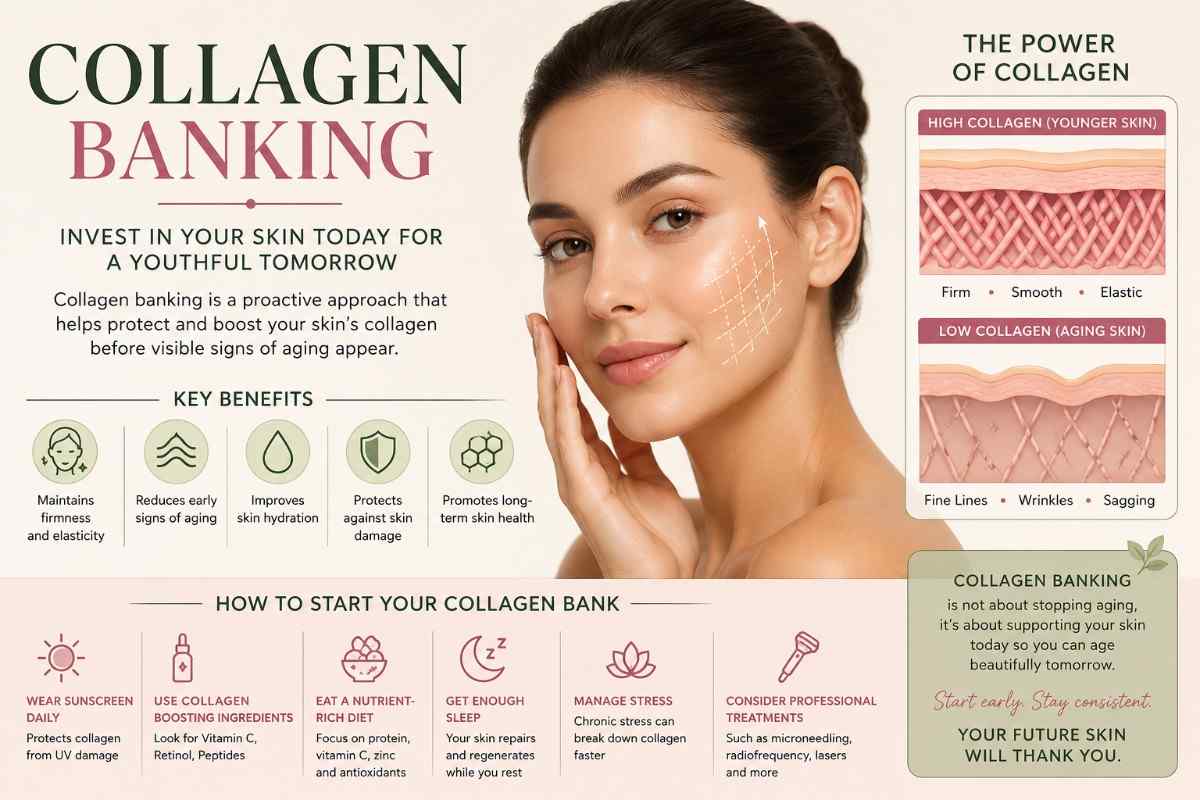
Collagen banking is one of the fastest-growing skincare trends, and for good reason. Instead of waiting for wrinkles, sagging skin, and loss of firmness to appear, this preventive approach focuses on protecting and building your skin’s collagen reserves before significant collagen loss occurs. Think of it as investing in your skin’s future—just as you save money for long-term financial security, collagen banking aims to preserve the protein responsible for keeping your skin smooth, firm, and youthful.
In this guide, you’ll learn what collagen banking is, how it works, why it’s becoming a popular preventive skincare strategy, and the best ways to support collagen production through skincare, nutrition, lifestyle habits, and professional treatments. Whether you’re in your twenties looking to prevent premature aging or seeking healthier skin at any age, understanding collagen banking can help you make smarter decisions for long-term skin health.
What Is Collagen Banking?
Collagen banking is a proactive skincare and wellness approach focused on preserving and stimulating your body’s collagen production before significant collagen loss occurs. Instead of trying to reverse visible signs of aging later in life, collagen banking encourages people to build and protect their collagen reserves early through skincare, healthy lifestyle habits, nutrition, and professional treatments.
The concept has gained popularity among dermatologists, skincare experts, and beauty enthusiasts because collagen is one of the most important proteins responsible for maintaining youthful, firm, smooth, and elastic skin.
Think of collagen banking like saving money in a bank account. The more collagen you preserve and stimulate when you’re younger, the more “collagen reserves” your skin may have as you age. While aging is inevitable, collagen banking may help slow down the appearance of fine lines, wrinkles, sagging skin, and loss of firmness.
What Is Collagen?
Collagen is the most abundant protein in the human body. It serves as a structural building block for:
- Skin
- Hair
- Nails
- Bones
- Muscles
- Tendons
- Ligaments
- Blood vessels
In the skin, collagen forms a supportive framework that keeps it firm, plump, and resilient.
When collagen levels are high, skin tends to appear:
- Smooth
- Hydrated
- Firm
- Elastic
- Youthful
As collagen production declines, the skin gradually loses its strength and elasticity, leading to visible signs of aging.
Why Does Collagen Decline With Age?
Collagen production naturally decreases as part of the aging process.
Research suggests that collagen production begins slowing in the mid-to-late twenties. By the time many people reach their forties and fifties, collagen loss becomes more noticeable.
Factors that accelerate collagen breakdown include:
Sun Exposure
Ultraviolet (UV) radiation damages collagen fibers and is one of the leading causes of premature aging.
Smoking
Smoking reduces blood flow to the skin and increases oxidative stress, contributing to collagen degradation.
Poor Diet
High-sugar diets may contribute to glycation, a process that damages collagen and elastin fibers.
Chronic Stress
Long-term stress can increase inflammation and negatively affect skin health.
Lack of Sleep
The body repairs and regenerates tissues during sleep, including collagen-producing processes.
Environmental Pollution
Pollutants can generate free radicals that damage skin proteins and accelerate aging.
What Is the Concept Behind Collagen Banking?
The idea behind collagen banking is simple:
Rather than waiting until wrinkles and sagging appear, start supporting collagen production early.
Collagen banking focuses on:
- Preventing collagen breakdown
- Stimulating collagen production
- Protecting existing collagen
- Supporting skin repair and renewal
The goal is not to stop aging but to age more gradually while maintaining healthier skin for longer.
Why Is Collagen Banking Trending?
Social media platforms and skincare professionals have increasingly discussed collagen banking because younger generations are becoming more interested in preventive skincare.
Instead of focusing solely on anti-aging products later in life, many people in their twenties and thirties are investing in:
- Sunscreen
- Retinoids
- Antioxidant serums
- Collagen-supporting nutrition
- Professional skin treatments
This preventive mindset aligns with modern dermatology recommendations that emphasize protecting skin health before significant damage occurs.
Benefits of Collagen Banking
1. May Reduce Early Signs of Aging
Supporting collagen production may help minimize the appearance of:
- Fine lines
- Wrinkles
- Crow’s feet
- Forehead lines
While no method can completely prevent aging, maintaining collagen levels may help delay visible changes.
2. Supports Skin Firmness
- Collagen contributes to skin structure and firmness.
- Preserving collagen may help maintain tighter-looking skin as you age.
3. Improves Skin Elasticity
- Healthy collagen networks allow skin to stretch and bounce back more effectively.
- Better elasticity often results in smoother and more youthful-looking skin.
4. Promotes Skin Hydration
- Collagen works alongside other skin components to support moisture retention.
- Well-supported skin barriers often appear healthier and more hydrated.
5. Encourages Long-Term Skin Health
- Collagen banking isn’t just about appearance.
- Many collagen-supporting habits—such as sun protection, healthy eating, and quality sleep—benefit overall skin health.
6. May Improve Recovery From Skin Damage
- Healthy collagen production helps support wound healing and tissue repair.
- Maintaining collagen levels may aid the skin’s natural recovery processes.
Related Articles:
Side Effects of Collagen Banking
Collagen banking itself is generally considered safe because it focuses on healthy skincare habits and lifestyle practices. However, certain collagen-boosting products, supplements, or treatments may cause side effects in some individuals.
1) Skin Irritation:
Products containing retinol, retinoids, or strong active ingredients may cause redness, dryness, peeling, or irritation, especially when first introduced into a skincare routine.
2) Allergic Reactions:
Some people may be sensitive to ingredients found in collagen supplements, serums, or moisturizers. Symptoms can include itching, rash, swelling, or skin discomfort.
3) Breakouts:
Certain collagen-supporting skincare products may clog pores in acne-prone individuals. This can lead to pimples, blackheads, or temporary skin congestion.
4) Digestive Discomfort:
Collagen supplements may occasionally cause bloating, stomach upset, heartburn, or a feeling of fullness in some users.
5) Increased Sun Sensitivity:
Retinol and other collagen-stimulating ingredients can make the skin more sensitive to sunlight. Daily sunscreen use is important to help prevent sunburn and skin damage.
6) Temporary Redness After Treatments:
Professional collagen-boosting treatments such as microneedling, laser therapy, or radiofrequency procedures may cause temporary redness, swelling, or mild discomfort.
7) Uneven Results:
Not everyone responds to collagen-supporting products or treatments in the same way. Results may vary depending on age, genetics, lifestyle habits, and overall skin health.
8) Product Overuse:
Using multiple active ingredients at the same time can weaken the skin barrier and increase irritation. Following product instructions and introducing new products gradually can help minimize this risk.
When Should You Start Collagen Banking?
Many dermatologists suggest that collagen banking can begin in your twenties.
A general guideline:
In Your 20s
Focus on prevention:
- Daily sunscreen
- Gentle skincare
- Healthy nutrition
- Avoid smoking
In Your 30s
Introduce collagen-supporting ingredients:
- Retinol
- Vitamin C
- Peptides
Consider professional treatments if desired.
In Your 40s and Beyond
Continue collagen preservation while addressing visible signs of aging with targeted skincare and treatments. The earlier you begin protecting your collagen, the better your long-term skin health may be.
How to Build Your Collagen Bank?
Best Ways to Build Your Collagen Bank Naturally:
1. Wear Sunscreen Every Day
Daily sunscreen is arguably the most important collagen-preserving habit.
Choose:
- Broad-spectrum SPF 30 or higher
- Water-resistant formulas when needed
- Daily application, even on cloudy days
UV damage is responsible for a significant portion of premature skin aging.
2. Use Vitamin C Serum
Vitamin C plays an important role in collagen synthesis.
Benefits include:
- Antioxidant protection
- Brighter skin tone
- Support for collagen formation
Applying a vitamin C serum in the morning may complement sunscreen use.
3. Incorporate Retinoids
Retinoids are among the most studied skincare ingredients for collagen support.
They may help:
- Stimulate collagen production
- Improve skin texture
- Reduce fine lines
- Promote cell turnover
Start slowly and follow product instructions to minimize irritation.
4. Add Peptides to Your Routine
- Peptides are amino acid chains that act as signaling molecules in the skin.
- Some peptide-based skincare products may help support collagen production and skin repair.
5. Stay Hydrated
- Adequate hydration supports overall skin function.
- While drinking water alone won’t dramatically increase collagen production, proper hydration contributes to healthier-looking skin.
6. Eat a Collagen-Friendly Diet
Certain nutrients play key roles in collagen synthesis.
Protein
Sources include:
- Eggs
- Fish
- Chicken
- Lentils
- Beans
- Dairy products
Vitamin C
Sources include:
- Oranges
- Lemons
- Kiwi
- Strawberries
- Bell peppers
Zinc
Sources include:
- Pumpkin seeds
- Chickpeas
- Seafood
Copper
Sources include:
- Nuts
- Seeds
- Whole grains
7. Prioritize Sleep
- Quality sleep allows the body to repair and regenerate tissues.
- Adults generally benefit from 7–9 hours of sleep per night.
- Poor sleep habits may accelerate visible skin aging.
8. Manage Stress
Chronic stress can contribute to inflammation and oxidative damage.
Helpful stress-management strategies include:
- Meditation
- Yoga
- Walking
- Deep breathing exercises
- Regular physical activity
Collagen Supplements and Collagen Banking
Collagen supplements have become increasingly popular.
Common forms include:
- Collagen powder
- Capsules
- Gummies
- Drinks
Hydrolyzed collagen peptides are broken down into smaller molecules that are easier for the body to absorb.
Some studies suggest collagen supplementation may support:
- Skin hydration
- Elasticity
- Skin appearance
However, results vary, and supplements should be viewed as part of a broader skincare and wellness strategy rather than a miracle solution.
Professional Treatments for Collagen Banking
Many dermatology clinics offer treatments designed to stimulate collagen production.
1. Microneedling
Microneedling creates controlled micro-injuries in the skin, encouraging natural healing responses and collagen formation.
2. Radiofrequency Treatments
Radiofrequency devices use energy to heat deeper skin layers and stimulate collagen remodeling.
3. Laser Resurfacing
Certain lasers promote skin renewal and collagen production while improving texture and tone.
4. Ultrasound-Based Treatments
Ultrasound technologies can target deeper tissue layers and support collagen generation.
5. Injectable Biostimulators
Some injectable treatments are designed to encourage the body’s natural collagen production over time.
Professional treatments should always be discussed with a qualified dermatologist or licensed medical professional.
Common Mistakes That Damage Collagen
Avoiding collagen-damaging habits is just as important as stimulating collagen production.
Skipping Sunscreen
Daily UV exposure can significantly accelerate collagen breakdown.
Smoking
Smoking remains one of the most harmful lifestyle factors for skin aging.
Excessive Sugar Consumption
High sugar intake may contribute to collagen-damaging glycation.
Over-Exfoliation
Too much exfoliation can weaken the skin barrier and cause irritation.
Inadequate Sleep
Consistently poor sleep can impair skin repair mechanisms.
Myths About Collagen Banking
Myth 1: Only Older Adults Need It
Collagen banking is most effective when started before significant collagen loss occurs.
Myth 2: Supplements Alone Are Enough
Supplements may help, but they cannot replace sunscreen, healthy nutrition, and good skincare habits.
Myth 3: Collagen Banking Stops Aging
Aging is a natural biological process.
Collagen banking aims to support skin health and potentially slow visible aging—not eliminate it.
Myth 4: Expensive Treatments Are Required
Many effective collagen-preserving habits are affordable, including sunscreen use, proper nutrition, hydration, and adequate sleep.
Is Collagen Banking Worth It?
For many people, yes.
Collagen banking encourages evidence-based habits that benefit both skin appearance and overall wellness.
The most effective strategies include:
- Consistent sun protection
- Balanced nutrition
- Retinoids
- Vitamin C
- Healthy lifestyle habits
- Appropriate professional treatments when desired
Rather than chasing quick fixes, collagen banking focuses on long-term skin health.
Final Thoughts
Collagen banking is a preventive skincare approach centered on preserving and supporting the body’s natural collagen production. As collagen naturally declines with age, building healthy habits early may help maintain smoother, firmer, and healthier-looking skin over time.
While no skincare routine can stop aging, protecting your skin from sun damage, eating a nutrient-rich diet, prioritizing sleep, managing stress, and using scientifically supported skincare ingredients can help support collagen levels and improve long-term skin health.
FAQ’s
What is a collagen banking serum?
A collagen banking serum is a skincare product designed to help support and protect the skin’s natural collagen levels. These serums often contain ingredients such as peptides, antioxidants, vitamin C, or retinoids that promote healthier-looking skin.
When should I apply collagen bank products?
Collagen bank products are typically applied as part of your daily skincare routine. Most collagen-supporting serums are used after cleansing and before moisturizing, while sunscreen should always be applied during the daytime.
How do I start collagen banking?
Start by adopting collagen-friendly habits such as wearing sunscreen daily, eating a nutrient-rich diet, getting enough sleep, and using skincare ingredients like vitamin C and retinol. Consistency is the key to supporting long-term collagen health.
How do I apply a Pro-Collagen Banking Serum?
After cleansing your face, apply a few drops of the serum to dry skin and gently massage it into your face and neck. Follow with a moisturizer and sunscreen during the day for optimal skin protection.
Should I use a Collagen Bank moisturizer daily?
Yes, most collagen-supporting moisturizers are intended for daily use to help maintain skin hydration and strengthen the skin barrier. Regular use may help improve the appearance of skin firmness and smoothness over time.
Does collagen banking really work?
Collagen banking is based on established principles of skin health, including sun protection, collagen stimulation, and healthy lifestyle habits that may help maintain youthful-looking skin.
Is sunscreen important for collagen banking?
Yes. Daily sunscreen use is one of the most effective ways to protect existing collagen from UV-related damage.
Is collagen banking only for women?
No. Collagen banking can benefit anyone interested in maintaining healthy skin regardless of gender.
Can I start collagen banking after 40?
Absolutely. While earlier prevention may be beneficial, healthy skincare habits can support skin health at any age.
Can collagen supplements help with collagen banking?
Collagen supplements may support skin hydration and elasticity in some individuals. However, they work best when combined with a healthy lifestyle and a consistent skincare routine.
Can collagen banking reverse wrinkles?
Collagen banking is primarily a preventive strategy. While certain treatments and skincare products may improve the appearance of existing wrinkles, the main goal is to slow future collagen loss.
How long does it take to see results from collagen banking?
Results vary depending on your age, skincare routine, lifestyle habits, and treatments used. Consistent collagen-supporting habits may lead to noticeable improvements in skin texture and firmness over several months.
Can collagen banking help with sagging skin?
Maintaining healthy collagen levels may help support skin firmness and elasticity, which can reduce the appearance of mild skin laxity over time.
What is the difference between collagen banking and anti-aging skincare?
Traditional anti-aging skincare often focuses on treating existing signs of aging, while collagen banking emphasizes prevention by protecting and supporting collagen production before major changes occur.
Is collagen banking safe?
Yes, collagen banking is generally safe when it involves healthy skincare habits, proper nutrition, and dermatologist-approved treatments. Always consult a healthcare professional before starting new supplements or cosmetic procedures.
Can collagen banking improve skin elasticity?
Collagen plays a major role in maintaining skin elasticity and firmness. Supporting collagen production may help skin appear smoother and more resilient over time.
Does collagen banking help with acne scars?
Collagen is involved in the skin’s natural repair process and may support scar improvement. Professional treatments like microneedling are often used to stimulate collagen in scarred areas.
Can men benefit from collagen banking?
Yes, men lose collagen with age just like women do. Collagen-supportive habits can help maintain healthier and firmer-looking skin regardless of gender.
Is collagen banking only about skincare products?
No, collagen banking also includes lifestyle habits such as healthy eating, sun protection, quality sleep, and stress management. A comprehensive approach is often more effective than relying on skincare products alone.
Can vitamin C help with collagen banking?
Yes, vitamin C is essential for collagen synthesis in the body. Without adequate vitamin C, the body cannot efficiently produce collagen.
Can collagen banking help with neck wrinkles?
Supporting collagen production may improve skin firmness in the neck area. Combining sunscreen, retinoids, and healthy lifestyle habits can provide the best results.
Can collagen banking help with under-eye wrinkles?
Healthy collagen levels help support the delicate skin around the eyes. Consistent skincare and sun protection may help reduce the appearance of fine lines in this area.
What is the best age to begin collagen banking?
Many experts recommend starting in your twenties when collagen production naturally begins to slow down. Early preventive habits can help preserve skin quality for longer.
Can collagen banking make you look younger?
Collagen-supportive habits may help maintain smoother, firmer, and healthier-looking skin. While they cannot stop aging, they may contribute to a more youthful appearance.
Is retinol good for collagen banking?
Yes, retinol is one of the most researched skincare ingredients for stimulating collagen production. Regular use may help improve skin texture and reduce fine lines.
Can smoking reverse the effects of collagen banking?
Smoking significantly accelerates collagen breakdown and skin aging. Continuing to smoke can reduce the benefits of collagen-supportive habits.
Does collagen banking help hair and nails?
Collagen supports the structure of hair and nails, although research is still ongoing. Some people report stronger nails and healthier-looking hair when using collagen supplements.
Can collagen banking help after menopause?
Yes, collagen levels decline more rapidly after menopause due to hormonal changes. Supporting collagen production may help maintain skin firmness and hydration during this stage of life.
Sources / References:
- Harvard T.H. Chan School of Public Health – Protein and Collagen Research
- American Academy of Dermatology (AAD) – Skin Aging and Sun Protection
- National Institutes of Health (NIH) – Collagen and Skin Health Research
- National Center for Biotechnology Information (NCBI) – Collagen Supplementation Studies
- Cleveland Clinic – Collagen Benefits and Aging
- Mayo Clinic – Skin Care and Healthy Aging
- Yale Medicine – Skin Aging and Prevention
- British Association of Dermatologists – Sun Protection Guidance
Also Read:
- Skin Flooding: Benefits, Routine & Side Effects & How to Do It
- Slugging: Benefits, Side Effects, How to Do It & Who Should Avoid It
- Oil Cleansing: Methods, Best Oils, Benefits & Mistakes
About the Author:
Written by: Kirti Solanki (Health Content Researcher)
Kirti Solanki is a health content researcher and wellness writer who specializes in creating evidence-based articles on nutrition, skincare, preventive health, natural remedies, and healthy living. Her content focuses on translating scientific research into practical, reader-friendly information that helps individuals make informed health and lifestyle decisions.
Disclaimer:
This article is for educational and informational purposes only and should not be considered medical advice. Always consult a qualified healthcare professional or dermatologist before starting new skincare treatments, supplements, or health-related practices.