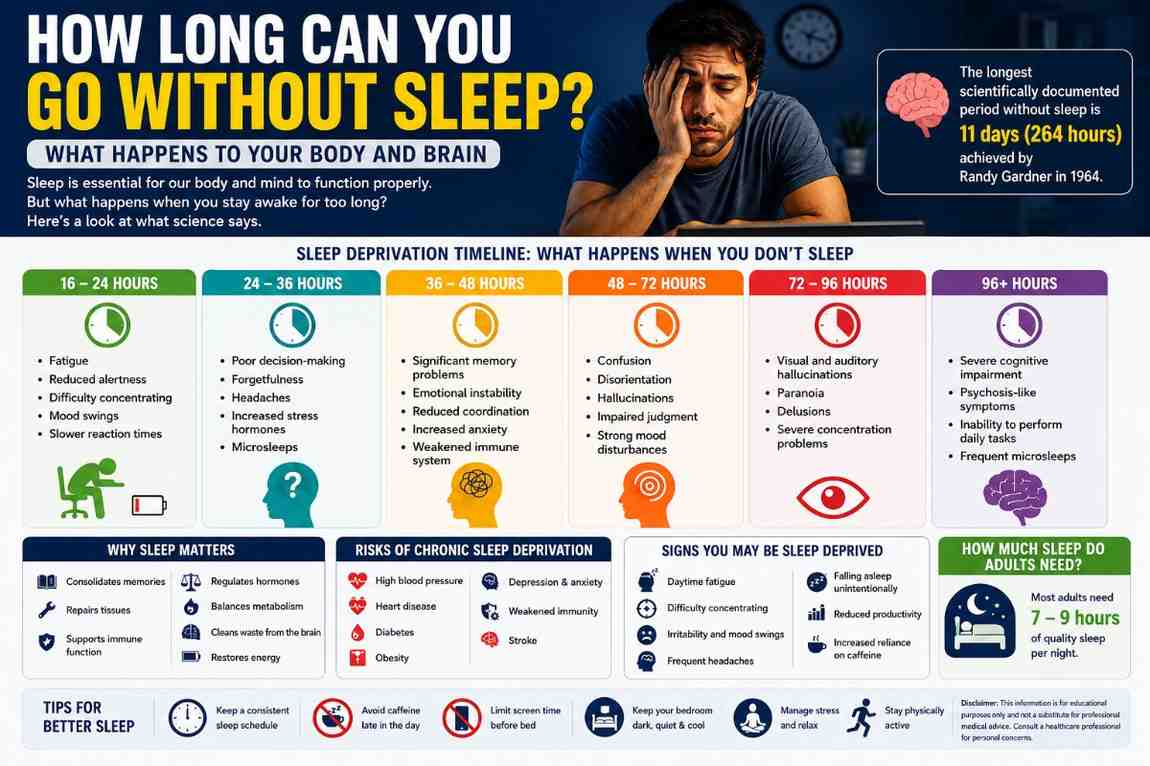
Sleep is one of the most important biological functions for human survival. While people often focus on food and water when discussing survival, sleep is just as essential for maintaining brain function, emotional balance, immune health, and overall well-being.
Many people have experienced staying awake for 24 hours during exams, work deadlines, travel, or personal emergencies. This often raises a common question: How long can you go without sleep?
The answer is not straightforward. While some individuals have remained awake for several days under controlled conditions, the effects of sleep deprivation begin much sooner than most people realize. Even one night of missed sleep can impair concentration, judgment, and reaction times.
In this guide, you’ll learn how long humans can stay awake, what happens to the body during sleep deprivation, the dangers of prolonged wakefulness, and why sleep is crucial for long-term health.
What Is Sleep Deprivation?
Sleep deprivation occurs when a person gets less sleep than their body requires. It can be:
Acute Sleep Deprivation
A short-term lack of sleep lasting from a few hours to several days.
Chronic Sleep Deprivation
Repeatedly getting insufficient sleep over weeks, months, or years.
Both forms can negatively affect physical and mental health, but chronic sleep deprivation is especially harmful because the effects accumulate over time.
How Long Can Humans Survive Without Sleep?
Unlike food or water deprivation, there is no precise limit for how long a person can survive without sleep.
The longest scientifically documented period without sleep was achieved by Randy Gardner, who stayed awake for approximately 264 hours (11 days) during a monitored experiment in 1964. During the experiment, he experienced severe cognitive and psychological symptoms but recovered after sleeping.
Another later record cited by Guinness World Records involved nearly 19 days without sleep, although Guinness no longer tracks sleep deprivation records because of the significant health risks involved.
The important takeaway is that although humans may remain awake for many days, the body and brain begin malfunctioning long before reaching those extremes.
What Happens When You Don’t Sleep?
Sleep deprivation affects nearly every system in the body.
Within 16–24 Hours
After a full day without sleep, many people experience:
- Fatigue
- Reduced alertness
- Slower reaction times
- Difficulty concentrating
- Mood swings
- Irritability
- Increased mistakes at work or school
Research suggests that being awake for 24 hours may impair performance similarly to alcohol intoxication.
After 24 Hours Without Sleep
At this stage, the brain begins struggling to function efficiently.
Common symptoms include:
- Poor decision-making
- Forgetfulness
- Reduced attention span
- Increased stress hormones
- Lower productivity
- Headaches
- Eye strain
Many people also experience microsleeps—brief episodes where the brain momentarily falls asleep for a few seconds without the person realizing it.
After 36 Hours Without Sleep
Going a day and a half without sleep causes more severe impairment.
Possible effects include:
- Significant memory problems
- Emotional instability
- Reduced coordination
- Difficulty communicating
- Increased anxiety
- Strong food cravings
The immune system also begins weakening, making the body more vulnerable to infections.
After 48 Hours Without Sleep
After two days awake, symptoms become increasingly serious.
People may experience:
- Confusion
- Disorientation
- Impaired judgment
- Mood disturbances
- Slowed thinking
- Reduced problem-solving ability
Some individuals begin experiencing hallucinations or altered perceptions of reality.
After 72 Hours Without Sleep
Three days without sleep can produce dramatic effects on brain function.
Symptoms may include:
- Visual hallucinations
- Auditory hallucinations
- Paranoia
- Delusions
- Severe concentration problems
- Memory loss
- Emotional breakdowns
At this stage, the brain struggles to distinguish reality from imagination.
Beyond 4–7 Days
Extended sleep deprivation may lead to:
- Severe cognitive impairment
- Psychosis-like symptoms
- Extreme fatigue
- Major mood disturbances
- Inability to perform routine tasks
- Frequent microsleeps
The longer wakefulness continues, the more dangerous the condition becomes.
Related Articles:
- Sleep Deprivation in Gen Z: Causes, Signs, Effects & Solutions
- Why Your Neck Hurts After Sleeping and How to Relieve It
- REM Sleep: How It Works, Why It Matters & How to Improve It
Why Does Sleep Matter So Much?
Sleep is not merely a period of rest. It is an active biological process during which the body performs essential maintenance and repair.
During sleep, the body:
- Consolidates memories
- Repairs tissues
- Supports immune function
- Regulates hormones
- Balances metabolism
- Removes waste products from the brain
- Restores energy levels
Without adequate sleep, these functions become disrupted, affecting nearly every organ system.
Effects of Sleep Deprivation on the Brain
The brain is often the first organ affected by sleep loss.
1. Reduced Concentration
Tasks that require focus become increasingly difficult.
2. Memory Problems
The brain struggles to form and store new memories.
3. Poor Decision-Making
Sleep-deprived individuals often make riskier choices.
4. Slower Reaction Times
Responses become delayed, increasing accident risk.
5. Emotional Instability
People may become more irritable, anxious, or depressed.
6. Hallucinations
Prolonged sleep deprivation can cause sensory distortions and false perceptions.
Physical Effects of Not Sleeping
Sleep deprivation impacts the body just as strongly as the brain.
1. Increased Blood Pressure
Lack of sleep can elevate stress hormones and blood pressure.
2. Weakened Immunity
Sleep helps maintain immune defenses against infections.
3. Hormonal Imbalances
Important hormones involved in hunger, growth, and metabolism become disrupted.
4. Increased Appetite
Sleep deprivation often increases cravings for high-calorie foods.
5. Reduced Physical Performance
Strength, endurance, and coordination may decline.
6. Higher Risk of Illness
Long-term sleep loss is associated with several chronic diseases.
Can Sleep Deprivation Kill You?
Direct death from ordinary sleep deprivation is rare, but severe sleep loss can contribute to life-threatening consequences.
These include:
- Motor vehicle accidents
- Workplace accidents
- Cardiovascular complications
- Serious medical errors
- Dangerous lapses in judgment
There is also a rare inherited disorder called Fatal Familial Insomnia, which progressively prevents sleep and is ultimately fatal. However, this condition is extremely uncommon.
For most people, the greatest danger comes from impaired judgment and accidents caused by sleep deprivation rather than sleep loss itself.
What Are Microsleeps?
Microsleeps are brief episodes of sleep lasting a few seconds.
During a microsleep:
- Eyes may remain open
- The brain temporarily disconnects
- Awareness disappears
- Reaction times stop
Microsleeps are particularly dangerous when driving or operating machinery because a few seconds of inattention can result in catastrophic accidents.
Long-Term Consequences of Chronic Sleep Loss
Many people never stay awake for multiple days, but millions regularly get insufficient sleep.
Over time, chronic sleep deprivation may increase the risk of:
1. Heart Disease
Poor sleep is linked to higher cardiovascular risk.
2. Type 2 Diabetes
Sleep affects insulin sensitivity and blood sugar regulation.
3. Obesity
Sleep influences appetite hormones and calorie consumption.
4. Depression and Anxiety
Mental health and sleep are closely connected.
5. Stroke
Insufficient sleep may contribute to stroke risk.
6. Reduced Immune Function
Chronic sleep loss can weaken the body’s defenses.
How Much Sleep Do Adults Need?
According to health experts, most adults need:
| Age Group | Recommended Sleep |
|---|---|
| Teenagers (13–17) | 8–10 hours |
| Adults (18–60) | 7 or more hours |
| Adults (61–64) | 7–9 hours |
| Adults (65+) | 7–8 hours |
Individual needs may vary slightly, but consistently getting less than seven hours can negatively affect health.
Signs You May Be Sleep Deprived
You may not realize you’re sleep deprived because the effects can develop gradually.
Common warning signs include:
- Frequent daytime fatigue
- Difficulty concentrating
- Forgetfulness
- Mood swings
- Increased caffeine dependence
- Falling asleep unintentionally
- Reduced productivity
- Frequent illness
If these symptoms occur regularly, poor sleep may be the cause.
Who Is Most at Risk?
Certain groups are particularly vulnerable to sleep deprivation.
1. Shift Workers
Night shifts often disrupt natural sleep rhythms.
2. Students
Academic pressures can reduce sleep duration.
3. New Parents
Infant care frequently interrupts sleep.
4. Healthcare Workers
Long hours may lead to chronic sleep loss.
5. Frequent Travelers
Jet lag can disrupt sleep schedules.
6. People With Sleep Disorders
Conditions such as insomnia and sleep apnea can prevent restorative sleep.
How to Recover From Sleep Deprivation
If you’ve missed sleep, recovery requires more than one long night of rest.
1. Prioritize Consistent Sleep
Go to bed and wake up at the same time each day.
2. Avoid All-Nighters
Trying to push through sleep deprivation often worsens symptoms.
3. Limit Caffeine Late in the Day
Excess caffeine can interfere with recovery sleep.
4. Create a Sleep-Friendly Environment
Keep the room cool, dark, and quiet.
5. Reduce Screen Time Before Bed
Blue light may delay sleep onset.
6. Address Underlying Sleep Problems
Seek professional help if sleep difficulties persist.
When Should You See a Doctor?
Consider speaking with a healthcare professional if you:
- Regularly struggle to fall asleep
- Wake up frequently during the night
- Feel exhausted despite sleeping
- Snore heavily
- Experience daytime sleepiness that affects daily life
Persistent sleep problems may indicate an underlying sleep disorder that requires treatment.
Final Thoughts
So, how long can you go without sleep?
While some individuals have stayed awake for 11 days or longer under exceptional circumstances, the effects of sleep deprivation begin much earlier. Within just 24 hours, concentration, memory, and reaction times can decline significantly. After several days without sleep, hallucinations, confusion, and serious cognitive impairment may occur.
Rather than asking how long humans can survive without sleep, a better question is how much sleep we need to thrive. For most adults, getting at least seven hours of quality sleep each night is one of the most effective ways to support physical health, mental performance, emotional well-being, and long-term longevity.
FAQs
Can you die from not sleeping?
Direct death from ordinary sleep deprivation is uncommon, but severe sleep loss can contribute to fatal accidents and serious health complications.
What happens after 48 hours without sleep?
People may experience confusion, impaired judgment, memory issues, and hallucinations.
Is 24 hours without sleep dangerous?
Yes. Staying awake for 24 hours can significantly impair alertness, reaction time, and decision-making.
How long can a person stay awake before it becomes dangerous?
Most people experience noticeable cognitive impairment after 24 hours without sleep. The risk of accidents, poor judgment, and health complications increases significantly as sleep deprivation continues.
Can you survive 3 days without sleep?
Yes, most healthy people can survive 72 hours without sleep, but severe symptoms such as hallucinations, confusion, paranoia, and impaired thinking may occur.
What is the longest someone has gone without sleep?
The longest scientifically documented period without sleep is approximately 11 days (264 hours), achieved by Randy Gardner in 1964.
Can sleep deprivation cause hallucinations?
Yes. Prolonged sleep deprivation can lead to visual, auditory, or sensory hallucinations, especially after 48–72 hours without sleep.
Can you recover from sleep deprivation?
Yes. Recovery usually involves getting adequate sleep over several nights, maintaining a consistent sleep schedule, and addressing any underlying sleep problems.
What are the signs of severe sleep deprivation?
Common signs include extreme fatigue, difficulty concentrating, memory loss, mood swings, microsleeps, confusion, and hallucinations.
Does caffeine replace sleep?
No. Caffeine may temporarily increase alertness, but it cannot replace the restorative functions of sleep.
What is a microsleep?
A microsleep is a brief, involuntary episode of sleep lasting a few seconds. It can occur when a person is extremely sleep-deprived and is particularly dangerous while driving.
Is it okay to pull an all-nighter occasionally?
An occasional all-nighter is unlikely to cause lasting harm, but it can temporarily impair concentration, mood, reaction time, and productivity.
What happens if you don’t sleep for a week?
After a week without sleep, a person may experience severe cognitive impairment, psychosis-like symptoms, hallucinations, emotional instability, and frequent microsleeps.
How can I improve my sleep quality naturally?
Maintain a consistent sleep schedule, limit caffeine late in the day, reduce screen time before bed, keep your bedroom dark and quiet, and engage in regular physical activity.
Sources / References
- Centers for Disease Control and Prevention (CDC) – About Sleep
- Johns Hopkins Medicine – The Effects of Sleep Deprivation
- National Heart, Lung, and Blood Institute (NHLBI) – Sleep Deprivation and Deficiency
- Sleep Foundation – Effects of Sleep Deprivation
- Guinness World Records – Longest Time Without Sleep
- Medical News Today – How Long Can You Go Without Sleep?
Also Read:
- Why People in Blue Zones Live Longer: 10 Proven Longevity Secrets
- How Long Can You Live Without Water? Survival Limits & Risks
- How Long Can You Live Without Food? Survival Limits & Risks
About the Author
Written by: Kirti Solanki – Health Content Researcher
Kirti Solanki is a health content researcher who specializes in creating evidence-based articles on nutrition, wellness, preventive healthcare, and healthy lifestyle topics. She focuses on simplifying complex medical information into practical, reader-friendly content supported by reputable scientific and healthcare sources. All content is thoroughly researched to ensure accuracy, credibility, and usefulness for readers.
Disclaimer
This guide is for informational and educational purposes only and should not be considered medical advice, diagnosis, or treatment. Always consult a qualified healthcare professional regarding any medical concerns, sleep disorders, or health conditions.