Food is one of the basic requirements for human survival. While most people can comfortably go several hours between meals, many wonder what would happen if they stopped eating altogether. How long can a person survive without food? Does drinking water make a difference? What happens inside the body during starvation?
The answer is not simple because survival without food depends on several factors, including age, body weight, hydration, overall health, environmental conditions, and medical history. Some people may survive for a few weeks, while others can live for more than a month under specific circumstances.
Understanding how the body responds to prolonged food deprivation can help people appreciate the importance of proper nutrition and recognize the dangers associated with starvation, eating disorders, extreme dieting, and food insecurity.
In this guide, we’ll explore how long humans can survive without food, the stages of starvation, symptoms, risks, and factors that influence survival.
How Long Can You Live Without Food?
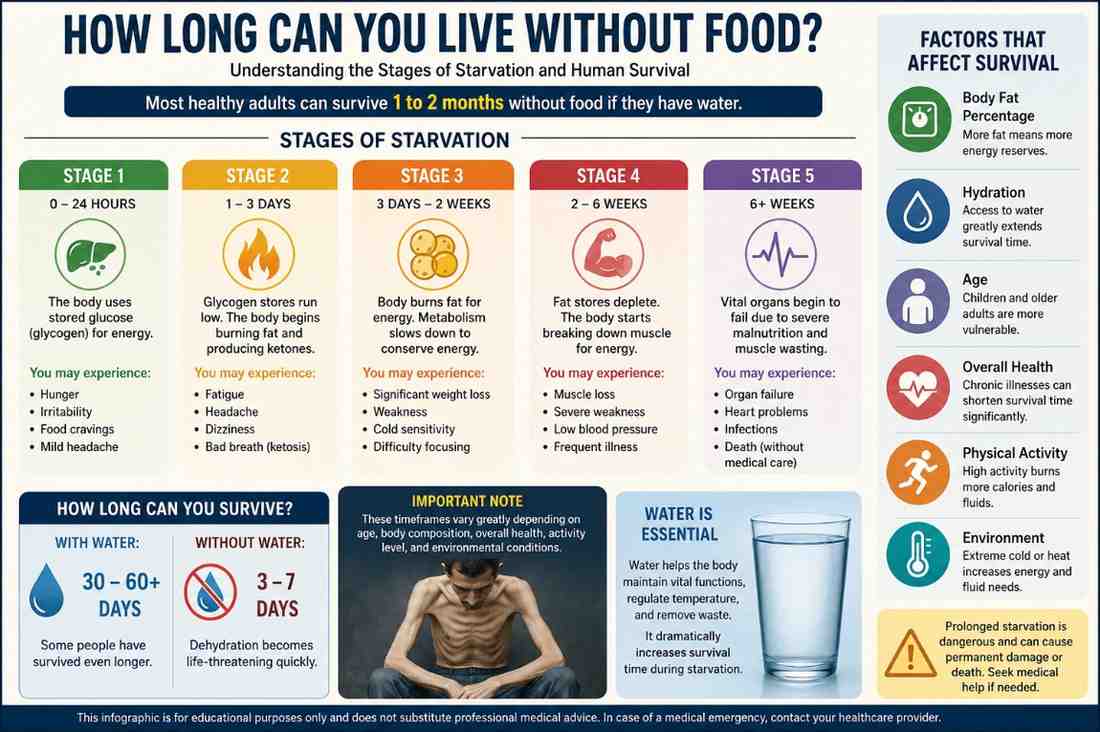
Most healthy adults can survive approximately 1 to 2 months without food if they continue drinking water. However, severe health complications may develop much earlier.
Without both food and water, survival is typically limited to 3 to 7 days, though environmental and health factors can influence this timeframe.
The often-cited “rule of threes” suggests that humans can survive:
- About 3 minutes without oxygen
- About 3 days without water
- About 3 weeks without food
However, this is only a rough estimate. Documented cases show that some individuals have survived significantly longer without food when adequate hydration was available.
Why Food Is Essential for Survival?
Food provides the body with:
- Carbohydrates for immediate energy
- Proteins for tissue repair and muscle maintenance
- Fats for long-term energy storage
- Vitamins and minerals for bodily functions
- Essential nutrients for organ health
When food intake stops, the body begins using stored energy reserves to keep vital organs functioning.
The human body is remarkably adaptable and has several backup systems designed to help people survive periods of famine or food shortages.
What Happens to Your Body When You Stop Eating?
Starvation occurs in stages rather than all at once.
Stage 1: First 6–24 Hours
After your last meal, the body continues using glucose from recently consumed food.
During this phase:
- Blood sugar remains relatively stable
- The liver releases stored glycogen
- Energy levels may remain normal
- Hunger signals increase
Common symptoms include:
- Hunger pangs
- Mild irritability
- Food cravings
- Difficulty concentrating
Stage 2: 24–72 Hours
Once glycogen stores become depleted, the body begins finding alternative energy sources.
Changes include:
- Increased fat breakdown
- Ketone production
- Reduced insulin levels
- Slower metabolism
Symptoms may include:
- Headaches
- Weakness
- Fatigue
- Dizziness
- Mood swings
- Bad breath from ketosis
At this stage, the body starts transitioning into survival mode.
Stage 3: Several Days to Two Weeks
Fat stores become the primary fuel source.
The body:
- Burns stored body fat
- Produces more ketones
- Conserves energy
- Reduces physical activity
Symptoms often include:
- Significant weight loss
- Muscle weakness
- Cold sensitivity
- Difficulty focusing
- Low blood pressure
- Reduced stamina
Many people also experience sleep disturbances and decreased physical performance.
Stage 4: Advanced Starvation
As fat reserves decline, the body increasingly breaks down muscle tissue for energy.
This stage is dangerous because:
- Muscle mass rapidly decreases
- The immune system weakens
- Organ function begins deteriorating
- Infection risk increases
Symptoms include:
- Severe weakness
- Difficulty walking
- Muscle wasting
- Frequent illness
- Slow wound healing
The body essentially begins consuming its own tissues to stay alive.
Stage 5: Organ Failure
In the final stages of starvation:
- Heart muscle weakens
- Kidney function declines
- Liver function deteriorates
- Electrolyte imbalances become severe
Potential complications include:
- Heart rhythm abnormalities
- Multi-organ failure
- Severe infections
- Death
Without medical intervention, prolonged starvation eventually becomes fatal.
Related Articles:
- What Happens to Your Body After Eating Too Much Fat?
- How to Stop Overeating: 20 Proven Strategies That Actually Work
- Why Do You Feel Dizzy After Eating Spicy Food & What to Do About It
How Long Can You Live Without Food but With Water?
When hydration is maintained, survival can extend considerably.
Many experts estimate:
| Condition | Approximate Survival Time |
|---|---|
| Healthy adult with water | 30–60+ days |
| Underweight individual | Often shorter |
| Severe illness present | Significantly shorter |
| Adequate body fat reserves | Potentially longer |
Water allows critical bodily functions to continue even when calories are unavailable.
Hydration helps:
- Regulate body temperature
- Support circulation
- Remove waste products
- Maintain organ function
This is why access to water dramatically increases survival chances during starvation.
How Long Can You Live Without Food and Water?
Without both food and water, survival is dramatically reduced.
Most individuals survive:
- Around 3–7 days
- Occasionally up to 10 days under favorable conditions
Factors affecting survival include:
- Climate
- Physical activity
- Health status
- Age
- Access to shade
- Body composition
Dehydration becomes life-threatening much faster than starvation.
Factors That Affect Survival Without Food
Not everyone survives the same amount of time without eating.
Several factors influence survival.
1. Body Fat Percentage
Fat serves as the body’s energy reserve.
People with higher body fat may survive longer because they have:
- More stored calories
- Larger energy reserves
- Greater metabolic flexibility
However, obesity does not guarantee survival because nutrient deficiencies still develop.
2. Hydration Status
Water is often more important than food in short-term survival.
Even mild dehydration can worsen:
- Fatigue
- Cognitive function
- Circulation
- Organ performance
Individuals who remain hydrated generally survive longer.
3. Age
Children and older adults are typically more vulnerable.
Children:
- Have smaller energy reserves
- Need nutrients for growth
- Can deteriorate quickly
Older adults:
- Often have reduced muscle mass
- May have chronic illnesses
- Recover more slowly
4. Overall Health
Medical conditions can significantly shorten survival time.
Examples include:
- Diabetes
- Heart disease
- Kidney disease
- Cancer
- Severe infections
People with chronic illnesses often require continuous nutrition and medication management.
5. Physical Activity
High activity levels increase calorie expenditure.
People performing strenuous work may:
- Burn energy reserves faster
- Lose fluids more rapidly
- Experience earlier complications
Resting conserves valuable energy during starvation.
6. Environmental Conditions
Extreme temperatures affect survival.
Cold environments increase energy needs because the body must generate heat.
Hot environments increase fluid loss through sweating, accelerating dehydration.
Can Fasting Help the Body Survive Longer?
The body adapts to short-term fasting differently than prolonged starvation.
Intermittent fasting and medically supervised fasting involve:
- Planned food restriction
- Adequate hydration
- Nutritional monitoring
Starvation differs because:
- Essential nutrients become depleted
- Muscle loss occurs
- Organ function may decline
Short-term fasting may be tolerated by healthy adults, but prolonged starvation is dangerous and should not be confused with structured fasting practices.
Historical Examples of Survival Without Food
Throughout history, there have been documented cases of people surviving weeks without food under extraordinary circumstances.
Examples include:
- Hunger strikes
- Disaster survivors
- Prisoners during wartime
- Individuals trapped after natural disasters
Most long-term survivors had access to water, which played a crucial role in extending survival.
Medical records show survival periods ranging from several weeks to over two months in rare cases.
Signs That Starvation Is Becoming Dangerous
Certain symptoms require immediate medical attention.
Warning signs include:
- Extreme weakness
- Fainting
- Chest pain
- Confusion
- Irregular heartbeat
- Severe dehydration
- Inability to stand
- Loss of consciousness
These symptoms may indicate life-threatening complications.
Long-Term Effects of Starvation
Even if someone survives prolonged food deprivation, lasting health consequences may occur.
Potential effects include:
1. Muscle Loss
The body breaks down muscle tissue for energy, leading to weakness and reduced physical function.
2. Immune Suppression
Malnutrition weakens immune defenses, increasing susceptibility to infections.
3. Hormonal Changes
Starvation affects hormones involved in:
- Reproduction
- Growth
- Metabolism
- Stress response
4. Bone Health Problems
Nutrient deficiencies can contribute to reduced bone density and increased fracture risk.
5. Mental Health Effects
Prolonged starvation may lead to:
- Anxiety
- Depression
- Memory problems
- Difficulty concentrating
Recovery can take months or even years depending on severity.
What Is Refeeding Syndrome?
After prolonged starvation, suddenly eating large amounts of food can be dangerous.
This condition is called Refeeding Syndrome.
It occurs when:
- Electrolytes shift rapidly
- Blood chemistry changes
- Organs struggle to adapt
Potential complications include:
- Heart problems
- Breathing difficulties
- Neurological issues
- Death in severe cases
Medical supervision is often necessary when reintroducing nutrition after prolonged starvation.
Who Is Most at Risk of Starvation?
Certain populations face a higher risk.
These include:
- Individuals experiencing food insecurity
- Older adults living alone
- People with eating disorders
- Patients with chronic illnesses
- Individuals with swallowing difficulties
- Disaster victims
- Refugees and displaced populations
Early intervention is critical to prevent severe complications.
Myths About Living Without Food
Myth 1: Humans Can Live for Months Without Water
False. Water is essential for survival, and dehydration usually becomes fatal within days.
Myth 2: Fat People Never Starve
False. Although body fat provides energy reserves, nutrient deficiencies and organ damage can still occur.
Myth 3: Starvation Only Causes Weight Loss
False. Starvation affects nearly every organ system, including the heart, brain, immune system, and kidneys.
Myth 4: Eating Again Immediately Fixes Starvation
False. Recovery must often be gradual to avoid complications such as refeeding syndrome.
How to Maintain Healthy Nutrition?
To support long-term health:
- Eat balanced meals regularly
- Include fruits and vegetables daily
- Consume adequate protein
- Stay hydrated
- Avoid extreme diets
- Seek medical advice for significant weight loss
- Address eating difficulties early
Proper nutrition remains one of the most important foundations of health and longevity.
Conclusion:
So, how long can you live without food? While many healthy adults may survive for several weeks or even up to two months when water is available, survival varies greatly based on body composition, hydration, age, health status, and environmental conditions.
The body undergoes a remarkable series of adaptations during starvation, beginning with glycogen depletion, progressing to fat burning, and eventually breaking down muscle and organ tissues. Although survival without food is possible for a limited period, prolonged starvation carries serious health risks and can ultimately become fatal.
Water plays a critical role in survival, and access to hydration can dramatically extend life during periods of food deprivation. Anyone experiencing severe malnutrition, rapid weight loss, or prolonged inability to eat should seek medical attention promptly.
FAQs
Can a person survive 30 days without food?
Yes. Many healthy adults can survive around 30 days or longer if they have access to water, though severe health complications may develop during that time.
What happens after 3 days without food?
The body typically depletes most glycogen stores and begins relying heavily on fat breakdown and ketone production for energy.
Is water more important than food?
Yes. Humans generally survive much longer without food than without water. Severe dehydration can become fatal within days.
Can you survive 60 days without food?
In rare circumstances, some individuals have survived close to or beyond 60 days when adequately hydrated, but this is extremely dangerous and not typical.
Does starvation hurt?
People often experience hunger, weakness, headaches, dizziness, fatigue, and discomfort, especially in the early stages. Severe starvation can become physically and mentally distressing.
Can fasting cause starvation?
Short-term fasting is not usually starvation in healthy individuals. Starvation occurs when the body experiences prolonged nutrient deprivation that threatens health and survival.
What happens after 24 hours without food?
The body begins using stored glycogen for energy. Hunger increases, and some people may experience fatigue, irritability, headaches, or difficulty concentrating.
How much weight do you lose if you don’t eat for a week?
Weight loss varies by individual, but a person may lose several pounds during a week without food due to loss of water, glycogen, fat, and muscle tissue.
Does sleeping reduce hunger during starvation?
Sleep may temporarily reduce awareness of hunger, but it does not stop the body’s need for nutrients and energy.
What are the first signs of starvation?
Early signs include intense hunger, fatigue, weakness, headaches, dizziness, irritability, and difficulty concentrating.
When does the body start burning fat?
The body typically begins increasing fat burning within 24–48 hours after food intake stops, once glycogen stores start running low.
What organs are affected by starvation?
Starvation can affect nearly every organ, including the heart, brain, liver, kidneys, digestive system, and immune system.
Can starvation permanently damage the body?
Yes. Prolonged starvation can lead to lasting effects such as muscle loss, weakened immunity, hormonal imbalances, bone loss, and organ damage.
Can overweight people survive longer without food?
People with more body fat may have larger energy reserves, but they can still develop severe nutrient deficiencies and life-threatening complications.
Is it safe to stop eating for several days?
Extended periods without food can be risky, especially for children, older adults, pregnant women, and people with medical conditions. Medical supervision is recommended for prolonged fasting.
Can you die from not eating?
Yes. Prolonged starvation can eventually lead to severe malnutrition, organ failure, and death if adequate nutrition is not restored.
Sources / References:
- National Institute of Diabetes and Digestive and Kidney Diseases (NIDDK)
- National Institutes of Health (NIH)
- MedlinePlus
- World Health Organization (WHO)
- Cleveland Clinic
- Merck Manual Professional Edition
- Harvard T.H. Chan School of Public Health
- National Library of Medicine
Also Read:
- What Really Happens to Your Body as You Age?
- What Is Normal Body Temperature? Why It Changes & When to Worry
- What Are Platelets? Functions, Levels, Risks, Diet & Recovery Tips
About the Author:
Written by: Kirti Solanki
Kirti Solanki is a Health Content Researcher who specializes in creating evidence-based, reader-friendly health and wellness content. She researches scientific studies, medical resources, and public health guidelines to provide accurate, trustworthy, and easy-to-understand information for readers. Her goal is to help people make informed decisions about nutrition, fitness, preventive healthcare, and overall well-being.
Disclaimer:
This guide is for educational and informational purposes only and should not be considered medical advice, diagnosis, or treatment. Always consult a qualified healthcare professional regarding any medical condition, nutritional concern, or health-related decision.