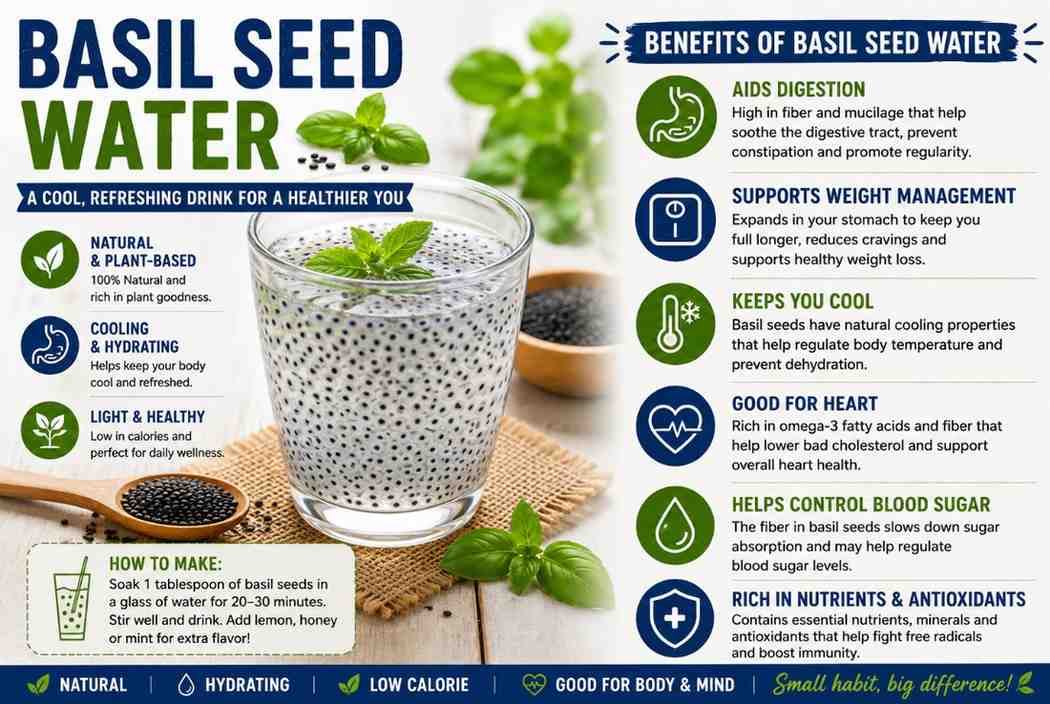
Basil seed water has become a popular wellness drink, especially among people looking for simple ways to add more fiber and plant-based nutrients to their daily routine. Made by soaking basil seeds in water, this drink develops a soft, gelatinous coating around the seeds. In India, these seeds are commonly called sabja seeds, tukmaria, or falooda seeds.
Unlike basil leaves used in cooking, basil seed water uses the seeds of Ocimum basilicum. When soaked, the seeds form a mucilaginous outer layer that gives the drink its distinctive texture. Research shows that basil seeds contain dietary fiber, protein, fats, minerals, and various plant compounds, although the nutritional composition can vary depending on the seed variety and growing conditions.
Basil seed water can be a refreshing addition to a balanced diet, but it should not be viewed as a detox drink, medicine, or replacement for a nutritious diet. Most research on basil seeds has examined the seeds, extracts, or mucilage rather than basil seed water itself, so some commonly advertised benefits should be interpreted cautiously.
What Is Basil Seed Water?
Basil seed water is a drink prepared by soaking edible basil seeds in drinking water until they swell and develop a translucent, jelly-like coating.
The seeds naturally produce mucilage, a type of plant polysaccharide that absorbs water. This is responsible for the slippery or gel-like texture of soaked basil seeds. Basil seed mucilage has been studied for its water-binding, thickening, stabilizing, and fiber-related properties.
Basil seed water can be consumed plain or combined with ingredients such as lemon, lime, mint, cucumber, or a small amount of fruit. It is important to distinguish basil seeds from chia seeds. They may look similar after soaking, but they come from different plants and have different nutritional profiles.
Components of Basil Seed Water
| Nutrient | Approximate contribution in basil seed water | Main source |
|---|---|---|
| Calories | Low when prepared with a small amount of seeds | Basil seeds |
| Protein | Small amount | Basil seeds |
| Dietary fiber | Moderate, depending on seed quantity consumed | Basil seeds and mucilage |
| Fat | Small amount | Basil seeds |
| Carbohydrates | Small amount | Basil seeds |
| Calcium | Small amount | Basil seeds |
| Magnesium | Small amount | Basil seeds |
| Potassium | Small amount | Basil seeds |
| Plant compounds | Present in small amounts | Basil seeds |
| Water | Main component | Drinking water |
20 Proven Health Benefits of Basil Seed Water
1. Provides Dietary Fiber
Basil seeds contain both soluble and insoluble dietary fiber, and their water-forming mucilage contributes to the drink’s gel-like texture. Fiber is important for normal digestive function and overall dietary quality.
2. May Support Regular Bowel Movements
The fiber and water provided by soaked basil seeds may help support normal bowel regularity, particularly when they are consumed as part of an otherwise fiber-rich diet.
3. May Help You Feel Fuller
Fiber-containing foods can contribute to satiety, so consuming soaked basil seeds may make a drink more filling than plain water alone.
4. Supports Hydration
The primary ingredient in basil seed water is water, making it a simple way to increase fluid intake during the day.
5. Contains Plant-Based Protein
Basil seeds contain measurable amounts of protein, although the quantity obtained from a typical serving of basil seed water is relatively small.
6. Provides Minerals
Basil seeds contain minerals including calcium, magnesium, and potassium, although the amount obtained from a homemade drink depends on how many seeds are consumed.
7. Contains Beneficial Plant Compounds
Research has identified phenolic compounds such as rosmarinic acid, orientin, and vicenin in basil seeds, contributing to their antioxidant potential.
8. Offers Antioxidant Potential
Laboratory and food-science research suggests that basil seeds contain antioxidant compounds, but this should not be interpreted as proof that basil seed water prevents disease in humans.
9. May Support a Fiber-Rich Diet
Adding soaked basil seeds to water can be an easy way to incorporate a plant-based source of fiber into meals and beverages.
10. May Support Digestive Comfort
The hydrated mucilage creates a soft texture that may be easier to incorporate into the diet than dry seeds, although individual digestive responses can differ.
11. May Support Healthy Eating Habits
Replacing sugary beverages with unsweetened basil seed water can reduce the amount of added sugar consumed from drinks.
12. May Help With Satiety During Weight Management
The fiber and gel-forming properties of basil seeds may contribute to fullness, but basil seed water itself has not been established as a weight-loss treatment. Human evidence remains limited.
13. Contains Essential Fatty Acids
Basil seeds contain fatty acids, including linoleic and alpha-linolenic acid in varying proportions, although only a modest amount would be obtained from a typical serving of soaked seeds.
14. May Complement Heart-Healthy Eating
The fiber and plant nutrients found in basil seeds can fit into a heart-conscious dietary pattern, but there is insufficient evidence to claim that basil seed water independently prevents cardiovascular disease.
15. May Help Increase Fiber Intake Without Heavy Meals
For people who struggle to eat enough fiber-rich foods, a small serving of soaked basil seeds can provide an additional plant-based fiber source.
16. May Have Prebiotic Potential
Research on basil seed polysaccharides and extracts suggests possible effects on beneficial gut bacteria, but more human research is needed before specific gut-health claims can be made.
17. May Support Healthy Blood Sugar Management
Basil seed fiber has been investigated for potential effects on glucose metabolism, but much of the evidence comes from laboratory or animal research rather than studies of basil seed water in people.
18. May Support Healthy Cholesterol Levels
The fiber content of basil seeds makes them interesting for cardiovascular nutrition, and research has investigated basil seed preparations in relation to lipid metabolism, but basil seed water should not be used as a cholesterol-lowering treatment.
19. Can Be a Refreshing Low-Sugar Beverage
When prepared without sugar or syrup, basil seed water can provide variety to a person’s regular hydration routine without the high sugar content of many sweetened beverages.
20. Provides a Convenient Way to Consume Basil Seeds
Soaking the seeds makes them easier to incorporate into beverages, and this traditional preparation is widely used in drinks and desserts in parts of Asia and the Middle East.
10 Side Effects of Basil Seed Water
1. May Cause Bloating
Suddenly increasing fiber intake can cause bloating, gas, or abdominal discomfort, especially in people who are not accustomed to high-fiber foods.
2. May Cause Gas
Fermentation of dietary fiber in the large intestine can increase gas in some people.
3. May Cause Loose Stools
A large serving of soaked seeds may have a laxative-like effect in sensitive individuals because of their fiber content.
4. May Cause Constipation if Fluid Intake Is Inadequate
Although soaked basil seeds contain water, consuming large quantities of fiber without adequate overall fluid intake can contribute to digestive discomfort.
5. May Feel Unpleasant in the Mouth
The gelatinous coating around hydrated seeds can feel slippery or unusual to people who are not accustomed to the texture.
6. May Trigger Food Sensitivity
Although uncommon, individuals can potentially experience an allergic reaction to basil seeds or other ingredients added to the drink.
7. May Be Difficult to Swallow if Prepared Incorrectly
Dry seeds expand after absorbing water, so they should be properly hydrated before consumption rather than swallowed dry.
8. May Interfere With Medication Absorption
The fiber and gel-forming properties of basil seeds could potentially alter how some orally taken medicines are absorbed, so people taking regular medications should discuss frequent use with a healthcare professional.
9. May Add Excess Sugar When Sweetened
Basil seed water can become a high-sugar beverage when prepared with large amounts of sugar, syrup, sweetened beverages, or flavored concentrates.
10. May Cause Digestive Discomfort When Overconsumed
Large amounts of basil seeds can provide a substantial fiber load and may cause cramps, bloating, or changes in bowel habits.
How to Make Basil Seed Water?
Ingredients:
- 1 teaspoon edible basil seeds
- 1 glass, about 250–300 ml, of drinking water
- Lemon or lime, optional
- Mint leaves, optional
- A small amount of natural flavoring or fruit, optional
Method:
- Place the basil seeds in a clean glass.
- Add approximately 250–300 ml of drinking water.
- Stir thoroughly so the seeds do not clump together.
- Allow them to soak for approximately 15–30 minutes, or until they develop a visible gel-like coating.
- Stir again before drinking.
- Add lemon, lime, cucumber, or mint if desired.
- Drink the prepared beverage soon after preparation.
Basil seeds rapidly develop mucilage when exposed to water. Scientific studies have also examined the extraction of basil seed mucilage using much longer controlled conditions, demonstrating how strongly these seeds interact with water.
How to Drink Basil Seed Water?
Start with a small serving if you are not accustomed to eating fiber-rich foods.
Drink the water slowly rather than consuming a large quantity quickly. You can consume the hydrated seeds along with the water because much of the fiber is associated with the seeds and their mucilage.
For a simple everyday version, use soaked basil seeds with plain water and avoid adding unnecessary sugar.
Basil seed water can also be included alongside a meal, but it does not need to be consumed on an empty stomach to provide its nutritional properties.
Tips for Consuming Basil Seed Water
- Always use food-grade basil seeds intended for human consumption.
- Wash or rinse the seeds appropriately before soaking when necessary.
- Soak the seeds thoroughly before drinking.
- Start with a small amount if you have a low-fiber diet.
- Drink enough fluids throughout the day.
- Avoid turning the drink into a sugary beverage.
- Do not treat basil seed water as a substitute for meals.
- Combine it with a balanced diet containing vegetables, fruits, whole grains, legumes, nuts, and seeds.
- Stop drinking it if you experience significant digestive symptoms or an allergic reaction.
Other Uses of Basil Seed Water
Basil seed water is not limited to plain drinking. The soaked seeds can be used in several food and beverage preparations.
1. Fruit Drinks
Soaked basil seeds can be added to homemade fruit beverages for texture and additional fiber.
2. Lemon Water
Adding soaked basil seeds to lemon water creates a refreshing drink without requiring added sugar.
3. Smoothies
A small quantity of soaked basil seeds can be blended or stirred into smoothies.
4. Falooda-Style Drinks
Basil seeds are traditionally used in beverages such as falooda and other sweet drinks in South Asian cuisine.
5. Yogurt and Desserts
Soaked basil seeds can be incorporated into yogurt, puddings, or other foods.
6. Culinary Thickening
Basil seed mucilage has functional properties that have been studied for thickening, stabilizing, emulsifying, and gel-forming applications in foods.
How Much Basil Seed Water Can You Drink in a Day?
There is no universally established evidence-based daily dose specifically for basil seed water.
For a general food use, about 1 teaspoon of basil seeds soaked in a glass of water is a reasonable starting portion for many healthy adults. People who tolerate it well may incorporate it regularly as part of their diet, but larger amounts are not necessarily better.
Some clinical research has studied considerably larger quantities of basil seeds, such as 10 g per day, but those study protocols should not automatically be treated as a recommended dose for everyone.
If you have a medical condition, take prescription medication, or have been advised to restrict fiber or fluids, ask your healthcare professional about an appropriate amount.
Best Time to Drink Basil Seed Water
There is no scientifically established “best” time to drink basil seed water.
Morning
Drinking it in the morning can be a convenient way to begin the day with fluids and some fiber.
Before a Meal
Some people prefer it before meals because the fiber-containing seeds may contribute to fullness.
Afternoon
It can work well as a refreshing alternative to sugary beverages during the afternoon.
Evening
There is no strong evidence that basil seed water is inherently better or worse at night. However, people who experience bloating or frequent urination may prefer to avoid a large serving close to bedtime.
Overall, the best time is the time that fits comfortably into your daily routine.
Who Should Drink Basil Seed Water?
- Adults Looking for a Fiber-Rich Beverage: Healthy adults can include properly soaked basil seed water as part of a balanced diet.
- People Who Want a Low-Sugar Drink: Unsweetened basil seed water can be an alternative to soft drinks and other sugar-sweetened beverages.
- People With Low Fiber Intake: Those who do not regularly consume enough fiber may find soaked basil seeds a convenient addition, provided the amount is increased gradually.
- People Interested in Plant-Based Foods: Basil seeds provide plant-based fiber, protein, fats, and minerals and can fit into vegetarian and vegan eating patterns.
- People Who Enjoy Traditional Drinks: Anyone who enjoys Indian and South Asian beverages can use soaked basil seeds in traditional or modern drink recipes.
Who Should Avoid Basil Seed Water?
- People With Difficulty Swallowing: Individuals with swallowing disorders should consult a healthcare professional before consuming gel-forming seeds because improperly prepared seeds may present a choking concern.
- People With Severe Digestive Sensitivity: Those who frequently experience significant bloating, abdominal pain, or bowel problems may need to limit high-fiber foods.
- People With Seed Allergies: Anyone with a known allergy to basil seeds should avoid them.
- People Taking Multiple Oral Medications: People taking important oral medicines should ask a healthcare professional whether regular consumption of fiber-rich basil seeds could affect medication timing or absorption.
- Young Children: Young children should not be given whole hydrated seeds without appropriate supervision and advice because swallowing ability and choking risk vary with age.
- People Following a Medically Restricted Diet: Anyone on a medically prescribed fiber, fluid, or gastrointestinal diet should check with their healthcare provider before adding basil seed water regularly.
How to Store Basil Seed Water?
- Refrigerate Promptly: Store prepared basil seed water in a clean, covered container in the refrigerator rather than leaving it at room temperature for prolonged periods.
- Prepare Small Batches: Making only the amount you expect to drink soon helps maintain freshness.
- Use Clean Containers: A clean glass bottle or food-safe container reduces the risk of contamination.
- Avoid Long Storage: Because homemade basil seed water does not contain commercial preservatives, it is better to prepare it fresh and consume it promptly.
- Check Before Drinking: Discard the drink if it develops an unusual odor, appearance, taste, or other signs of spoilage.
Precautions and Interactions
Basil seed water is generally a food beverage rather than a medicine, but a few precautions are worth remembering.
- Hydrate the seeds properly: Do not swallow large quantities of dry basil seeds. Allow them to absorb sufficient water before consumption.
- Increase fiber gradually: If your usual diet is low in fiber, start with a small quantity to reduce the chance of gas and bloating.
- Drink enough fluids: Fiber works best as part of an overall diet that includes adequate fluid intake.
- Be cautious with medications: Because basil seeds contain fiber and form mucilage, people taking regular oral medicines should ask their pharmacist or doctor whether separating the medicine and basil seeds is appropriate.
- Do not rely on it for disease treatment: Research on basil seeds is promising in several areas, but evidence from human clinical trials of basil seed water remains limited. Laboratory, animal, and whole-seed studies should not be presented as proof that the beverage treats diabetes, obesity, high cholesterol, constipation, or other medical conditions.
- Pregnancy and breastfeeding: There is not enough high-quality evidence to establish a specific medicinal dose of basil seed water during pregnancy or breastfeeding. Food-level use may be different from concentrated supplements or extracts, so discuss regular or high-dose use with your healthcare professional.
- Choose food-grade seeds: Use basil seeds sold for culinary consumption rather than seeds intended for planting.
FAQ’s
What is basil seed water good for?
Basil seed water can provide hydration and dietary fiber and may help support digestion and fullness when included as part of a balanced diet.
Can I drink basil seed water every day?
Yes, most healthy adults can consume a modest amount of properly soaked basil seed water daily, provided it does not cause digestive discomfort.
How long should basil seeds be soaked in water?
Basil seeds generally need about 15–30 minutes to absorb water and develop their characteristic gel-like coating.
Can basil seed water help with weight loss?
It may support fullness because basil seeds contain fiber, but basil seed water has not been proven to directly cause weight loss.
Is basil seed water good for digestion?
The fiber and mucilage in basil seeds may support regular bowel movements and digestive health, although consuming too much may cause gas or bloating.
Can I drink basil seed water on an empty stomach?
Yes, many people drink it in the morning on an empty stomach. However, there is no strong scientific evidence that drinking it on an empty stomach provides special benefits.
Is basil seed water good to drink at night?
It can be consumed at night, but people who experience bloating or frequent urination may prefer drinking it earlier in the day.
Does basil seed water reduce belly fat?
No drink can specifically target belly fat. Basil seed water may contribute to fullness when it contains fiber, but reducing abdominal fat requires an overall healthy diet and appropriate physical activity.
Does basil seed water cool the body?
Basil seed drinks are traditionally considered cooling in some cultures, particularly during hot weather. However, the idea of “cooling the body” is largely traditional rather than a firmly established medical effect.
Can basil seed water help with constipation?
The fiber in basil seeds may support regular bowel movements, especially when combined with adequate fluid intake. Start with a small amount if you are not accustomed to fiber.
What does basil seed water taste like?
Plain basil seed water has a mild, mostly neutral taste. The hydrated seeds have a soft, slightly slippery texture.
What does basil seed water smell like?
Plain basil seed water usually has a very mild or almost neutral smell. Lemon, mint, or other ingredients can change its aroma.
Can children drink basil seed water?
Older children may be able to consume properly prepared basil seeds, but young children may have difficulty swallowing the swollen seeds. Parents should consider the child’s age, swallowing ability, and dietary needs and seek pediatric advice when unsure.
Is basil seed water safe during pregnancy?
There is limited research establishing a specific medicinal amount of basil seed water during pregnancy. Pregnant women should consult their healthcare professional before consuming large or concentrated amounts regularly.
Can I drink basil seed water while breastfeeding?
There is limited evidence about high or medicinal amounts during breastfeeding. Occasional food-level consumption may differ from concentrated preparations, so discuss regular use with a healthcare professional if you have concerns.
Can diabetics drink basil seed water?
Unsweetened basil seed water may fit into a diabetes-friendly diet because basil seeds provide fiber and the beverage itself contains little carbohydrate when no sugar is added. It should not replace prescribed diabetes treatment.
Can basil seed water lower cholesterol?
Basil seeds contain fiber and have been studied for potential effects on lipid metabolism, but there is not enough evidence to recommend basil seed water as a treatment for high cholesterol.
Can basil seed water lower blood sugar?
Basil seeds have been investigated for possible effects on glucose metabolism, but evidence specifically supporting basil seed water as a blood-sugar-lowering treatment is insufficient.
Can I drink basil seed water after eating?
Yes. Basil seed water can be consumed with or after meals. There is no requirement to drink it only before eating or on an empty stomach.
Can basil seed water cause gas?
Yes. Increasing fiber suddenly can cause gas, bloating, cramps, or changes in bowel movements, particularly in people with sensitive digestion.
Can basil seed water cause constipation?
It can potentially contribute to constipation if large amounts of fiber are consumed without adequate overall fluid intake. Properly soaking the seeds and drinking enough fluids is important.
Are basil seeds the same as chia seeds?
No. Basil seeds and chia seeds come from different plants. They can look similar after soaking, but their nutritional compositions and culinary uses are different.
Should basil seeds be swallowed dry?
No. Basil seeds should be properly soaked before consumption because they expand and develop a gel-like coating when exposed to water.
Can I add lemon to basil seed water?
Yes. Lemon or lime can add flavor without significantly increasing calories when used without added sugar.
Can I add honey or sugar to basil seed water?
You can, but large amounts increase the drink’s sugar and calorie content. For a healthier everyday beverage, keep added sweeteners to a minimum.
How long does basil seed water last?
For best quality and food safety, prepare it fresh and keep it covered and refrigerated. Discard homemade basil seed water if it develops an unusual smell, taste, appearance, or other signs of spoilage.
Sources / References:
Disclaimer:
This article is for general educational purposes only and does not replace professional medical advice, diagnosis, or treatment. If you have a medical condition, take medication, or are pregnant or breastfeeding, consult a qualified healthcare professional before making significant dietary changes.
Also Read: