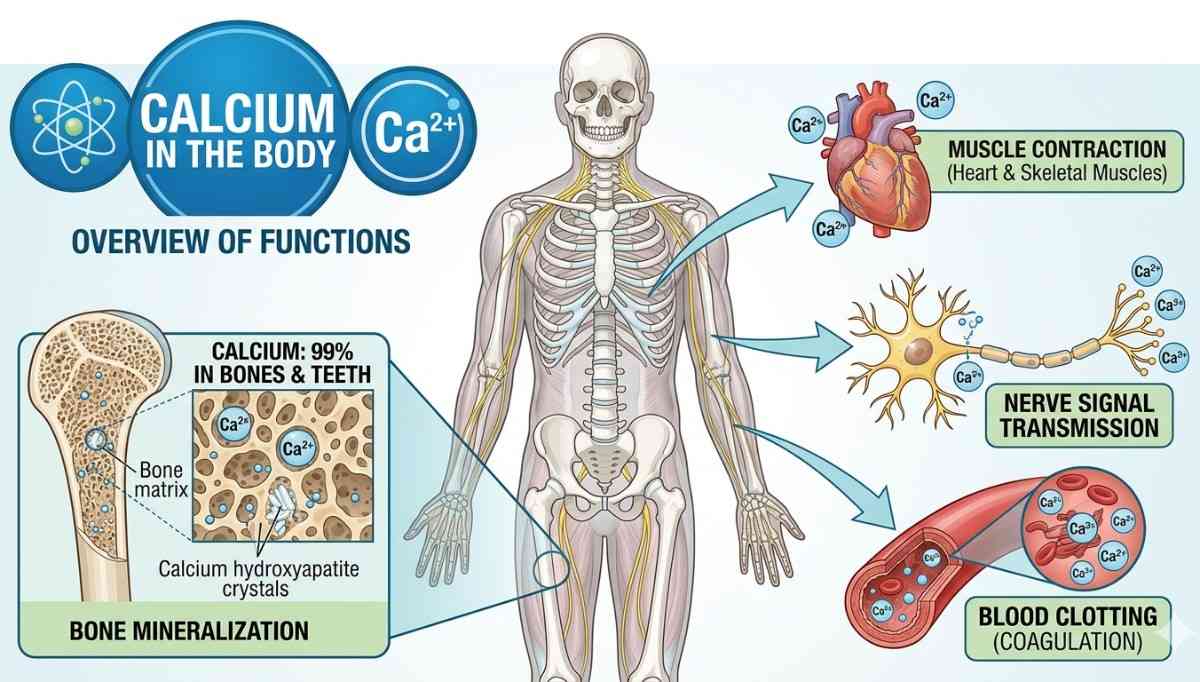
Calcium (Ca) is one of the most essential minerals in the human body. While most people associate calcium with strong bones and teeth, its role goes far beyond skeletal health. From muscle contractions and heart rhythm regulation to nerve transmission and hormone secretion, Ca is involved in nearly every vital function.
In this guide, you will learn what calcium is, how much you need, its benefits, side effects of excess intake, symptoms of deficiency, best food sources, and how to maintain healthy calcium levels safely.
What is Calcium?
Calcium is a vital mineral and the most abundant mineral in the human body. About 99% of calcium is stored in bones and teeth, where it provides structure and strength. The remaining 1% circulates in the blood and soft tissues, playing a critical role in muscle movement, nerve signaling, blood clotting, and heart function.
Your body cannot produce calcium on its own, which means you must obtain it through food or supplements. If dietary intake is insufficient, your body pulls Ca from bones to maintain normal blood levels. Over time, this can weaken bones and lead to health complications.
Calcium Dosage
The amount of calcium you need depends on age, gender, and life stage.
Recommended Daily Intake and Upper Limit By Age
| Age Group | Recommended Daily Intake (RDI) | Upper Intake Limit (UL) |
|---|---|---|
| 0–6 months | 200 mg | 1,000 mg |
| 7–12 months | 260 mg | 1,500 mg |
| 1–3 years | 700 mg | 2,500 mg |
| 4–8 years | 1,000 mg | 2,500 mg |
| 9–18 years | 1,300 mg | 3,000 mg |
| 19–50 years | 1,000 mg | 2,500 mg |
| 51–70 years (Men) | 1,000 mg | 2,000 mg |
| 51–70 years (Women) | 1,200 mg | 2,000 mg |
| 71+ years | 1,200 mg | 2,000 mg |
| Pregnant & Breastfeeding (19–50 years) | 1,000 mg | 2,500 mg |
Exceeding the upper intake limit may increase the risk of side effects and health complications.
20 Benefits of Calcium
- Strong Bones: Ca strengthens bone structure and helps prevent bone loss as you age.
- Healthy Teeth: Ca maintains tooth enamel and reduces the risk of dental decay.
- Prevents Osteoporosis: Adequate calcium intake lowers the risk of osteoporosis, especially in postmenopausal women.
- Supports Muscle Contraction: Ca enables muscles to contract and relax properly.
- Regulates Heart Rhythm: Calcium helps maintain a steady and healthy heartbeat.
- Nerve Signal Transmission: Ca assists in transmitting signals between the brain and the rest of the body.
- Blood Clotting: Ca plays a crucial role in the blood clotting process after injury.
- Hormone Secretion: Ca supports the release of important hormones and enzymes.
- Supports Pregnancy Health: Adequate Ca reduces the risk of pregnancy-related hypertension.
- Reduces PMS Symptoms: Ca may help ease mood swings and cramps associated with PMS.
- May Lower Blood Pressure: Calcium can help regulate blood pressure levels.
- Supports Weight Management: Some research suggests calcium may assist in fat metabolism.
- Prevents Rickets in Children: Ca ensures proper bone development in growing children.
- Maintains Bone Density in Elderly: Ca slows age-related bone thinning.
- Improves Athletic Performance: Strong bones and proper muscle function enhance physical performance.
- Reduces Risk of Colon Issues: Adequate calcium intake may support colon health.
- Supports Enzyme Function: Ca activates enzymes involved in digestion and metabolism.
- Helps Prevent Fractures: Stronger bones reduce fracture risk.
- Supports Nail Health: Ca contributes to strong and healthy nails.
- Improves Overall Structural Integrity: Ca provides foundational strength to the skeletal system.
10 Side Effects of Excess Calcium
Excessive calcium intake, particularly from supplements, can lead to health complications.
- Kidney Stones: Too much Cacan lead to calcium-based kidney stones.
- Constipation: High calcium intake may slow bowel movement.
- Nausea and Vomiting: Ca toxicity may cause digestive discomfort.
- Frequent Urination: Elevated Ca levels can increase urine production.
- Confusion: Severe hypercalcemia can affect brain function.
- Abdominal Pain: Excess calcium may cause stomach discomfort.
- Fatigue: High Ca levels can lead to weakness and tiredness.
- Irregular Heartbeat: Severe cases may disturb heart rhythm.
- Interference with Iron Absorption: Excess Ca may reduce iron absorption.
- Soft Tissue Calcification: Extremely high levels can cause Ca deposits in organs.
Symptoms of Calcium Deficiency
Calcium deficiency, also known as hypocalcemia, can develop gradually. Common symptoms include:
- Muscle cramps and spasms
- Tingling in fingers and toes
- Brittle nails
- Fatigue
- Weak bones
- Bone pain
- Irregular heartbeat
- Seizures in severe cases
- Poor appetite
- Depression or mood changes
Long-term deficiency may lead to osteoporosis or fractures.
Causes of Calcium Deficiency
Several factors can lead to low Ca levels:
- Inadequate dietary intake
- Vitamin D deficiency
- Lactose intolerance limiting dairy intake
- Hormonal disorders (such as low parathyroid hormone)
- Chronic kidney disease
- Certain medications (e.g., corticosteroids)
- Digestive disorders affecting absorption
- Menopause (due to estrogen decline)
Best Food Sources of Calcium
The best way to meet Ca needs is through a balanced diet. Below is a table of excellent calcium-rich foods.
| Food | Approximate Calcium per Serving |
|---|---|
| Milk (1 cup) | 300 mg |
| Yogurt (1 cup) | 250–400 mg |
| Cheese (30 g) | 200 mg |
| Sardines (with bones) | 325 mg |
| Tofu (fortified) | 250–400 mg |
| Almonds (30 g) | 75 mg |
| Sesame seeds (1 tbsp) | 90 mg |
| Ragi (Finger Millet, 100 g) | 344 mg |
| Spinach (1 cup cooked) | 240 mg |
| Kale (1 cup cooked) | 180 mg |
| Fortified orange juice (1 cup) | 300 mg |
| Chia seeds (1 tbsp) | 80 mg |
For those in India, ragi, sesame seeds, and curd are particularly accessible and affordable sources.
Who is at Risk of Calcium Deficiency?
Certain groups are more vulnerable:
- Postmenopausal women
- Elderly individuals
- Vegans with low fortified food intake
- People with lactose intolerance
- Individuals with vitamin D deficiency
- Adolescents in rapid growth phases
- Pregnant and breastfeeding women
- People with digestive disorders
Complications of Calcium Deficiency
Untreated deficiency can result in:
- Osteoporosis
- Increased fracture risk
- Rickets in children
- Osteomalacia in adults
- Abnormal heart rhythms
- Dental problems
- Seizures
Long-term deficiency can significantly affect quality of life.
Preventing Calcium Deficiency
You can prevent deficiency by:
- Eating calcium-rich foods daily
- Ensuring adequate vitamin D through sunlight or supplements
- Engaging in weight-bearing exercise
- Avoiding excessive caffeine and alcohol
- Getting regular bone density screenings after age 50
- Taking supplements only if prescribed
Symptoms of Calcium Toxicity
Toxicity (hypercalcemia) occurs when blood Ca levels are too high. Symptoms include:
- Excessive thirst
- Frequent urination
- Nausea
- Vomiting
- Confusion
- Muscle weakness
- Kidney stones
- Bone pain
- Irregular heartbeat
Severe cases require immediate medical attention.
How to Maintain Healthy Calcium Levels
To maintain optimal Ca levels:
- Follow recommended daily intake guidelines
- Pair Ca with vitamin D for better absorption
- Spread Ca intake throughout the day
- Limit excessive supplement use
- Stay physically active
- Monitor blood Ca levels if at risk
Balanced intake from food is always preferred over high-dose supplements.
Who Should Take Calcium?
Supplements may be beneficial for:
- Individuals with diagnosed deficiency
- Postmenopausal women
- People with osteoporosis
- Those who cannot meet intake through diet
- Vegans with low dietary intake
- Elderly individuals with poor appetite
Consult a healthcare professional before starting supplementation.
Who Should Not Take Calcium?
Supplements may not be appropriate for:
- Individuals with kidney stones
- Those with hypercalcemia
- People with severe kidney disease
- Individuals taking certain heart medications
- People already consuming adequate dietary Ca
Medical supervision is recommended in these cases.
Best Time to Take Calcium
- Ca carbonate is best taken with meals for better absorption.
- Ca citrate can be taken with or without food.
- It is better to divide doses (e.g., 500 mg twice daily) rather than taking a large single dose.
- Avoid taking Ca at the same time as iron supplements.
Precautions and Interactions
Ca supplements may interact with:
- Iron supplements
- Zinc supplements
- Thyroid medications
- Certain antibiotics (like tetracyclines)
- Blood pressure medications
- Bisphosphonates
Always separate Ca from these medications by at least 2–4 hours unless advised otherwise.
Other precautions:
- Do not exceed the upper intake limit.
- Avoid combining multiple Ca supplements without medical advice.
- Stay hydrated to reduce kidney stone risk.
- Get periodic blood tests if on long-term supplementation.
Final Thoughts
Calcium is more than just a bone-building mineral. It supports heart health, muscle function, nerve signaling, hormone release, and overall structural strength. While deficiency can lead to serious complications such as osteoporosis and fractures, excessive intake can also cause health problems.
The key is balance. Prioritize Ca-rich foods, ensure adequate vitamin D levels, and use supplements wisely when necessary. With proper intake and lifestyle habits, you can maintain strong bones and overall health at every stage of life.
FAQ’s
Which food is highest in calcium?
Parmesan cheese, sardines with bones, and ragi are among the highest sources.
Does calcium increase creatinine?
Normal intake does not, but excessive Ca may affect kidney function.
What is a good calcium for seniors?
Ca citrate is often preferred because it is easier to absorb.
What is the king of calcium?
Milk and dairy products are considered the richest and most reliable sources.
At what age is calcium most important?
During childhood, adolescence, and after age 50.
What drinks are high in calcium?
Milk, fortified plant milk, and fortified orange juice.
Can vitamin D affect calcium levels?
Yes, vitamin D helps the body absorb it properly.
What is calcium mainly used for?
It is mainly used to build and maintain strong bones and teeth, but it also supports muscle contraction, nerve signaling, heart rhythm, and blood clotting.
Can I get enough calcium without dairy?
Yes, you can get enough Ca from non-dairy sources like ragi, sesame seeds, tofu, almonds, leafy greens, and fortified plant-based milk.
What happens if I don’t get enough calcium?
Ca deficiency can lead to weak bones, muscle cramps, fatigue, brittle nails, and in severe cases, osteoporosis or fractures.
Is it better to get calcium from food or supplements?
It is generally better to get Ca from food because it is absorbed more naturally and carries a lower risk of side effects compared to high-dose supplements.
Can calcium supplements cause kidney stones?
Yes, excessive supplementation may increase the risk of kidney stones, especially if fluid intake is low.
Does vitamin D help with calcium absorption?
Yes, vitamin D is essential for proper Ca absorption and helps maintain healthy blood levels.
Can too much calcium be harmful?
Yes, excessive intake can cause constipation, nausea, kidney stones, and in severe cases, irregular heartbeat or confusion.
Who needs calcium supplements the most?
Postmenopausal women, elderly individuals, people with osteoporosis, and those who cannot meet daily needs through diet may benefit from supplements.
Can children take calcium supplements?
Children can take supplements if prescribed by a healthcare professional, especially during growth spurts or if dietary intake is insufficient.
Does calcium help with joint pain?
Ca supports bone strength but does not directly treat joint pain unless the pain is related to bone weakness.
Can calcium help lower blood pressure?
Some studies suggest that adequate Ca intake may help regulate blood pressure, especially in individuals with low dietary Ca.
Is calcium important during pregnancy?
Yes, Ca is crucial during pregnancy to support fetal bone development and reduce the risk of high blood pressure in the mother.
Also Read:
2 thoughts on “Calcium: 20 Benefits, Sources, Dosage & Deficiency Signs”