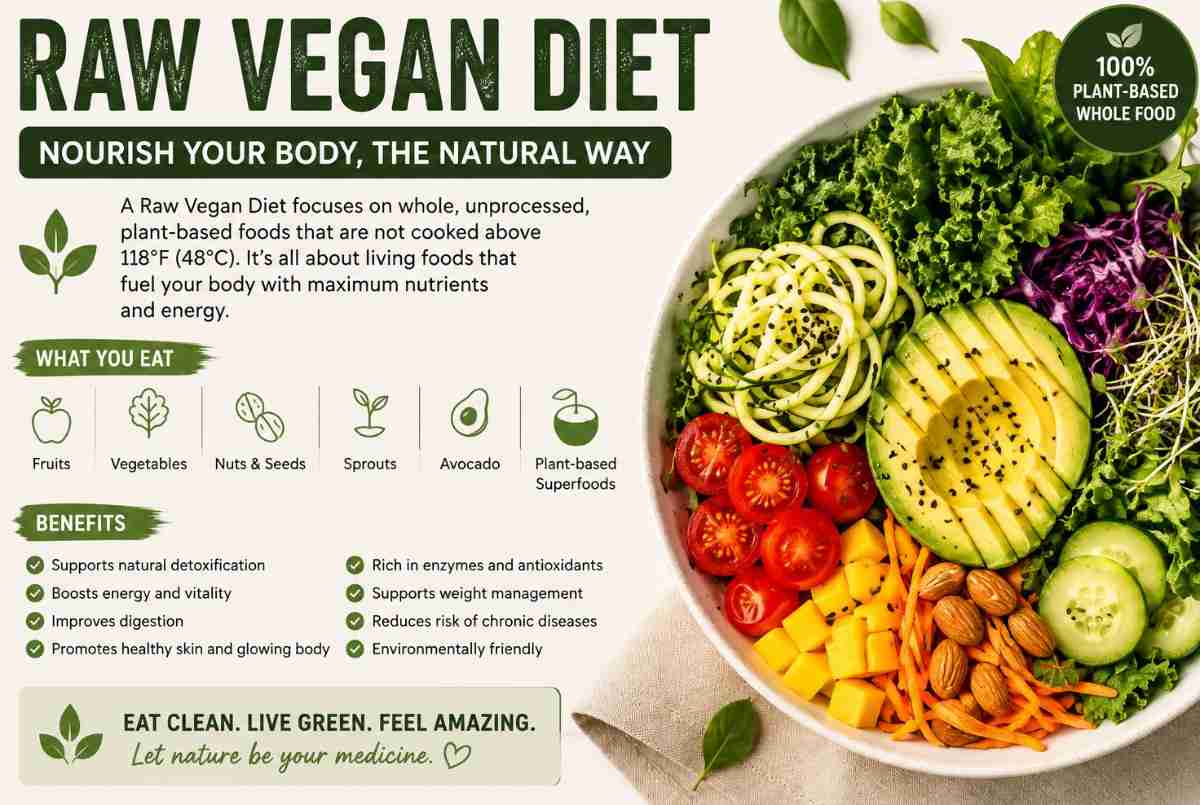
The raw vegan diet is a plant-based eating pattern that combines two ideas: eating only plant foods and eating most foods in their raw or minimally heated form. It has attracted attention among people interested in whole-food nutrition, weight management, digestive health, and reducing their intake of highly processed foods.
At first glance, the diet can seem simple: plenty of fruits, vegetables, nuts, seeds, sprouts, and other plant foods. In practice, however, following a raw vegan diet requires careful planning because eliminating both animal foods and many cooked foods can make it harder to obtain enough protein, vitamin B12, calcium, iodine, vitamin D, iron, zinc, and other nutrients.
A well-planned vegan diet can provide the nutrients needed for good health, but a raw vegan diet is more restrictive than a standard vegan diet. This guide explains what a raw vegan diet is, what you can eat, possible benefits, nutritional concerns, meal ideas, and practical tips for following it more safely.
What Is a Raw Vegan Diet?
A raw vegan diet is an eating pattern based entirely on plant foods while avoiding animal-derived foods and generally avoiding foods heated above a specific temperature.
There is no single universally accepted temperature that defines “raw.” Some people use a limit of approximately 104–118°F (40–48°C), while others simply describe their diet as mostly raw and minimally heated.
Foods commonly eaten include:
- Fresh fruits
- Raw vegetables
- Leafy greens
- Nuts
- Seeds
- Avocados
- Coconut
- Sprouted grains
- Sprouted legumes
- Raw nut and seed butters
- Cold-pressed oils
- Raw plant-based sauces
- Fresh herbs
- Some fermented plant foods
Foods typically avoided include:
- Meat
- Poultry
- Fish
- Eggs
- Milk and dairy products
- Honey
- Cooked vegetables
- Cooked grains
- Cooked beans and lentils
- Many baked foods
- Highly processed foods
The biggest difference between a regular vegan diet and a raw vegan diet is cooking. A vegan diet can include cooked beans, lentils, whole grains, tofu, tempeh, and other cooked foods, while a strict raw vegan diet generally excludes them.
How Does a Raw Vegan Diet Work?
The basic idea is to build meals around uncooked plant foods rather than conventional cooked meals.
For example, instead of oatmeal, a raw vegan breakfast might include chia pudding made without cooking, fresh fruit, and nuts.
Instead of cooked pasta, someone following the diet might use spiralized zucchini noodles with a raw tomato and cashew sauce.
Instead of cooked rice, cauliflower may be processed into small pieces and used as a raw “rice” alternative.
The emphasis is usually on whole or minimally processed plant foods.
However, “raw” does not automatically mean “healthy.” A diet made mostly from fruit juices, raw desserts, large amounts of coconut oil, or heavily processed raw snack foods can still be nutritionally unbalanced.
Foods You Can Eat on a Raw Vegan Diet
A varied raw vegan diet can include a surprisingly wide range of foods.
1. Fruits
Fruits are one of the major sources of carbohydrates and natural sweetness.
Examples include:
- Apples
- Bananas
- Oranges
- Grapes
- Mangoes
- Papaya
- Pineapple
- Berries
- Kiwi
- Pears
- Melons
- Peaches
- Apricots
- Cherries
2. Vegetables
Raw vegetables provide fiber, vitamins, minerals, and plant compounds.
Good choices include:
- Cucumber
- Tomatoes
- Bell peppers
- Carrots
- Broccoli
- Cauliflower
- Zucchini
- Cabbage
- Celery
- Radishes
- Beets
- Lettuce
- Kale
- Spinach
- Arugula
3. Nuts
Nuts can provide calories, healthy fats, protein, magnesium, and other nutrients.
Examples include:
- Almonds
- Walnuts
- Cashews
- Pecans
- Macadamia nuts
- Hazelnuts
- Brazil nuts
Because nuts are energy-dense, portions can matter if weight management is one of your goals.
4. Seeds
Seeds can make raw vegan meals more nutritionally substantial.
Useful choices include:
- Chia seeds
- Flaxseeds
- Hemp seeds
- Pumpkin seeds
- Sunflower seeds
- Sesame seeds
Chia, flax, and walnuts are also sources of plant-based omega-3 fatty acid ALA.
5. Avocado
Avocado is particularly useful because it provides energy and unsaturated fats while adding creaminess to salads, sauces, and smoothies.
6. Sprouted Foods
Some raw vegan diets include sprouted:
- Lentils
- Mung beans
- Chickpeas
- Seeds
- Buckwheat
- Other grains
Sprouting is often used to change the texture and flavor of foods without conventional cooking.
However, sprouts can carry food-safety risks because warm, moist sprouting conditions can also support bacterial growth. People who are pregnant, very young, older, or immunocompromised should be particularly cautious with raw sprouts.
20 Potential Benefits of a Raw Vegan Diet
A raw vegan diet may offer several nutritional advantages when it is carefully planned. However, many benefits come from eating a varied plant-rich diet rather than from avoiding cooking itself.
1. High Fruit and Vegetable Intake: A raw vegan diet can encourage people to eat a large variety of fruits and vegetables, increasing their intake of fiber and plant nutrients.
2. More Dietary Fiber: Fruits, vegetables, nuts, seeds, and other plant foods can provide substantial dietary fiber that supports normal bowel function.
3. More Plant Foods: The diet naturally emphasizes minimally processed plant foods rather than meat, dairy, and many ultra-processed foods.
4. Antioxidant-Rich Choices: Colorful fruits and vegetables provide compounds such as carotenoids and polyphenols that contribute to overall dietary quality.
5. Heart-Friendly Fat Choices: Nuts, seeds, and avocados provide predominantly unsaturated fats that can fit well into a heart-conscious eating pattern.
6. Lower Intake of Processed Foods: A well-designed raw vegan diet can reduce consumption of foods high in added sugars, sodium, and saturated fat.
7. Weight Management Support: High-fiber foods may contribute to fullness, although nuts, seeds, oils, and raw desserts can add substantial calories.
8. Greater Food Variety: Eating many different fruits, vegetables, nuts, and seeds can increase exposure to a wide range of vitamins, minerals, and plant compounds.
9. Increased Intake of Vitamin C: Raw fruits and vegetables can be excellent sources of vitamin C, which is important for immune function, collagen formation, and iron absorption.
10. Natural Sources of Potassium: Many fruits and vegetables provide potassium, an important mineral involved in fluid balance, nerve function, and muscle contraction.
11. Healthy Plant-Based Fats: Avocados, nuts, and seeds can contribute beneficial unsaturated fats to meals.
12. Plant-Based Omega-3 Sources: Chia seeds, ground flaxseed, hemp seeds, and walnuts provide ALA, a plant-based omega-3 fatty acid.
13. Reduced Animal Food Intake: The diet eliminates meat, poultry, fish, eggs, dairy, and other animal-derived foods.
14. More Homemade Meals: Preparing raw meals at home can make it easier to control ingredients and reduce reliance on packaged foods.
15. Greater Awareness of Ingredients: Following a restrictive eating pattern often encourages people to pay closer attention to food labels and ingredients.
16. Potentially Lower Saturated Fat Intake: If the diet focuses on whole plant foods rather than coconut-heavy desserts and oils, saturated fat intake may be relatively low.
17. Better Use of Whole Plant Foods: Whole fruits, vegetables, nuts, and seeds can form the foundation of nutrient-dense meals.
18. Hydrating Foods: Fruits and vegetables contain substantial amounts of water, which can contribute to overall fluid intake.
19. Potential Improvement in Overall Diet Quality: Replacing highly processed foods with whole plant foods can improve the nutritional profile of the overall diet.
20. Encourages Mindful Food Preparation: Making salads, raw soups, blended sauces, vegetable noodles, and seed-based dishes can encourage more active involvement with food.
Importantly, these potential benefits should not be interpreted as proof that a raw vegan diet is superior to a balanced vegan or omnivorous diet. Research and dietary guidance generally emphasize overall dietary quality and nutrient adequacy rather than simply whether food is raw.
Important Nutrients to Watch on a Raw Vegan Diet
This is one of the most important parts of following a raw vegan diet.
A restrictive diet can make certain nutrients more difficult to obtain. The NHS specifically identifies vitamin B12, calcium, iron, iodine, and selenium as nutrients that require attention in vegan diets.
1. Vitamin B12
Vitamin B12 deserves particular attention because reliable natural plant sources are very limited.
Fortified foods and B12 supplements are commonly used by vegans. Vitamin B12 is important for red blood cell formation and normal nervous-system function.
A strict raw vegan diet that excludes fortified foods can therefore create a significant nutritional challenge.
2. Protein
Protein can be obtained from plant foods, but a raw vegan diet has fewer convenient protein sources than a conventional vegan diet because cooked beans, lentils, tofu, tempeh, and many other protein-rich foods may be excluded.
Nuts and seeds help, but relying exclusively on them can result in a diet that is very high in calories.
3. Calcium
Calcium is important for bones, teeth, muscles, and normal nervous-system function.
Raw vegan sources can include:
- Sesame seeds
- Tahini
- Chia seeds
- Certain leafy greens
- Almonds
- Calcium-fortified plant beverages, where compatible with the person’s definition of raw
Fortified foods are often useful in vegan diets, but strict raw-food followers may avoid them depending on how the products are processed.
4. Iron
Plant foods contain iron, but the body generally absorbs non-heme iron from plants less efficiently than heme iron from animal foods.
Raw vegan sources include:
- Pumpkin seeds
- Sesame seeds
- Chia seeds
- Leafy greens
- Dried fruits
- Nuts
- Some sprouted foods
Pairing plant sources of iron with vitamin-C-rich foods can help improve iron absorption.
5. Iodine
Iodine is needed to produce thyroid hormones.
Strict vegans can have difficulty obtaining adequate iodine if they avoid dairy, eggs, seafood, and fortified foods. Iodized salt may also not fit some raw-food approaches.
Sea vegetables can contain iodine, but their iodine content can vary considerably, and excessive iodine intake can also be harmful.
6. Vitamin D
Vitamin D can be difficult to obtain from food on many vegan diets.
Sunlight exposure, fortified foods, and supplements may be relevant depending on individual circumstances and local guidance.
7. Zinc
Zinc is found in nuts and seeds, but plant-based sources may contain compounds that reduce mineral absorption.
A varied diet containing seeds, nuts, and other plant foods can help provide zinc.
8. Selenium
Selenium is needed for several important functions, including normal thyroid and immune function.
Brazil nuts are particularly rich in selenium, but their selenium content can vary, so eating very large amounts is not advisable.
Raw Vegan Diet vs Vegan Diet
| Feature | Raw Vegan Diet | Vegan Diet |
|---|---|---|
| Animal foods | Avoided | Avoided |
| Fruits | Yes | Yes |
| Vegetables | Yes | Yes |
| Nuts and seeds | Yes | Yes |
| Cooked beans | Usually avoided | Allowed |
| Cooked lentils | Usually avoided | Allowed |
| Tofu | Usually avoided if cooked/processed | Allowed |
| Whole grains | Often restricted | Allowed |
| Cooked vegetables | Avoided | Allowed |
| Fortified foods | May be restricted | Commonly used |
| Cooking | Minimal or none | Allowed |
| Nutritional flexibility | More restrictive | More flexible |
This distinction is important. A vegan diet can include a broad range of foods, while a raw vegan diet adds significant restrictions around preparation.
Is a Raw Vegan Diet Healthy?
It can be possible to follow a raw vegan diet that is nutrient-dense, but it requires considerably more planning than a conventional balanced vegan diet.
A varied vegan diet can provide adequate nutrition when it includes appropriate food choices and fortified foods or supplements for nutrients that are difficult to obtain.
The raw restriction makes this more complicated.
For example, someone following a conventional vegan diet can obtain protein from cooked lentils, chickpeas, beans, tofu, tempeh, and other foods. A strict raw vegan diet has fewer options.
For this reason, “raw” should not automatically be equated with “healthier.”
Side Effects and Risks of Raw Vegan Diet
1. Nutrient Deficiencies: Poorly planned raw vegan diets can increase the risk of inadequate vitamin B12, calcium, iodine, vitamin D, iron, zinc, selenium, protein, and other nutrients.
2. Low Protein Intake: Avoiding cooked legumes and other concentrated plant proteins can make it harder to meet protein needs.
3. Unintentional Weight Loss: Some people may struggle to consume enough energy from fruits and vegetables alone.
4. Excessive Calorie Intake: Large quantities of nuts, seeds, coconut products, oils, and raw desserts can make the diet extremely calorie-dense.
5. Digestive Discomfort: A sudden increase in fiber can cause bloating, gas, abdominal discomfort, or changes in bowel habits.
6. Iron Deficiency: Plant-based iron is less readily absorbed than heme iron, making careful food planning particularly important.
7. Vitamin B12 Deficiency: Without fortified foods or supplementation, strict vegans can struggle to obtain adequate B12.
8. Low Calcium Intake: Avoiding fortified plant foods can make adequate calcium intake more difficult.
9. Low Iodine Intake: Avoiding iodized salt and other reliable iodine sources can increase the risk of inadequate iodine intake.
10. Food Safety Concerns: Raw sprouts and other uncooked foods can carry harmful microorganisms if they are contaminated.
How to Start a Raw Vegan Diet?
Starting a raw vegan diet does not have to mean changing everything overnight. A gradual approach can make the transition easier and help you identify which foods work best for you.
- Start Slowly: Gradually add more raw fruits, vegetables, nuts, and seeds instead of changing your diet overnight.
- Reduce Processed Foods: Slowly cut down on fast food, sugary drinks, packaged snacks, and highly processed foods.
- Eat Balanced Meals: Combine fruits or vegetables with healthy fats, seeds, nuts, and suitable plant-based protein sources.
- Don’t Eat Only Fruit: Include plenty of vegetables, leafy greens, nuts, and seeds for better nutritional variety.
- Include Healthy Fats: Add avocado, walnuts, chia seeds, flaxseeds, and hemp seeds to meals.
- Get Enough Protein: Use nuts, seeds, sprouts, and other suitable raw plant foods to support protein intake.
- Plan for Vitamin B12: Vegans generally need a reliable source of vitamin B12 through fortified foods or supplements.
- Watch Key Nutrients: Pay attention to calcium, iron, iodine, vitamin D, zinc, selenium, protein, and omega-3 fats.
- Increase Fiber Gradually: Slowly increase raw foods to reduce possible gas, bloating, and digestive discomfort.
- Learn Easy Recipes: Try smoothies, salads, chia pudding, zucchini noodles, lettuce wraps, and raw soups.
- Prepare Ahead: Wash and prepare fruits and vegetables in advance for convenient meals.
- Practice Food Safety: Wash produce carefully and take extra precautions with raw sprouts.
- Don’t Assume Raw Is Healthier: Cooking can make some foods easier to digest and provide certain nutritional advantages.
- Start With Mostly Raw: If a strict raw diet is difficult, begin with a mostly raw diet that includes nutritious cooked foods.
- Monitor Your Health: Watch your energy, digestion, hunger, and weight, and seek professional advice if problems develop.
7-Day Raw Vegan Diet Meal Plan
Here is a simple, varied 7-day meal plan based on raw or minimally heated plant foods. Portions should be adjusted according to individual calorie and nutrient needs.
| Day | Breakfast | Mid-Morning Snack | Lunch | Evening Snack | Dinner |
|---|---|---|---|---|---|
| Day 1 | Banana, berry, chia and flaxseed smoothie | Apple + walnuts | Large green salad with cucumber, tomato, avocado, bell pepper and pumpkin seeds | Orange + almonds | Zucchini noodles with raw tomato-basil sauce and hemp seeds |
| Day 2 | Chia pudding with berries, banana and walnuts | Pear + pumpkin seeds | Raw lettuce wraps with avocado, cucumber, tomato and sprouts | Fresh mango | Raw cauliflower rice with vegetables, avocado and sesame seeds |
| Day 3 | Fresh fruit bowl with banana, papaya, berries and chia seeds | Apple + cashews | Spinach salad with cucumber, carrots, tomato, avocado and sunflower seeds | Watermelon slices | Raw zucchini noodles with avocado, lemon and herbs |
| Day 4 | Berry-banana smoothie with hemp and flaxseeds | Kiwi + walnuts | Raw vegetable salad with cabbage, cucumber, bell pepper, avocado and sesame seeds | Fresh pineapple | Raw tomato and avocado soup with a large leafy-green salad |
| Day 5 | Chia pudding with banana, strawberries and pumpkin seeds | Orange + almonds | Collard-green wraps filled with sprouts, cucumber, carrot, tomato and avocado | Grapes + walnuts | Zucchini noodles with raw cashew-herb sauce and vegetables |
| Day 6 | Mango, banana and spinach smoothie with chia seeds | Pear + sunflower seeds | Raw cauliflower “rice” bowl with cucumber, tomato, avocado, sprouts and hemp seeds | Berries + almonds | Large mixed salad with avocado, cabbage, carrots, tomatoes and pumpkin seeds |
| Day 7 | Tropical fruit bowl with papaya, pineapple, banana and chia seeds | Apple + walnuts | Rainbow salad with leafy greens, cucumber, tomato, carrot, bell pepper, avocado and seeds | Watermelon or berries | Raw zucchini noodles with tomato, basil, avocado and hemp-seed topping |
Simple Tips for This 7-Day Plan
- Drink water throughout the day according to your thirst and individual needs.
- Include a variety of fruits, vegetables, nuts and seeds rather than relying heavily on one food.
- Use ground flaxseed or chia seeds regularly for plant-based omega-3 ALA.
- Pay particular attention to vitamin B12, as unfortified plant foods do not reliably provide enough B12.
- Consider calcium, iron, iodine, vitamin D, zinc, selenium and protein when planning the diet.
- Raw sprouts should be handled carefully because they can carry foodborne pathogens.
- If you experience persistent fatigue, weakness, digestive problems, or unintended weight loss, reconsider the diet and seek professional nutrition advice.
- This plan is an example and is not a medically personalized diet plan.
Raw Vegan Food Preparation Ideas
Following a raw vegan diet does not have to mean eating plain salads every day.
Raw Zucchini Noodles
Use a spiralizer to turn zucchini into noodles and combine them with tomatoes, basil, avocado, and a nut-based sauce.
Raw Chia Pudding
Combine chia seeds with an appropriate plant-based liquid and allow them to thicken in the refrigerator.
Raw Vegetable Wraps
Use large lettuce leaves or collard leaves as wraps and fill them with vegetables, avocado, sprouts, and seed-based sauces.
Raw Energy Bites
Blend dates with nuts and seeds and form the mixture into small balls.
Raw Soup
Blend cucumber, tomato, avocado, herbs, lemon juice, and water to create a chilled vegetable soup.
Raw “Rice” Bowl
Pulse cauliflower into small pieces and combine it with vegetables, herbs, avocado, and seeds.
Tips for Following a Raw Vegan Diet
1. Start Gradually
Moving suddenly from a conventional diet to a very high-fiber raw diet may cause digestive discomfort. Gradually increasing raw fruits, vegetables, nuts, and seeds may be easier for some people.
2. Eat Enough Calories
Fruits and vegetables can be filling without providing a large amount of energy. Include appropriate portions of nuts, seeds, avocado, and other energy-dense foods.
3. Prioritize Protein
Do not build the entire diet around fruit. Include a variety of nuts, seeds, sprouts, and other suitable plant protein sources.
4. Plan for Vitamin B12
Do not assume that fruits and vegetables provide enough B12. Reliable fortified sources or supplementation are generally important for strict vegans.
5. Pay Attention to Minerals
Include varied sources of calcium, iron, zinc, iodine, and selenium rather than relying on one food.
6. Use Vitamin C With Iron-Rich Foods
Adding foods such as citrus fruits, berries, tomatoes, broccoli, or bell peppers to meals can help with plant-iron absorption.
7. Be Careful With Supplements
More is not necessarily better. Some nutrients, particularly iodine, can cause problems when taken in excessive amounts.
8. Practice Good Food Hygiene
Wash produce thoroughly, keep refrigerated foods cold, and take particular care with raw sprouts.
Who Should Be Careful With a Raw Vegan Diet?
A highly restrictive diet may not be appropriate for everyone.
Extra caution is warranted for:
- Children and teenagers
- Pregnant people
- Breastfeeding people
- Older adults
- People who are underweight
- People with a history of disordered eating
- People with certain digestive conditions
- People with nutrient deficiencies
- People with medical conditions requiring specialized diets
Pregnancy and breastfeeding require particular attention to energy, protein, vitamins, and minerals. Vegan diets during these life stages need careful planning, and a healthcare professional or registered dietitian can help assess individual needs.
Is Raw Vegan Better Than Cooked Vegan?
Not necessarily.
Cooking can make many foods easier to digest and can increase the amount of certain nutrients that the body can absorb from particular foods. At the same time, some heat-sensitive nutrients can decrease with cooking.
The more important question is whether the overall diet provides enough:
- Calories
- Protein
- Fiber
- Essential fats
- Vitamins
- Minerals
- Vitamin B12
- Calcium
- Iron
- Iodine
- Vitamin D
- Zinc
- Selenium
A balanced vegan diet that includes both raw and cooked foods may be easier to make nutritionally complete than a strict raw vegan diet.
FAQ’s
Is a raw vegan diet safe?
It can be followed by some adults, but its restrictive nature makes nutrient planning especially important. Vitamin B12, protein, calcium, iron, iodine, vitamin D, zinc, and selenium deserve particular attention.
Can you get enough protein on a raw vegan diet?
It is possible to obtain protein from nuts, seeds, sprouts, and other suitable plant foods, but meeting protein needs can be more challenging than on a conventional vegan diet because cooked legumes and other concentrated protein foods are excluded.
Can you lose weight on a raw vegan diet?
Yes, some people may lose weight because the diet can be high in fiber and relatively low in calorie-dense foods, but weight loss depends on total calorie intake and individual factors.
Can you eat bananas on a raw vegan diet?
Yes. Bananas are commonly eaten on a raw vegan diet and can be used in smoothies, desserts, or eaten fresh.
Can you eat rice on a raw vegan diet?
Cooked rice is generally not considered raw. Some raw-food followers use sprouted grains or vegetables such as cauliflower as alternatives.
Can you eat oatmeal on a raw vegan diet?
Cooked oatmeal does not fit a strict raw vegan diet. Some people eat oats after soaking them, depending on their definition of raw.
Can you eat potatoes on a raw vegan diet?
Raw potatoes are generally not recommended because they can be difficult to digest and contain naturally occurring compounds that may be harmful in large amounts.
Can you eat tofu on a raw vegan diet?
Most commercially produced tofu is heated during processing, so it usually does not qualify as raw under a strict raw vegan diet.
Where do raw vegans get protein?
Raw vegans can obtain protein from nuts, seeds, hemp seeds, chia seeds, sprouts, and other suitable plant foods, although meeting protein needs may require careful planning.
How do raw vegans get vitamin B12?
Reliable vitamin B12 sources for vegans generally include B12-fortified foods and supplements because unfortified plant foods do not reliably provide enough B12.
Can you eat nuts on a raw vegan diet?
Yes. Almonds, walnuts, cashews, pecans, macadamia nuts, and other nuts are commonly included.
Can you eat beans on a raw vegan diet?
Most dried beans should not be eaten raw because some contain naturally occurring compounds that can cause illness. Sprouted legumes may be used in some raw vegan diets, but they require careful food-safety practices.
Is raw vegan good for digestion?
The diet can provide substantial fiber, but a sudden increase in raw fruits, vegetables, and seeds may cause bloating, gas, or digestive discomfort in some people.
Can children follow a raw vegan diet?
A strict raw vegan diet can make it difficult for children to meet their high energy and nutrient needs. Children should not follow such a restrictive diet without guidance from a qualified healthcare professional or dietitian.
Can you drink coffee on a raw vegan diet?
Coffee is technically plant-based, but it is roasted and brewed with heat, so it generally does not fit a strict raw-food diet.
Can you eat bread on a raw vegan diet?
Traditional baked bread is not considered raw because it is cooked. Raw vegan alternatives may include dehydrated seed or vegetable breads.
What do raw vegans eat for breakfast?
Common choices include fresh fruit, smoothies, chia pudding, soaked oats, nuts, seeds, avocado, and raw fruit-and-seed bowls.
Can you eat avocado on a raw vegan diet?
Yes. Avocado is a popular raw vegan food because it provides healthy unsaturated fats and can add creaminess to salads, sauces, and smoothies.
Is a raw vegan diet safe during pregnancy?
A strict raw vegan diet may make it harder to meet pregnancy-related nutrient and energy requirements. Anyone considering it during pregnancy should discuss their diet with a healthcare professional or registered dietitian.
Can you survive on a raw vegan diet?
Yes, some adults can follow a raw vegan diet long-term, but it requires careful planning to meet calorie, protein, vitamin B12, calcium, iron, iodine, vitamin D, zinc, and other nutrient needs.
What do raw vegans not eat?
Raw vegans avoid all animal products, including meat, fish, eggs, dairy, and usually honey. They also avoid cooked foods such as cooked grains, beans, lentils, and most heated or highly processed foods.
Final Thoughts
The raw vegan diet emphasizes fruits, vegetables, nuts, seeds, sprouts, avocados, herbs, and other plant foods while avoiding animal products and generally avoiding cooked foods. Its focus on minimally processed plant foods can encourage a high intake of fiber and a variety of vitamins, minerals, and beneficial plant compounds.
However, the “raw” part makes the diet considerably more restrictive than a standard vegan diet. Removing cooked legumes, grains, tofu, fortified foods, and other convenient foods can make nutritional adequacy more difficult.
If you choose to follow this eating pattern, focus on variety, adequate calories, sufficient protein, reliable vitamin B12, and careful attention to calcium, iron, iodine, vitamin D, zinc, and selenium. A registered dietitian can be particularly helpful when following a restrictive diet or when planning nutrition during pregnancy, breastfeeding, childhood, older age, or a period of illness.
About the Author:
Written by: Kirti Solanki (Health Content Researcher)
Kirti Solanki creates reader-friendly health and nutrition content based on reputable medical, nutrition, and public-health references. Her work focuses on making complex nutrition topics easier to understand while highlighting practical considerations and limitations.
Sources / References:
Disclaimer:
This article is for general educational purposes and is not a substitute for personalized medical or nutritional advice. If you have a medical condition, are pregnant or breastfeeding, or are considering a restrictive diet for a child, consult a qualified healthcare professional or registered dietitian.
Also Read: