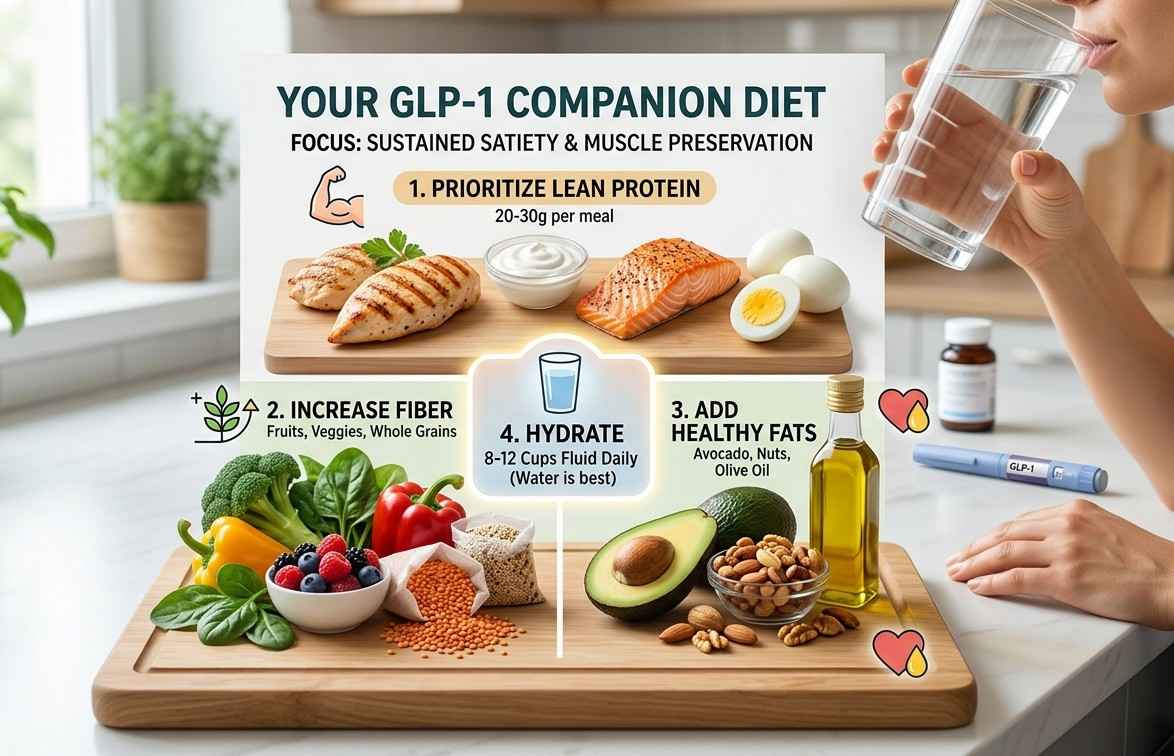
The GLP-1 diet has become one of the most talked-about nutrition approaches in recent years, especially alongside the growing popularity of GLP-1 medications used for weight management and diabetes support. But despite the attention, many people still wonder what a GLP-1 diet actually means, what foods to eat, and how to build healthy habits around it.
A GLP-1 diet is not a strict fad diet or a crash weight-loss plan. Instead, it focuses on eating foods that naturally support appetite control, blood sugar balance, digestion, and metabolic health. It also helps people using GLP-1 medications like semaglutide or tirzepatide eat in a way that reduces side effects and improves results.
Whether your goal is weight loss, diabetes management, reduced cravings, or better overall health, understanding how a GLP-1-friendly eating pattern works can make a major difference. In this guide, you’ll learn everything about the GLP-1 diet, including how it works, the best foods to eat, foods to avoid, meal planning tips, benefits, side effects, and practical strategies for long-term success.
What Is a GLP-1 Diet?
A GLP-1 diet is an eating pattern designed to support the natural hormone called glucagon-like peptide-1 (GLP-1), which plays a key role in appetite regulation, blood sugar control, and digestion.
GLP-1 is a hormone released in the gut after eating. It helps:
- Slow stomach emptying
- Increase feelings of fullness
- Reduce hunger
- Improve insulin release
- Stabilize blood sugar levels
- Reduce overeating
The GLP-1 diet focuses on foods and habits that naturally encourage these effects. It is commonly followed by:
- People taking GLP-1 medications
- Individuals with type 2 diabetes
- People trying to lose weight
- Those managing insulin resistance
- Individuals struggling with overeating or cravings
Unlike restrictive diets that eliminate entire food groups, the GLP-1 diet emphasizes balanced nutrition, portion awareness, and high-quality whole foods.
How Does GLP-1 Work in the Body?
When you eat, the intestines release GLP-1 hormones into the bloodstream. These hormones communicate with the brain and pancreas to regulate appetite and blood sugar.
Main Functions of GLP-1
1. Promotes Fullness
GLP-1 signals the brain that you are satisfied after eating. This reduces the urge to snack or overeat.
2. Slows Digestion
Food stays in the stomach longer, helping you feel full for extended periods.
3. Controls Blood Sugar
GLP-1 helps the pancreas release insulin when needed and reduces excess glucose production.
4. Reduces Cravings
Many people notice fewer cravings for sugary or highly processed foods.
5. Supports Weight Loss
By lowering appetite and improving satiety, GLP-1 can help reduce calorie intake naturally.
What Foods Support GLP-1 Naturally?
Certain foods may encourage healthy GLP-1 activity in the body. These foods are usually high in fiber, protein, healthy fats, and slow-digesting carbohydrates.
Best Foods for a GLP-1 Diet
1. Lean Protein Foods
Protein is one of the most important parts of a GLP-1-friendly diet because it increases fullness and helps preserve muscle during weight loss.
Good Protein Choices:
- Chicken breast
- Turkey
- Eggs
- Fish
- Greek yogurt
- Cottage cheese
- Tofu
- Lentils
- Beans
- Tempeh
Protein also helps reduce blood sugar spikes after meals.
2. High-Fiber Vegetables
Fiber slows digestion and helps you stay full longer.
Best Vegetables:
- Broccoli
- Spinach
- Kale
- Cauliflower
- Zucchini
- Brussels sprouts
- Bell peppers
- Cabbage
- Cucumbers
- Green beans
Vegetables are low in calories but rich in nutrients and volume.
3. Whole Grains
Whole grains digest more slowly than refined carbohydrates.
Healthy Options:
- Oats
- Brown rice
- Quinoa
- Barley
- Whole wheat bread
- Whole grain pasta
These foods help maintain steady energy levels throughout the day.
4. Healthy Fats
Healthy fats improve satiety and support hormone function.
Good Sources:
- Avocados
- Nuts
- Seeds
- Olive oil
- Chia seeds
- Flaxseeds
- Nut butters
Moderation is important because fats are calorie-dense.
5. Fruits
Many fruits provide fiber, vitamins, and antioxidants.
Best Fruits for GLP-1 Support:
- Berries
- Apples
- Pears
- Oranges
- Kiwi
- Peaches
- Grapefruit
Whole fruits are better than fruit juices because they contain fiber.
6. Fermented Foods
Gut health may influence GLP-1 activity.
Helpful Fermented Foods:
- Yogurt
- Kefir
- Kimchi
- Sauerkraut
- Miso
- Kombucha
These foods contain probiotics that support digestive health.
Foods to Avoid on a GLP-1 Diet
Certain foods may interfere with appetite regulation, blood sugar balance, and weight management.
1. Sugary Foods
High sugar intake can lead to blood sugar spikes and increased hunger later.
Limit:
- Candy
- Soda
- Pastries
- Ice cream
- Sugary cereals
- Sweetened coffee drinks
2. Ultra-Processed Foods
Highly processed foods are often low in nutrients and easy to overeat.
Examples:
- Chips
- Fast food
- Frozen fried foods
- Packaged snacks
- Processed meats
3. Refined Carbohydrates
Refined carbs digest quickly and may increase cravings.
Reduce:
- White bread
- White pasta
- White rice
- Sugary baked goods
4. Fried Foods
Greasy foods may worsen digestive discomfort, especially for people using GLP-1 medications.
5. Excess Alcohol
Alcohol may affect blood sugar regulation and appetite control.
Benefits of Following a GLP-1 Diet
1. Supports Weight Loss
The diet naturally reduces overeating by increasing fullness and reducing cravings.
2. Improves Blood Sugar Control
Balanced meals help prevent glucose spikes and crashes.
3. Helps Reduce Cravings
Protein and fiber-rich meals may decrease emotional eating and constant snacking.
4. Encourages Healthier Eating Habits
The diet focuses on whole foods rather than extreme restriction.
5. Supports Digestive Health
Fiber and fermented foods can improve gut function.
6. Helps Preserve Muscle Mass
Adequate protein intake is important during weight loss.
GLP-1 Diet for People Taking GLP-1 Medications
Many people following this diet are also taking GLP-1 medications prescribed for obesity or type 2 diabetes.
These medications may include:
- Semaglutide
- Tirzepatide
- Liraglutide
The diet can help reduce common side effects such as:
- Nausea
- Bloating
- Constipation
- Acid reflux
- Stomach discomfort
Tips for Eating While on GLP-1 Medications
Eat Smaller Meals
Large meals may feel uncomfortable because digestion slows down.
Prioritize Protein
Protein helps maintain muscle and supports fullness.
Stay Hydrated
Drink enough water throughout the day.
Eat Slowly
Eating too quickly may worsen nausea or bloating.
Avoid Heavy Greasy Foods
Fatty meals may trigger digestive discomfort.
How to Start a GLP-1 Diet?
- Add More Protein: Include foods like eggs, chicken, fish, yogurt, tofu, or beans in every meal to help control hunger and support muscle health.
- Eat More Fiber: Choose vegetables, fruits, oats, and whole grains to stay full longer and support digestion.
- Drink Enough Water: Stay hydrated throughout the day to support digestion, energy, and appetite control.
- Reduce Sugary Foods: Limit soda, candy, pastries, and other sugary snacks that may increase cravings and blood sugar spikes.
- Avoid Ultra-Processed Foods: Cut back on chips, fast food, and packaged snacks that are often high in calories and low in nutrients.
- Eat Smaller Balanced Meals: Choose balanced meals with protein, fiber, and healthy fats to avoid overeating.
- Eat Slowly: Eating slowly helps your body recognize fullness and may reduce bloating or discomfort.
- Plan Meals Ahead: Meal planning makes it easier to stick to healthy eating habits during busy days.
- Choose Healthy Snacks: Keep snacks like nuts, yogurt, fruit, or boiled eggs available to manage hunger between meals.
- Include Healthy Fats: Add moderate amounts of avocado, olive oil, nuts, and seeds for better fullness and nutrition.
- Stay Active: Combine the GLP-1 diet with regular exercise like walking or strength training for better results.
- Start Gradually: Make small changes step by step instead of trying to change everything at once.
- Watch Portion Sizes: Large meals may cause discomfort, so focus on moderate portions.
- Prioritize Sleep and Stress Control: Good sleep and lower stress levels can support appetite balance and healthy habits.
- Stay Consistent: Focus on long-term healthy habits instead of aiming for perfection.
Sample 7-Day GLP-1 Diet Meal Plan
| Day | Breakfast | Mid-Morning Snack | Lunch | Evening Snack | Dinner |
|---|---|---|---|---|---|
| Day 1 | Greek yogurt with berries, chia seeds, and oats | Apple slices with almond butter | Grilled chicken salad with quinoa and olive oil dressing | Roasted chickpeas | Baked salmon with broccoli and brown rice |
| Day 2 | Scrambled eggs with spinach and whole grain toast | Cottage cheese with cucumber slices | Turkey and vegetable wrap with side salad | Handful of mixed nuts | Grilled tofu with roasted vegetables and quinoa |
| Day 3 | Overnight oats with flaxseeds and blueberries | Boiled eggs | Lentil soup with mixed vegetable salad | Greek yogurt | Grilled fish with sweet potato and green beans |
| Day 4 | Protein smoothie with banana, spinach, and peanut butter | Pear slices | Chicken stir-fry with brown rice and vegetables | Hummus with carrot sticks | Baked tofu with cauliflower and quinoa |
| Day 5 | Vegetable omelet with avocado | Handful of almonds | Tuna salad with whole grain crackers | Cottage cheese with berries | Grilled chicken with roasted Brussels sprouts |
| Day 6 | Chia pudding with berries and nuts | Apple with peanut butter | Quinoa bowl with black beans, vegetables, and avocado | Roasted edamame | Baked fish with asparagus and brown rice |
| Day 7 | Oatmeal with walnuts and sliced banana | Greek yogurt with cinnamon | Grilled turkey salad with mixed greens | Mixed seeds and nuts | Lentil curry with steamed vegetables and quinoa |
High-Protein GLP-1 Diet Foods
Protein becomes especially important because many people eat less overall while following a GLP-1 plan.
Best High-Protein Foods:
| Food | Protein Content |
|---|---|
| Chicken Breast | High |
| Eggs | Moderate |
| Greek Yogurt | High |
| Fish | High |
| Cottage Cheese | High |
| Lentils | Moderate |
| Tofu | Moderate |
| Protein Shakes | High |
Protein also helps reduce muscle loss during weight reduction.
Fiber and the GLP-1 Diet
Fiber is another essential part of the diet.
Benefits of Fiber
- Slows digestion
- Improves fullness
- Supports gut health
- Stabilizes blood sugar
- Helps prevent constipation
High-Fiber Foods
- Oats
- Beans
- Lentils
- Vegetables
- Fruits
- Chia seeds
- Flaxseeds
Increase fiber gradually and drink enough water.
Hydration on a GLP-1 Diet
Some people experience dehydration because they eat less food overall.
Hydration Tips:
- Drink water consistently
- Include herbal teas
- Eat water-rich foods
- Limit sugary beverages
Good hydration also supports digestion and energy levels.
Common Mistakes on a GLP-1 Diet
1. Eating Too Little
Some people drastically reduce food intake, which may lead to fatigue or nutrient deficiencies.
2. Skipping Protein
Low protein intake can contribute to muscle loss.
3. Ignoring Fiber
Without enough fiber, constipation may become a problem.
4. Eating Too Fast
Fast eating can increase bloating and nausea.
5. Relying on Processed “Diet” Foods
Highly processed low-calorie foods are not always nutritious.
Is the GLP-1 Diet Safe?
For most healthy adults, a balanced GLP-1 diet based on whole foods is generally considered safe.
However, some people should speak with a healthcare professional before making major dietary changes, including:
- People with diabetes
- Pregnant women
- Individuals with eating disorders
- People with digestive diseases
- Those taking prescription medications
GLP-1 Diet and Exercise
Exercise works well alongside the GLP-1 diet.
Best Types of Exercise
- Strength Training: Helps preserve muscle mass during weight loss.
- Walking: Simple and effective for improving metabolism.
- Cardio: Supports heart health and calorie burning.
- Flexibility Exercises: Yoga and stretching may improve mobility and stress management.
Can the GLP-1 Diet Help Without Medication?
Yes. Many principles of the GLP-1 diet are beneficial even without medication.
A high-protein, high-fiber, minimally processed diet naturally supports:
- Appetite control
- Stable blood sugar
- Reduced cravings
- Better digestion
- Healthy weight management
Many nutrition experts recommend these eating habits for long-term health.
GLP-1 Diet for Beginners
If you are new to the GLP-1 diet, start gradually.
Beginner Tips:
- Add protein to every meal
- Increase vegetables slowly
- Drink more water
- Reduce sugary snacks
- Plan meals ahead
- Avoid extreme restriction
- Eat mindfully
Consistency matters more than perfection.
Signs Your GLP-1 Diet Is Working
You may notice:
- Reduced appetite
- Fewer cravings
- Better portion control
- Improved energy
- Gradual weight loss
- Better blood sugar readings
- Less emotional eating
Healthy progress is usually steady rather than rapid.
How Long Does It Take to See Results?
Results vary based on:
- Activity level
- Sleep quality
- Stress
- Medical conditions
- Medication use
- Starting weight
Some people notice appetite changes within days, while body composition changes may take weeks or months.
GLP-1 Diet vs Keto Diet
| Feature | GLP-1 Diet | Keto Diet |
|---|---|---|
| Main Goal | Support appetite control, blood sugar balance, and sustainable weight loss | Shift the body into ketosis for fat burning |
| Eating Style | Balanced and flexible | Very low-carb and high-fat |
| Carbohydrate Intake | Moderate healthy carbs allowed | Extremely low carbs |
| Protein Intake | High to moderate protein | Moderate protein |
| Fat Intake | Moderate healthy fats | Very high fat intake |
| Focus Foods | Lean proteins, vegetables, fruits, whole grains, legumes | Meat, eggs, cheese, butter, oils, low-carb vegetables |
| Foods Limited | Sugary foods, ultra-processed foods, refined carbs | Bread, rice, pasta, fruits, sugary foods, many legumes |
| Fiber Intake | Usually high due to vegetables and whole grains | Can be lower if vegetables are limited |
| Appetite Control | Supports natural fullness through protein and fiber | Ketosis may reduce hunger |
| Blood Sugar Impact | Helps stabilize blood sugar levels | May reduce blood sugar spikes due to low carb intake |
| Weight Loss Speed | Gradual and sustainable | Often rapid in the beginning |
| Sustainability | Easier for many people to maintain long term | Can feel restrictive over time |
| Flexibility | Allows a wide variety of foods | Requires strict carb tracking |
| Meal Planning Difficulty | Moderate and beginner-friendly | More demanding and restrictive |
| Social Eating | Easier to follow at restaurants and events | More difficult due to carb restrictions |
| Nutrient Variety | Broad nutrient intake from multiple food groups | Some nutrient-rich foods may be limited |
| Common Side Effects | Mild digestive changes if overeating occurs | Keto flu, fatigue, constipation, headaches |
| Best For | Long-term healthy eating and appetite management | Rapid carb reduction and ketosis-focused goals |
| Exercise Support | Supports balanced energy for workouts | Some people may experience low energy initially |
| Long-Term Approach | Lifestyle-focused and balanced | Often used short term or cyclically |
| Suitable for Beginners | Generally easier to start | Requires more tracking and adjustment |
| Medical Supervision Needed | Helpful for people with health conditions | Recommended for certain medical conditions or long-term use |
| Typical Breakfast | Greek yogurt with berries and oats | Eggs with cheese and avocado |
| Typical Snack | Apple with peanut butter | Nuts or cheese |
| Overall Approach | Balanced nutrition with portion awareness | High-fat metabolic approach |
GLP-1 Diet vs Intermittent Fasting
| Feature | GLP-1 Diet | Intermittent Fasting |
|---|---|---|
| Main Focus | Improving food quality, fullness, and blood sugar balance | Controlling when you eat rather than what you eat |
| Eating Style | Balanced meals with protein, fiber, and whole foods | Scheduled eating and fasting windows |
| Goal | Appetite control, healthy weight management, metabolic support | Fat burning, calorie reduction, and metabolic flexibility |
| Meal Timing | Flexible meal timing | Restricted eating hours |
| Food Restrictions | Limits ultra-processed and sugary foods | No specific food restrictions unless combined with another diet |
| Protein Intake | Encourages regular protein intake | Depends on food choices during eating windows |
| Carbohydrates | Includes healthy carbohydrates | Varies depending on the individual |
| Fat Intake | Moderate healthy fats | Flexible depending on diet style |
| Hunger Management | Focuses on fullness through food choices | Hunger may increase during fasting periods |
| Blood Sugar Support | Supports stable blood sugar through balanced meals | May improve insulin sensitivity in some people |
| Weight Loss Style | Gradual and sustainable | Often reduces calorie intake naturally |
| Sustainability | Easier for many people long term | Can be difficult for some schedules or lifestyles |
| Meal Frequency | Regular balanced meals and snacks | Fewer meals during eating windows |
| Flexibility | Highly flexible food approach | Structured timing approach |
| Best Foods | Lean proteins, vegetables, fruits, whole grains | Depends on personal food choices |
| Muscle Preservation | High protein helps support muscle maintenance | Muscle loss may occur if protein intake is low |
| Energy Levels | More stable energy throughout the day | Some people experience energy dips during fasting |
| Digestive Impact | Supports digestion with fiber-rich foods | Long fasting periods may affect digestion for some individuals |
| Common Side Effects | Mild bloating or fullness if overeating | Headaches, irritability, fatigue, hunger |
| Social Convenience | Easier for family meals and social events | Meal timing can interfere with social schedules |
| Exercise Compatibility | Supports regular workouts with consistent nutrition | Fasted workouts may feel difficult for some people |
| Beginner Friendliness | Generally simple and balanced | May take time to adjust to fasting windows |
| Long-Term Approach | Lifestyle-focused healthy eating | Time-based eating strategy |
| Typical Breakfast | Eggs with vegetables or Greek yogurt with berries | Often skipped during fasting hours |
| Typical Eating Pattern | Balanced meals spaced throughout the day | Eating only during a set window such as 8 hours |
| Overall Philosophy | Eat nourishing foods that increase fullness and balance | Restrict eating times to support metabolism and calorie control |
Mental and Emotional Benefits of a GLP-1 Diet
Many people report emotional improvements when cravings become more manageable.
Potential benefits may include:
- Reduced food obsession
- Better eating awareness
- Improved confidence
- More stable energy
- Reduced binge eating tendencies
A balanced relationship with food is an important long-term goal.
Simple GLP-1-Friendly Snack Ideas
- Greek yogurt
- Cottage cheese
- Hard-boiled eggs
- Nuts
- Apple with peanut butter
- Hummus with vegetables
- Protein smoothies
- Roasted chickpeas
These snacks combine protein, fiber, or healthy fats.
Restaurant Tips for a GLP-1 Diet
Eating out can still fit into the plan.
Helpful Strategies:
- Choose grilled foods
- Prioritize vegetables
- Start with protein
- Avoid oversized portions
- Limit sugary drinks
- Eat slowly
- Take leftovers home
Small adjustments can make a big difference.
Long-Term Sustainability of the GLP-1 Diet
The best diet is one you can maintain consistently.
The GLP-1 approach encourages:
- Flexible eating
- Balanced nutrition
- Realistic portion sizes
- Whole foods
- Sustainable habits
This makes it easier for many people to follow long term compared to highly restrictive diets.
Final Thoughts
The GLP-1 diet is more than just a trend. It is a practical, science-informed approach to eating that supports appetite regulation, blood sugar balance, and sustainable weight management.
By focusing on protein, fiber, whole foods, hydration, and mindful eating habits, the GLP-1 diet can help improve overall health while reducing cravings and overeating. Whether you are using GLP-1 medications or simply looking for a healthier way to eat, this approach offers flexibility and long-term sustainability without extreme restrictions.
FAQ’s
Is the GLP-1 diet good for weight loss?
Yes, the diet may help support weight loss by improving fullness, reducing cravings, and encouraging healthier eating habits.
Can you follow a GLP-1 diet without medication?
Yes, many people follow the principles of the GLP-1 diet naturally without taking GLP-1 medications.
Is the GLP-1 diet low carb?
Not necessarily. The diet usually includes healthy carbohydrates like oats, quinoa, fruits, and vegetables instead of eliminating carbs completely.
Why is protein important on a GLP-1 diet?
Protein helps control hunger, supports muscle maintenance, and keeps you feeling full longer.
Can the GLP-1 diet help with blood sugar control?
Balanced meals with protein and fiber may help support stable blood sugar levels.
How much water should you drink on a GLP-1 diet?
Hydration needs vary, but drinking water consistently throughout the day is important for digestion and appetite control.
Can you snack on a GLP-1 diet?
Yes, healthy snacks like nuts, yogurt, fruit, boiled eggs, or roasted chickpeas can fit well into the diet.
Is exercise important with a GLP-1 diet?
Yes, regular exercise like walking, strength training, or cycling can support better overall health and weight management results.
How long does it take to see results on a GLP-1 diet?
Some people notice reduced appetite within days, while weight and body composition changes may take several weeks.
Is the GLP-1 diet safe long term?
For most people, a balanced GLP-1 diet based on whole foods can be safe and sustainable long term.
Can beginners follow the GLP-1 diet easily?
Yes, the GLP-1 diet is generally beginner-friendly because it focuses on balanced meals rather than extreme food restrictions.
Also Read: