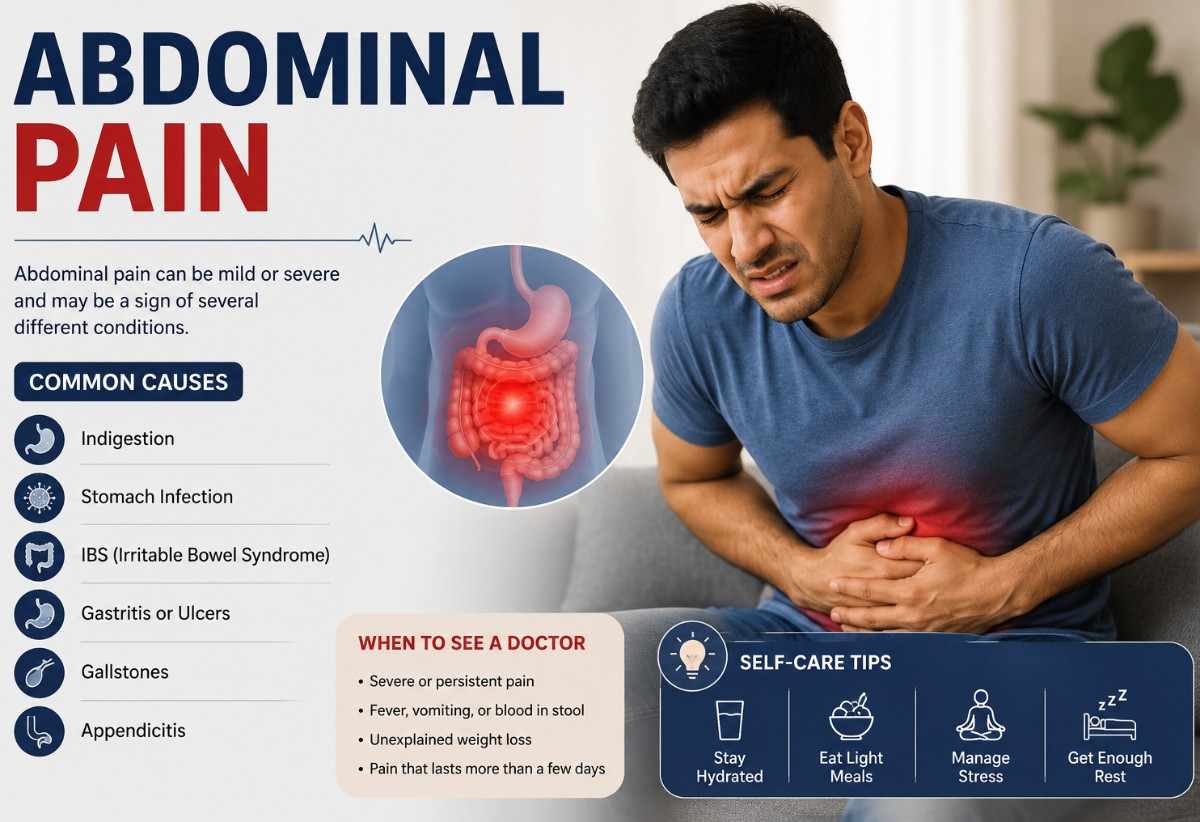
Abdominal pain is one of the most common health complaints. It can feel like a dull ache, sharp pain, burning, cramping, pressure, or discomfort anywhere between the chest and groin.
Sometimes abdominal pain is caused by something relatively minor, such as gas, constipation, indigestion, or a stomach infection. In other situations, it can be a warning sign of conditions that require prompt medical attention, including appendicitis, gallstones, kidney stones, intestinal obstruction, pancreatitis, or internal bleeding.
One important point is that the intensity of abdominal pain does not always indicate how serious the underlying cause is. Severe pain can occur with relatively minor conditions, while some potentially serious problems may initially cause only mild discomfort.
This guide explains common causes of abdominal pain, symptoms to watch for, how doctors diagnose it, treatment options, home-care measures, and when abdominal pain should be treated as an emergency.
What Is Abdominal Pain?
Abdominal pain refers to pain or discomfort felt anywhere between the chest and groin. Although people often call it “stomach pain,” the abdomen contains many organs, including parts of the digestive system, kidneys, bladder, reproductive organs, liver, gallbladder, pancreas, and other structures.
Because so many organs are located in or near the abdomen, abdominal pain can have many different causes. Doctors consider the location, timing, character, severity, associated symptoms, medical history, and physical examination when trying to identify the cause.
What Does Abdominal Pain Feel Like?
People describe abdominal pain in different ways. It may be:
- Sharp: A sudden, stabbing or intense sensation.
- Dull: A mild, aching discomfort.
- Cramping: Pain that comes and goes, sometimes in waves.
- Burning: A hot or irritating sensation, often associated with upper abdominal problems.
- Pressure: A feeling of fullness or tightness.
- Colicky: Severe pain that comes in waves and may occur with conditions such as kidney or gallstones.
The location and pattern of pain can provide useful clues, but they cannot reliably establish a diagnosis on their own.
Where Does Abdominal Pain Occur?
The abdomen is commonly divided into different areas to help healthcare professionals describe and evaluate pain.
| Location | Possible Causes |
|---|---|
| Upper abdomen | Indigestion, gastritis, peptic ulcer, gallbladder problems, pancreatitis |
| Upper right abdomen | Gallstones or gallbladder inflammation |
| Upper left abdomen | Stomach, spleen, pancreas, or intestinal problems |
| Around the belly button | Gas, indigestion, intestinal problems, early appendicitis |
| Lower right abdomen | Appendicitis and some intestinal or reproductive conditions |
| Lower left abdomen | Constipation, diverticular disease, intestinal conditions |
| Pelvic/lower abdomen | Urinary, reproductive, menstrual, or intestinal causes |
| Generalized abdomen | Gastroenteritis, gas, constipation, intestinal obstruction, or other conditions |
These are examples rather than diagnostic rules. Several conditions can cause pain in the same area, and some problems can cause pain that moves from one location to another.
Common Causes of Abdominal Pain
Abdominal pain can result from digestive, urinary, reproductive, muscular, inflammatory, infectious, or other medical conditions.
1. Gas and Bloating
Gas trapped in the digestive tract can cause pressure, cramping, bloating, and discomfort. The pain may improve after passing gas or having a bowel movement.
2. Constipation
Infrequent or difficult bowel movements can cause abdominal discomfort, cramping, bloating, and a feeling of fullness.
3. Indigestion
Indigestion can cause discomfort or burning in the upper abdomen, early fullness, bloating, belching, or nausea.
4. Gastroenteritis
Stomach infections can cause abdominal cramps along with diarrhea, nausea, vomiting, and sometimes fever.
5. Food Intolerance
Certain foods can trigger abdominal symptoms in people who have an intolerance or sensitivity. Lactose intolerance, for example, can cause bloating, abdominal discomfort, and diarrhea after consuming lactose-containing foods.
6. Irritable Bowel Syndrome
Irritable bowel syndrome, or IBS, may cause recurring abdominal pain associated with changes in bowel habits, including diarrhea, constipation, or both.
7. Peptic Ulcers
Peptic ulcers can cause pain or discomfort in the upper abdomen. Some people experience a dull or burning sensation, sometimes when the stomach is empty or at night.
8. Appendicitis
Appendicitis occurs when the appendix becomes inflamed. Pain may begin around the belly button and later become more noticeable in the lower-right abdomen. Nausea, vomiting, loss of appetite, fever, constipation, or diarrhea can also occur.
Appendicitis requires prompt medical evaluation because an untreated appendix can rupture and cause serious complications.
9. Gallstones
Gallstones can block the bile ducts and cause sudden abdominal pain. Gallbladder attacks commonly cause pain in the upper-right abdomen and may require medical attention.
10. Kidney Stones
Kidney stones can cause severe, wave-like pain that may travel toward the back, side, lower abdomen, or groin. Urinary symptoms and nausea may also occur.
11. Urinary Tract Infection
A urinary tract infection may cause lower abdominal discomfort along with burning during urination, frequent urination, or an urgent need to urinate.
12. Pancreatitis
Pancreatitis is inflammation of the pancreas. Abdominal pain can be an important symptom, and doctors may use medical history, physical examination, laboratory tests, and imaging to determine the cause.
13. Diverticulitis
Inflammation or infection involving diverticula in the colon can cause abdominal pain, often accompanied by other digestive symptoms.
14. Hernia
A hernia occurs when tissue pushes through a weakened area of muscle or surrounding tissue. It may cause localized discomfort or pain, particularly with lifting, coughing, or straining.
15. Menstrual Cramps
Menstrual periods can cause cramping and lower abdominal or pelvic pain. The severity varies from person to person.
16. Ovarian Cysts and Other Reproductive Conditions
Some ovarian or pelvic conditions can cause lower abdominal or pelvic pain. Sudden or severe pelvic pain requires medical evaluation, particularly when accompanied by fainting, vomiting, fever, or abnormal bleeding.
17. Ectopic Pregnancy
An ectopic pregnancy occurs when a pregnancy develops outside the uterus. Abdominal or pelvic pain during pregnancy or possible pregnancy requires prompt medical assessment because an ectopic pregnancy can become life-threatening.
18. Intestinal Obstruction
A bowel obstruction can cause abdominal pain, bloating, vomiting, and difficulty passing stool or gas. Inability to pass stool, particularly when accompanied by vomiting, is a reason to seek urgent medical care.
Abdominal Pain Symptoms to Watch For
Abdominal pain may occur alone or alongside other symptoms.
Important associated symptoms include:
- Nausea or vomiting
- Diarrhea
- Constipation
- Bloating
- Fever
- Loss of appetite
- Pain during urination
- Frequent urination
- Blood in the stool
- Black, tarry stool
- Vomiting blood
- Abdominal swelling
- Unexplained weight loss
- Vaginal bleeding or abnormal discharge
- Pain that spreads to the back or shoulder
- Difficulty breathing
- Dizziness or fainting
The combination of symptoms can help healthcare professionals determine whether further investigation is necessary.
When Is Abdominal Pain an Emergency?
Some abdominal pain requires immediate medical attention.
Seek emergency medical care for sudden or severe abdominal pain, particularly if it is accompanied by:
- A rigid, hard, or extremely tender abdomen
- Vomiting blood
- Bloody or black stools
- Difficulty breathing
- Chest pain
- Fainting or collapse
- Inability to pass stool or gas, especially with vomiting
- Severe or persistent vomiting
- Recent abdominal injury
- Pregnancy or possible pregnancy with significant abdominal pain
- Confusion or signs of severe illness
MedlinePlus and the NHS both identify sudden or severe abdominal pain, abdominal tenderness or rigidity, gastrointestinal bleeding, breathing difficulty, and inability to pass stool or gas among situations requiring urgent assessment.
If symptoms are severe or you believe you may be experiencing a medical emergency, seek emergency medical care rather than trying to diagnose the cause yourself.
When Should You See a Doctor for Abdominal Pain?
Not every episode requires an emergency visit, but persistent or recurring pain should not be ignored.
Contact a healthcare professional if:
- Pain does not improve within 24 to 48 hours.
- Pain continues or repeatedly returns.
- Pain becomes increasingly severe.
- You have abdominal pain with fever.
- You have persistent vomiting.
- You cannot keep food or fluids down.
- You experience unexplained weight loss.
- You have prolonged diarrhea.
- You have persistent bloating.
- You notice blood in your stool.
- You have painful or unusually frequent urination.
- You experience abnormal vaginal bleeding.
- You are pregnant or may be pregnant.
MedlinePlus recommends medical evaluation for abdominal discomfort lasting a week or longer and for pain that does not improve within 24 to 48 hours or becomes more severe or frequent.
How Is Abdominal Pain Diagnosed?
There is no single test for abdominal pain because many different conditions can cause it.
A healthcare professional may begin by asking:
- Where is the pain?
- When did it start?
- Did it begin suddenly or gradually?
- Is it constant or does it come and go?
- Is it sharp, dull, burning, or cramping?
- Does the pain move to another area?
- What makes it better or worse?
- Is it associated with eating?
- Have you experienced vomiting, diarrhea, constipation, fever, or urinary symptoms?
- Are you taking any medications?
- Could you be pregnant?
A physical examination may include gently pressing different areas of the abdomen to identify tenderness, swelling, or other findings.
Depending on the suspected cause, doctors may order blood tests, urine tests, pregnancy testing, ultrasound, CT scans, MRI, endoscopy, colonoscopy, or other investigations. For example, appendicitis evaluation may include blood and urine tests and imaging such as ultrasound, CT, or MRI.
How Is Abdominal Pain Treated?
Treatment depends entirely on the underlying cause.
For Gas or Mild Digestive Discomfort
Rest, hydration, avoiding foods that trigger symptoms, and following appropriate dietary measures may help when the cause is minor digestive discomfort.
For Constipation
Increasing fluid intake, physical activity, and dietary fiber may help some people. Persistent or severe constipation should be discussed with a healthcare professional.
For Infections
Some gastrointestinal infections improve with supportive care, including adequate hydration. Certain bacterial infections or other infections may require specific treatment determined by a clinician.
For Acid-Related Problems
Depending on the diagnosis, a healthcare professional may recommend dietary changes or medications that reduce stomach acid.
For Gallstones
Treatment depends on whether gallstones are causing symptoms or complications. Symptomatic gallstones may require medical or surgical treatment.
For Appendicitis
Appendicitis requires prompt medical evaluation. Treatment commonly involves removal of the appendix, although some selected cases may be treated with antibiotics. Surgery remains the standard treatment in many cases.
For Kidney Stones
Treatment depends on the stone’s size, location, symptoms, and whether complications are present. Some stones pass naturally, while others require medical procedures.
For Other Conditions
Conditions such as intestinal obstruction, pancreatitis, severe infections, internal bleeding, or ectopic pregnancy require specific medical treatment and should not be managed solely with home remedies.
What Can You Do at Home for Mild Abdominal Pain?
If the pain is mild and you do not have warning signs, some general measures may be reasonable:
- Stay hydrated: Drink fluids regularly unless a healthcare professional has told you to restrict fluids.
- Choose simple foods: If eating makes you uncomfortable, temporarily choose smaller, lighter meals.
- Avoid known triggers: Limit foods or drinks that consistently worsen your symptoms.
- Rest: Give your body time to recover if the discomfort is associated with a minor illness.
- Monitor your symptoms: Pay attention to changes in pain location, severity, bowel movements, vomiting, fever, or urinary symptoms.
- Do not ignore worsening pain: Increasing or persistent pain may require medical assessment.
Avoid relying on home remedies when pain is severe, unexplained, persistent, or accompanied by red-flag symptoms.
Should You Take Painkillers for Abdominal Pain?
It is important to be cautious with medication because the appropriate treatment depends on the cause of the pain.
Some nonsteroidal anti-inflammatory drugs (NSAIDs), such as aspirin and ibuprofen, can increase the risk of gastrointestinal bleeding, particularly in certain people or when combined with other medicines.
If you have unexplained abdominal pain, especially severe or persistent pain, ask a healthcare professional or pharmacist which medication is appropriate for you rather than repeatedly treating the symptom without identifying its cause.
How to Help Prevent Some Types of Abdominal Pain?
Not all abdominal pain can be prevented, but several healthy habits can reduce the likelihood of some digestive problems.
1. Eat a Balanced Diet
Include a variety of vegetables, fruits, whole grains, protein foods, and other nutritious foods appropriate for your individual needs.
2. Drink Enough Fluids
Adequate hydration supports normal bowel function and may help reduce constipation.
3. Increase Fiber Gradually
Fiber can support bowel regularity, but increasing it very quickly may worsen gas and bloating in some people.
4. Stay Physically Active
Regular physical activity supports overall digestive and metabolic health.
5. Practice Food Safety
Wash hands, prepare food safely, cook foods appropriately, and refrigerate perishable foods promptly to reduce the risk of foodborne illness.
6. Know Your Food Triggers
If certain foods consistently cause discomfort, keeping a food and symptom diary may help identify patterns to discuss with a healthcare professional.
7. Use Medicines Responsibly
Follow medication instructions and discuss long-term or frequent use of pain relievers, particularly NSAIDs, with a healthcare professional.
Abdominal Pain in Children
Children can experience abdominal pain for many reasons, including constipation, infections, gas, food-related problems, and other conditions.
Parents and caregivers should pay attention to the child’s overall behavior and other symptoms. Severe pain, persistent vomiting, a swollen or rigid abdomen, blood in vomit or stool, difficulty breathing, unusual sleepiness, or significant worsening requires prompt medical evaluation.
Children may also have difficulty explaining exactly where or how they hurt, so changes in behavior can be important clues.
Abdominal Pain During Pregnancy
Abdominal or pelvic discomfort can occur during pregnancy for several reasons, some of which are normal and others that require medical attention.
Pregnancy-related abdominal pain should be evaluated promptly when it is severe, sudden, persistent, or accompanied by vaginal bleeding, dizziness, fainting, fever, vomiting, or other concerning symptoms.
An ectopic pregnancy is one important emergency that can cause abdominal or pelvic pain. Anyone who is pregnant or could be pregnant and develops significant abdominal pain should seek medical advice promptly.
Abdominal Pain After Eating
Pain after eating can have several possible explanations.
Some common possibilities include:
- Indigestion
- Gas and bloating
- Food intolerance
- Acid-related conditions
- Gallstones
- Peptic ulcers
- Functional digestive disorders
Keeping track of what you eat, how much you eat, how quickly symptoms appear, and which other symptoms occur can provide useful information for a healthcare professional.
Repeated pain after meals should not automatically be assumed to be simple indigestion.
Abdominal Pain and Back Pain
Abdominal pain that occurs together with back pain can have several causes.
Depending on the location and symptoms, possibilities may include kidney stones, pancreatitis, gallbladder problems, digestive disorders, or other conditions.
Severe abdominal pain that spreads to the back, particularly when associated with vomiting, fever, fainting, or other concerning symptoms, requires medical assessment.
Abdominal Pain and Diarrhea
Abdominal cramps and diarrhea commonly occur together with gastroenteritis and other digestive problems.
Drink enough fluids to reduce the risk of dehydration. Seek medical advice if diarrhea is severe, persists, contains blood, is accompanied by significant abdominal pain or fever, or prevents you from maintaining adequate hydration.
Abdominal Pain and Vomiting
Vomiting can occur with infections, food poisoning, appendicitis, gallstones, intestinal obstruction, pancreatitis, and many other conditions.
Abdominal pain combined with persistent vomiting deserves medical attention, particularly if you cannot keep fluids down, develop severe pain, have a swollen abdomen, or cannot pass stool or gas.
Types of Abdominal Pain
Abdominal pain can be classified by location, sensation, duration, and pattern. Understanding these types can help describe symptoms more clearly, although the type or location alone cannot determine the cause.
1. Upper Abdominal Pain
Pain felt above the belly button, often involving the stomach, liver, gallbladder, or pancreas.
2. Lower Abdominal Pain
Pain below the belly button that may be related to the intestines, bladder, reproductive organs, or other structures.
3. Right-Sided Abdominal Pain
Pain on the right side of the abdomen. Possible causes include appendicitis, gallbladder problems, kidney stones, and intestinal conditions.
4. Left-Sided Abdominal Pain
Pain on the left side that may be associated with constipation, intestinal conditions, kidney problems, or other causes.
5. Central Abdominal Pain
Pain around the belly button or middle of the abdomen. Gas, indigestion, intestinal problems, and early appendicitis are among the possibilities.
6. Sharp Abdominal Pain
A stabbing or intense pain that may begin suddenly. Sudden severe pain requires prompt medical assessment.
7. Dull Abdominal Pain
A mild, aching, or persistent discomfort that may occur with digestive problems, constipation, or other conditions.
8. Cramping Abdominal Pain
Pain that comes and goes, often feeling like squeezing or tightening. It can occur with gas, diarrhea, constipation, or menstrual cramps.
9. Burning Abdominal Pain
A burning sensation, particularly in the upper abdomen, may occur with acid-related digestive conditions.
10. Colicky Abdominal Pain
Severe pain that comes in waves and may occur when a hollow organ, such as the urinary tract or intestine, contracts against an obstruction.
11. Sudden Abdominal Pain
Pain that develops quickly and unexpectedly. Severe sudden pain can be a medical emergency.
12. Chronic Abdominal Pain
Pain that continues or repeatedly occurs over a prolonged period. IBS and other chronic digestive conditions are possible causes.
13. Recurrent Abdominal Pain
Pain that repeatedly comes back after periods of improvement. Recurring symptoms should be discussed with a healthcare professional.
14. Generalized Abdominal Pain
Pain spread across much or most of the abdomen rather than being limited to one specific area.
15. Localized Abdominal Pain
Pain concentrated in one particular area of the abdomen. The location can provide doctors with useful diagnostic clues, but it is not enough to identify the cause by itself.
Exercises for Abdominal Pain
Exercise can sometimes help with mild abdominal discomfort related to gas, constipation, or bloating, but it is not appropriate for every type of abdominal pain.
1. Walking
A gentle 10–20 minute walk may support digestion and bowel movement and can be helpful for mild bloating or constipation.
2. Knee-to-Chest Stretch
Lie on your back and gently bring one or both knees toward your chest. Hold briefly and release. Stop if the movement increases pain.
3. Cat-Cow Stretch
On your hands and knees, gently alternate between arching and rounding your back. This provides gentle movement through the abdomen and torso.
4. Child’s Pose
Kneel and gently lower your upper body toward the floor while keeping your breathing relaxed. Avoid this if it causes abdominal discomfort.
5. Gentle Torso Stretch
Sit or stand comfortably and slowly rotate your upper body from side to side without forcing the movement.
6. Diaphragmatic Breathing
Lie comfortably or sit upright. Breathe slowly through your nose, allowing your abdomen to rise gently, then exhale slowly. This can promote relaxation when tension contributes to discomfort.
7. Gentle Cycling
Easy cycling may be suitable when you feel well enough to exercise and the abdominal discomfort is mild.
Exercises to Avoid
Avoid strenuous workouts, heavy lifting, intense abdominal exercises, and high-impact activities when you have unexplained or significant abdominal pain.
Important: Do not exercise to “push through” sudden, severe, or worsening abdominal pain. If pain is severe or accompanied by vomiting, fever, fainting, a rigid abdomen, blood in the stool or vomit, or difficulty breathing, seek medical attention rather than exercising.
FAQ’s
When is abdominal pain serious?
Sudden or severe pain, vomiting blood, bloody or black stools, fainting, difficulty breathing, or a rigid abdomen can require urgent medical care.
Can gas cause abdominal pain?
Yes. Trapped gas can cause cramping, pressure, bloating, and abdominal discomfort.
Can constipation cause abdominal pain?
Yes. Constipation may cause cramping, bloating, pressure, and discomfort.
How long does abdominal pain usually last?
It depends on the cause. Mild pain may resolve quickly, while persistent or worsening pain should be evaluated.
Where does appendicitis pain usually occur?
Appendicitis pain often begins around the belly button and may later move to the lower-right abdomen.
Can stress cause abdominal pain?
Stress can worsen digestive symptoms and abdominal discomfort, but persistent or severe pain should not automatically be attributed to stress.
What should I eat when I have abdominal pain?
Depending on the cause, small meals and easily tolerated foods may be appropriate. Avoid foods that clearly worsen your symptoms.
Can abdominal pain occur with diarrhea?
Yes. Infections, food-related problems, IBS, and other digestive conditions can cause both abdominal pain and diarrhea.
Can abdominal pain be caused by kidney stones?
Yes. Kidney stones can cause severe, wave-like pain that may spread from the side or back toward the lower abdomen or groin.
Can abdominal pain go away on its own?
Yes, some mild causes resolve without treatment. However, severe, persistent, or unexplained pain should be medically evaluated.
Does abdominal pain always mean a stomach problem?
No. Pain in the abdomen can originate from many organs and systems, including the intestines, gallbladder, pancreas, kidneys, urinary tract, reproductive organs, and appendix.
What foods should I avoid with abdominal pain?
There is no universal list because the appropriate diet depends on the cause. If certain foods consistently worsen your symptoms, avoid those triggers temporarily and discuss recurring symptoms with a healthcare professional.
How do I tell if my abdominal pain is serious?
Abdominal pain may be serious if it is sudden or severe, worsening, persistent, or accompanied by fever, repeated vomiting, fainting, difficulty breathing, a rigid or very tender abdomen, vomiting blood, or bloody or black stools. Seek urgent medical care if these symptoms occur.
Where is abdominal pain located?
Abdominal pain can occur anywhere between the chest and pelvis. It may be felt in the upper or lower abdomen, around the belly button, on the right or left side, or throughout the abdomen. The location can provide clues about possible causes, but it cannot diagnose the condition by itself.
Final Thought
Abdominal pain can range from temporary digestive discomfort to a symptom of a serious medical condition. Common causes include gas, constipation, indigestion, infections, food intolerance, and IBS, while appendicitis, gallstones, kidney stones, pancreatitis, intestinal obstruction, and other conditions may require medical treatment.
The location, severity, duration, and accompanying symptoms are all important. Most importantly, do not rely solely on pain intensity to determine whether a condition is serious.
Sudden or severe abdominal pain, a rigid or very tender abdomen, vomiting blood, bloody or black stools, difficulty breathing, fainting, or inability to pass stool or gas are reasons to seek urgent medical care.
Sources / References:
Disclaimer:
This guide is for general educational purposes only and does not provide a diagnosis or replace professional medical advice. Seek medical care for severe, sudden, persistent, or concerning abdominal pain.
Also Read: