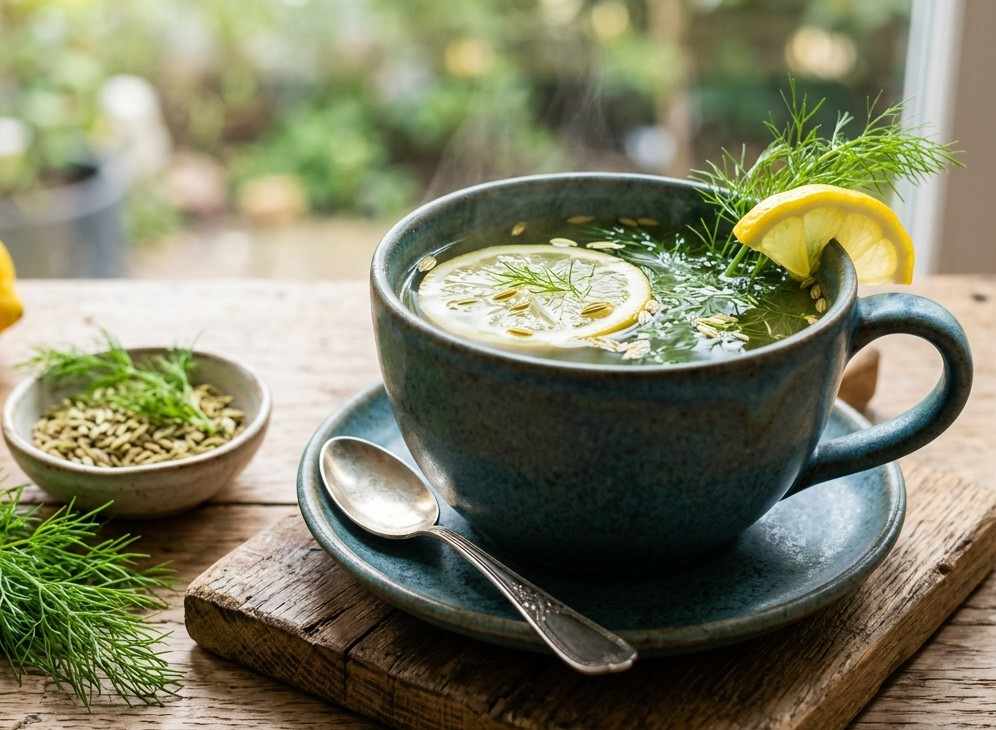
Fennel Lemon Tea is a refreshing herbal drink made by steeping fennel seeds in hot water and adding fresh lemon juice. Fennel has traditionally been used to support digestion, while lemon adds a bright citrus flavor and a small amount of vitamin C.
Fennel contains aromatic compounds such as anethole, fenchone, flavonoids and phenolic compounds, which have been investigated for antioxidant, digestive, anti-inflammatory and other biological activities. However, much of the scientific evidence comes from laboratory, animal, or concentrated fennel preparations rather than a typical cup of fennel tea.
What Is Fennel Lemon Tea?
Fennel Lemon Tea is a caffeine-free herbal infusion prepared by steeping lightly crushed fennel seeds in hot water and adding lemon juice.
Fennel seeds come from Foeniculum vulgare, an aromatic plant traditionally used in food and herbal preparations. The plant contains volatile oils and other phytochemicals that have been studied for potential digestive, antioxidant, antispasmodic and anti-inflammatory properties.
Adding lemon gives the tea a naturally tart flavor and contributes vitamin C, although the amount depends on how much lemon juice is added.
Unlike black or green tea, Fennel Lemon Tea is naturally caffeine-free unless another caffeinated tea is added to the recipe.
Nutritional Facts of Fennel Lemon Tea
The exact nutrition of Fennel Lemon Tea varies according to the amount of fennel seeds, lemon juice and any sweetener used. A simple unsweetened cup is generally very low in calories.
| Nutrient | Approximate amount per 1 cup |
|---|---|
| Calories | 2–10 kcal |
| Carbohydrates | Less than 2 g |
| Protein | Less than 0.5 g |
| Fat | Less than 0.1 g |
| Fiber | Minimal |
| Vitamin C | Small amount |
| Sugar | 0 g naturally, if unsweetened |
| Caffeine | 0 mg |
| Sodium | Very low |
20 Health Benefits of Fennel Lemon Tea
1. May Support Digestion: Fennel has traditionally been used for digestive discomfort, and its aromatic compounds have demonstrated antispasmodic and gastrointestinal effects in experimental research.
2. May Help Reduce Bloating: Fennel preparations may help relax intestinal smooth muscle, which could make the drink useful as part of a diet aimed at reducing occasional digestive discomfort.
3. May Support Healthy Digestion After Meals: A warm fennel infusion can be a gentle, caffeine-free beverage after eating, while fennel’s traditional digestive use provides a rationale for this habit.
4. Provides Plant Compounds With Antioxidant Activity: Fennel contains phenolic compounds and flavonoids that have demonstrated antioxidant activity in experimental studies.
5. May Support the Body’s Response to Oxidative Stress: The antioxidant compounds identified in fennel may help neutralize reactive molecules in laboratory models, although the effect of a normal cup of tea in humans has not been established.
6. May Have Anti-Inflammatory Properties: Fennel compounds have shown anti-inflammatory activity in preclinical research, but human evidence for fennel tea remains limited.
7. May Support Normal Intestinal Comfort: Fennel’s traditional use for stomach discomfort is consistent with experimental evidence suggesting antispasmodic activity.
8. May Support Menopausal Comfort: Clinical trials have investigated fennel preparations for menopausal symptoms, with one systematic review finding potential improvement in some symptoms, although study quality and the evidence base remain limited.
9. May Contribute to Cardiovascular Health Research: Experimental research has identified potentially cardiovascular-supportive activities of fennel, including antioxidant, vasorelaxant and lipid-related effects, but these findings should not be interpreted as proof that fennel tea prevents cardiovascular disease.
10. May Have Mild Antimicrobial Activity: Fennel extracts and compounds have demonstrated antimicrobial activity in laboratory studies, although this does not establish that drinking fennel tea treats infections.
11. Can Increase Fluid Intake: Because Fennel Lemon Tea is primarily water, it can contribute to daily fluid intake when consumed without excessive sugar.
12. Naturally Caffeine-Free: Fennel Lemon Tea can be an alternative to caffeinated beverages for people who prefer a caffeine-free drink.
13. May Freshen the Mouth: Fennel’s aromatic oils can provide a naturally sweet, refreshing flavor that may make the tea pleasant after meals.
14. May Provide a Refreshing Source of Lemon Flavor: Fresh lemon gives the tea acidity and flavor while contributing a modest amount of vitamin C.
15. May Support Normal Appetite and Digestive Habits: Fennel has a long history of traditional use as an aromatic digestive herb, although appetite-related effects from fennel tea have not been firmly established in clinical trials.
16. May Have Antispasmodic Effects: Experimental studies have found that fennel constituents can influence smooth-muscle activity, providing a possible explanation for its traditional use for abdominal discomfort.
17. May Support General Wellness Through a Low-Sugar Beverage Choice: Replacing sugar-sweetened drinks with unsweetened Fennel Lemon Tea can reduce added-sugar intake.
18. May Provide Bioactive Plant Compounds: Fennel contains volatile oils, flavonoids and phenolic compounds that are being studied for several biological activities.
19. May Support a Healthy Beverage Routine: Drinking it warm after meals can provide a simple alternative to heavily sweetened beverages while contributing to hydration.
20. May Offer Multiple Potential Biological Effects: Laboratory and preclinical research suggests fennel has antioxidant, anti-inflammatory, antimicrobial, antispasmodic and other properties, although stronger human studies are needed to determine how much of these effects occur from ordinary tea consumption.
10 Side Effects of Fennel Lemon Tea
1. Allergic Reactions: People who are sensitive to fennel or related plants may develop skin, respiratory or other allergic symptoms.
2. Stomach Discomfort: Drinking a strong preparation may cause digestive discomfort in some sensitive individuals.
3. Heartburn: The lemon component may worsen acidity or heartburn in people who are sensitive to acidic beverages.
4. Mouth Irritation: Concentrated lemon juice may irritate the mouth, especially in people with mouth sores or sensitive oral tissues.
5. Dental Enamel Erosion With Frequent Acidic Drinks: Regular exposure to acidic beverages may contribute to enamel erosion, particularly when consumed frequently throughout the day.
6. Possible Hormonal Effects: Fennel contains compounds with estrogen-like activity, so concentrated or regular medicinal use may not be appropriate for everyone.
7. Possible Drug Interactions: Fennel extracts have demonstrated effects on drug-metabolizing enzymes such as CYP3A4 in experimental research, creating a potential interaction concern with some medicines.
8. Possible Sensitivity to Strong Preparations: Fennel essential oil and concentrated extracts are substantially different from a mild culinary tea and should not be substituted for one another.
9. Possible Effects During Pregnancy: Safety of medicinal fennel preparations during pregnancy has not been adequately established, so pregnant people should consult a healthcare professional before regularly consuming concentrated fennel preparations.
10. Excessive Intake May Increase Risk: Large amounts or concentrated fennel products may expose the body to higher levels of active compounds than those found in an ordinary cup of tea.
How to Make Fennel Lemon Tea?
Ingredients:
- 1 teaspoon fennel seeds
- 1½ cups water
- 1–2 teaspoons fresh lemon juice
- Optional: ½–1 teaspoon honey
Method:
- Lightly crush the fennel seeds using the back of a spoon or a mortar and pestle.
- Bring 1½ cups of water to a gentle boil.
- Add the crushed fennel seeds.
- Reduce the heat and simmer gently for about 3–5 minutes.
- Turn off the heat and cover the cup or saucepan for another 5 minutes.
- Strain the tea into a cup.
- Allow it to cool slightly before adding fresh lemon juice.
- Add honey only if desired.
- Drink it warm.
For a milder flavor, use ½ teaspoon fennel seeds instead of 1 teaspoon.
Other Uses of Fennel Lemon Tea
Fennel Lemon Tea is mainly consumed as a beverage, but it can also be incorporated into everyday food and wellness routines.
- After-Meal Drink: Enjoy a warm cup after a meal as a caffeine-free beverage.
- Morning Drink: Use it as a refreshing alternative to sweetened morning drinks.
- Iced Herbal Tea: Cool the prepared tea and serve it over ice with lemon slices.
- Mocktail Base: Use chilled fennel tea as a base for a non-alcoholic herbal drink.
- Flavoring Liquid: A small amount can be incorporated into certain homemade beverages and recipes.
- Hydration Routine: Use unsweetened tea as one option for increasing fluid intake.
Avoid treating Fennel Lemon Tea as a substitute for medical treatment.
How Much Fennel Lemon Tea Can You Drink a Day?
For healthy adults, 1 cup per day is a reasonable conservative starting point, particularly if you are new to fennel tea.
Some people may tolerate 1–2 cups, but there is no universally established evidence-based daily dose specifically for Fennel Lemon Tea.
The strength of the tea matters. A lightly infused cup made with about 1 teaspoon of fennel seeds is very different from a concentrated fennel extract or essential oil.
Pregnant or breastfeeding individuals, children, and people taking regular medication should seek individualized advice before using fennel regularly or in concentrated amounts. Safety data for medicinal fennel preparations during pregnancy and lactation remain limited.
Tips for Consuming Fennel Lemon Tea
- Start Mild: Begin with a weaker infusion if you have never consumed fennel tea before.
- Use Fresh Lemon: Freshly squeezed lemon provides a cleaner flavor than bottled lemon drinks.
- Avoid Excess Sugar: Keeping the tea unsweetened helps maintain its low-calorie profile.
- Do Not Use Fennel Essential Oil: Essential oil is highly concentrated and is not equivalent to fennel seeds used for tea.
- Watch for Allergies: Stop drinking the tea if you develop an allergic reaction.
- Protect Your Teeth: Avoid sipping acidic lemon tea continuously throughout the day.
- Choose Quality Seeds: Use food-grade fennel seeds from a reliable source.
- Keep the Preparation Simple: Fennel and lemon are usually sufficient for a pleasant herbal drink.
- Do Not Overconcentrate: More fennel does not necessarily mean greater health benefits.
- Consider Your Medications: Ask a healthcare professional about possible interactions if you regularly take prescription medicines.
Best Time to Drink Fennel Lemon Tea
There is no scientifically established best time to drink Fennel Lemon Tea.
Many people prefer it after meals because fennel has traditionally been associated with digestive comfort. Others enjoy it in the morning as a caffeine-free beverage.
If lemon tends to trigger heartburn for you, avoid drinking it close to bedtime.
The most appropriate time depends on individual tolerance, dietary habits and whether you are using the tea simply as a beverage or as part of a specific health routine.
Who Should Drink Fennel Lemon Tea?
Fennel Lemon Tea may be suitable for healthy adults who:
- Enjoy caffeine-free herbal beverages.
- Want a low-calorie alternative to sugary drinks.
- Like fennel’s naturally sweet, aromatic flavor.
- Want a warm beverage after meals.
- Can tolerate both fennel and lemon.
- Are looking for a simple way to increase fluid intake.
It is best viewed as a food or beverage rather than a treatment.
Who Should Not Drink Fennel Lemon Tea?
Extra caution is appropriate for:
- People With Fennel Allergy: Avoid fennel if you have previously experienced an allergic reaction to it.
- People With Significant Citrus Sensitivity: Lemon may worsen symptoms in people who are sensitive to acidic foods.
- Pregnant People: Regular medicinal or concentrated fennel use should be discussed with a healthcare professional because pregnancy safety has not been adequately established.
- Young Children: Concentrated herbal preparations should not be given routinely to children without professional guidance.
- People Taking Multiple Medicines: Fennel may potentially affect drug metabolism, making professional advice particularly important.
- People With Hormone-Sensitive Conditions: Discuss regular medicinal fennel consumption with a healthcare professional because fennel has estrogenic activity.
- People With Frequent Heartburn: The lemon component may aggravate acid-related symptoms.
Precautions and Interactions
Although fennel has a long history of culinary and traditional use, concentrated fennel preparations require more caution than ordinary culinary quantities.
Fennel contains compounds with estrogen-like activity, and research has raised concerns about its use during pregnancy and in certain hormone-sensitive situations. Evidence regarding pregnancy safety is insufficient, and some regulatory sources do not recommend medicinal fennel use during pregnancy or lactation because safety has not been established.
Fennel may also affect CYP3A4, an enzyme involved in the metabolism of many medicines. This creates a theoretical or documented interaction concern with certain drugs, particularly when concentrated fennel preparations are used.
People taking prescription medicines should therefore discuss regular fennel consumption with a doctor or pharmacist rather than assuming that an herbal tea cannot interact with medication.
FAQ’s
What is Fennel Lemon Tea good for?
Fennel Lemon Tea may support digestion, hydration and general wellness while providing a refreshing, caffeine-free beverage.
How long does Fennel Lemon Tea take to work?
Digestive comfort may be noticed within a few hours in some people, but there is no established time for Fennel Lemon Tea to produce specific health effects.
Can I drink Fennel Lemon Tea every day?
Healthy adults may enjoy a mild cup daily, but regular medicinal use should be discussed with a healthcare professional.
Is Fennel Lemon Tea good for bloating?
Fennel has traditionally been used for digestive discomfort and may help with occasional bloating, although evidence specifically on fennel tea is limited.
Can Fennel Lemon Tea help with weight loss?
Fennel Lemon Tea does not have proven fat-burning properties, but an unsweetened cup can replace higher-calorie beverages.
Is Fennel Lemon Tea good for digestion?
Yes, fennel has traditionally been used to support digestion and may help promote digestive comfort.
Can I drink Fennel Lemon Tea at night?
Yes, you can drink it at night if you tolerate it well, although lemon may trigger heartburn in some people.
Is Fennel Lemon Tea safe during pregnancy?
Pregnant women should consult a healthcare professional before regularly consuming fennel tea because the safety of medicinal fennel preparations during pregnancy has not been adequately established.
Can children drink Fennel Lemon Tea?
Children should not routinely consume concentrated fennel preparations without advice from a pediatrician or qualified healthcare professional.
Does Fennel Lemon Tea contain caffeine?
No, Fennel Lemon Tea is naturally caffeine-free when made only with fennel seeds, lemon and water.
Does Fennel Lemon Tea taste good?
It has a mildly sweet, aromatic fennel flavor balanced by the bright and slightly sour taste of lemon.
Does Fennel Lemon Tea smell strong?
It can have a noticeable sweet, licorice-like aroma from fennel, while lemon adds a fresh citrus scent.
Can Fennel Lemon Tea cause acidity?
It may cause or worsen heartburn in sensitive people because lemon is acidic, particularly when consumed on an empty stomach.
Can Fennel Lemon Tea improve sleep?
Fennel Lemon Tea is caffeine-free, but there is insufficient evidence to say that it directly improves sleep.
Can I drink Fennel Lemon Tea on an empty stomach?
Some people tolerate it well, but those prone to acidity or heartburn may prefer drinking it after food.
Is Fennel Lemon Tea good for gas?
Fennel has traditionally been used for gas and digestive discomfort, although the effectiveness of ordinary fennel tea varies between individuals.
Can Fennel Lemon Tea detox the body?
There is no strong scientific evidence that Fennel Lemon Tea detoxifies the body; the liver and kidneys naturally perform the body’s major detoxification functions.
Can I add honey to Fennel Lemon Tea?
Yes, honey can be added for sweetness, but it increases the drink’s calorie and sugar content.
Sources / References
Disclaimer
This guide is for general educational purposes only and does not replace professional medical advice, diagnosis or treatment. Consult a qualified healthcare professional before regularly using herbal preparations, especially during pregnancy, breastfeeding, childhood or when taking medication.
Also Read: