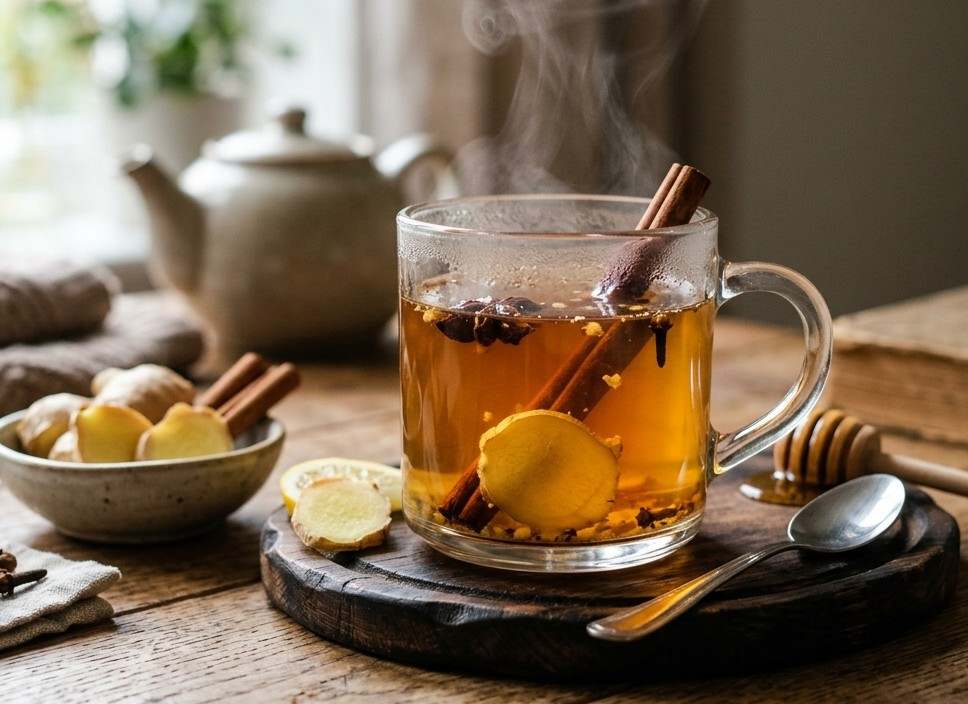
Ginger cinnamon tea is a warm, aromatic herbal drink made by steeping fresh ginger with cinnamon in hot water. It is naturally caffeine-free when prepared without tea leaves and is commonly enjoyed after meals or during colder weather.
Both ginger and cinnamon contain naturally occurring plant compounds that have been studied for their potential antioxidant, digestive, anti-inflammatory, and metabolic effects. However, most human research has examined ginger or cinnamon separately, often in supplement forms, rather than this exact tea combination. Therefore, ginger cinnamon tea should be viewed as a nutritious beverage rather than a treatment for a medical condition.
What Is Ginger Cinnamon Tea?
Ginger cinnamon tea is an infusion prepared using fresh ginger root and cinnamon bark or cinnamon powder. The ginger contributes a spicy, warming flavor, while cinnamon adds a naturally sweet and woody aroma.
Ginger contains bioactive compounds such as gingerols and shogaols, while cinnamon contains compounds including cinnamaldehyde and, depending on the variety, varying amounts of coumarin.
The combination is especially popular because it creates a flavorful beverage without requiring added sugar.
Also known as: Ginger cinnamon herbal tea, ginger and cinnamon tea, cinnamon ginger tea, or ginger cinnamon infusion.
Nutritional Facts of Ginger Cinnamon Tea
The nutritional value depends on the quantity of ginger and cinnamon used and whether sweeteners or other ingredients are added. A basic unsweetened cup contains very few calories.
| Nutrient | Approximate amount per 1 cup |
|---|---|
| Calories | 2–10 kcal |
| Carbohydrates | <2 g |
| Protein | <0.5 g |
| Fat | <0.5 g |
| Fiber | <0.5 g |
| Natural sugars | <1 g |
| Caffeine | 0 mg |
| Sodium | Very low |
| Potassium | Small amount |
| Calcium | Small amount |
| Iron | Small amount |
| Plant compounds | Gingerols, shogaols, cinnamaldehyde and other polyphenols |
Values are approximate because homemade tea varies considerably depending on preparation.
20 Health Benefits of Ginger Cinnamon Tea
1. May Support Digestion: Ginger has traditionally been used for gastrointestinal discomfort, and research has investigated its effects on digestive symptoms and nausea.
2. May Help With Nausea: Ginger has been studied for several forms of nausea and may be particularly useful for nausea associated with pregnancy when used appropriately.
3. Provides Antioxidant Compounds: Ginger and cinnamon contain naturally occurring plant compounds with antioxidant activity that may help protect cells from oxidative stress.
4. May Support a Healthy Inflammatory Response: Ginger contains bioactive compounds that have been investigated for their potential anti-inflammatory effects.
5. May Help With Menstrual Discomfort: Research on ginger supplements suggests that ginger may help reduce the severity of menstrual cramps in some people.
6. May Support Joint Comfort: Ginger has been studied for osteoarthritis symptoms, although the quality of evidence varies and much of the research has involved supplements rather than tea.
7. May Support Blood Sugar Management: Cinnamon supplementation has been investigated for blood glucose and insulin resistance, although results vary and cinnamon should not replace diabetes treatment.
8. May Support Metabolic Health: Research has examined cinnamon’s possible effects on glucose, triglycerides, cholesterol, and other metabolic markers, but results are not consistent enough to consider cinnamon a treatment.
9. May Support Heart Health: Cinnamon has been studied for effects on blood lipids and blood pressure, although research quality and outcomes differ between studies.
10. May Provide a Low-Calorie Beverage Option: Unsweetened ginger cinnamon tea can add flavor to the diet without the calories of many sweetened beverages.
11. May Encourage Hydration: Because the drink is primarily water, it can contribute to daily fluid intake.
12. May Be Comforting During Cold Weather: The warm temperature and spicy aroma can make ginger cinnamon tea a soothing beverage when you want something warm.
13. May Help Reduce Reliance on Sugary Drinks: Its naturally spicy and slightly sweet flavor may make it easier to choose an unsweetened beverage instead of sugar-sweetened drinks.
14. May Support Post-Meal Comfort: Ginger is traditionally used for digestive discomfort, making a mild ginger infusion a popular after-meal beverage.
15. Contains Bioactive Plant Compounds: Ginger and cinnamon contribute naturally occurring compounds that are responsible for much of their flavor, aroma, and biological activity.
16. Naturally Caffeine-Free: When prepared without black tea, green tea, or other caffeinated ingredients, ginger cinnamon tea contains no caffeine.
17. May Complement a Balanced Diet: Replacing high-sugar beverages with an unsweetened herbal infusion can fit into an overall balanced eating pattern.
18. May Offer Cinnamon-Related Metabolic Effects: Cinnamon has been investigated for potential effects on fasting blood glucose and insulin resistance, although further research is needed.
19. May Provide a Warming Sensation: Ginger’s pungent compounds create a naturally warming sensation that makes this tea particularly appealing in cooler weather.
20. Can Be Part of a Healthy Beverage Routine: When consumed in moderate amounts without excessive sugar, ginger cinnamon tea can be a flavorful addition to a varied and balanced diet.
10 Side Effects of Ginger Cinnamon Tea
Moderate amounts are generally well tolerated by many healthy adults, but concentrated or excessive consumption can cause problems.
1. Heartburn: Ginger may cause heartburn or worsen reflux symptoms in some people, particularly at higher amounts.
2. Stomach Discomfort: Concentrated ginger may cause abdominal discomfort in sensitive individuals.
3. Diarrhea: Larger amounts of ginger may cause loose stools or diarrhea.
4. Mouth Irritation: Strong ginger preparations may irritate the mouth or throat.
5. Allergic Reactions: Cinnamon can cause allergic reactions in susceptible individuals, particularly when consumed in larger amounts.
6. Liver Concerns With Excess Cassia Cinnamon: Cassia cinnamon can contain significant amounts of coumarin, and prolonged high intake may be a concern for people who are sensitive to its effects on the liver.
7. Acid Reflux Symptoms: The combination of spicy ginger and cinnamon may aggravate reflux in some people.
8. Blood Sugar Changes: Cinnamon may influence blood glucose, which can be important for people taking glucose-lowering medicines.
9. Medication Interactions: Herbal products can interact with medicines, and healthcare professionals should know about regular herbal-product use.
10. Excessive Intake: Drinking very concentrated tea or consuming large amounts every day may increase the likelihood of digestive or cinnamon-related side effects.
How to Make Ginger Cinnamon Tea?
Ingredients:
- 1–2 inches fresh ginger
- 1 small cinnamon stick
- 1½–2 cups water
- Lemon or a small amount of honey, optional
Method:
- Wash and thinly slice the fresh ginger.
- Add the ginger and cinnamon stick to a saucepan with water.
- Bring the mixture to a gentle boil.
- Reduce the heat and simmer for approximately 5–10 minutes.
- Turn off the heat and allow the tea to steep for another few minutes.
- Strain into a cup.
- Add lemon or a small amount of honey if desired.
- Drink it warm.
Tip: A cinnamon stick is a practical choice for regular tea because it allows you to control the amount more easily than adding large quantities of cinnamon powder.
Other Uses of Ginger Cinnamon Tea
Ginger cinnamon tea can be enjoyed in several ways besides drinking it plain.
- Use it as a warm after-meal beverage.
- Add lemon for a citrus-flavored variation.
- Add a small amount of honey for sweetness.
- Serve it chilled as an iced herbal drink.
- Use it as a base for a homemade spiced beverage.
- Combine it with other caffeine-free herbs such as tulsi or chamomile.
- Use it as a flavorful alternative to sweetened beverages.
These uses are culinary and beverage-related and should not be interpreted as medical treatments.
How Much Ginger Cinnamon Tea Can You Drink a Day?
For a healthy adult, 1 cup daily is a reasonable starting point, and some people may comfortably have up to 2 cups per day when the tea is mildly prepared and does not cause symptoms.
There is no universally established therapeutic daily dose for ginger cinnamon tea itself because studies have generally examined individual ingredients, different preparations, or supplements rather than this exact beverage.
If you drink it regularly, avoid making it excessively concentrated. This is particularly important with cassia cinnamon because its coumarin content can vary considerably.
Tips for Consuming Ginger Cinnamon Tea
- Choose Fresh Ginger: Fresh ginger provides a strong natural flavor and is easy to use in homemade tea.
- Prefer Cinnamon Sticks: A cinnamon stick makes it easier to control the quantity used.
- Consider Ceylon Cinnamon: Ceylon cinnamon generally contains much less coumarin than cassia cinnamon.
- Avoid Excess Sugar: Keep the tea unsweetened or use only a small amount of honey.
- Start Mild: If you are new to ginger tea, begin with a weaker preparation.
- Monitor Your Stomach: Reduce the amount if you develop heartburn, diarrhea, or abdominal discomfort.
- Do Not Treat It as Medicine: Tea cannot replace prescribed treatment for diabetes, high blood pressure, digestive disorders, or other medical conditions.
- Drink It Fresh: Freshly prepared tea generally provides the best flavor.
- Check Your Medicines: Ask a healthcare professional about possible herb-drug interactions if you regularly take medication.
Best Time to Drink Ginger Cinnamon Tea
There is no scientifically established “best” time for everyone.
Morning
A warm cup can be a caffeine-free alternative to morning tea or coffee.
After Meals
Some people prefer ginger tea after eating because ginger has traditionally been used for digestive discomfort.
Evening
It can be consumed in the evening because it is naturally caffeine-free, provided ginger or cinnamon does not aggravate your heartburn.
Before Bed
There is no strong evidence that ginger cinnamon tea itself improves sleep. If you experience reflux after drinking it, avoid consuming it close to bedtime.
Who Should Drink Ginger Cinnamon Tea?
Ginger cinnamon tea can be a suitable beverage for healthy adults who enjoy its flavor and want a caffeine-free drink.
It may particularly appeal to people who:
- Prefer unsweetened herbal beverages.
- Want a warm, flavorful alternative to caffeinated drinks.
- Enjoy ginger and cinnamon flavors.
- Want to add more variety to their daily beverage choices.
- Are looking for a low-calorie alternative to sugary beverages.
However, its potential health benefits should not be overstated because research on the specific tea combination is limited.
Who Should Not Drink Ginger Cinnamon Tea?
Some people should use greater caution or seek professional advice before drinking it regularly.
- People With Liver Disease: Regular high intake of cassia cinnamon may be unsuitable because of its coumarin content.
- People With Frequent Acid Reflux: Ginger may worsen heartburn in some individuals.
- People Taking Regular Medicines: Herbal products can potentially interact with medicines, so discuss regular use with your healthcare professional.
- People With Cinnamon Allergy: Avoid cinnamon if you have a known allergy or develop an allergic reaction.
- Pregnant Women: Ginger has been studied for pregnancy-related nausea, but anyone considering regular herbal use during pregnancy should discuss it with their healthcare provider. Cinnamon is generally considered acceptable in food amounts, while larger amounts require more caution.
- Breastfeeding Women: Evidence about larger amounts of cinnamon or ginger supplements during breastfeeding is limited, so regular concentrated use should be discussed with a healthcare professional.
Precautions and Interactions
1. Cinnamon Type Matters
Cassia and Ceylon cinnamon are not chemically identical. Cassia cinnamon generally contains considerably more coumarin, while Ceylon cinnamon contains only trace amounts.
2. Liver Conditions
People with liver disease should be particularly cautious about prolonged high intake of cassia cinnamon because coumarin can be a concern for the liver.
3. Diabetes Medicines
Cinnamon has been studied for effects on blood glucose, so people taking diabetes medication should discuss regular cinnamon consumption with their healthcare professional.
4. Prescription Medicines
Herbal products can interact with medicines, and the evidence for individual interactions is sometimes limited. Tell your doctor or pharmacist about regular use of herbal products.
5. Pregnancy
Ginger may help pregnancy-related nausea, but safety depends on the amount and individual circumstances. Consult your healthcare provider before using concentrated preparations regularly during pregnancy.
6. Avoid Excessive Concentration
More is not necessarily better. A strong tea made with large quantities of ginger or cinnamon may increase the chance of side effects.
FAQ’s
What does Ginger Cinnamon Tea taste like?
Ginger Cinnamon Tea has a warm, spicy, slightly sweet taste, with the sharp zing of ginger balanced by the woody sweetness of cinnamon.
What is Ginger Cinnamon Tea good for?
Ginger Cinnamon Tea may support digestion, provide antioxidant compounds, and offer a soothing caffeine-free beverage option.
Can I drink Ginger Cinnamon Tea every day?
Yes, most healthy adults can enjoy a mild cup daily, but excessive or highly concentrated intake should be avoided.
Can I drink Ginger Cinnamon Tea at night?
Yes, it is naturally caffeine-free, but avoid it near bedtime if ginger or cinnamon triggers heartburn.
Can I drink Ginger Cinnamon Tea on an empty stomach?
You can, but sensitive people may experience stomach irritation or heartburn, so having it after food may be more comfortable.
Does Ginger Cinnamon Tea help with bloating?
Ginger may support normal digestion and may help some people with digestive discomfort, although results can vary.
Does Ginger Cinnamon Tea help with weight loss?
It does not directly cause weight loss, but unsweetened tea can be a low-calorie alternative to sugary beverages.
Does Ginger Cinnamon Tea help with blood sugar?
Cinnamon has been studied for its potential effects on blood glucose, but Ginger Cinnamon Tea should not replace diabetes medication or dietary treatment.
Is Ginger Cinnamon Tea caffeine-free?
Yes, it is caffeine-free when made only with ginger, cinnamon, and water.
Which cinnamon is best for Ginger Cinnamon Tea?
Ceylon cinnamon is often preferred for regular use because it generally contains much less coumarin than cassia cinnamon.
Can pregnant women drink Ginger Cinnamon Tea?
Pregnant women should consult their healthcare provider before regularly consuming concentrated herbal preparations, even though ginger has been studied for pregnancy-related nausea.
Can children drink Ginger Cinnamon Tea?
Children should generally have mild preparations only after discussing regular herbal tea use with a pediatrician, especially at younger ages.
Can Ginger Cinnamon Tea cause acidity?
Yes, ginger may cause heartburn or stomach discomfort in some people, particularly when consumed in larger amounts.
Does Ginger Cinnamon Tea help with a cold?
It may provide a warm and soothing drink when you have a cold, but it does not cure viral infections.
Can I add lemon to Ginger Cinnamon Tea?
Yes, lemon can be added for extra flavor, although it may increase acidity and could worsen reflux in sensitive people.
Can I add honey to Ginger Cinnamon Tea?
Yes, honey can be added for sweetness, but keep the amount moderate if you are limiting added sugars.
How long can Ginger Cinnamon Tea be stored?
For the best quality, drink freshly prepared tea; if refrigerated, store it in a clean covered container and use it promptly.
Does Ginger Cinnamon Tea help with menstrual cramps?
Ginger has been studied for menstrual pain and may help reduce discomfort in some people, although most research has involved ginger preparations rather than this specific tea.
What happens if I drink too much Ginger Cinnamon Tea?
Excessive intake may cause heartburn, stomach discomfort, diarrhea, or other digestive symptoms, while frequent high intake of cassia cinnamon may increase exposure to coumarin.
Sources / References:
About the Author:
Written by: Kirti Solanki (Health Content Researcher)
Kirti Solanki creates research-based health and wellness content focused on making nutrition and everyday health topics clear and reader-friendly.
Disclaimer:
This guide is for educational purposes only and does not replace professional medical advice, diagnosis, or treatment. If you are pregnant, have a medical condition, or take prescription medicines, consult your healthcare professional before using ginger cinnamon tea regularly or in concentrated amounts.
Also Read: