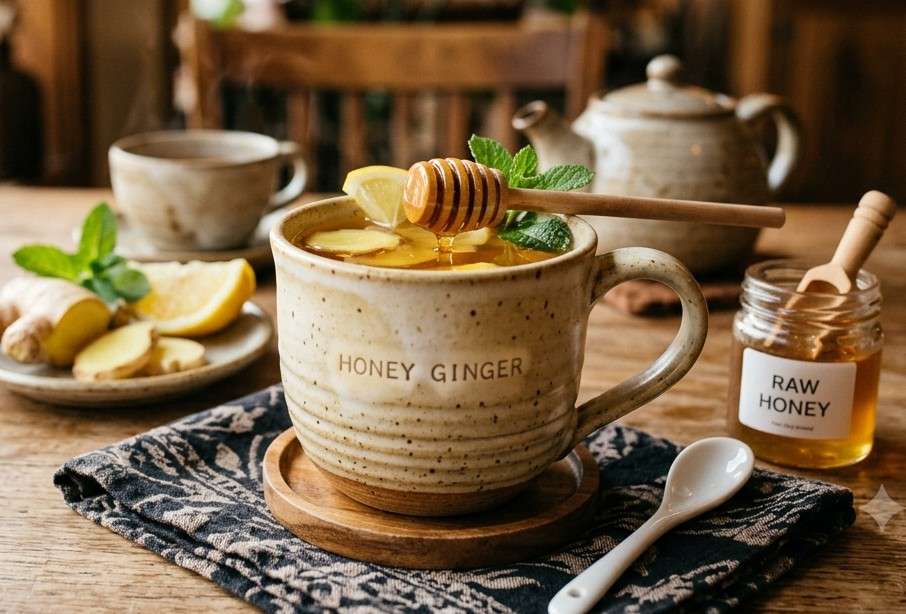
Honey Ginger Tea is a warm, soothing beverage made by combining fresh ginger with water and honey. It is commonly enjoyed for its spicy-sweet flavor and is often used as a comforting drink when experiencing nausea, digestive discomfort, or a sore throat.
Ginger has been studied for several health-related uses, particularly nausea and vomiting, while honey is commonly used as a sweetener and soothing ingredient. However, Honey Ginger Tea should not be considered a cure or replacement for medical treatment. Research on ginger is stronger for some specific uses than others, and the effects of a homemade tea may differ from those observed with concentrated ginger supplements.
What Is Honey Ginger Tea?
Honey Ginger Tea is a simple herbal-style drink prepared by steeping fresh ginger or ginger slices in hot water and adding honey after the tea has cooled slightly.
Ginger contains naturally occurring compounds such as gingerols and shogaols, which contribute to its characteristic spicy flavor. Honey provides sweetness and carbohydrates, while the amount of vitamins, minerals, and other nutrients in the finished beverage depends on how much ginger and honey are used.
Unlike traditional tea made from tea leaves, Honey Ginger Tea is naturally caffeine-free unless ingredients such as black tea or green tea are added.
Nutritional Facts of Honey Ginger Tea
The nutritional values can vary considerably depending on the amount of honey and ginger used. The following is an approximate profile for 1 cup (240 mL) of homemade Honey Ginger Tea containing about 1 teaspoon of honey and fresh ginger.
| Nutrient | Approximate Amount |
|---|---|
| Calories | 20–25 kcal |
| Carbohydrates | 5–6 g |
| Total Sugars | 5–6 g |
| Protein | Less than 0.5 g |
| Fat | 0 g |
| Fiber | Less than 0.5 g |
| Sodium | Very low |
| Caffeine | 0 mg |
| Added sugar | Depends on honey used |
| Vitamin C | Small amount |
| Potassium | Small amount |
20 Health Benefits of Honey Ginger Tea
1. May Help Ease Nausea
Ginger has been studied for nausea and vomiting, including pregnancy-related nausea, although much of the research has examined ginger preparations or supplements rather than homemade tea.
2. May Support Digestive Comfort
Ginger has traditionally been used for gastrointestinal discomfort, and a warm ginger drink may be a comforting addition to a balanced diet.
3. Provides a Warming Beverage
The natural pungency of ginger makes Honey Ginger Tea a warming drink that can be especially enjoyable during colder weather.
4. May Soothe an Irritated Throat
Warm fluids can feel soothing on an irritated throat, while honey adds a smooth texture and sweetness to the beverage.
5. May Help With Occasional Cough Discomfort
Honey is commonly used as a soothing ingredient for throat irritation and cough, although Honey Ginger Tea should not be used as a substitute for treatment of persistent or severe respiratory symptoms.
6. Contains Ginger’s Bioactive Compounds
Ginger naturally contains bioactive compounds, including gingerols, that contribute to its characteristic taste and have been investigated for various biological effects.
7. May Support Menstrual Comfort
Ginger supplementation has been studied for menstrual cramps, with some research suggesting it may reduce their severity, although these findings cannot automatically be applied to ordinary ginger tea.
8. May Provide Antioxidant Compounds
Ginger contains naturally occurring compounds with antioxidant activity, although drinking ginger tea should not be viewed as a treatment for oxidative-stress-related diseases.
9. May Help Make Hydration More Enjoyable
Because Honey Ginger Tea is primarily water, it can contribute to daily fluid intake when consumed without excessive honey.
10. Can Be a Caffeine-Free Alternative
Homemade Honey Ginger Tea contains no caffeine and can be an alternative to caffeinated beverages.
11. May Help Reduce the Need for Heavily Sweetened Drinks
Replacing sugary soft drinks with lightly sweetened ginger tea can reduce overall intake of highly processed beverages.
12. May Support Appetite Comfort
Ginger’s strong aroma and flavor may make a warm cup of tea appealing when appetite feels temporarily reduced.
13. May Complement a Balanced Diet
Ginger adds flavor and plant compounds to the diet without requiring large amounts of food or calories.
14. May Be Comforting During Mild Digestive Upset
A warm ginger beverage may feel soothing during occasional digestive discomfort, although individual responses vary.
15. May Support a Relaxing Routine
A warm, caffeine-free drink can become part of a calming evening or bedtime routine, particularly when prepared with a modest amount of honey.
16. Can Add Flavor Without Dairy
Honey Ginger Tea naturally contains no dairy unless milk or another dairy ingredient is added.
17. Can Be Customized Easily
You can adjust the amount of ginger, honey, lemon, cinnamon, or other food ingredients according to your taste and dietary preferences.
18. May Be Useful During Seasonal Discomfort
Warm ginger tea is often used as a comforting beverage during periods of seasonal throat or nasal discomfort, although it does not prevent or cure infections.
19. May Offer a Lower-Calorie Sweet Drink
When only a small amount of honey is used, Honey Ginger Tea can provide sweetness with relatively few calories compared with many commercially sweetened beverages.
20. Provides a Simple Way to Enjoy Ginger
Tea provides an easy food-based way to include ginger in the diet without necessarily using concentrated ginger supplements.
10 Side Effects of Honey Ginger Tea
1. Heartburn
Ginger can cause heartburn in some people, particularly when consumed in larger amounts.
2. Stomach Discomfort
Some people may experience abdominal discomfort after consuming ginger.
3. Diarrhea
Larger amounts of ginger may cause diarrhea in some individuals.
4. Mouth Irritation
Concentrated or strongly prepared ginger tea may irritate the mouth or throat in sensitive people.
5. Gas or Bloating
Ginger may cause gas or bloating in some people, particularly at higher amounts.
6. Increased Sugar Intake
Honey contributes sugar and calories, so adding large quantities can increase overall sugar intake.
7. Allergy
Although uncommon, an individual can be allergic or sensitive to ginger, honey, or another ingredient added to the tea.
8. Blood-Clotting Concerns
Concerns have been raised about possible interactions between ginger and blood-thinning medicines, so people taking anticoagulants should discuss regular or concentrated ginger use with their healthcare professional.
9. Blood-Sugar Considerations
Honey contains naturally occurring sugars, so people who need to carefully manage blood glucose should account for the honey in their overall diet.
10. Excessive Intake May Increase Side Effects
Consuming unusually large amounts of ginger may make digestive side effects more noticeable.
How to Make Honey Ginger Tea?
Ingredients:
- 1–2 inches of fresh ginger
- 1½–2 cups of water
- 1–2 teaspoons of honey
- Optional: a small squeeze of lemon
Method:
- Wash and thinly slice the fresh ginger.
- Add the ginger to 1½–2 cups of water.
- Bring the water to a gentle boil.
- Reduce the heat and simmer for about 5–10 minutes.
- Strain the tea into a cup.
- Allow it to cool slightly.
- Add honey according to taste.
- Add lemon if desired and serve warm.
Tip: Adding honey after the tea has cooled slightly makes it easier to control the sweetness and avoids unnecessarily heating the honey.
Other Uses of Honey Ginger Tea
Honey Ginger Tea can be enjoyed in several ways beyond simply drinking it warm.
- Morning Drink: Enjoy a small cup as part of a breakfast routine.
- After-Meal Beverage: A lightly prepared version can be enjoyed after meals.
- Cold Ginger Drink: Cool the tea and serve it over ice for a refreshing beverage.
- Lemon Ginger Tea: Add fresh lemon juice for a citrus flavor.
- Cinnamon Ginger Tea: Add a small cinnamon stick while simmering.
- Ginger Honey Ice Cubes: Freeze cooled tea in ice-cube trays and add the cubes to water.
- Mocktail Base: Use chilled Honey Ginger Tea as a base for a non-alcoholic drink.
How Much Honey Ginger Tea Can You Drink a Day?
There is no universally established medical dose for homemade Honey Ginger Tea because the amount of ginger and honey varies between recipes.
For most healthy adults, 1–2 cups a day prepared with a modest amount of ginger and honey can be a practical food-and-beverage choice. People who experience heartburn, diarrhea, abdominal discomfort, or other symptoms should reduce the amount or stop drinking it.
It is also important to distinguish ordinary culinary ginger tea from concentrated ginger supplements, which may deliver substantially larger amounts of ginger compounds.
If you take regular medications, have a medical condition, are pregnant, or are preparing for surgery, ask your healthcare professional about appropriate ginger intake.
Tips for Consuming Honey Ginger Tea
- Start with a small amount of ginger if you are new to the drink.
- Use fresh ginger for a stronger, naturally spicy flavor.
- Avoid adding excessive honey if you are monitoring sugar or calorie intake.
- Drink it warm rather than extremely hot.
- If you experience heartburn, try a weaker preparation.
- Choose good-quality food-grade ginger and honey.
- Do not use Honey Ginger Tea to replace prescribed medicines.
- If symptoms such as persistent nausea, vomiting, severe abdominal pain, or prolonged cough continue, seek medical advice.
- If you take medication regularly, check for possible herb-drug interactions before consuming concentrated ginger preparations.
- Remember that more ginger does not necessarily mean greater health benefits.
Best Time to Drink Honey Ginger Tea
The best time depends on your purpose and personal tolerance.
- In the Morning: A warm cup can be a pleasant caffeine-free alternative to coffee or tea.
- After a Meal: Some people prefer ginger tea after eating because ginger has traditionally been used for digestive comfort.
- During the Day: It can be consumed as a warm beverage whenever you want a caffeine-free drink.
- In the Evening: A caffeine-free version may fit into a relaxing evening routine.
- Before Bed: If you tolerate ginger well, a small, lightly sweetened cup may be suitable, but people prone to heartburn may prefer to avoid ginger drinks close to bedtime.
There is no scientifically established “best time” that guarantees a particular health benefit.
Who Should Drink Honey Ginger Tea?
Honey Ginger Tea may be suitable for healthy adults who enjoy ginger and want a warm, caffeine-free beverage.
It may also be appealing to people who:
- Prefer naturally flavored drinks.
- Want an alternative to caffeinated beverages.
- Enjoy ginger’s spicy flavor.
- Want a warm beverage during colder weather.
- Are looking for a simple way to include culinary ginger in their diet.
People considering ginger for a specific medical problem should discuss the appropriate preparation and amount with a healthcare professional rather than relying solely on tea.
Who Should Not Drink Honey Ginger Tea?
Honey Ginger Tea may not be appropriate for everyone.
- Infants Under 12 Months: Honey should never be given to children younger than 12 months because honey can cause infant botulism. This applies even when honey is mixed into tea or other foods.
- People With Ginger Sensitivity: Anyone who develops an allergic or unusual reaction after consuming ginger should avoid it and seek appropriate medical advice.
- People With Significant Heartburn: Ginger may worsen heartburn in some individuals.
- People Taking Certain Medications: Those taking blood thinners or medicines with a narrow therapeutic range should discuss regular ginger use with their healthcare professional.
- People Preparing for Surgery: Tell your healthcare team about herbal products and concentrated ginger supplements before surgery because some supplements can affect bleeding or interact with medicines used around surgery.
Precautions and Interactions
Honey Ginger Tea is a food-based beverage, but precautions are still worthwhile.
1. Ginger and Blood Thinners
There have been concerns that ginger may interact with anticoagulant medicines. Evidence about the extent of this interaction is not definitive, but people taking blood thinners should discuss regular or high-dose ginger consumption with their healthcare professional.
2. Ginger and Surgery
If you are scheduled for surgery, inform your surgeon and anesthesia team about supplements and concentrated herbal products you use. Some supplements can affect bleeding or interact with anesthesia and other medicines.
3. Pregnancy
Ginger has been studied for pregnancy-related nausea, and some evidence suggests it may help. However, the safety of ginger supplements during pregnancy is not considered completely established, so pregnant individuals should discuss regular or concentrated ginger use with their healthcare provider.
4. Breastfeeding
There is limited information about the safety of ginger in amounts greater than those normally found in food during breastfeeding. Discuss concentrated ginger products with a healthcare professional if you have concerns.
5. Diabetes and Blood Sugar
Honey is still a source of sugar even though it is often considered a natural sweetener. People managing diabetes or blood glucose should keep the amount of honey modest and include it within their overall dietary plan.
6. Gallbladder Problems
NCCIH notes that people with gallstone disease may need to avoid ginger in certain contexts, particularly when considering medicinal amounts. Anyone with gallbladder disease should discuss regular or concentrated ginger intake with a healthcare professional.
7. Medication Interactions
If you take prescription medicines regularly, especially medicines with a narrow therapeutic range, consult your healthcare professional before using concentrated ginger products. Herbal products can sometimes interact with medicines, and the evidence varies by product and dose.
FAQ’s
What is Honey Ginger Tea good for?
Honey Ginger Tea is commonly enjoyed for digestive comfort, nausea support, throat soothing, and as a warm caffeine-free beverage.
Can I drink Honey Ginger Tea every day?
Yes, most healthy adults can enjoy a moderate amount daily, such as 1–2 cups, if they tolerate ginger and honey well.
Does Honey Ginger Tea help with nausea?
Ginger has been studied for nausea and vomiting, although the evidence depends on the type and amount of ginger consumed.
Is Honey Ginger Tea good for a sore throat?
The warmth of the tea and soothing texture of honey may provide temporary throat comfort.
Can I drink Honey Ginger Tea at night?
Yes, Honey Ginger Tea is naturally caffeine-free, but people prone to heartburn may prefer not to drink ginger tea close to bedtime.
Does Honey Ginger Tea help with digestion?
Ginger has traditionally been used to support digestive comfort and may help with certain digestive symptoms.
Is Honey Ginger Tea safe during pregnancy?
Ginger may help pregnancy-related nausea, but pregnant women should discuss regular or concentrated ginger use with their healthcare provider.
Can children drink Honey Ginger Tea?
Children under 12 months should never consume honey because of the risk of infant botulism; for older children, consult a pediatrician about regular use.
Does Honey Ginger Tea contain caffeine?
No, homemade Honey Ginger Tea made with ginger, water, and honey is naturally caffeine-free.
Can Honey Ginger Tea help with weight loss?
Honey Ginger Tea is not a proven weight-loss drink, although using it instead of high-calorie sugary beverages may help reduce overall calorie intake.
Can Honey Ginger Tea cause acidity?
Yes, ginger may cause or worsen heartburn or stomach discomfort in some people, particularly when consumed in larger amounts.
Can I drink Honey Ginger Tea on an empty stomach?
Some people tolerate it well, but those who experience acidity or stomach irritation may prefer drinking it after food.
Can Honey Ginger Tea help with cough?
Honey may soothe an irritated throat and provide temporary cough comfort, but persistent or severe coughing requires appropriate medical evaluation.
Does Honey Ginger Tea help with menstrual cramps?
Ginger has been studied for menstrual pain, although research commonly uses specific ginger preparations rather than homemade tea.
Can people with diabetes drink Honey Ginger Tea?
They may be able to drink it in moderation, but honey contains sugar and should be included in the person’s overall carbohydrate intake.
Can I add lemon to Honey Ginger Tea?
Yes, lemon can be added for flavor, although people with acid reflux may find acidic ingredients uncomfortable.
How long can homemade Honey Ginger Tea be stored?
For best quality, drink freshly prepared tea, or refrigerate leftovers promptly in a covered container and use them within a few days.
What is Honey Ginger Tea made from?
Honey Ginger Tea is made by steeping fresh ginger in hot water and adding honey for natural sweetness; lemon can also be added for extra flavor.
How long does it take for Honey Ginger Tea to work?
Honey Ginger Tea may provide soothing effects within minutes, but the time varies depending on why you are drinking it and your individual response; it is not a guaranteed treatment for any condition.
What does Honey Ginger Tea taste like?
Honey Ginger Tea has a warm, spicy, and slightly sweet taste, with the sharp flavor of ginger balanced by the smooth sweetness of honey.
Final Thought
Honey Ginger Tea is a simple combination of fresh ginger, water, and honey that can be enjoyed as a warm, flavorful, caffeine-free beverage. Ginger has the strongest human research for certain types of nausea and has also been studied for menstrual discomfort and other conditions, but evidence varies depending on the preparation and health goal.
For everyday use, keep the ginger and honey amounts moderate. People taking medications, preparing for surgery, pregnant or breastfeeding individuals, and people with certain medical conditions should discuss regular or concentrated ginger use with a healthcare professional.
Sources / References:
Disclaimer:
This guide is for general educational purposes only and does not replace professional medical advice, diagnosis, or treatment. Consult a qualified healthcare professional if you have a medical condition, take medication, are pregnant or breastfeeding, or experience persistent symptoms.
Also Read: