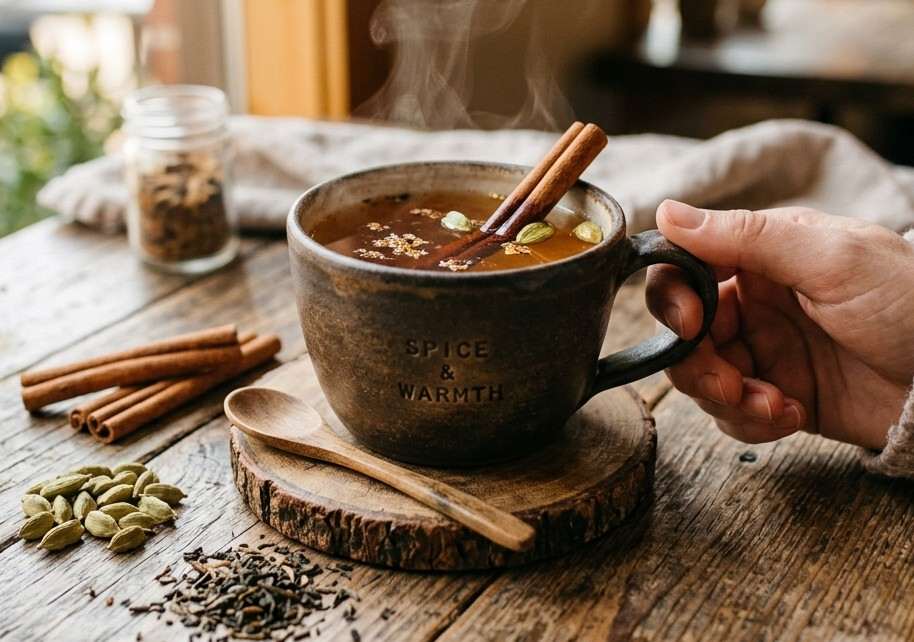
Cardamom Cinnamon Tea is a warm, aromatic herbal drink made by steeping cardamom pods and cinnamon in hot water. It has a naturally sweet, spicy flavor and is commonly enjoyed after meals or as a comforting caffeine-free beverage.
Both cardamom and cinnamon contain plant compounds with antioxidant and anti-inflammatory properties. Research on cardamom has shown potential effects on inflammatory markers and blood pressure, while research on cinnamon has explored blood sugar, inflammation, and metabolic health.
What Is Cardamom Cinnamon Tea?
Cardamom Cinnamon Tea is an infusion prepared using cardamom pods and cinnamon sticks or a small amount of cinnamon powder. Green cardamom is generally used because it has a fresh, slightly sweet and floral aroma, while cinnamon provides a warm, woody and mildly sweet flavor.
The tea can be prepared with only water or customized with ingredients such as ginger, lemon, or a small amount of honey.
Unlike traditional black or green tea, a simple Cardamom Cinnamon Tea contains no tea leaves and is naturally caffeine-free unless another caffeinated ingredient is added.
Cardamom contains aromatic compounds such as 1,8-cineole, while cinnamon contains polyphenols and other compounds that contribute to its characteristic flavor and antioxidant activity. Research on cardamom has found potential effects on inflammatory markers and blood pressure, although researchers emphasize that more studies are needed.
Nutritional Facts of Cardamom Cinnamon Tea
The following is an approximate nutritional profile for 1 cup (240 ml) of unsweetened Cardamom Cinnamon Tea prepared with small amounts of spices. Actual values vary depending on the quantity and type of ingredients used.
| Nutrient | Approximate Amount per 1 Cup |
|---|---|
| Calories | 2–10 kcal |
| Carbohydrates | 0.5–2 g |
| Protein | Less than 0.5 g |
| Fat | Less than 0.5 g |
| Fiber | Less than 1 g |
| Natural Sugars | Less than 1 g |
| Sodium | 0–5 mg |
| Potassium | 5–20 mg |
| Caffeine | 0 mg |
| Antioxidant compounds | Present |
| Polyphenols | Present |
| Essential aromatic compounds | Present |
Adding honey, sugar, milk, or other ingredients will increase the calorie and carbohydrate content.
20 Health Benefits of Cardamom Cinnamon Tea
1. Provides Antioxidant Compounds
Cardamom and cinnamon contain plant compounds with antioxidant activity that can help the body manage oxidative stress.
2. May Support Healthy Inflammation Levels
Clinical research on cardamom has reported reductions in certain inflammatory markers, although the evidence remains limited and does not specifically establish the same effect from tea.
3. May Support Blood Pressure
A systematic review of randomized clinical trials found that cardamom consumption was associated with modest reductions in systolic and diastolic blood pressure, but the researchers noted limitations in the available evidence.
4. May Support Digestion
The aromatic spices in this tea may be soothing after meals, while cardamom has a long history of culinary and traditional digestive use.
5. May Help Freshen Breath
Cardamom’s naturally aromatic oils can provide a refreshing flavor and may temporarily improve mouth freshness.
6. May Support Oral Freshness
Cardamom and cinnamon contain naturally occurring compounds studied for antimicrobial activity, although drinking the tea should not be considered a replacement for brushing, flossing, or dental care.
7. May Support Metabolic Health
Cinnamon has been investigated for its possible effects on glucose and metabolic markers, but current evidence is not strong enough to recommend cinnamon as a treatment for diabetes.
8. May Complement a Heart-Healthy Diet
Cardamom’s potential effects on blood pressure and inflammation make it an interesting addition to an overall balanced eating pattern, although tea alone should not be expected to prevent heart disease.
9. May Help Increase Fluid Intake
Unsweetened Cardamom Cinnamon Tea contributes to daily fluid intake and can be a flavorful alternative to sugary drinks.
10. May Be a Low-Calorie Beverage
When prepared without sugar, honey, or milk, this tea is naturally very low in calories.
11. May Reduce the Desire for Sugary Drinks
Its naturally sweet-spicy aroma can make plain water or unsweetened beverages more appealing to people trying to reduce added sugar.
12. Contains Plant Polyphenols
Cinnamon and cardamom contribute various plant compounds, including polyphenols and aromatic constituents, to the diet.
13. May Support General Wellness
Replacing highly sweetened beverages with an unsweetened spice tea can support an overall healthier beverage pattern.
14. May Offer a Warming Post-Meal Drink
The warm temperature and aromatic spices make this tea a pleasant option after breakfast or lunch.
15. May Support a Relaxing Routine
A warm, caffeine-free cup can become part of a calming evening routine, although this should not be confused with a clinically proven sleep treatment.
16. May Provide Flavor Without Caffeine
A basic Cardamom Cinnamon Tea made without black or green tea naturally contains no caffeine.
17. May Support Healthy Dietary Habits
Choosing an unsweetened spice infusion instead of sugary beverages can make it easier to maintain a lower-added-sugar diet.
18. May Contribute to Dietary Antioxidant Diversity
Using different herbs and spices adds a variety of plant-derived compounds to the diet rather than relying on a single food or supplement.
19. May Complement Weight-Management Habits
Unsweetened Cardamom Cinnamon Tea is low in calories and can replace calorie-containing beverages, although cinnamon tea itself has not been established as a weight-loss treatment. NCCIH states that evidence for cinnamon supplementation and weight loss remains unclear.
20. Can Be an Enjoyable Alternative to Sweetened Drinks
Its combination of floral cardamom and warm cinnamon can provide a satisfying flavor without requiring added sugar.
10 Side Effects of Cardamom Cinnamon Tea
1. Stomach Discomfort
Drinking large or very concentrated amounts may cause stomach discomfort in sensitive individuals.
2. Heartburn
Spiced beverages may worsen heartburn or reflux symptoms in some people.
3. Allergic Reactions
People allergic to cardamom, cinnamon, or related spices should avoid the tea.
4. Mouth Irritation
Concentrated cinnamon may irritate the mouth or throat in sensitive individuals.
5. Possible Liver Concerns From Excess Cassia Cinnamon
Cassia cinnamon can contain relatively high amounts of coumarin, which can be harmful to the liver when exposure is excessive or prolonged, particularly in sensitive individuals.
6. Possible Blood Sugar Effects
Cinnamon may influence glucose metabolism, so people taking diabetes medication should avoid consuming unusually large amounts without medical guidance.
7. Possible Blood Pressure Effects
Cardamom has shown modest blood-pressure effects in some clinical research, so people taking blood-pressure medication should discuss regular concentrated use with their healthcare professional.
8. Nausea From Excessive Spice
Very strong tea may cause nausea or digestive discomfort rather than providing additional benefits.
9. Medication Interactions
Concentrated herbal preparations can potentially interact with medicines, and cinnamon has documented safety considerations related to coumarin and the liver.
10. Problems From Excessive Long-Term Consumption
More tea is not necessarily better, particularly when large amounts of cassia cinnamon are used regularly.
How to Make Cardamom Cinnamon Tea?
Ingredients:
- 1½ cups water
- 2 green cardamom pods
- 1 small Ceylon cinnamon stick
- 1 teaspoon honey, optional
- A small piece of fresh ginger, optional
- A few drops of lemon juice, optional
Method:
- Add the water to a saucepan and bring it to a gentle boil.
- Lightly crush the cardamom pods to release their aroma.
- Add the cardamom and cinnamon stick to the water.
- Simmer gently for about 5–10 minutes.
- Turn off the heat and allow the tea to steep for another 2–3 minutes.
- Strain the tea into a cup.
- Add honey or lemon if desired.
- Allow it to cool slightly before drinking.
Can You Use Cinnamon Powder?
Yes, but a small amount is enough. Cinnamon powder can make the tea cloudy and may settle at the bottom of the cup. For regular consumption, choosing Ceylon cinnamon can help reduce exposure to coumarin compared with cassia cinnamon.
Other Uses of Cardamom Cinnamon Tea
Cardamom Cinnamon Tea can be enjoyed in several ways beyond a basic hot beverage.
- After Meals: Enjoy a small cup after breakfast or lunch.
- Morning Beverage: Use it as a caffeine-free alternative to regular tea.
- Evening Drink: Prepare a mild, unsweetened version as part of an evening routine.
- Iced Spice Tea: Cool the prepared tea and serve it over ice.
- With Lemon: Add lemon for a brighter flavor.
- With Ginger: Combine it with ginger for a stronger spicy taste.
- With Honey: Add a small amount of honey if you prefer sweetness.
- With Milk: Add a splash of milk for a creamy variation.
- Smoothie Base: Cooled, unsweetened tea can be used as a liquid ingredient in some smoothies.
- Mocktail Base: Use chilled tea with lemon and sparkling water for a non-alcoholic drink.
How Much Cardamom Cinnamon Tea Can You Drink a Day?
For most healthy adults, 1 cup of mild Cardamom Cinnamon Tea per day is a reasonable starting point, particularly when it is prepared with culinary quantities of spices.
Some people may comfortably have 2 cups, but there is no well-established clinical dosage for Cardamom Cinnamon Tea itself.
The type of cinnamon matters. Cassia cinnamon can contain substantially more coumarin than Ceylon cinnamon, and regularly consuming large quantities of cassia cinnamon can increase coumarin exposure.
If you drink this tea every day, using a small amount of Ceylon cinnamon is a practical option.
Tips for Consuming Cardamom Cinnamon Tea
- Choose Ceylon cinnamon for frequent use when possible.
- Use whole cardamom pods for a fresher flavor.
- Avoid making the tea excessively concentrated.
- Drink it unsweetened if you want to keep calories and added sugar low.
- Do not use large amounts of cinnamon simply to increase the perceived health benefits.
- If you have a medical condition, ask your healthcare professional before consuming concentrated herbal preparations regularly.
- Check the cinnamon variety listed on the package.
- Start with a small serving if you have never consumed the combination before.
- Avoid replacing prescribed medication with herbal tea.
- Treat the tea as part of a balanced diet rather than as a cure or detox drink.
Best Time to Drink Cardamom Cinnamon Tea
There is no scientifically established best time to drink Cardamom Cinnamon Tea.
However, different times may suit different people:
| Time | Why You Might Choose It |
|---|---|
| Morning | Provides a warm, caffeine-free beverage |
| After Breakfast | Can be a pleasant post-meal drink |
| After Lunch | May be refreshing and flavorful |
| Afternoon | Can replace sugary beverages |
| Evening | Suitable as a caffeine-free warm drink |
| Before Bed | May be part of a relaxing routine, provided it does not worsen reflux or cause nighttime bathroom trips |
If you have acid reflux, drinking strongly spiced tea close to bedtime may not be comfortable.
Who Should Drink Cardamom Cinnamon Tea?
Cardamom Cinnamon Tea may be suitable for healthy adults who:
- Enjoy caffeine-free herbal beverages.
- Want a low-calorie alternative to sugary drinks.
- Like naturally aromatic and warming spices.
- Want to include more culinary spices in their diet.
- Prefer unsweetened beverages.
- Enjoy a warm drink after meals.
The tea should complement a balanced diet and healthy lifestyle rather than be used as a medical treatment.
Who Should Not Drink Cardamom Cinnamon Tea?
You should avoid or seek professional advice before regular consumption if you:
- Have an allergy to cinnamon or cardamom.
- Have significant liver disease, particularly if using cassia cinnamon regularly.
- Take medications that affect blood sugar or blood pressure.
- Take medications for which herbal interactions are a concern.
- Are pregnant or breastfeeding and intend to consume concentrated amounts rather than normal culinary quantities.
- Have frequent acid reflux that is aggravated by spices.
- Have been advised by your healthcare professional to restrict particular herbs or spices.
NCCIH notes that cinnamon appears generally safe in food amounts, but safety becomes less certain with larger or prolonged amounts, and concerns exist regarding coumarin-containing cassia cinnamon.
Precautions and Interactions
1. Cinnamon Type Matters
Cinnamon is not a single chemically identical ingredient. Cassia cinnamon generally contains much more coumarin than Ceylon cinnamon. The German Federal Institute for Risk Assessment recommends moderation with cassia cinnamon and notes that Ceylon cinnamon has much lower coumarin levels.
2. Liver Health
People with liver disease should be particularly cautious about regularly consuming large amounts of cassia cinnamon because of its coumarin content. NCCIH also identifies prolonged cassia cinnamon use as a potential concern for sensitive individuals, including people with liver disease.
3. Diabetes Medication
Because cinnamon has been studied for possible effects on blood glucose, people using diabetes medication should discuss regular or concentrated cinnamon consumption with their healthcare professional.
4. Blood Pressure Medication
Clinical research on cardamom suggests possible modest blood-pressure effects. Anyone taking antihypertensive medication should avoid assuming that larger quantities are beneficial and should discuss regular concentrated use with a healthcare professional.
5. Pregnancy and Breastfeeding
Cinnamon used in ordinary food quantities is different from concentrated supplements or very strong preparations. Larger amounts during pregnancy and the safety of larger amounts while breastfeeding are not well established.
6. Do Not Use It as a Treatment
Cardamom Cinnamon Tea should not replace prescribed medicines or medical care. Research on the individual spices is still developing, and evidence for cinnamon in particular is inconsistent. Research does not clearly support cinnamon for any specific health condition.
Final Thoughts
Cardamom Cinnamon Tea is a flavorful, naturally caffeine-free beverage that can easily fit into a balanced lifestyle. Cardamom research provides some promising evidence regarding inflammatory markers and blood pressure, while cinnamon has been studied for several metabolic effects, although the evidence is not conclusive.
For everyday drinking, moderation is more important than making the tea extremely strong. Choosing Ceylon cinnamon, using culinary amounts, and avoiding excessive long-term consumption can help limit unnecessary coumarin exposure.
Most importantly, think of Cardamom Cinnamon Tea as a comforting beverage with potentially useful plant compounds, not as a cure, detox, or replacement for medical treatment.
FAQ’s
What is Cardamom Cinnamon Tea good for?
Cardamom Cinnamon Tea is a caffeine-free beverage that may provide antioxidant compounds and support digestion, healthy inflammation levels, and overall wellness.
Can I drink Cardamom Cinnamon Tea every day?
Yes, most healthy adults can enjoy a mild cup daily, but excessive amounts of cinnamon should be avoided, especially when cassia cinnamon is used.
Does Cardamom Cinnamon Tea help with digestion?
It may provide digestive comfort after meals, although strong clinical evidence specifically for Cardamom Cinnamon Tea is limited.
Does Cardamom Cinnamon Tea contain caffeine?
No, a tea made only with cardamom, cinnamon, and water is naturally caffeine-free.
Can I drink Cardamom Cinnamon Tea at night?
Yes, you can drink it at night because it is naturally caffeine-free, but avoid it if spices trigger your acid reflux or heartburn.
Can Cardamom Cinnamon Tea help with weight loss?
It may support weight-management habits when used instead of sugary drinks, but there is not enough evidence to consider it a weight-loss treatment.
Is Cardamom Cinnamon Tea good for blood sugar?
Cinnamon has been studied for its possible effects on blood glucose, but evidence is inconsistent, so the tea should not be used to treat diabetes.
Which cinnamon is better for Cardamom Cinnamon Tea?
Ceylon cinnamon is a practical choice for regular use because it generally contains much less coumarin than cassia cinnamon.
Can pregnant women drink Cardamom Cinnamon Tea?
Small culinary amounts of cinnamon are different from concentrated preparations, but pregnant women should consult their healthcare professional before regularly consuming strong or concentrated herbal teas.
Can children drink Cardamom Cinnamon Tea?
Children should generally have only small amounts of mild spice tea, and parents should consult a pediatrician before giving it regularly to young children.
Can Cardamom Cinnamon Tea lower blood pressure?
Cardamom has shown modest blood-pressure effects in some clinical studies, but more research is needed and the tea should not replace prescribed treatment.
Can I add honey to Cardamom Cinnamon Tea?
Yes, honey can be added for sweetness, but it increases the drink’s sugar and calorie content.
Can I add ginger to Cardamom Cinnamon Tea?
Yes, ginger can be added to create a stronger, warming spice tea and may also complement its flavor.
What does Cardamom Cinnamon Tea taste like?
It has a warm, mildly sweet and spicy cinnamon flavor combined with cardamom’s fresh, floral and slightly citrusy aroma.
How long should I steep Cardamom Cinnamon Tea?
Simmering the spices for about 5–10 minutes followed by a short steep usually produces a flavorful cup without making it excessively strong.
Is Cardamom Cinnamon Tea good for the liver?
It should not be considered a liver detox or treatment, and people with liver disease should be particularly cautious with large amounts of cassia cinnamon because of its coumarin content.
Can Cardamom Cinnamon Tea be consumed on an empty stomach?
Some people tolerate it well, but those prone to acidity or stomach irritation may find it more comfortable to drink after food.
How should Cardamom Cinnamon Tea be stored?
If prepared in advance, allow it to cool, refrigerate it in a covered container, and consume it promptly rather than keeping it at room temperature for long periods.
What is Cardamom Cinnamon Tea made from?
Cardamom Cinnamon Tea is made by steeping or simmering cardamom pods and cinnamon sticks in hot water, with optional ingredients such as ginger, lemon, or honey.
Does Cardamom Cinnamon Tea make you sleepy?
Cardamom Cinnamon Tea is caffeine-free, so it can be a relaxing evening beverage, but it is not proven to directly cause sleepiness.
Does Cardamom Cinnamon Tea help with bloating?
It may provide digestive comfort, but there is limited scientific evidence specifically showing that this tea reduces bloating.
Does Cardamom Cinnamon Tea help with gas?
The warm spice infusion may feel soothing after meals, although more research is needed to confirm a direct effect on gas.
Is Cardamom Cinnamon Tea good for a sore throat?
A warm cup may temporarily soothe throat discomfort, but it does not treat the underlying cause of a sore throat.
Does Cardamom Cinnamon Tea help with a cough?
The warmth may provide temporary throat comfort, but there is insufficient evidence that Cardamom Cinnamon Tea itself treats cough.
Is Cardamom Cinnamon Tea good for skin?
Its spices contain antioxidant compounds, but drinking the tea has not been proven to directly improve skin health.
Does Cardamom Cinnamon Tea help with inflammation?
Cardamom and cinnamon contain compounds with antioxidant and anti-inflammatory activity, but evidence for the effects of drinking this specific tea is limited.
Can Cardamom Cinnamon Tea help reduce cravings?
Its naturally strong aroma and flavor may make it a satisfying alternative to sweetened beverages, but it has not been proven to directly suppress appetite.
Does Cardamom Cinnamon Tea have calories?
Unsweetened Cardamom Cinnamon Tea is very low in calories, but adding honey, sugar, milk, or cream increases its calorie content.
Can I drink Cardamom Cinnamon Tea before breakfast?
Yes, but people who experience acidity or stomach irritation from spices may prefer drinking it after eating.
Can I drink Cardamom Cinnamon Tea after dinner?
Yes, a mild caffeine-free cup can be enjoyed after dinner, provided it does not trigger heartburn or reflux.
Can Cardamom Cinnamon Tea be served cold?
Yes, you can refrigerate the prepared tea and serve it chilled with lemon or ice.
What is the best cinnamon for Cardamom Cinnamon Tea?
Ceylon cinnamon is often preferred for regular use because it contains considerably less coumarin than cassia cinnamon.
Can I use cardamom powder instead of pods?
Yes, cardamom powder can be used, although whole pods generally provide a cleaner and more aromatic infusion.
Can Cardamom Cinnamon Tea be made without sugar?
Yes, it tastes pleasant without added sugar, making it a low-calorie beverage option.
Is Cardamom Cinnamon Tea better than regular tea?
They are different beverages; Cardamom Cinnamon Tea is naturally caffeine-free, while traditional black and green teas contain caffeine and different plant compounds.
Can Cardamom Cinnamon Tea help with menstrual cramps?
Although spices are traditionally used in various cultures for menstrual comfort, there is not enough evidence to establish Cardamom Cinnamon Tea as an effective treatment for menstrual cramps.
Sources / References:
Disclaimer:
This guide is for general educational purposes only and does not replace professional medical advice, diagnosis, or treatment. If you have a medical condition or take medication, consult a qualified healthcare professional before regularly consuming concentrated herbal beverages.
Also Read:
1 thought on “Cardamom Cinnamon Tea: 20 Benefits, Side Effects & How to Make It”