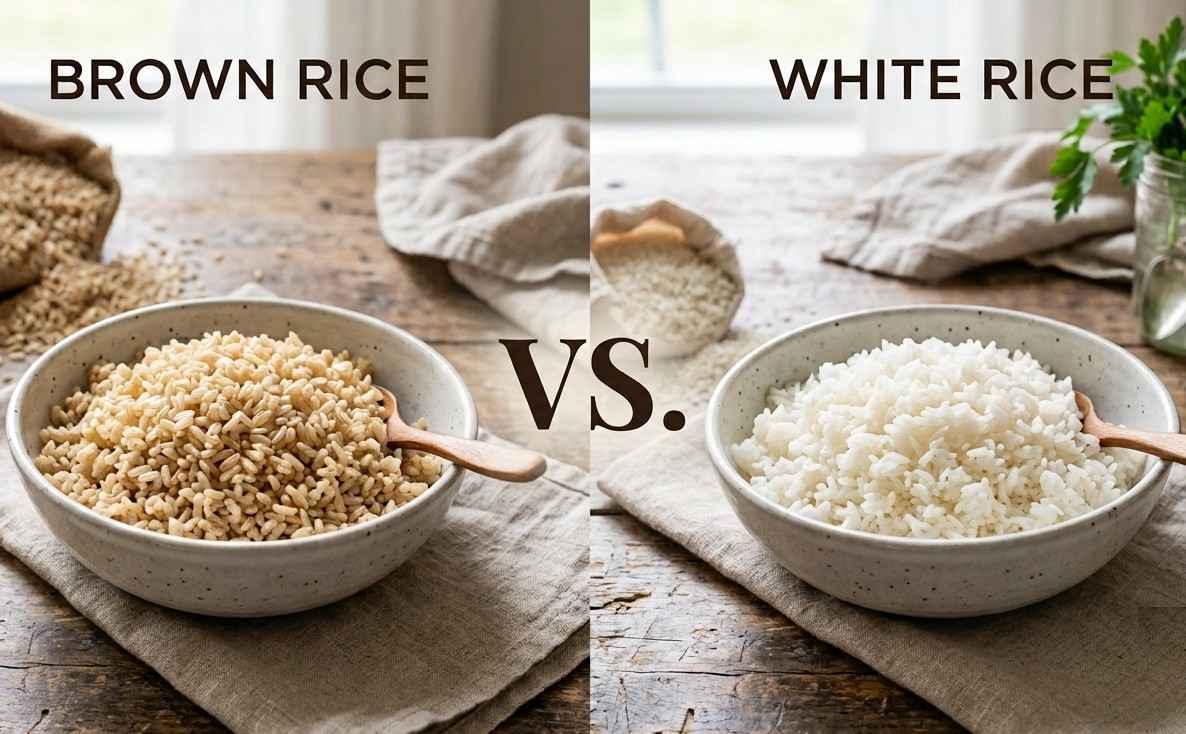
Rice is a staple food for millions of people around the world and is an important source of carbohydrates and energy. But when choosing between brown rice and white rice, many people wonder: Which one is healthier? Is brown rice really better than white rice?
The main difference is how the rice is processed. Brown rice is a whole grain because it retains the bran and germ, while white rice is refined and has these outer layers removed. Because of this, brown rice generally contains more fiber and naturally occurring nutrients and tends to have a gentler effect on blood sugar.
For most people, brown rice is the more nutrient-dense choice, particularly when eaten as part of a balanced diet. However, white rice can also fit into a healthy diet, and its easier digestion, softer texture, and versatility may make it useful for certain people and meals.
What Is Brown Rice?
Brown rice is a whole-grain form of rice. During processing, only the inedible outer hull is removed, leaving the bran, germ, and endosperm intact.
The bran provides fiber, while the germ contains nutrients such as vitamin E, B vitamins, healthy fats, and various plant compounds. The endosperm provides most of the carbohydrate and some protein. Because the bran and germ remain, brown rice usually has a chewy texture, nutty flavor, and longer cooking time than white rice.
Brown rice is not a completely different species of rice. It describes rice that remains relatively unrefined, and brown rice can come from different rice varieties.
What Is White Rice?
White rice is rice that has been milled and polished to remove the bran and germ, leaving mainly the starchy endosperm.
This processing gives white rice its softer texture, lighter color, and shorter cooking time. Some white rice is enriched with certain B vitamins and iron after processing, but enrichment does not restore all of the nutrients naturally present in the whole grain.
White rice is easy to digest and is widely used in dishes such as rice bowls, curries, pulao, fried rice, sushi, and many traditional meals.
Brown Rice vs White Rice: Nutritional Comparison
The exact nutrition varies according to rice variety, cooking method, and serving size. In general, the major nutritional difference is fiber and the nutrients associated with the bran and germ.
| Nutrient/Feature | Brown Rice | White Rice |
|---|---|---|
| Grain type | Whole grain | Refined grain |
| Bran | Retained | Removed |
| Germ | Retained | Removed |
| Fiber | Higher | Lower |
| Magnesium | Generally higher | Lower |
| Naturally occurring nutrients | More | Fewer after milling |
| Texture | Chewy | Soft |
| Flavor | Nutty | Mild |
| Cooking time | Usually longer | Usually shorter |
| Effect on blood sugar | Generally gentler | Generally faster |
| Digestibility | More fiber, may feel heavier | Usually easier to digest |
Milling and polishing white rice removes much of the naturally occurring fiber, B vitamins, minerals, and phytochemicals found in the outer layers of the grain.
Brown Rice vs White Rice: Which One Is Healthier?
Brown rice is generally the healthier choice for overall nutrition because it is a whole grain and provides more fiber and naturally occurring nutrients than refined white rice.
However, that does not mean white rice is unhealthy or that everyone needs to avoid it.
The overall meal matters. Brown rice served with vegetables, beans, lentils, fish, eggs, or other protein sources can be part of a balanced meal. Similarly, a moderate serving of white rice paired with vegetables, legumes, and protein can also fit into a healthy eating pattern. Choosing whole grains such as brown rice because they generally have a milder effect on blood sugar and insulin than refined grains such as white rice.
10 Key Differences Between Brown Rice and White Rice
1. Brown Rice Contains More Fiber
Brown rice retains the bran layer, making it naturally higher in fiber than white rice.
Fiber can support digestive health, promote fullness, and slow the digestion of carbohydrates. Whole grains are also associated with better overall health outcomes when they replace refined grains in the diet.
2. Brown Rice Retains More Nutrients
The bran and germ contain vitamins, minerals, healthy fats, antioxidants, and other plant compounds.
White rice loses much of these nutrients during milling, although some products are enriched with selected vitamins and minerals afterward.
3. Brown Rice Usually Has a Lower Glycemic Index
The glycemic index, or GI, describes how quickly a carbohydrate-containing food raises blood glucose.
Harvard reports an average GI of about 55 for brown rice compared with about 64 for white rice, although the actual GI can vary substantially depending on the variety and preparation method.
4. Brown Rice May Be More Filling
Because brown rice contains more fiber and has a less processed structure, it may help you feel full for longer than white rice.
However, fullness depends on the entire meal, portion size, protein, fat, and other foods eaten with the rice.
5. White Rice Is Easier to Digest for Some People
White rice contains less fiber and is softer after cooking, which can make it easier to tolerate for people who temporarily need a lower-fiber diet.
This is one reason white rice may sometimes be included in meals during digestive upset or when a healthcare professional recommends limiting fiber temporarily.
6. White Rice Cooks Faster
Brown rice generally takes longer to cook because the bran layer remains intact.
White rice cooks more quickly and develops a softer texture, making it convenient for everyday meals.
7. Brown Rice Is a Whole Grain
Whole grains contain the bran, germ, and endosperm.
Refined grains such as white rice contain primarily the endosperm after processing. Health guidance generally encourages replacing at least some refined grains with whole grains.
8. Both Provide Carbohydrates
Both brown and white rice are carbohydrate-rich foods and can provide energy.
Choosing brown rice does not mean eating a low-carbohydrate food. The main difference is the nutritional quality and processing of the grain.
9. Portion Size Still Matters
Brown rice can be a nutritious choice, but eating very large portions can still provide substantial calories and carbohydrates.
A balanced plate should include vegetables, a suitable protein source, and an appropriate portion of whole grains or other carbohydrate-rich foods.
10. Preparation Can Change the Overall Meal
Brown rice cooked with vegetables and legumes is nutritionally different from brown rice served with a large amount of butter, cream, or another calorie-dense ingredient.
Likewise, white rice served with vegetables, beans, lentils, and a protein source can be part of a balanced meal.
Brown Rice and Blood Sugar
One of the biggest reasons brown rice is often recommended over white rice is its effect on blood sugar.
The fiber and intact structure of whole grains can slow carbohydrate digestion and produce a more gradual increase in blood glucose.
Research has also found associations between frequent white rice consumption and a higher risk of developing type 2 diabetes, while higher whole-grain and brown-rice consumption has been associated with lower risk in some observational studies. These findings show an association rather than proving that rice alone causes or prevents diabetes.
For people managing diabetes or blood sugar, portion size and the foods eaten with rice are important, not simply whether the rice is brown or white.
Brown Rice vs White Rice: Which Rice is Better for Weight Loss?
Brown rice may be helpful for a weight-management diet because its higher fiber content can contribute to fullness.
However, brown rice is not a special weight-loss food. Weight change depends on overall calorie intake, dietary pattern, physical activity, sleep, and other factors.
A practical approach is to use a moderate portion of rice and fill the rest of the meal with vegetables and a good protein source.
For example:
Balanced rice meal:
Brown rice + dal + mixed vegetables + curd
or
Another option:
White rice + rajma/chana + vegetables + salad
Both can provide a balanced combination of carbohydrates, protein, fiber, and micronutrients.
Brown Rice vs White Rice: Which Rice is Better for Diabetes?
For people concerned about diabetes, brown rice is generally the more favorable option because it is a whole grain and tends to have a lower GI than many forms of white rice.
However, switching rice types alone is not enough to manage blood glucose.
Helpful strategies can include:
- Choosing reasonable portions.
- Adding vegetables to meals.
- Pairing rice with protein and legumes.
- Choosing minimally processed foods more often.
- Limiting sugary drinks and highly refined foods.
- Following an individualized eating plan when diagnosed with diabetes.
People taking diabetes medication should discuss major dietary changes with their healthcare professional.
Brown Rice vs White Rice: Which Rice is Easier to Digest?
White rice may be easier to digest because it contains considerably less fiber and has a softer texture after cooking.
Brown rice, on the other hand, contains more fiber, which can support normal bowel function but may cause bloating or digestive discomfort in some people when they suddenly increase their fiber intake.
If you are not accustomed to eating whole grains, increase them gradually and drink enough fluids.
For people with a specific digestive condition or who have been instructed to follow a low-fiber diet, the appropriate rice choice may be different.
Is Brown Rice Good for the Heart?
Brown rice contributes fiber, minerals, and other compounds found in whole grains.
More broadly, research has associated higher whole-grain intake with favorable health outcomes, including cardiovascular health. However, evidence should not be interpreted as showing that brown rice alone prevents heart disease.
For heart health, the overall eating pattern matters more than one individual grain.
A diet rich in vegetables, fruits, whole grains, legumes, nuts, seeds, and healthy protein sources is generally more important than choosing one specific type of rice.
Does Brown Rice Have More Arsenic?
One important consideration when comparing brown and white rice is arsenic exposure.
Rice can absorb arsenic from soil and water, and brown rice may contain more inorganic arsenic than white rice because arsenic can accumulate in the outer layers that remain in brown rice.
This does not mean you should automatically avoid brown rice.
Instead, variety is useful. You can rotate rice with other whole grains such as oats, barley, millet, quinoa, bulgur, and other grains.
Harvard also notes that washing rice thoroughly and cooking it in excess water before draining can reduce some arsenic exposure, although this method can also reduce some water-soluble nutrients.
Brown Rice vs White Rice: Which Rice Is Better for Daily Eating?
For most healthy adults, brown rice can be a nutritious choice for regular meals because it is a whole grain with more fiber and naturally occurring nutrients.
But eating white rice occasionally or as part of a balanced meal is not inherently unhealthy.
If you enjoy white rice, you do not necessarily need to eliminate it. You can improve the nutritional quality of the meal by:
- Keeping portions moderate.
- Adding vegetables.
- Including beans, lentils, eggs, fish, chicken, tofu, or another protein source.
- Adding a source of healthy fat when appropriate.
- Choosing minimally processed foods alongside the rice.
Brown Rice vs White Rice: Which Is Better for Specific Goals?
| Goal | More suitable choice | Why |
|---|---|---|
| More fiber | Brown rice | Retains the bran |
| Whole-grain eating | Brown rice | It is a whole grain |
| Blood-sugar-friendly eating | Usually brown rice | Generally has a lower GI |
| Easier digestion | White rice | Lower in fiber and softer |
| Quick cooking | White rice | Usually cooks faster |
| More naturally occurring nutrients | Brown rice | Bran and germ remain |
| Soft texture | White rice | Softer after cooking |
| Long-term healthy eating pattern | Brown rice more often | Fits whole-grain recommendations |
| Variety in the diet | Both | Different types can fit different meals |
How Much Brown Rice Should You Eat?
There is no single rice portion that is appropriate for everyone.
Your ideal amount depends on your age, activity level, energy requirements, health goals, and the rest of your diet.
A practical approach is to make rice one part of a balanced meal rather than allowing it to dominate the plate.
For many people, combining a moderate serving of rice with plenty of vegetables and a protein-rich food is a simple way to build a more balanced meal.
How to Make Brown Rice Healthier
Brown rice is already a nutrient-rich whole grain, but the overall meal can make a major difference.
Try these ideas:
- Pair it with vegetables: Add leafy greens, carrots, beans, cauliflower, peas, or other vegetables.
- Add protein: Combine brown rice with dal, chickpeas, rajma, tofu, eggs, fish, or lean meat.
- Watch high-calorie additions: Large amounts of butter, cream, or oil can significantly increase the calorie content.
- Use herbs and spices: Flavor brown rice with herbs, garlic, ginger, turmeric, cumin, or other spices instead of relying heavily on salt.
- Rotate your grains: Include oats, millet, barley, quinoa, whole wheat, and other whole grains throughout the week.
Can You Eat White Rice and Still Be Healthy?
Yes.
White rice can be part of a healthy diet, particularly when portions are appropriate and it is combined with nutritious foods.
The idea that one food automatically makes a diet healthy or unhealthy is too simplistic. Dietary quality depends on the overall pattern.
For example, white rice with vegetables, lentils, and a protein source is nutritionally different from white rice eaten in a large portion alongside sugary beverages and highly processed foods.
The same principle applies to brown rice.
Brown Rice or White Rice: Which Is Better for Your Health?
For overall nutritional quality, brown rice generally has the advantage because it is a whole grain and provides more fiber and naturally occurring nutrients.
Brown rice may be particularly useful for people who want to increase whole-grain intake or choose carbohydrates that generally produce a gentler blood-sugar response.
White rice still has a place in a healthy diet. It can be easier to digest, cooks quickly, and may be preferable in certain meals or for people temporarily following a lower-fiber diet.
The healthiest approach is not necessarily to completely eliminate white rice. Instead, make whole grains such as brown rice a regular part of a varied diet while choosing portions and meal combinations that suit your individual needs.
Brown Rice vs White Rice: Final Thought
When comparing brown rice and white rice, brown rice is generally the healthier choice for everyday nutrition because it retains the bran and germ, provides more fiber, and is a whole grain.
White rice is more refined and contains less fiber, but it remains a useful staple food and can be included in a balanced diet.
Ultimately, the best rice for you depends on your health needs, digestive tolerance, dietary preferences, and the rest of your meal. Instead of focusing only on the type of rice, focus on the overall quality, variety, and balance of your diet.
FAQ’s
Is brown rice healthier than white rice?
Yes, brown rice is generally healthier because it is a whole grain with more fiber and naturally occurring nutrients.
Is white rice bad for your health?
No, white rice can be part of a healthy diet when eaten in moderate portions with vegetables, protein, and other nutritious foods.
Brown Rice vs White Rice: Which rice has more fiber?
Brown rice has more fiber because its bran layer remains intact during processing.
Does brown rice have more calories than white rice?
Cooked brown and white rice have relatively similar calorie amounts per serving, although their fiber and nutrient profiles differ.
Brown Rice vs White Rice: Which rice is better for gut health?
Brown rice generally provides more fiber, which can support normal digestive health, while white rice may be better tolerated when a lower-fiber diet is needed.
Which is more nutritious, brown rice or white rice?
Brown rice is generally more nutritious because it retains the bran and germ, which contain fiber, vitamins, minerals, and plant compounds.
Should I completely stop eating white rice?
No, there is generally no need to completely eliminate white rice if it fits your dietary needs and is eaten as part of a balanced diet.
Why do Chinese eat white rice instead of brown rice?
Chinese cuisine traditionally favors white rice because it has a softer texture, milder flavor, is easier to digest, cooks faster, and pairs well with many dishes.
Is brown rice better than white rice for cholesterol?
Brown rice provides more fiber and whole-grain nutrients, which may support healthier cholesterol levels as part of an overall balanced diet.
Which rice has more protein, brown or white?
Brown rice generally contains slightly more protein than white rice, although the difference is relatively small.
Does brown rice have more carbohydrates than white rice?
Both contain substantial carbohydrates, and the difference in carbohydrate content depends on the rice variety and serving size.
Brown Rice vs White Rice: Which rice is better for constipation?
Brown rice may be more helpful because its higher fiber content can support regular bowel movements.
Why is white rice more popular than brown rice?
White rice has a softer texture, milder flavor, shorter cooking time, and is widely used in traditional cuisines.
Is brown rice suitable for children?
Brown rice can be included in a child’s balanced diet, provided the texture and portion are appropriate for the child’s age and eating abilities.
Can you mix brown rice and white rice together?
Yes, mixing them is a simple way to combine the softer texture of white rice with some of the additional fiber of brown rice.
Brown Rice vs White Rice: Which rice has a lower glycemic index?
Brown rice generally has a lower glycemic index than white rice, although the actual value varies by rice type and cooking method.
Brown Rice vs White Rice: Which rice is better for high blood sugar?
Brown rice is generally the preferable option because it typically produces a slower blood-glucose response than white rice, but portion size remains important.
Is brown rice harder to cook than white rice?
Yes, brown rice usually takes longer to cook because its bran layer remains intact.
Does rinsing rice remove nutrients?
Rinsing can remove some surface starch and small amounts of water-soluble nutrients, but it is commonly used as part of rice preparation.
Can brown rice replace white rice completely?
Yes, many people can replace white rice with brown rice, but there is no requirement to completely eliminate white rice from a balanced diet.
Brown Rice vs White Rice: Which rice is better for long-term health?
Brown rice can be a useful whole-grain choice for long-term healthy eating, while white rice can also fit into a balanced dietary pattern.
Sources / References:
Disclaimer:
This guide is for general educational purposes only and does not replace personalized medical or dietary advice from a qualified healthcare professional.
Also Read: