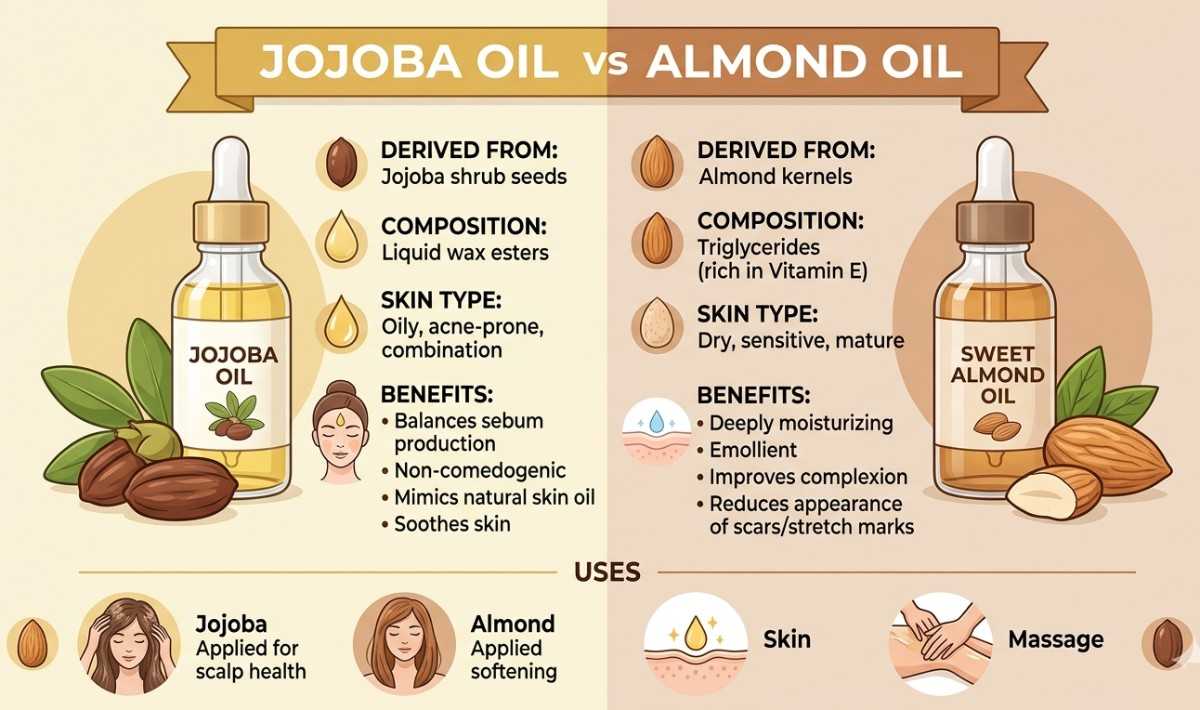
When it comes to natural skincare and haircare, two oils often top the list: jojoba oil and almond oil. Both are plant-based, nutrient-rich, and widely praised for their moisturizing and healing properties. But if you are trying to decide between the two, you may be wondering: Jojoba oil vs almond oil — which is better?
The truth is, both oils are excellent, but they serve slightly different purposes. The right choice depends on your skin type, hair concerns, and overall goals. In this guide, we’ll compare jojoba oil and almond oil in terms of composition, benefits, skin compatibility, hair care uses, side effects, and more.
What Is Jojoba Oil?
Jojoba oil is extracted from the seeds of the jojoba plant (Simmondsia chinensis), a shrub native to North America. Interestingly, jojoba oil is technically not an oil but a liquid wax ester. Its structure closely resembles human sebum, the natural oil produced by our skin.
Because of this similarity, jojoba oil blends seamlessly into the skin without clogging pores. It is lightweight, non-greasy, and highly stable due to its natural antioxidant content.
Key Characteristics of Jojoba Oil:
- Light texture
- Non-comedogenic
- Long shelf life
- Mimics natural skin oils
- Suitable for oily and acne-prone skin
What Is Almond Oil?
Almond oil is derived from almonds, typically sweet almonds (Prunus amygdalus var. dulcis). It has been used for centuries in traditional beauty and wellness practices.
Almond oil is rich in vitamin E, fatty acids, and antioxidants. It has a slightly heavier texture compared to jojoba oil, making it deeply nourishing and ideal for dry or sensitive skin.
Key Characteristics of Almond Oil:
- Rich and nourishing
- High in vitamin E
- Excellent for dry skin
- Slightly heavier consistency
- Popular for massage and baby care
Nutritional Comparison: Jojoba Oil vs Almond Oil
| Nutrient/Property | Jojoba Oil | Almond Oil |
|---|---|---|
| Vitamin E | Moderate | High |
| Fatty Acids | Wax esters, oleic acid | Oleic acid, linoleic acid |
| Texture | Lightweight | Medium-heavy |
| Comedogenic Rating | 2 (low) | 2 (low to moderate) |
| Shelf Life | Very long | Moderate |
| Best For | Oily/acne-prone skin | Dry/sensitive skin |
Jojoba Oil vs Almond Oil for Skin
1. For Oily Skin
Jojoba oil is often considered better for oily skin. Because it mimics sebum, it can help regulate oil production. When your skin senses enough oil, it may reduce excess sebum production.
Almond oil, while not extremely heavy, may feel slightly rich for very oily skin types.
Winner for oily skin: Jojoba oil
2. For Dry Skin
Almond oil deeply nourishes and replenishes dry skin due to its high vitamin E and fatty acid content. It creates a protective barrier that locks in moisture.
Jojoba oil hydrates well but does not provide the same intense nourishment as almond oil for extremely dry skin.
Winner for dry skin: Almond oil
3. For Acne-Prone Skin
Jojoba oil is generally preferred for acne-prone skin. Its lightweight, non-comedogenic nature makes it less likely to clog pores. It also has mild anti-inflammatory properties.
Almond oil may work for some people with acne, but it is not as commonly recommended.
Winner for acne-prone skin: Jojoba oil
4. For Sensitive Skin
Both oils are gentle, but almond oil is especially soothing for irritated or sensitive skin. It is often used in baby products.
However, those with nut allergies should avoid almond oil.
Winner for sensitive skin: Almond oil (unless allergic to nuts)
5. For Anti-Aging
Both oils contain antioxidants that fight free radicals and reduce signs of aging.
- Jojoba oil improves elasticity.
- Almond oil reduces fine lines and supports skin repair.
They are nearly equal in anti-aging benefits.
Winner for anti-aging: Tie
Jojoba Oil vs Almond Oil for Hair
1. For Dry, Damaged Hair
Almond oil penetrates deeply into the hair shaft and provides intense nourishment. It is excellent for brittle, dry hair.
Winner: Almond oil
2. For Oily Scalp
Jojoba oil helps balance scalp oil production. It cleanses excess buildup without making the scalp greasy.
Winner: Jojoba oil
3. For Dandruff
Both oils can help reduce dandruff due to their moisturizing properties. However, jojoba oil is slightly better at dissolving scalp buildup.
Winner: Jojoba oil
4. For Hair Growth
There is no strong scientific evidence that either oil directly stimulates new hair growth. However, they improve scalp health, which may support stronger hair over time.
Almond oil provides nourishment.
Jojoba oil keeps follicles unclogged.
Winner: Tie
Absorption and Texture Comparison
One major difference between jojoba oil and almond oil is how they feel on the skin.
- Jojoba oil absorbs quickly and leaves little residue.
- Almond oil takes longer to absorb and leaves a soft, slightly oily finish.
If you prefer lightweight skincare, jojoba oil may be better. If you enjoy a richer feel, almond oil is ideal.
Comedogenic Rating
Comedogenic ratings measure how likely an ingredient is to clog pores.
- Jojoba oil: Rating of 2
- Almond oil: Rating of 2
Both are relatively safe for most skin types, but jojoba oil’s sebum-like structure gives it a slight edge for acne-prone individuals.
Shelf Life and Stability
Jojoba oil is highly stable because it is technically a wax ester. It resists oxidation and has a long shelf life.
Almond oil can go rancid faster if not stored properly.
Winner for longevity: Jojoba oil
Massage and Body Care
Almond oil has traditionally been used for body massage. Its slightly heavier texture provides excellent glide and hydration.
Jojoba oil works for massage but absorbs more quickly.
Winner for massage: Almond oil
Makeup Removal
Jojoba oil effectively dissolves makeup and excess sebum without leaving heavy residue. Almond oil also works well but may feel heavier.
Winner: Jojoba oil
Potential Side Effects
Jojoba Oil
- Rare allergic reactions
- Mild irritation in very sensitive individuals
Almond Oil
- Risk for people with nut allergies
- Possible pore clogging in extremely oily skin
Always perform a patch test before applying either oil extensively.
Environmental and Ethical Considerations
Jojoba plants are drought-resistant and environmentally sustainable in arid regions.
Almond cultivation requires more water, especially in large-scale farming operations.
If sustainability is a priority, jojoba oil may be the better choice.
Cost Comparison: Jojoba Oil vs Almond Oil
Almond oil is generally more affordable and widely available.
Jojoba oil is slightly more expensive due to its extraction process and plant cultivation.
Who Should Choose Jojoba Oil?
Choose jojoba oil if you:
- Have oily or acne-prone skin
- Prefer lightweight skincare
- Need scalp oil balance
- Want longer shelf life
- Are concerned about sustainability
Who Should Choose Almond Oil?
Choose almond oil if you:
- Have dry or flaky skin
- Want deep nourishment
- Enjoy massage oils
- Need intense hair conditioning
- Do not have nut allergies
Can You Use Both Together?
Yes. Many skincare enthusiasts combine both oils for balanced benefits.
For example:
- Use jojoba oil in the morning for lightweight hydration.
- Use almond oil at night for deep nourishment.
- Mix a few drops of both for body care.
Layering can help you enjoy the best of both worlds.
Final Verdict: Jojoba Oil vs Almond Oil — Which Is Better?
There is no universal winner. The better oil depends on your skin type and needs.
- For oily and acne-prone skin: Jojoba oil is better.
- For dry and sensitive skin: Almond oil is better.
- For hair nourishment: Almond oil excels.
- For scalp balance: Jojoba oil wins.
If you want a lightweight, sebum-mimicking oil that balances the skin, choose jojoba oil. If you need rich, vitamin-packed nourishment, almond oil is your go-to option.
In many cases, the smartest choice is not choosing one over the other but using both strategically.
FAQ’s
Can I use jojoba oil and almond oil daily?
Yes, both oils are safe for daily use if your skin tolerates them well. Always start with a small amount.
Which oil is better for face massage?
Almond oil provides better glide, while jojoba oil absorbs faster. Your preference matters.
Does jojoba oil clog pores?
Jojoba oil has a low comedogenic rating and is unlikely to clog pores for most people.
Is almond oil good for under-eye dark circles?
Almond oil is commonly used to nourish the delicate under-eye area, though results vary.
Which oil is better for babies?
Almond oil is traditionally used for baby massage, but consult a pediatrician first.
Can these oils help with stretch marks?
Both oils may improve skin elasticity and hydration, which can reduce the appearance of stretch marks over time.
Which is better for the face: jojoba oil or almond oil?
Jojoba oil is better for oily and acne-prone skin because it mimics natural sebum, while almond oil is better for dry and sensitive skin due to its rich, nourishing texture.
Can I use jojoba oil and almond oil together?
Yes, you can mix both oils to combine lightweight hydration from jojoba oil with the deep nourishment of almond oil.
Which oil is better for acne-prone skin?
Jojoba oil is generally better for acne-prone skin because it is lightweight, non-comedogenic, and helps balance oil production.
Is almond oil too heavy for oily skin?
Almond oil may feel slightly heavy on very oily skin, but some people tolerate it well in small amounts.
Which oil is better for hair growth?
Neither oil directly causes hair growth, but both improve scalp health, which may support stronger and healthier hair over time.
Can I leave jojoba oil or almond oil on my face overnight?
Yes, both oils can be used overnight as moisturizers, provided your skin tolerates them well and you perform a patch test first.
Is jojoba oil safe for sensitive skin?
Jojoba oil is generally safe for sensitive skin, but individuals with very reactive skin should test it on a small area first.
Is almond oil safe for people with nut allergies?
People with nut allergies should avoid almond oil unless cleared by a healthcare professional.
Which oil absorbs faster into the skin?
Jojoba oil absorbs faster and leaves less residue compared to almond oil.
How often can I use jojoba oil or almond oil?
Both oils can be used daily, once or twice a day, depending on your skin type and needs.
Conclusion
When comparing jojoba oil vs almond oil, the best choice comes down to your unique skin and hair needs. Jojoba oil is lightweight, balancing, and ideal for oily skin. Almond oil is rich, deeply nourishing, and perfect for dry or sensitive skin.
Understanding how each oil works allows you to make an informed decision. Whether you choose one or both, incorporating natural oils into your routine can elevate your skincare and haircare results in a gentle and effective way.
Also Read: