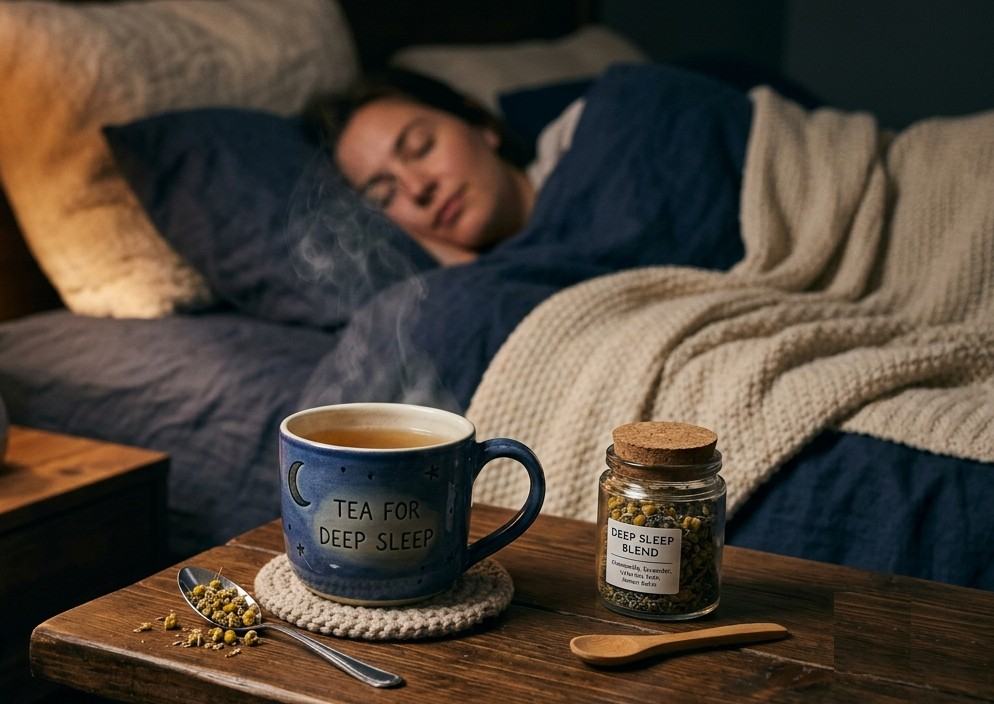
Getting a good night’s sleep is about more than simply spending enough hours in bed. Stress, an irregular sleep schedule, late-night screen use, caffeine, heavy meals, and an uncomfortable sleep environment can all make it harder to fall asleep or stay asleep.
A warm cup of caffeine-free herbal tea can be a simple addition to a relaxing bedtime routine. Certain herbs, including chamomile, valerian, lavender, lemon balm, and passionflower, are traditionally used for relaxation and sleep. However, the scientific evidence is different for each herb, and tea should not be considered a treatment for chronic insomnia.
This guide explores the best teas for deep sleep, what makes each one popular, how to drink them at night, and important safety considerations.
What Makes a Tea Good for Sleep?
A bedtime tea is generally most useful when it is caffeine-free, calming, easy to digest, and incorporated into a consistent nighttime routine.
Herbal teas may also provide a comforting ritual before bed. The warmth, aroma, slower pace of drinking, and time away from screens can all contribute to a relaxing transition toward sleep. Sleep Foundation recommends incorporating relaxing activities such as bedtime tea, reading, stretching, breathing exercises, or meditation into a regular bedtime routine.
It is important to distinguish between supporting relaxation and directly causing deep sleep. Research on many popular sleep herbs remains limited or inconsistent.
10 Best Teas for Deep Sleep
1. Chamomile Tea
Chamomile tea is one of the most popular bedtime teas. It is naturally caffeine-free and has traditionally been used as a calming beverage before sleep.
Chamomile contains plant compounds such as apigenin, which has been investigated for its interaction with receptors involved in relaxation. However, clinical evidence specifically supporting chamomile for insomnia remains limited. There is currently insufficient evidence to establish chamomile as an effective treatment for insomnia.
Best for: A gentle, calming bedtime ritual.
2. Valerian Root Tea
Valerian root tea is traditionally used for relaxation and sleep. Valerian has a long history of use for insomnia and other nervous-system-related complaints.
However, research has produced inconsistent results. There is not enough evidence to determine whether valerian is useful for sleep problems, and long-term safety remains uncertain.
Best for: People interested in traditional herbal sleep remedies, with appropriate caution.
3. Lavender Tea
Lavender tea is another caffeine-free option often associated with relaxation. Its floral aroma can make the bedtime routine feel especially soothing.
Lavender is frequently included among herbal teas used for sleep and relaxation, although evidence for drinking lavender tea specifically as a treatment for insomnia is not strong.
Best for: A relaxing evening routine and people who enjoy floral flavors.
4. Lemon Balm Tea
Lemon balm tea has a mild lemony flavor and is traditionally associated with relaxation and stress reduction.
It is commonly included in herbal sleep blends, sometimes alongside valerian or chamomile. However, more high-quality human research is needed to establish how effective lemon balm tea is for sleep.
Best for: People who prefer a fresh, lightly citrus-flavored herbal tea.
5. Passionflower Tea
Passionflower tea is traditionally used as a calming herbal drink. It is sometimes included in nighttime tea blends designed to promote relaxation.
Although passionflower is widely used in sleep products, evidence regarding its effectiveness for insomnia is still limited. Herbal combinations containing passionflower also make it difficult to determine which ingredient is responsible for any observed effects.
Best for: Those looking for a traditional herbal tea with a relaxing evening profile.
6. Peppermint Tea
Peppermint tea is naturally caffeine-free and has a refreshing flavor. While it is not one of the best-studied herbs for improving sleep, many people enjoy it as a relaxing nighttime beverage.
Peppermint tea may be particularly appealing after dinner because of its refreshing taste. However, people who experience acid reflux may find that peppermint aggravates their symptoms.
Best for: A caffeine-free after-dinner drink when peppermint does not trigger reflux.
7. Ginger Tea
Ginger tea is caffeine-free when made from fresh ginger or caffeine-free ginger tea bags. Its warming flavor can make it a comforting evening beverage.
Ginger is better known for digestive uses than for directly improving sleep, so it should not be considered a proven sleep treatment. If a heavy meal leaves you feeling uncomfortable, a mild ginger tea may fit into a relaxing nighttime routine.
Best for: People who enjoy a warm, spicy herbal drink after dinner.
8. Magnolia Bark Tea
Magnolia bark is traditionally used in some herbal preparations for relaxation and sleep. It is also included among herbal ingredients commonly marketed for nighttime use.
However, human evidence for using magnolia bark tea specifically to improve sleep is limited.
Best for: People interested in less-common traditional herbal teas, provided safety considerations are addressed.
9. Rooibos Tea
Rooibos tea is naturally caffeine-free and has a naturally sweet, earthy flavor. Because it does not contain the caffeine found in traditional black and green teas, it can be a convenient evening alternative.
Rooibos is not a proven treatment for insomnia, but choosing a caffeine-free beverage instead of caffeinated tea can help reduce one potential source of sleep disruption.
Best for: People who want a mild, caffeine-free alternative to black or green tea.
10. Banana Tea
Banana tea is a caffeine-free drink sometimes prepared by steeping banana pieces or banana peel in hot water.
It has become popular online as a natural bedtime drink, although strong clinical evidence that banana tea produces deeper sleep is lacking. Its main benefit may be that it provides a warm, caffeine-free beverage that can become part of a calming nighttime routine.
Best for: People looking for a simple caffeine-free bedtime drink.
Best Teas for Deep Sleep at a Glance
| Tea | Naturally Caffeine-Free | Main Reason People Choose It | Evidence for Sleep |
|---|---|---|---|
| Chamomile Tea | Yes | Relaxation and bedtime routine | Limited |
| Valerian Root Tea | Yes | Traditional sleep support | Inconsistent |
| Lavender Tea | Yes | Calming aroma and relaxation | Limited |
| Lemon Balm Tea | Yes | Relaxation and mild citrus flavor | Limited |
| Passionflower Tea | Yes | Traditional calming use | Limited |
| Peppermint Tea | Yes | Refreshing, caffeine-free drink | Not established for insomnia |
| Ginger Tea | Yes | Warmth and digestive comfort | Not established for insomnia |
| Magnolia Bark Tea | Yes | Traditional relaxation | Limited |
| Rooibos Tea | Yes | Caffeine-free alternative | Not established as sleep treatment |
| Banana Tea | Yes | Warm, caffeine-free bedtime beverage | Limited |
Which Tea Is Best for Deep Sleep?
There is no single tea that has been conclusively proven to produce deeper sleep in everyone.
Chamomile, valerian, lavender, lemon balm, passionflower, and other herbal teas are commonly used for sleep, but the strength of scientific evidence varies considerably. NCCIH specifically notes that evidence for chamomile and valerian in insomnia is insufficient or inconsistent.
For many people, the practical choice is a caffeine-free tea they enjoy and can consistently include in a relaxing bedtime routine.
What Time Should You Drink Tea for Sleep?
A good starting point is to drink a small cup of caffeine-free herbal tea about 30–60 minutes before bedtime.
This gives you time to enjoy the beverage as part of your wind-down routine without making the drink itself the focus of sleep.
Avoid drinking a very large amount immediately before bed because frequent trips to the bathroom can interrupt sleep.
How to Make a Bedtime Tea
Basic Herbal Tea Method:
- Boil fresh water.
- Add one tea bag or the recommended amount of dried herb.
- Steep according to the product instructions, usually for several minutes.
- Remove the tea bag or strain the herbs.
- Allow the tea to cool slightly.
- Drink it slowly as part of your nighttime routine.
Avoid adding large amounts of sugar if your goal is to keep your bedtime beverage simple.
Can Tea Really Help You Sleep Better?
Tea can be helpful as one part of a broader sleep routine, but it should not be viewed as a guaranteed solution for insomnia.
A consistent bedtime and wake time, reducing evening stimulation, limiting caffeine, creating a dark and quiet bedroom, and developing a relaxing pre-bed routine can all be important for healthy sleep.
In other words, the tea may be less important than the routine surrounding it.
Teas to Avoid Before Bed
Not every tea is suitable for nighttime.
1. Black Tea
Black tea naturally contains caffeine, which can promote alertness and interfere with sleep when consumed too late in the day.
2. Green Tea
Green tea also contains caffeine. Although its caffeine content can vary, it may still interfere with sleep in caffeine-sensitive individuals.
3. Matcha
Matcha generally contains caffeine and is therefore more appropriate for daytime consumption than immediately before bed.
4. Yerba Mate
Yerba mate contains caffeine and can increase alertness, making it unsuitable for many people as a bedtime beverage.
How Much Caffeine Should You Have Before Bed?
If you are trying to improve sleep, consider avoiding caffeine well before bedtime.
Sleep Foundation notes that caffeine can affect sleep even when consumed several hours before bed and recommends a substantial gap between caffeine intake and bedtime. Individual sensitivity varies.
If you notice that afternoon tea or coffee makes it harder to fall asleep, consider moving caffeinated drinks earlier in the day.
Best Bedtime Tea Combinations
If you enjoy blended teas, several caffeine-free combinations can make pleasant evening drinks:
- Chamomile + Lavender Tea: Floral and calming.
- Chamomile + Lemon Balm Tea: Mild and refreshing.
- Lemon Balm + Lavender Tea: Light citrus and floral flavors.
- Chamomile + Valerian Tea: A traditional sleep-oriented herbal combination.
- Ginger + Chamomile Tea: Warming with a mild floral flavor.
- Rooibos + Chamomile Tea: Earthy, naturally caffeine-free blend.
When using herbal blends, check the ingredient list because some commercial “sleep teas” contain multiple herbs, and evidence for the combination may be limited.
Safety Considerations
Herbal does not automatically mean risk-free.
- Chamomile: People allergic to ragweed or related plants may also react to chamomile.
- Valerian: Possible side effects include headache, stomach upset, mental dullness, vivid dreams, and other reactions; long-term safety is uncertain.
- Kava: Kava is sometimes marketed for relaxation, but it has been associated with potentially serious liver injury and is not a good choice for a casual bedtime tea.
- Medications: Some herbs can interact with medications or other supplements, so people taking regular medicines should check with a healthcare professional before using concentrated herbal preparations.
- Pregnancy and breastfeeding: If you are pregnant or breastfeeding, ask your healthcare professional before regularly consuming medicinal amounts of herbal products.
When Should You Talk to a Doctor About Poor Sleep?
Occasional difficulty sleeping is common, but persistent sleep problems deserve attention.
Speak with a healthcare professional if you regularly:
- Have difficulty falling or staying asleep.
- Wake repeatedly during the night.
- Feel excessively tired during the daytime.
- Snore loudly or wake up gasping.
- Depend on sleep aids regularly.
- Experience sleep problems that are affecting daily activities.
A bedtime tea may complement healthy sleep habits, but persistent insomnia or another sleep disorder may require a more targeted approach.
Simple Bedtime Tea Routine for Better Sleep
Try creating a consistent routine rather than relying on one particular tea.
- 1 hour before bed: Reduce stimulating activities and begin winding down.
- 45 minutes before bed: Prepare a caffeine-free herbal tea.
- 30 minutes before bed: Put away unnecessary screens and choose a quiet activity such as reading.
- 15 minutes before bed: Dim the lights, practice slow breathing, or do gentle stretching.
- Bedtime: Go to bed at approximately the same time each night.
A consistent routine can help create behavioral cues that signal to your brain that it is time to prepare for sleep.
Final Thoughts
The best teas for deep sleep are generally caffeine-free herbal options such as chamomile, lavender, lemon balm, valerian, and passionflower. However, none should be presented as a guaranteed treatment for insomnia. Scientific evidence varies considerably between herbs, with some having limited research and others showing inconsistent results.
For most people, the most useful approach is to choose a caffeine-free tea they enjoy and combine it with a consistent bedtime schedule, a relaxing nighttime routine, and a sleep-friendly environment.
FAQ’s
Which tea helps you fall asleep fastest?
There is no tea proven to make everyone fall asleep quickly, but caffeine-free herbal teas such as chamomile or valerian may help create a relaxing bedtime routine.
Can I drink chamomile tea every night?
Many people drink chamomile tea regularly, but people with allergies to chamomile or related plants, or those taking certain medications, should consult a healthcare professional before frequent use.
Can I drink tea every night for sleep?
A caffeine-free herbal tea can be included in a nightly bedtime routine, but persistent sleep problems should not be managed with tea alone.
Can tea improve sleep quality?
A caffeine-free tea may support relaxation and a consistent bedtime routine, but evidence that tea itself substantially improves sleep quality varies by herb and remains limited for many popular varieties.
Which herbal tea is best for anxiety and sleep?
Chamomile, lemon balm, lavender, and passionflower are commonly used for relaxation, although their effects can vary from person to person and the evidence differs among herbs.
Is green tea good before bed?
Regular green tea contains caffeine, so it may not be the best choice immediately before bed, particularly for people who are sensitive to caffeine.
Can I drink sleep tea if I wake up at night?
A small amount may be part of a bedtime routine, but drinking a large amount during the night can increase urination and potentially cause additional sleep disruption.
Is sleep tea safe during pregnancy?
Not all herbal teas have been adequately studied during pregnancy, so pregnant women should check with their healthcare professional before regularly consuming medicinal or multi-herb sleep teas.
Can sleep tea cure insomnia?
No. Herbal tea should not be considered a cure for insomnia. Persistent insomnia may have underlying causes that require assessment and appropriate treatment.
Sources / References:
Disclaimer:
This guide is for general educational purposes only and does not replace professional medical advice, diagnosis, or treatment. If sleep problems are persistent or severe, consult a qualified healthcare professional.
Also Read: