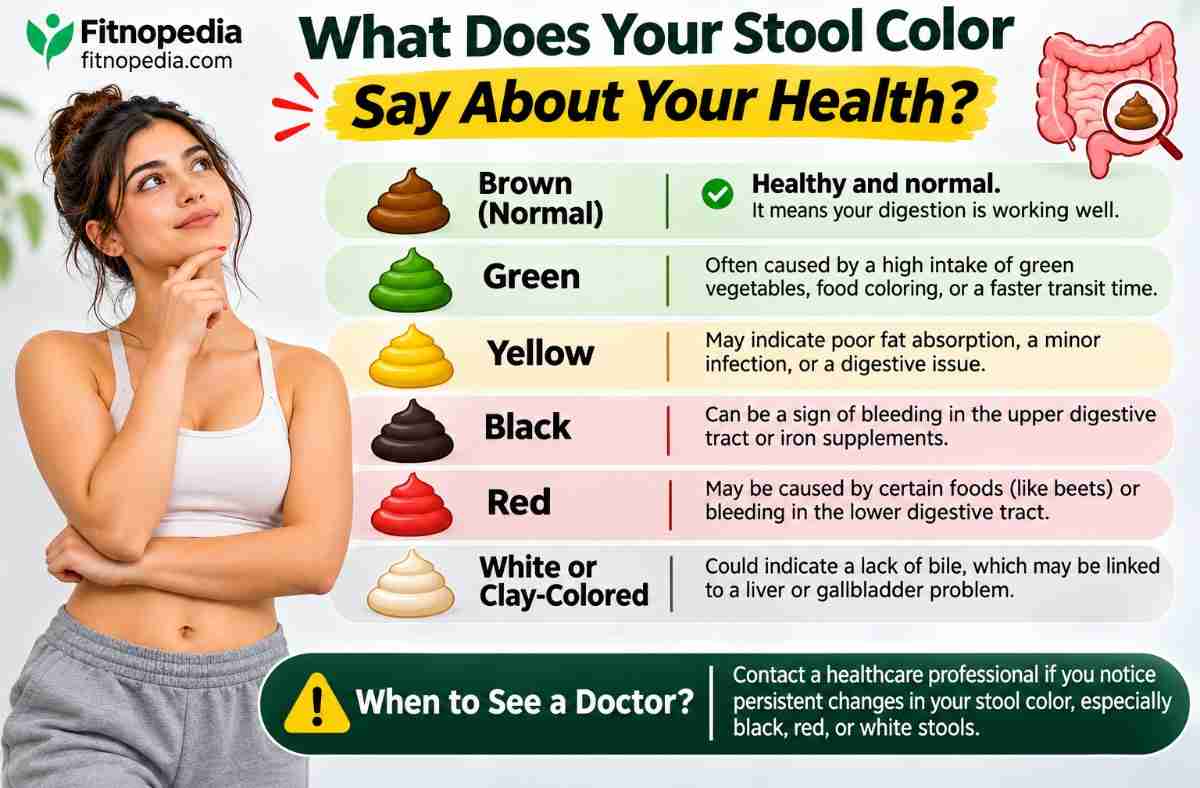
Your stool can reveal more about your digestive health than you might think. Although it may not be a comfortable topic to discuss, checking your stool color occasionally can help you notice changes in your body. From brown and green to yellow, red, black, or pale, different stool colors can provide clues about digestion, food choices, medications, and sometimes underlying health conditions.
Have you ever noticed that your stool suddenly turned green after eating certain foods? Or wondered why it sometimes looks unusually dark or pale? These changes are not always a reason to worry, but some may indicate that your digestive system needs attention.
So, what does your stool color say about your health?
In this guide, we will explore the meaning of different stool colors, their possible causes, when they are harmless, and which changes should never be ignored.
What Is the Normal Color of Stool?
The normal color of stool is usually brown, ranging from light brown to dark brown. This color mainly comes from bile, a digestive fluid produced by the liver and released into the small intestine.
Bile contains substances that help break down fats. As it moves through the digestive tract, chemical changes give stool its characteristic brown color.
Healthy stool color can vary depending on:
- The foods you eat.
- Your digestive process.
- The amount of bile in your digestive system.
- Certain medications and supplements.
- How quickly food moves through your intestines.
Occasional changes in stool color are common and are often related to diet. However, persistent or unexplained changes may require medical attention.
Stool Color Chart: What Different Colors May Mean
Here is a quick overview of common stool colors and what they may indicate.
| Stool Color | Possible Meaning |
|---|---|
| Brown | Usually normal digestion |
| Green | Green vegetables, food coloring, or rapid intestinal transit |
| Yellow | Fat malabsorption or dietary factors |
| Red | Red-colored foods or possible bleeding |
| Black | Iron supplements, certain foods, or possible digestive bleeding |
| White or Clay-Colored | Reduced bile reaching the intestines |
| Orange | Certain foods, food coloring, or sometimes bile-related changes |
| Pale Gray | Possible liver, gallbladder, or bile duct problems |
Let’s understand each stool color in detail.
10 Stool Colors and What They May Indicate About Your Health
1. Brown Stool: A Sign of Normal Digestion
Brown is generally considered the healthiest and most typical stool color. It usually indicates that bile is reaching your intestines and undergoing normal digestive changes.
Brown stool can range from light brown to dark brown. Both shades are generally normal when there are no other concerning symptoms.
Possible reasons for brown stool:
- Normal bile production and digestion.
- A balanced diet containing different food groups.
- Normal movement of food through the digestive tract.
- Regular digestive processes.
When should you worry?
Brown stool is generally not concerning. However, persistent changes in stool consistency, blood in the stool, unexplained weight loss, or ongoing abdominal discomfort should be discussed with a healthcare professional.
2. Green Stool: What Does It Mean?
Green stool can look surprising, especially when you are used to seeing brown stool. However, it is often harmless and may simply be related to your diet.
Bile naturally has a yellow-green color. Normally, it changes as it travels through the intestines. If stool moves through the digestive tract too quickly, bile may not have enough time to break down completely, resulting in green stool.
Common causes of green stool:
- Eating green vegetables such as spinach, kale, and broccoli.
- Consuming foods containing green food coloring.
- Taking iron supplements.
- Experiencing diarrhea or rapid intestinal movement.
- Certain intestinal infections.
Is green stool dangerous?
Occasional green stool without other symptoms is usually not a reason for concern. However, if it continues or occurs with diarrhea, fever, stomach cramps, or dehydration, consult a healthcare professional.
3. Yellow Stool: A Possible Sign of Digestive Problems
Yellow stool can sometimes result from dietary choices, but persistent yellow, greasy, or unusually foul-smelling stool may indicate problems with fat digestion or absorption.
When your digestive system does not absorb fat properly, excess fat can remain in your stool. This condition is known as steatorrhea.
Possible causes of yellow stool:
- Eating high-fat or oily foods.
- Poor fat absorption.
- Celiac disease.
- Pancreatic conditions that affect digestive enzyme production.
- Certain digestive infections, including giardiasis.
What does greasy yellow stool indicate?
If your stool looks oily, floats frequently, smells unusually bad, or is difficult to flush, it may suggest excess fat in the stool.
Persistent symptoms should be evaluated by a healthcare professional to identify the underlying cause.
4. Red Stool: Could It Be Blood?
Red stool can be alarming because it may indicate bleeding somewhere in the digestive tract. However, not every red-colored bowel movement contains blood.
Certain foods and food dyes can temporarily change stool color.
Common food-related causes include:
- Beetroots.
- Cranberries.
- Tomatoes and tomato juice.
- Red-colored candies.
- Foods containing red food coloring.
However, bright red blood may come from the lower digestive tract, rectum, or anus.
Possible medical causes of red stool:
- Hemorrhoids.
- Anal fissures.
- Inflammatory bowel disease.
- Intestinal inflammation.
- Other sources of gastrointestinal bleeding.
When should you seek medical attention?
Do not automatically assume that red stool is caused by food. Visible blood in stool should be medically assessed, particularly if it happens repeatedly.
Seek emergency medical attention if there is heavy bleeding, large blood clots, fainting, severe dizziness, or significant weakness.
5. Black Stool: When Should You Be Concerned?
Black stool can sometimes be caused by foods, supplements, or medications. However, black, sticky, tar-like stool may indicate bleeding in the upper digestive tract.
This type of stool is medically known as melena. It can occur when blood is digested as it passes through the stomach and intestines.
Common causes of black stool include:
- Iron supplements.
- Bismuth-containing medications.
- Black licorice.
- Blueberries and other very dark foods.
- Bleeding from the stomach or upper digestive tract.
What does tarry black stool mean?
Black stool that looks sticky, tar-like, and unusually foul-smelling can be a warning sign of gastrointestinal bleeding.
Possible causes include stomach ulcers and other conditions affecting the upper digestive tract.
When should you seek medical attention?
New black, tarry stool should receive urgent medical assessment, even if you are not experiencing pain.
If it occurs with dizziness, fainting, vomiting blood, shortness of breath, or weakness, seek emergency medical care.
6. White or Clay-Colored Stool: A Possible Bile Problem
White, gray, or clay-colored stool is not a typical stool color. It may indicate that insufficient bile is reaching the intestines.
Since bile gives stool its normal brown color, reduced bile flow can make stool appear unusually pale.
Possible causes include:
- Bile duct blockage.
- Gallstones.
- Liver conditions.
- Gallbladder problems.
- Pancreatic conditions.
- Certain medications or medical procedures.
Other symptoms to watch for:
- Yellowing of the skin or eyes (jaundice).
- Dark-colored urine.
- Itchy skin.
- Abdominal discomfort.
- Nausea or loss of appetite.
Persistent white or clay-colored stool should be evaluated by a healthcare professional. If it occurs with jaundice, dark urine, or abdominal pain, seek prompt medical assessment.
7. Orange Stool: What Causes It?
Orange stool is less common than brown or green stool. In many cases, it is related to foods containing orange pigments or food coloring.
Certain foods contain beta-carotene, a natural pigment that gives them their orange color.
Common causes of orange stool include:
- Carrots.
- Sweet potatoes.
- Pumpkin.
- Winter squash.
- Foods containing orange food coloring.
- Certain medications.
Sometimes, orange or unusually pale stool may also be associated with changes in bile flow.
Should you worry about orange stool?
An occasional orange bowel movement after eating orange-colored foods is usually harmless.
However, if the color continues without an obvious dietary explanation or occurs with dark urine, jaundice, or abdominal discomfort, consult a healthcare professional.
8. Pale Gray Stool: What Your Body May Be Telling You
Pale gray stool may look lighter than normal brown stool and can sometimes resemble clay or putty.
This change may occur when bile does not enter the intestines in sufficient amounts.
Possible causes include:
- Liver disease.
- Gallbladder conditions.
- Gallstones.
- Bile duct obstruction.
- Pancreatic disorders.
Pale gray stool should not be ignored if it occurs repeatedly. A healthcare professional may recommend blood tests or imaging to investigate the liver, gallbladder, pancreas, and bile ducts.
9. Dark Brown Stool: Is It Normal?
Dark brown stool is generally within the normal color range. Its appearance can vary depending on your diet, digestion, and other factors.
Some foods may naturally make stool darker.
Possible causes include:
- Eating dark-colored foods.
- Consuming foods rich in certain pigments.
- Dietary changes.
- Iron supplements.
However, dark brown stool should not be confused with black, tar-like stool. If you cannot distinguish between the two, particularly if the stool looks sticky or tarry, seek medical advice.
10. Maroon Stool: A Possible Sign of Intestinal Bleeding
Maroon-colored stool appears dark red or reddish-purple. Although certain foods can cause similar color changes, maroon stool may indicate bleeding from the digestive tract.
Possible causes include:
- Bleeding from the small intestine.
- Bleeding from the colon.
- Diverticular bleeding.
- Inflammatory bowel disease.
- Other gastrointestinal conditions.
Maroon stool should be assessed urgently, especially when accompanied by abdominal pain, weakness, dizziness, or other symptoms of blood loss.
What Other Stool Changes Can Tell You About Your Health
Stool color is only one part of digestive health. Its shape, consistency, smell, and frequency can also provide useful information.
Here are some additional changes worth understanding.
1. Floating Stool
Stool sometimes floats instead of sinking in the toilet. This can happen because of trapped gas or excess fat.
Occasional floating stool is usually harmless. However, persistent floating stool accompanied by an oily appearance, foul smell, or unexplained weight loss may indicate poor nutrient absorption.
2. Greasy or Oily Stool
Greasy stool may appear shiny, leave an oily film in the toilet, or be difficult to flush.
It can indicate excess fat in the stool, which may be associated with conditions affecting the pancreas, small intestine, or bile system.
3. Hard and Dry Stool
Hard, dry stool is commonly associated with constipation.
Possible contributing factors include:
- Not eating enough fiber.
- Insufficient fluid intake.
- Lack of physical activity.
- Certain medications.
- Changes in daily routine.
Increasing dietary fiber gradually, drinking adequate fluids, and staying physically active may help improve bowel movements.
4. Loose or Watery Stool
Watery stool is commonly associated with diarrhea. It may occur due to infections, food intolerance, medications, or digestive conditions.
Persistent diarrhea can cause dehydration and electrolyte imbalances.
5. Mucus in Stool
A small amount of clear mucus can sometimes appear in stool. However, frequent or excessive mucus, especially when accompanied by blood, diarrhea, abdominal pain, or changes in bowel habits, should be medically evaluated.
When Should You See a Doctor About Stool Color?
Most temporary stool color changes are related to food, supplements, or medications. However, certain changes may indicate a medical problem.
Contact a healthcare professional if you notice:
- Black, tarry stool.
- Red or maroon stool that may contain blood.
- Persistent white, gray, or clay-colored stool.
- Yellow, greasy, foul-smelling stool that continues.
- Unexplained changes in stool color lasting several days.
- Blood or mucus in your stool.
- Persistent diarrhea or constipation.
- Unexplained weight loss.
- Ongoing abdominal pain.
Seek emergency medical care if stool changes occur with heavy rectal bleeding, fainting, severe dizziness, vomiting blood, severe abdominal pain, or signs of significant blood loss.
How to Maintain Healthy Digestion and Normal Bowel Movements
Although stool color cannot tell you everything about your health, maintaining healthy digestive habits can support normal bowel function.
Here are some practical habits to consider.
1. Eat Fiber-Rich Foods: Include fruits, vegetables, whole grains, beans, and legumes in your daily diet to support regular bowel movements.
2. Drink Enough Water: Adequate fluid intake helps soften stool and supports normal digestion.
3. Include Different Food Groups: A varied diet provides essential nutrients and supports overall digestive health.
4. Stay Physically Active: Regular physical activity can help encourage normal intestinal movement.
5. Avoid Excessive Processed Foods: Limit excessive consumption of highly processed foods and meals that are low in fiber.
6. Pay Attention to Food Intolerances: If certain foods repeatedly cause diarrhea, bloating, or unusual stool changes, discuss them with a healthcare professional.
7. Do Not Ignore Persistent Symptoms: Ongoing changes in stool color, consistency, or frequency deserve attention.
8. Review Your Medications: Iron supplements, antibiotics, and certain other medications can affect stool appearance. Do not stop prescribed medication without consulting your healthcare provider.
FAQ’s
Why is my stool black?
Black stool can result from iron supplements, certain medications, or dark-colored foods. However, black, sticky, tar-like stool may indicate bleeding in the upper digestive tract.
Does red stool mean blood?
Not always. Beetroots, tomatoes, cranberries, and red food coloring can make stool appear red. However, red stool may also indicate gastrointestinal bleeding.
Can food change your stool color?
Yes. Foods such as spinach, beetroots, carrots, blueberries, and foods containing artificial coloring can temporarily change stool color.
Can stress affect stool color?
Stress can affect digestion and bowel movements, sometimes causing diarrhea or changes in stool consistency. However, persistent unusual stool colors should not automatically be attributed to stress.
What stool color indicates liver problems?
Pale, gray, or clay-colored stool may indicate problems with bile production or flow. Liver conditions can sometimes cause these changes, particularly when accompanied by yellow skin or eyes.
Is floating stool a sign of poor digestion?
Occasional floating stool is usually harmless and may result from trapped gas. However, persistent floating, greasy, foul-smelling stool may indicate problems with fat absorption.
Can stool color indicate digestive problems?
Yes. Stool color can provide clues about digestion, bile flow, food intake, and possible gastrointestinal conditions. However, stool color alone cannot confirm a diagnosis.
Is green stool a sign of infection?
Not necessarily. Green stool is commonly caused by green vegetables, food coloring, iron supplements, or rapid movement through the intestines. However, infections can also cause green stool, particularly when accompanied by diarrhea and stomach cramps.
What does yellow, greasy stool mean?
Yellow, greasy, foul-smelling stool may indicate excess fat in the stool, a condition called steatorrhea. It can be associated with digestive conditions such as celiac disease or pancreatic disorders.
Does black stool always mean internal bleeding?
No. Iron supplements, bismuth-containing medications, and certain dark foods can make stool black. However, black, sticky, tar-like stool may indicate bleeding in the upper digestive tract and requires urgent medical assessment.
Is dark brown poop healthy?
Yes, dark brown poop is generally normal and indicates typical digestion.
What is an unhealthy stool color?
Black, red, maroon, white, or clay-colored stool may indicate an underlying health problem.
How do I tell if my stool is unhealthy?
Watch for blood, unusual colors, greasy texture, persistent diarrhea, constipation, or abdominal pain.
What color is a clean colon?
There is no specific stool color that indicates a clean or healthy colon.
Are darker stools healthier?
No. Different shades of brown are normal, but black, tarry stool may indicate bleeding.
What color is liver poop?
Healthy stool is usually brown. Pale or clay-colored stool may indicate problems with bile flow.
When should I worry about dark poop?
Worry about black, sticky, tar-like stool, especially if accompanied by dizziness or weakness.
Does black poop mean liver damage?
No. Black stool may result from foods, iron supplements, medications, or digestive bleeding.
What foods can cause black stool?
Black licorice, blueberries, and other dark-colored foods may temporarily darken stool.
How to cure black stool in adults?
Treatment depends on the cause. Black, tarry stool requires urgent medical evaluation.
What is the color of stool in fatty liver?
Fatty liver usually does not change stool color. Most people have normal brown stool.
What is the healthiest stool color and shape?
Brown, soft, smooth, and sausage-shaped stool is generally considered healthy.
Final Thoughts
Your stool color can provide useful clues about what is happening inside your digestive system. Brown stool is generally normal, while temporary green, yellow, or orange changes may be related to food and digestion.
However, black and tarry stool, visible blood, and persistent white or clay-colored stool should never be ignored.
The most important thing is to pay attention to changes that are unusual for you, especially when they continue or occur alongside other symptoms. If something does not seem right, consult a qualified healthcare professional rather than trying to diagnose yourself based on stool color alone.
Sources / References:
Disclaimer:
This article is for educational and informational purposes only. It is not a substitute for professional medical advice, diagnosis, or treatment. Consult a qualified healthcare professional if you experience unusual or persistent changes in stool color.
Also Read: