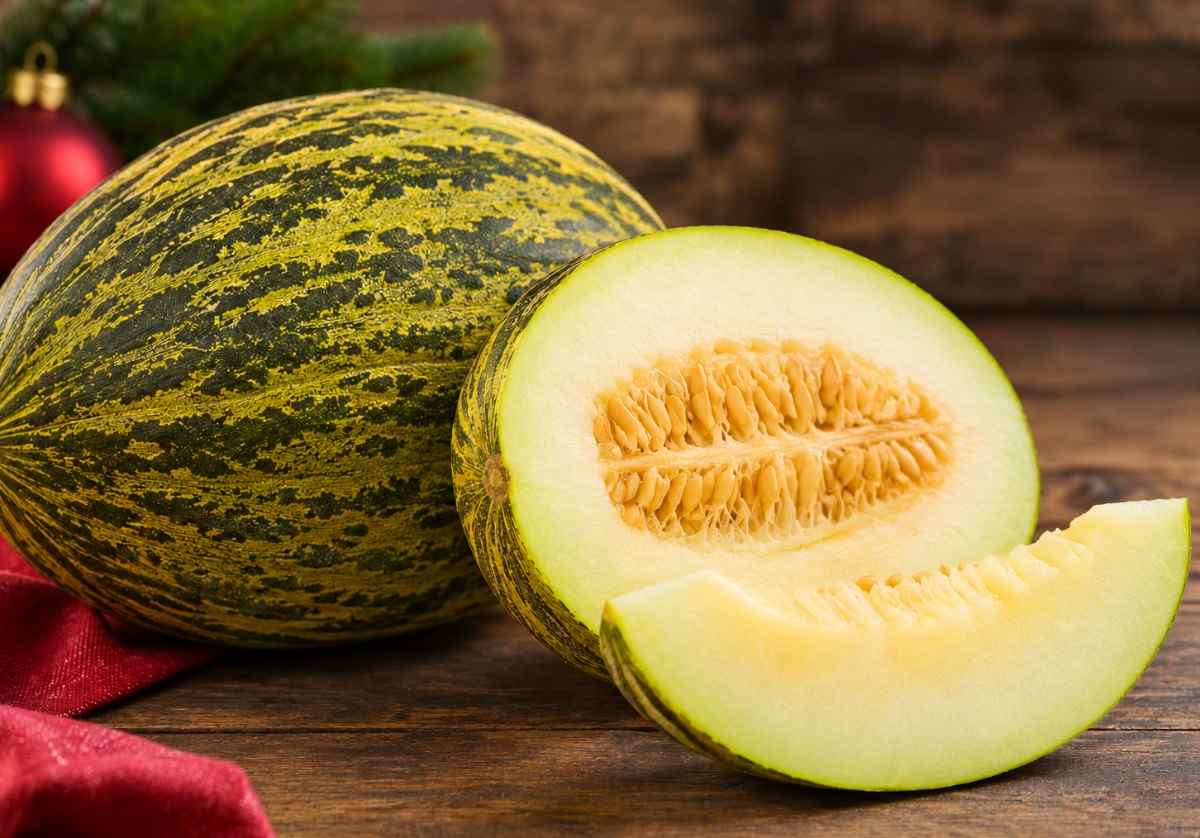
Santa Claus melon is a refreshing, naturally sweet fruit that stands out for its unusual green-and-yellow striped skin, juicy flesh, and excellent storage qualities. Also known as Christmas melon, Piel de Sapo or Toad skin melon, this specialty melon is enjoyed for its mild sweetness and crisp texture.
Beyond its delicious taste, Santa Claus melon provides water, vitamin C, potassium, folate, and other nutrients that contribute to a balanced diet. Its low calorie content and refreshing nature make it a good option for people looking for nutritious fruits to include in their daily meals.
Whether you want to learn about its nutritional value, potential health benefits, possible side effects, or the best ways to enjoy it, this guide covers everything you need to know.
What Is Santa Claus Melon?
Santa Claus melon, scientifically known as Cucumis melo, is a variety of winter melon belonging to the Cucurbitaceae family, which also includes cucumbers, pumpkins, and watermelons.
It is commonly called Piel de Sapo, a Spanish name meaning “toad skin.” The name describes its distinctive thick, green skin with yellow markings that resemble the appearance of a toad.
The melon is generally oval-shaped and has pale green to whitish flesh with a juicy, crisp texture. Its flavour is mildly sweet and somewhat similar to honeydew melon.
One interesting feature of Santa Claus melon is its excellent keeping quality. Under suitable storage conditions, it can remain fresh longer than many other melon varieties. This characteristic is one reason it is associated with Christmas and its alternative name, Christmas melon.
Key characteristics of Santa Claus melon:
- Scientific Name: Cucumis melo
- Common Names: Christmas melon and Piel de Sapo.
- Family: Cucurbitaceae.
- Origin: Traditionally associated with Spain.
- Appearance: Oval-shaped fruit with dark green and yellow-striped skin.
- Flesh: Pale green to whitish, juicy, and crisp.
- Taste: Mildly sweet and refreshing.
- Edible Portion: The inner flesh.
- Seeds: Usually removed before eating.
Santa Claus melon is generally eaten fresh, but it can also be added to fruit salads, smoothies, desserts, and refreshing summer drinks.
Nutrition Facts of Santa Claus Melon
The following is an approximate nutritional values per 100 grams of raw Piel de Sapo melon. Actual values may vary depending on the variety, growing conditions, and ripeness.
| Nutrient | Approximate Amount per 100 g |
|---|---|
| Calories | 36 kcal |
| Carbohydrates | 9.1 g |
| Protein | 0.5 g |
| Total Fat | 0.1 g |
| Dietary Fiber | 0.8 g |
| Natural Sugars | 8.1 g |
| Potassium | 228 mg |
| Vitamin C | 18 mg |
| Calcium | 6 mg |
| Magnesium | 10 mg |
| Phosphorus | 11 mg |
| Iron | 0.17 mg |
| Folate | 19 mcg |
| Vitamin B6 | 0.09 mg |
| Vitamin K | 2.9 mcg |
| Sodium | 18 mg |
Source: USDA FoodData Central-derived Piel de Sapo nutritional data.
20 Potential Health Benefits of Santa Claus Melon
1. Supports Immune Health: Santa Claus melon contains vitamin C, which helps support normal immune system function and the body’s natural defence mechanisms.
2. Promotes Hydration: Its high water content helps replenish body fluids and supports proper hydration.
3. Supports Digestive Health: Its dietary fibre contributes to healthy digestion and normal bowel movements.
4. Supports Heart Health: Its potassium content helps maintain normal heart function and healthy blood pressure.
5. Promotes Healthy Skin: Vitamin C supports collagen production, which helps maintain skin structure and elasticity.
6. Supports Muscle Function: The potassium and magnesium in Santa Claus melon contribute to normal muscle contraction and function.
7. Supports Nerve Function: Its potassium and magnesium content helps maintain normal nerve signalling.
8. Provides Antioxidants: Vitamin C acts as an antioxidant that helps protect cells against oxidative stress.
9. Supports Bone Health: It provides small amounts of magnesium, calcium, and vitamin K, which contribute to normal bone maintenance.
10. Supports Red Blood Cell Formation: Its folate content contributes to normal red blood cell production.
11. Supports Energy Metabolism: Vitamin B6 helps the body metabolise carbohydrates, proteins, and fats.
12. Helps With Weight Management: Its relatively low calorie content and high water content make it a satisfying alternative to calorie-dense snacks.
13. Helps Maintain Blood Pressure: Potassium contributes to blood pressure regulation by balancing the effects of sodium.
14. Supports Bowel Regularity: Its combination of water and dietary fibre can help support regular bowel movements.
15. Supports Collagen Formation: The vitamin C in Santa Claus melon helps the body produce collagen for healthy skin, bones, and connective tissues.
16. Supports Healthy Cell Growth: Folate plays an important role in DNA synthesis and normal cell division.
17. Helps Maintain Fluid Balance: Its potassium content contributes to maintaining normal fluid and electrolyte balance.
18. Contributes to Eye Health: Including Santa Claus melon in a varied diet adds nutrients that support overall nutritional health, although it is not a particularly rich source of vitamin A.
19. Satisfies Sweet Cravings: Its naturally sweet flavour makes it a refreshing alternative to many sugar-rich desserts.
20. Supports Overall Nutrition: Its combination of vitamin C, potassium, folate, and other nutrients contributes to several essential body functions.
10 Possible Side Effects of Santa Claus Melon
Santa Claus melon is generally safe for most people when eaten in moderate quantities. However, consuming large portions, eating contaminated fruit, or having an individual sensitivity may cause unwanted effects. Here are 10 possible side effects to be aware of.
1. Digestive Discomfort: Eating excessive amounts of Santa Claus melon may cause stomach discomfort or digestive disturbances in sensitive individuals.
2. Diarrhoea: Consuming large portions may contribute to loose stools in some people, particularly those with sensitive digestive systems.
3. Allergic Reactions: People with melon allergies may experience itching, hives, swelling, or other allergic symptoms after eating it.
4. Oral Allergy Syndrome: Individuals with pollen-related food allergies may experience itching or tingling in their mouth and throat after consuming fresh melon.
5. Blood Sugar Concerns: Santa Claus melon contains natural sugars and carbohydrates, which people with diabetes should consider when planning their meals.
6. Food Poisoning: Improperly washed, cut, or stored melon may contain harmful bacteria that can cause foodborne illness.
7. Abdominal Bloating: Eating large quantities at once may cause temporary bloating or a feeling of fullness.
8. Allergic Cross-Reactions: Some people allergic to certain pollens or related fruits may experience cross-reactive symptoms after consuming melon.
9. Potassium-Related Concerns: People with advanced kidney disease or potassium restrictions may need to limit their intake according to medical advice.
10. Stomach Discomfort From Overconsumption: Eating more Santa Claus melon than your digestive system tolerates may cause temporary abdominal discomfort.
How to Eat Santa Claus Melon?
Santa Claus melon is easy to prepare and can be enjoyed in several delicious ways. Its mild sweetness makes it suitable for both simple snacks and creative recipes.
Here are some simple ways to eat it:
- Fresh Slices: Cut the melon into slices, remove the seeds and rind, and enjoy the juicy flesh directly.
- Fruit Salad: Combine diced Santa Claus melon with strawberries, grapes, blueberries, and other seasonal fruits.
- Smoothies: Blend the melon with yoghurt, milk, or other fruits to prepare a refreshing smoothie.
- Fruit Juice: Blend the flesh with a little water and strain if desired for a refreshing drink.
- Melon Bowls: Cut the fruit into small cubes and serve it chilled as a light breakfast or snack.
- Yoghurt Topping: Add small melon pieces to plain Greek yoghurt for a naturally sweet combination.
- Frozen Melon Bites: Cut the flesh into cubes and freeze them for a refreshing summer snack.
- Desserts: Use the fruit in homemade fruit popsicles, chilled desserts, or fruit-based puddings.
- Salsa: Combine finely chopped melon with cucumber, mint, lime juice, and a little chilli for a fresh fruit salsa.
- Breakfast Topping: Add diced melon to oatmeal, cereal, or overnight oats.
Tips for Consuming Santa Claus Melon
A few simple practices can help you enjoy Santa Claus melon safely while getting the most out of its nutritional value.
- Choose a Ripe Melon: Look for a firm fruit with green and yellow markings and a slightly yellowing rind.
- Check the Weight: Choose a melon that feels heavy for its size.
- Smell Before Buying: A ripe melon may have a mild, pleasant fragrance.
- Wash Before Cutting: Scrub the outer surface under clean running water before slicing.
- Remove the Seeds: Scoop out the central seed cavity before eating.
- Remove the Rind: Eat the inner flesh rather than the tough outer skin.
- Enjoy It Fresh: Freshly cut melon offers a pleasant texture and flavour.
- Avoid Excessive Sugar: Avoid adding large amounts of sugar, flavoured syrup, or sweetened condensed milk.
- Combine With Other Fruits: Pair it with berries, apples, or other fruits to add variety to your diet.
- Maintain Portion Control: Enjoy a moderate serving instead of consuming an entire large melon at once.
Other Uses of Santa Claus Melon
Apart from eating it as a fresh fruit, Santa Claus melon can be used in different culinary preparations.
- Fruit Decorations: Melon balls and slices can be used to decorate fruit platters and dessert dishes.
- Smoothie Ingredients: Its mild sweetness makes it a useful ingredient in homemade fruit smoothies.
- Frozen Desserts: Frozen melon cubes can be blended into homemade fruit sorbets.
- Fruit Infused Water: Small pieces of melon can be added to drinking water for a light fruity flavour.
- Dessert Garnishing: Thin melon slices can be used to garnish cakes, puddings, and chilled desserts.
- Party Fruit Platters: Its attractive green-striped rind and pale flesh make it a good addition to fruit arrangements.
- Fruit Skewers: Cubes of Santa Claus melon can be combined with grapes, strawberries, and pineapple on fruit skewers.
- Chilled Soups: Blended melon can be used as a base for cold fruit soups with mint or lime.
- Homemade Popsicles: Pureed melon can be frozen in moulds to make simple fruit popsicles.
- Breakfast Bowls: Diced melon can be added to breakfast bowls with yoghurt, nuts, and seeds.
How Much Santa Claus Melon Can You Eat in a Day?
There is no officially established daily serving recommendation specifically for Santa Claus melon.
However, approximately 150–200 grams per day can be a reasonable fruit portion for many healthy adults. This amount provides a refreshing snack along with vitamin C, potassium, water, and other nutrients.
You can adjust the portion according to your dietary needs, activity level, and overall fruit consumption.
Suggested Serving Sizes:
| Individual | Suggested Portion |
|---|---|
| Healthy adults | 150–200 g |
| Children | 50–100 g |
| Older adults | 100–150 g |
| People managing blood sugar | Individualised portion |
| People with kidney-related dietary restrictions | Follow medical advice |
These are practical serving suggestions, not medically established limits. Avoid eating excessive quantities in one sitting, and remember that fruit should be part of a varied diet rather than your only source of nutrition.
Best Time to Eat Santa Claus Melon
Santa Claus melon can be enjoyed at different times of the day because it is a light and refreshing fruit.
Here are some convenient times to include it in your diet:
- In the Morning: Enjoy a serving alongside breakfast for a refreshing start to the day.
- As a Mid-Morning Snack: Its water content makes it a convenient snack between meals.
- In the Afternoon: Chilled melon can be a refreshing option during warm weather.
- After Physical Activity: Its water and potassium content can contribute to fluid and electrolyte intake alongside appropriate hydration.
- As an Evening Snack: A moderate serving can be enjoyed as a naturally sweet alternative to heavier desserts.
There is no scientific evidence that eating Santa Claus melon at one particular time provides greater health benefits than eating it at another.
Who Should Eat Santa Claus Melon?
- People Looking for Healthy Snacks: Individuals who want a naturally sweet, relatively low-calorie snack can include Santa Claus melon in their diet.
- People Who Need More Hydration: Those looking to increase their fluid intake can enjoy its juicy flesh alongside regular water consumption.
- People Interested in Heart Health: Individuals following a heart-conscious eating pattern may benefit from its potassium content.
- People Looking After Their Skin: Those who want to include vitamin C-rich foods in their diet can enjoy Santa Claus melon.
- People With Active Lifestyles: Physically active individuals can enjoy it as part of a varied diet that supports normal muscle function.
- People Seeking Digestive Support: Individuals looking to increase fruit and water intake may find it a useful addition to their meals.
- Older Adults: Older individuals who enjoy soft, juicy fruits can include ripe Santa Claus melon in their daily fruit choices.
- People Following a Balanced Diet: Anyone looking to increase their variety of fruits and micronutrient intake can enjoy this melon in moderate quantities.
Who Should Not Eat Santa Claus Melon?
Although Santa Claus melon is generally safe, certain individuals may need to avoid it or consult a healthcare professional before consuming it.
- People With Melon Allergies: Individuals with a known melon allergy should avoid Santa Claus melon to prevent allergic reactions.
- People With Severe Pollen-Food Allergy Reactions: Those who experience allergic reactions to melon through pollen cross-reactivity should seek medical advice before trying it.
- People With Advanced Kidney Disease: Individuals following potassium restrictions may need to limit their intake according to their prescribed diet.
- People With Specific Blood Sugar Restrictions: Those managing diabetes should account for its carbohydrate and natural sugar content when planning meals.
- People With Sensitive Digestive Systems: Individuals who experience bloating or digestive discomfort after eating melon may need smaller portions or should avoid it if symptoms persist.
- People With Food Intolerances: Anyone who repeatedly experiences digestive symptoms after consuming melon should avoid it until the cause is understood.
- People Eating Spoiled Melon: Anyone should avoid fruit with mould, rotten areas, an unpleasant smell, or unusual texture.
- People With Suspected Food Poisoning: Individuals experiencing symptoms after eating contaminated melon should avoid further consumption and seek medical advice when necessary.
How to Store Santa Claus Melon?
- Store Unripe Melons: Keep an unripe whole melon at room temperature until it reaches the desired ripeness.
- Refrigerate Ripe Melons: Once ripe, store the whole melon in the refrigerator to help maintain its freshness.
- Use an Airtight Container: Place cut melon pieces in a clean, covered container before refrigerating.
- Keep Away From Raw Foods: Store cut melon separately from raw meat, seafood, and other foods that could cause cross-contamination.
- Avoid Leaving Cut Melon Outside: Do not leave cut melon at room temperature for extended periods.
- Use Within a Few Days: For good quality, consume refrigerated cut melon within approximately 2–4 days.
- Check Before Eating: Discard melon that develops mould, an unpleasant smell, sliminess, or signs of spoilage.
- Avoid Freezing Whole Melons: If you want to freeze the fruit, remove the rind and seeds and freeze the flesh in small pieces.
Precautions and Interactions
Santa Claus melon is a nutritious fruit, but following basic food safety and dietary precautions is important.
- Wash the Outer Skin: Always wash and scrub the rind under running water before cutting because bacteria on the outside can transfer to the flesh.
- Check for Allergies: Avoid the fruit if you have a known allergy to melon or experience allergic symptoms after eating it.
- Monitor Blood Sugar: People with diabetes should account for its natural sugars and carbohydrates when planning meals.
- Consider Potassium Intake: People with kidney disease or potassium restrictions should discuss suitable portions with their healthcare provider.
- Avoid Spoiled Fruit: Do not consume melon that has developed mould, an unusual smell, or a slimy texture.
- Maintain Refrigeration: Refrigerate cut melon promptly to reduce the risk of bacterial growth.
- Prevent Cross-Contamination: Use clean knives, cutting boards, and utensils when preparing the fruit.
- Watch Portion Sizes: Avoid consuming unusually large amounts in one sitting, especially if you have digestive sensitivity.
- Be Careful With Food Allergies: People with pollen-related food allergies should be aware of possible cross-reactions.
- Follow Individual Dietary Advice: If you have a medical condition requiring dietary restrictions, follow your healthcare professional’s recommendations.
FAQ’s
What Is Santa Claus Melon Good For?
Santa Claus melon provides vitamin C, potassium, folate, and water, supporting hydration, immune function, and overall nutrition.
Is Santa Claus Melon Good for Weight Loss?
Yes, its relatively low calorie content and high water content make it a suitable snack for weight-management diets.
Is Santa Claus Melon High in Sugar?
It contains approximately 8.1 grams of natural sugar per 100 grams, although the amount varies with ripeness.
Can Diabetics Eat Santa Claus Melon?
Yes, people with diabetes can generally enjoy moderate portions while monitoring carbohydrate intake and blood sugar levels.
Can You Eat Santa Claus Melon Every Day?
Yes, most healthy people can eat it daily in moderate quantities as part of a balanced diet.
Why Is Santa Claus Melon Called Christmas Melon?
It gets this name because it has a longer storage life than many other melons and can remain available during the Christmas season.
Is Santa Claus Melon Better Than Honeydew?
Both are nutritious fruits. Santa Claus melon has a crisp texture, while honeydew is generally softer and sweeter.
Can Pregnant Women Eat Santa Claus Melon?
Yes, pregnant women can generally enjoy properly washed and freshly cut Santa Claus melon as part of a balanced diet.
Is Santa Claus Melon Good for Skin?
Its vitamin C content supports collagen production, which helps maintain healthy skin.
How Do You Know When Santa Claus Melon Is Ripe?
A ripe melon generally feels heavy for its size, has a slightly yellowing rind, and may develop a mild sweet fragrance.
Can You Eat Santa Claus Melon at Night?
Yes, it can be enjoyed as a light evening snack. There is no scientific evidence that eating it at night is harmful.
Is Santa Claus Melon Available in India?
It may be available through selected specialty fruit sellers, premium supermarkets, and online fruit retailers, depending on the season and location.
Can Santa Claus Melon Be Stored in the Refrigerator?
Yes, whole ripe melons and freshly cut pieces can be refrigerated to maintain freshness and quality.
What Does Santa Claus Melon Taste Like?
Santa Claus melon has a mildly sweet, refreshing flavour with crisp, juicy flesh. Its taste is often compared to honeydew melon.
Can You Eat Santa Claus Melon Seeds?
The seeds are generally removed when preparing the fruit. There is little nutritional or safety research specifically about eating Santa Claus melon seeds, so the flesh is the preferred edible portion.
Is Santa Claus Melon Good for Hydration?
Yes. Its juicy flesh contributes to daily fluid intake, although drinking sufficient water remains important.
Is Santa Claus Melon safe for children?
Yes, Santa Claus melon is generally safe for children when served ripe, washed, and cut into small, age-appropriate pieces to reduce choking risk.
Sources / References:
Disclaimer:
This article is for informational purposes only and should not replace professional medical advice, diagnosis, or treatment. Consult a qualified healthcare professional for individual dietary recommendations.
Also Read: