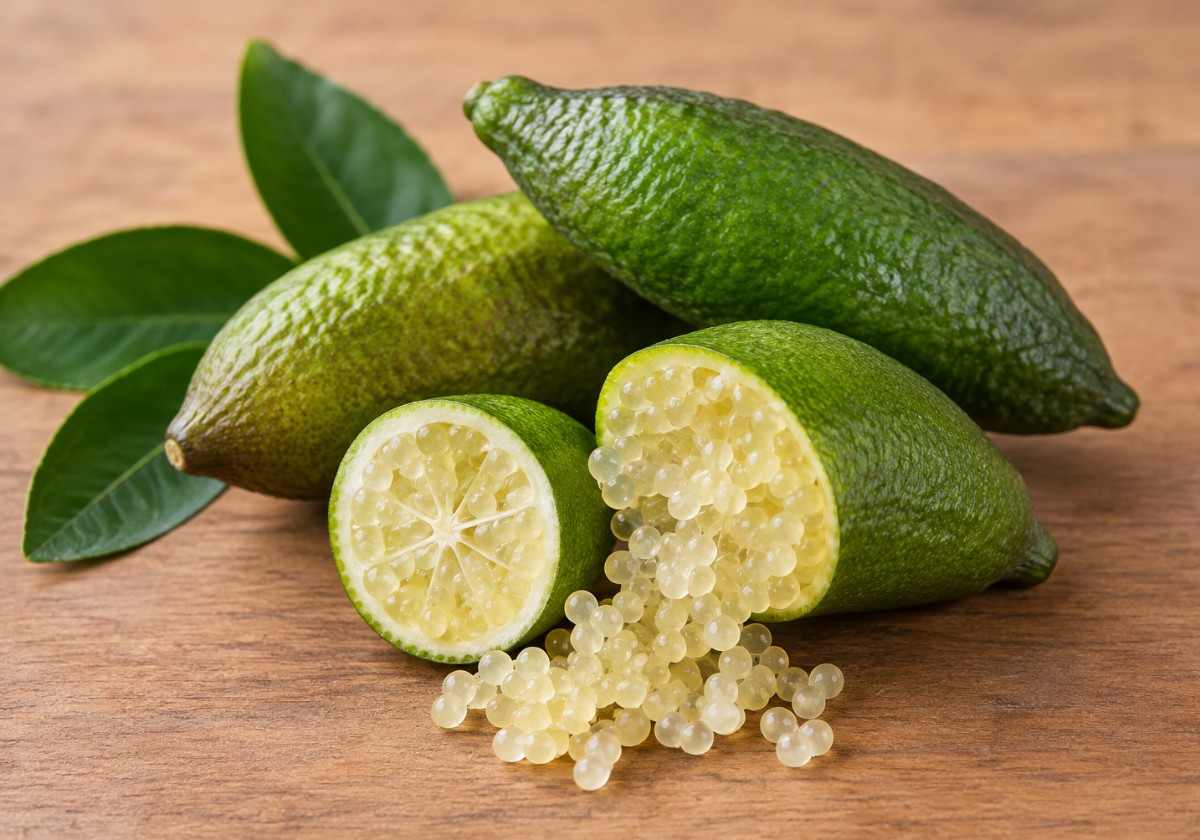
Finger lime is a unique Australian citrus fruit that looks like a tiny cucumber but contains beautiful, juice-filled pearls inside. Often called citrus caviar, this unusual fruit has become popular in gourmet cooking because of its refreshing tangy flavour, attractive appearance, and interesting texture.
Beyond its culinary appeal, finger lime contains vitamin C, dietary fibre, minerals, and plant compounds such as flavonoids and phenolics. These nutrients contribute to several important functions in the body, including immune support, healthy digestion, and protection against oxidative stress.
We will explore what finger lime is, its nutrition facts, potential health benefits, possible side effects, ways to eat it, recommended daily intake, storage tips, and precautions.
What Is Finger Lime?
Finger lime (Citrus australasica) is a small, elongated citrus fruit native to the rainforests and subtropical regions of eastern Australia. It belongs to the Rutaceae family, which also includes oranges, lemons, and regular limes.
The fruit gets its name from its long, finger-like shape. Depending on the variety, its outer skin can be green, yellow, pink, purple, or reddish.
What makes finger lime particularly special is its interior. Instead of the usual citrus segments, it contains tiny, round juice-filled vesicles that resemble caviar. These edible pearls burst in your mouth, releasing a refreshing, sour citrus flavour.
Taste and Texture of Finger Lime
Finger lime has a tangy, slightly sour taste similar to lime or lemon, sometimes with subtle floral or herbal notes. Its tiny pearls provide a juicy, popping sensation that makes eating this fruit a different experience from ordinary citrus fruits.
Popular Names of Finger Lime
- Citrus caviar
- Australian finger lime
- Lemon caviar
- Caviar lime
- Bush caviar
- Finger lemon
Finger lime is commonly used in seafood dishes, salads, desserts, sauces, drinks, and gourmet food preparations.
Nutrition Facts of Finger Lime
The following is an approximate reference per 100 grams of edible fruit. The exact nutritional composition can vary depending on the cultivar, growing conditions, ripeness, and edible portion.
| Nutrient | Approximate amount per 100 g |
|---|---|
| Calories | 30–50 kcal |
| Carbohydrates | 5–10.5 g |
| Protein | 0.7–1.6 g |
| Fat | 0.2–1 g |
| Dietary Fibre | 2.8–7.2 g |
| Natural Sugars | 1.2–1.7 g |
| Vitamin C | 23–88 mg |
| Calcium | 33–50 mg |
| Magnesium | 31–140 mg |
| Potassium | 102–290 mg |
| Iron | 0.6–0.8 mg |
| Zinc | 0.28–0.85 mg |
Note: These figures are drawn from different published analyses and reference datasets, not one standardized nutrient profile. Actual values may differ considerably between varieties. (ScienceDirect)
20 Proven Health Benefits of Finger Lime
Here are 20 potential health benefits of eating finger lime.
1. Supports Immune Function: Finger lime contains vitamin C, which supports the normal functioning of immune cells and helps the body defend itself against infections.
2. Provides Antioxidant Protection: Its vitamin C and naturally occurring phenolic compounds help protect cells against oxidative stress caused by free radicals.
3. Supports Healthy Digestion: The dietary fibre in finger lime contributes to digestive health and helps maintain regular bowel movements.
4. Promotes Collagen Production: Vitamin C plays an essential role in collagen formation, which helps maintain healthy skin, blood vessels, cartilage, and connective tissues.
5. Supports Healthy Skin: Its vitamin C content helps protect skin cells from oxidative damage and supports the natural processes involved in skin repair.
6. Helps Maintain Healthy Gums: Vitamin C is necessary for healthy gum tissue, and adequate intake helps reduce the risk of vitamin C deficiency-related gum problems.
7. Supports Iron Absorption: Vitamin C improves the absorption of non-haem iron from plant-based foods such as beans, lentils, and leafy vegetables.
8. Contributes to Heart Health: Its potassium content contributes to normal blood pressure regulation, while its plant compounds are being investigated for cardiovascular benefits.
9. Supports Normal Blood Vessel Function: Vitamin C contributes to collagen formation, which is important for maintaining the structure of blood vessels.
10. Helps Maintain Healthy Bones: Vitamin C supports collagen formation in bone tissue, while minerals such as calcium and magnesium contribute to normal bone structure.
11. Supports Wound Healing: Adequate vitamin C intake helps the body produce collagen, which is important for normal wound healing.
12. Supports Healthy Brain Function: Finger lime contains plant compounds that are being investigated for their potential effects on inflammation and oxidative stress in laboratory research.
13. Helps Maintain Healthy Cells: Antioxidant compounds in finger lime may help protect cellular components from oxidative damage.
14. Supports Muscle Function: Its potassium and magnesium content contributes to normal muscle contraction and function.
15. Supports Nerve Function: Potassium and magnesium are involved in nerve signalling and the transmission of electrical impulses throughout the body.
16. Contributes to Hydration: Finger lime contains water, and eating it alongside other water-rich foods can contribute to overall daily fluid intake.
17. Supports Gut Regularity: Its dietary fibre helps add bulk to stools and supports normal bowel movements.
18. May Support Metabolic Health: Finger lime contains polyphenols that have shown interesting biological activities in preliminary laboratory studies, although human metabolic benefits have not been established.
19. Provides Nutrients With Relatively Few Calories: Finger lime can add a refreshing citrus flavour to meals without requiring large amounts of added sugar or calorie-dense sauces.
20. Adds Variety to a Healthy Diet: Its vitamin C, fibre, and plant compounds make it an interesting addition to a varied diet containing fruits and vegetables.
10 Side Effects of Finger Lime
Finger lime is generally safe for most people when eaten in normal food quantities. However, its acidity, citrus compounds, and fibre may cause discomfort in certain individuals. Here are 10 possible side effects to know about.
1. Acid Reflux: The natural acidity of finger lime may trigger heartburn or worsen acid reflux symptoms in people who are sensitive to citrus fruits.
2. Stomach Irritation: Eating too much finger lime may cause stomach discomfort, particularly in people with sensitive digestive systems.
3. Allergic Reactions: Some individuals may experience itching, skin rashes, swelling, or other allergic symptoms after consuming citrus fruits.
4. Mouth Irritation: Its sour and acidic juice may cause a burning sensation or irritation in people with mouth ulcers or sensitive oral tissues.
5. Tooth Enamel Erosion: Frequent exposure to acidic citrus foods may gradually weaken tooth enamel and increase dental sensitivity.
6. Diarrhoea: Consuming large quantities of fruit may cause loose stools or digestive discomfort in people who are sensitive to fibre or acidic foods.
7. Bloating and Gas: Eating more fibre than your digestive system is accustomed to may cause temporary bloating, gas, or abdominal discomfort.
8. Nausea: The strong sour flavour and acidity may cause nausea in some individuals, especially when consumed in excessive amounts.
9. Skin Irritation From Peel Oils: Citrus peel oils may irritate sensitive skin in some people, particularly if concentrated extracts or essential oils are applied directly.
10. Increased Symptoms of Existing Digestive Conditions: People with acid reflux or other acid-sensitive digestive symptoms may experience discomfort after eating finger lime.
Important: These are possible reactions associated with acidic citrus foods and individual sensitivities, not a list of side effects established specifically through finger lime clinical trials. If you experience swelling of the throat, breathing difficulties, or a severe allergic reaction, seek emergency medical attention. NIDDK+3
How to Eat Finger Lime?
Finger lime is easy to eat once you know how to open it. Its tiny juice-filled pearls are the edible highlight of the fruit. Follow these simple steps:
- Wash the Fruit: Rinse the finger lime thoroughly under clean running water to remove dirt and surface impurities.
- Cut Lengthwise: Place the fruit on a clean cutting board and slice it lengthwise using a sharp knife.
- Remove the Pearls: Gently squeeze or scoop the juicy pearls out of the skin using your fingers or a small spoon.
- Remove the Seeds: Check for seeds and remove them if you prefer a smoother eating experience.
- Enjoy Fresh: Eat the pearls directly or add them to your favourite dishes.
Popular Ways to Eat Finger Lime
- Fresh Fruit: Enjoy the juicy pearls directly as a refreshing citrus snack.
- Fruit Salads: Sprinkle finger lime pearls over mango, kiwi, pineapple, or berries.
- Seafood Dishes: Add them to grilled fish, prawns, oysters, or sushi for a tangy flavour.
- Salad Dressings: Mix the pearls into homemade citrus dressings.
- Desserts: Use them as a topping for yoghurt, ice cream, cheesecakes, and puddings.
- Drinks: Add them to sparkling water, mocktails, lemonade, or fruit-based drinks.
- Salsas: Combine finger lime with chopped tomatoes, onions, coriander, and other ingredients for a refreshing salsa.
For the best texture, add finger lime pearls just before serving. This helps preserve their characteristic popping sensation.
Tips for Consuming Finger Lime
A few simple practices can help you enjoy finger lime while preserving its flavour and freshness.
- Choose Fresh Fruits: Select firm finger limes with smooth, healthy-looking skin.
- Check the Colour: Choose fruits with the characteristic colour of their particular variety.
- Wash Before Cutting: Clean the outer skin before opening the fruit.
- Start With Small Portions: If you have never eaten finger lime, try a small quantity first.
- Eat the Pearls Fresh: Fresh pearls generally offer the best flavour and texture.
- Avoid Excessive Heating: Add the pearls after cooking because high heat can damage their delicate texture.
- Combine With Other Foods: Pair finger lime with vegetables, seafood, yoghurt, or other fruits.
- Avoid Added Sugar: Enjoy its natural tangy flavour instead of adding unnecessary sweeteners.
- Check for Spoilage: Avoid fruits with mould, unpleasant odours, or signs of decay.
- Maintain Variety: Include finger lime as one part of a balanced diet rather than relying on it for specific health benefits.
Other Uses of Finger Lime
1. Food Garnishing: Finger lemon pearls are used to decorate seafood, salads, appetisers, and gourmet dishes.
2. Dessert Decoration: Chefs use its colourful pearls to add a refreshing citrus finish to cakes, mousses, puddings, and ice creams.
3. Beverage Preparation: Finger lime is added to mocktails, sparkling water, lemonades, and speciality beverages.
4. Seafood Accompaniment: Its tangy pearls complement oysters, prawns, salmon, sushi, and grilled fish.
5. Homemade Sauces: The fruit can be incorporated into citrus sauces, marinades, salsas, and salad dressings.
6. Citrus Zest: The outer peel can be used in small amounts to add aromatic citrus flavour to suitable recipes.
7. Flavoured Oils: Finger lemon zest can be incorporated into culinary oil preparations to provide a distinctive citrus aroma.
8. Fruit Preserves: Finger lime can be used in speciality jams, marmalades, jellies, and fruit-based preserves.
9. Gourmet Food Products: Its unique appearance and flavour make it a popular ingredient in speciality food products and restaurant preparations.
10. Food Research: Researchers are investigating finger lemon extracts and their phenolic compounds for potential applications in functional foods and natural food ingredients.
How Much Finger Lime Can You Eat in a Day?
There is currently no scientifically established daily serving recommendation specifically for finger lime.
For most healthy adults, a small serving of approximately 1–2 whole fruits can be a reasonable starting point, depending on their size and individual tolerance.
Because finger limes vary considerably in size, this is a practical serving suggestion rather than an official nutritional or medical recommendation.
Consider the following:
- Start with a small portion if you are trying finger lemon for the first time.
- Eat it alongside other foods if its sourness bothers your stomach.
- Avoid excessive consumption if you experience heartburn or digestive discomfort.
- Include other fruits and vegetables to maintain nutritional variety.
- Reduce your intake if you notice any unwanted reactions.
Moderation is especially important for people who are sensitive to acidic foods.
Best Time to Eat Finger Lime
Here are some convenient ways to include it in your daily routine.
- During Breakfast: Add a few pearls to fruit salads, yoghurt, or breakfast bowls.
- With Lunch: Use finger lime as a topping for salads, seafood, or vegetable dishes.
- As an Afternoon Snack: Enjoy a small portion with other fresh fruits.
- With Dinner: Add it to grilled fish, vegetables, or homemade sauces.
- Before or After Exercise: Include it in a balanced snack or meal if you enjoy its refreshing taste.
People with acid reflux may prefer to avoid finger lemon if it triggers symptoms, especially close to bedtime.
Who Should Eat Finger Lime?
Finger lime can be a useful addition to a varied diet for people who enjoy citrus fruits and want to try something different.
1. Health-Conscious Individuals: People looking to include a wider variety of fruits and plant-based nutrients in their diets may enjoy finger lemon.
2. People Seeking Vitamin C Foods: Individuals who want additional dietary sources of vitamin C can include finger lime alongside other vitamin C-rich fruits and vegetables.
3. People Following a Balanced Diet: Its natural flavour and relatively low calorie content make it a useful ingredient in different healthy recipes.
4. People Who Enjoy Citrus Fruits: Individuals who like lemons, limes, and other tangy fruits may appreciate its refreshing flavour.
5. Seafood Lovers: People who regularly prepare fish, prawns, or oysters can use finger lemon as a citrus garnish.
6. People Interested in Dietary Fibre: Those looking to include more fibre-containing fruits in their diet may benefit from adding finger lime in suitable portions.
7. Vegetarians and Vegans: Finger lemon is a plant-based fruit that can be included in vegetarian and vegan meals.
8. People Interested in New Foods: Anyone who enjoys exploring different fruits, flavours, and culinary ingredients can try finger lemon.
Who Should Not Eat Finger Lime?
Although finger lemon is generally suitable as a food for many people, certain individuals should avoid it or consume it cautiously.
1. People With Citrus Allergies: Anyone with a confirmed allergy to finger lemon should avoid eating it to prevent allergic reactions.
2. People With Acid Reflux: Individuals whose heartburn or reflux symptoms are triggered by citrus fruits should limit or avoid finger lime.
3. People With Sensitive Teeth: Those experiencing dental sensitivity may find its acidic juice uncomfortable.
4. People With Mouth Ulcers: Individuals with painful mouth sores may experience additional irritation from its sour juice.
5. People With Sensitive Stomachs: Anyone who develops stomach discomfort after eating acidic fruits should start cautiously or avoid it if symptoms persist.
6. People With Existing Food Intolerances: Individuals who have previously experienced digestive problems after consuming citrus fruits should consider their personal tolerance.
7. People With a History of Severe Food Allergies: Anyone with a history of serious food reactions should consult an allergist before trying an unfamiliar citrus fruit if there is a concern about cross-reactions.
8. Young Children Who Cannot Safely Handle the Fruit: Whole fruits and small pieces should be prepared appropriately to reduce choking risks. Caregivers should supervise young children while eating.
How to Store Finger Lime?
1. Refrigerate Fresh Fruits: Store fresh finger lemons in the refrigerator to slow down moisture loss and spoilage.
2. Use an Airtight Container: Keep cut or opened finger lemons in a clean, airtight food container to protect them from drying out and absorbing other food odours.
3. Keep Them Dry: Avoid storing wet fruits because excess moisture can encourage mould growth.
4. Avoid Direct Sunlight: Keep finger limes away from direct sunlight and excessive heat.
5. Separate Damaged Fruits: Remove mouldy, leaking, or spoiled fruits to prevent problems with the remaining fruits.
6. Store Extracted Pearls Properly: Place freshly removed pearls in a covered container and refrigerate them promptly.
7. Freeze for Longer Storage: Extracted pearls can be frozen in a suitable freezer-safe container, although their texture may change after thawing.
8. Check Before Eating: Inspect stored fruit for mould, unusual softness, unpleasant smells, or other signs of spoilage.
Precautions and Interactions
Finger lime is a food rather than a medicinal product, but a few precautions can help you enjoy it safely.
1. Check for Allergies: Avoid finger lemon if you have a known allergy to this fruit or have experienced an allergic reaction after consuming it.
2. Be Careful With Acid Reflux: Its acidic nature may trigger heartburn in people sensitive to citrus fruits.
3. Protect Your Teeth: Rinse your mouth with plain water after eating acidic fruits and avoid brushing immediately afterward.
4. Wash Before Consumption: Always wash the outer skin thoroughly before cutting the fruit.
5. Avoid Spoiled Fruits: Do not consume finger limes that show mould, unusual discoloration, or unpleasant smells.
6. Avoid Excessive Consumption: Eating large quantities may cause digestive discomfort in sensitive individuals.
7. Be Careful With Concentrated Extracts: Finger lemon extracts and essential oils are different from the whole fruit. Do not consume concentrated essential oils unless specifically advised by a qualified professional.
8. Consider Existing Medical Conditions: People with digestive conditions that worsen with acidic foods should consider their individual tolerance.
9. Check Medication Concerns: There is insufficient clinical evidence to establish specific medication interactions with ordinary finger lime servings. If you take regular medication and have concerns about citrus products, consult your pharmacist or healthcare professional.
10. Introduce It Gradually: If you have never eaten finger lemon, begin with a small quantity and observe how your body responds.
FAQ’s
What Is Finger Lime Good For?
Finger lemon provides vitamin C, dietary fibre, and antioxidant plant compounds that support normal immune function, digestion, and overall health.
What Does Finger Lime Taste Like?
Finger lemon has a tangy, slightly sour citrus flavour similar to lemon or lime. Its tiny juice-filled pearls create a refreshing popping sensation.
Is Finger Lime Rich in Vitamin C?
Yes, finger lemon contains vitamin C, which supports immune function, collagen production, and iron absorption.
Can You Eat Finger Lime Every Day?
Yes, most people can enjoy finger lemon daily in moderate food quantities, provided they do not have citrus allergies or experience digestive discomfort.
Is Finger Lime Good for Weight Loss?
Finger lemon is relatively low in calories and can add flavour to healthy meals. However, there is no scientific evidence that it directly burns fat or causes weight loss.
Is Finger Lime Good for Skin?
Yes, its vitamin C content supports collagen production and helps protect cells against oxidative stress, contributing to normal skin health.
Can You Eat Finger Lime Seeds?
Finger lemon seeds are not usually eaten because most people prefer the juicy pearls. You can remove the seeds before serving.
Is Finger Lime Safe During Pregnancy?
Finger lemon can generally be enjoyed during pregnancy as a properly washed fruit in normal food quantities. Pregnant women should avoid it if they have a citrus allergy or experience digestive discomfort.
Is Finger Lime Available in India?
Finger lemon is not widely available in regular Indian markets, but it may be found through speciality fruit suppliers, gourmet stores, and selected online retailers.
Can You Grow Finger Lime at Home?
Yes, finger lemon can be grown at home in suitable climates. It requires well-drained soil, adequate sunlight, and regular but controlled watering.
What Is the Difference Between Finger Lime and Regular Lime?
Finger lime is an elongated fruit containing tiny juice-filled pearls, while regular lime is round and contains conventional citrus segments. Both have a tangy flavour.
Can Finger Lime Help With Digestion?
Finger lemon contains dietary fibre, which supports bowel regularity and normal digestive function when consumed as part of a balanced diet.
Can You Freeze Finger Lime Pearls?
Yes, finger lemon pearls can be frozen in an airtight, freezer-safe container. Their texture may become softer after thawing, but they can still be used in drinks, sauces, and desserts.
Why Is Finger Lime Called Citrus Caviar?
Finger lime is called citrus caviar because its pulp contains small, round, juice-filled pearls that resemble fish caviar.
Is Finger Lime Better Than Regular Lime?
Both fruits provide citrus flavour and vitamin C. Finger lemon is particularly popular for its caviar-like texture, while regular lime is more commonly used for juice.
Is Finger Lime Safe for Children?
Yes, finger lemon is generally safe for children in small portions. Remove seeds if needed and supervise young children while eating.
Why Are Finger Limes Expensive?
Finger lemons are expensive due to limited availability, careful harvesting, and high demand for gourmet dishes.
Is Finger Lime Healthy?
Yes, finger lemon contains vitamin C, fibre, potassium, and antioxidants that support overall health.
Is Finger Lime Hard to Grow?
Finger lemon requires suitable temperatures, well-drained soil, sunlight, and regular care, making it moderately challenging to grow.
Where Can We Buy Finger Limes?
You can buy finger limes from speciality fruit stores, gourmet markets, online retailers, and selected citrus growers.
What Is Another Name for Finger Limes?
Finger lime is also called Australian finger lime, citrus caviar, caviar lime, and lemon caviar.
Sources / References:
Disclaimer:
This article is intended for educational and informational purposes only. It does not replace professional medical advice, diagnosis, or treatment. Consult a qualified healthcare professional if you have allergies, existing medical conditions, or concerns about consuming finger lime.
Also Read: