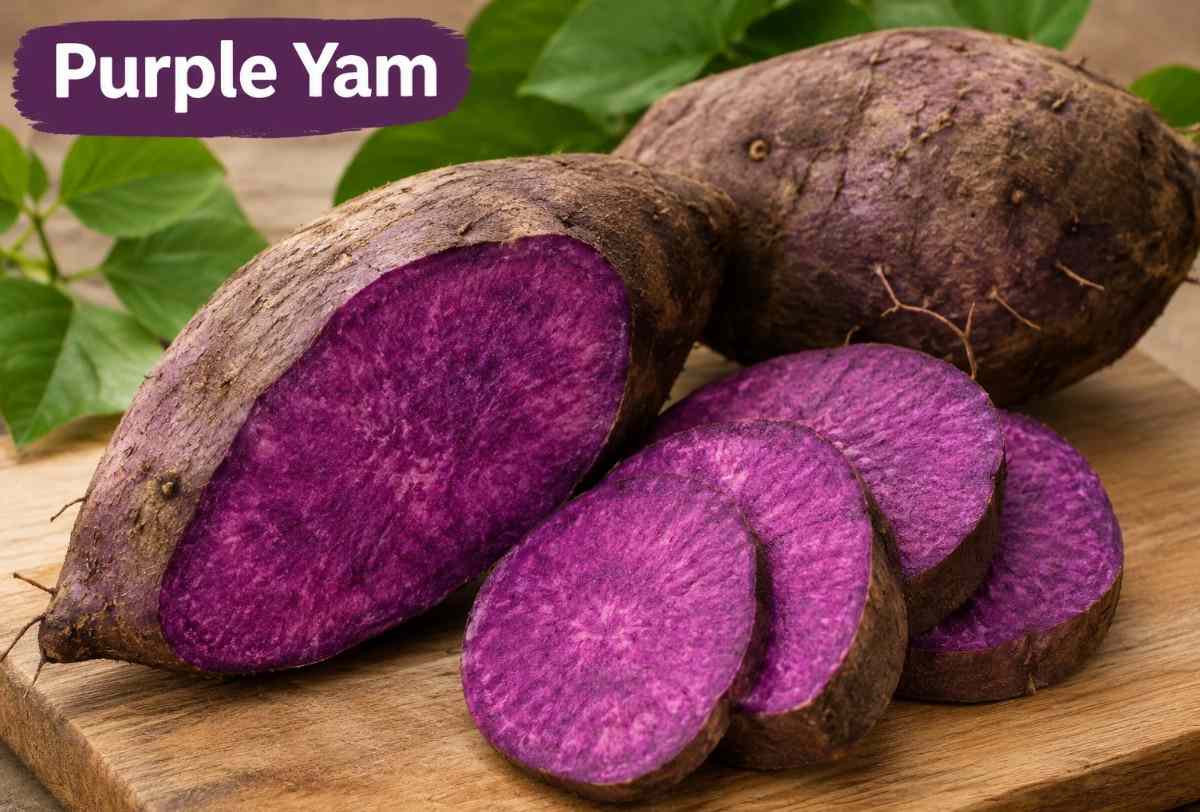
Purple yam is a colorful, starchy root vegetable known for its vibrant violet flesh, naturally sweet flavor, and nutritional value. Popular in Asian and Pacific cuisines, it is enjoyed in everything from traditional vegetable dishes to cakes, puddings, and other desserts.
Also known as ube or Dioscorea alata, purple yam contains carbohydrates, dietary fiber, minerals, and naturally occurring plant compounds called anthocyanins. These compounds give the vegetable its distinctive purple color and have attracted scientific interest because of their antioxidant properties.
In this guide, we explore what purple yam is, its nutrition facts, 20 potential health benefits, possible side effects, cooking methods, and precautions.
What Is Purple Yam?
Purple yam is an edible underground tuber that belongs to the yam family, Dioscoreaceae. Its scientific name is Dioscorea alata. It is widely grown in tropical and subtropical regions, particularly in Southeast Asia, India, and the Pacific Islands.
The vegetable has rough, brownish skin and flesh that ranges from lavender to deep purple. Its color comes mainly from anthocyanins, a group of naturally occurring plant pigments also found in blueberries, blackberries, and purple cabbage.
Purple yam is commonly called ube in the Philippines and ratalu in parts of India. It is sometimes confused with purple sweet potatoes, but the two are different vegetables.
Purple yam has a mildly sweet, earthy flavor and a soft, creamy texture after cooking. It can be boiled, steamed, roasted, baked, or mashed.
It is particularly popular in Filipino cuisine, where it is used to prepare ube halaya, ice cream, cakes, pastries, and other traditional desserts. In India, purple yam is also used in vegetable curries, fried snacks, and regional dishes.
Nutritionally, purple yam is primarily a carbohydrate-rich food. It also provides fiber, potassium, vitamin C, and beneficial plant compounds.
Nutrition Facts of Purple Yam
The following is an approximate nutritional information for 100 grams of cooked yam. The exact nutritional composition varies depending on the variety, growing conditions, maturity, and cooking method.
| Nutrient | Approximate amount per 100 g |
|---|---|
| Calories | 116 kcal |
| Carbohydrates | 27.5 g |
| Dietary Fiber | 3.9 g |
| Protein | 1.5 g |
| Total Fat | 0.2 g |
| Potassium | 670 mg |
| Vitamin C | 12–13 mg |
| Calcium | 17 mg |
| Iron | 0.5 mg |
| Magnesium | 21 mg |
| Phosphorus | 55 mg |
20 Potential Health Benefits of Purple Yam
- Rich in Antioxidants: Purple yam contains anthocyanins and phenolic compounds that help protect cells against oxidative stress.
- Supports Digestive Health: Its dietary fiber helps promote regular bowel movements and supports normal digestion.
- Supports Heart Health: Purple yam provides potassium, a mineral that helps maintain normal blood pressure and cardiovascular function.
- Provides Natural Energy: Its complex carbohydrates provide glucose that the body uses as fuel for everyday activities.
- Supports Gut Health: Its dietary fiber can help nourish beneficial gut bacteria and contribute to a healthy intestinal environment.
- Supports Immune Function: Ube contains vitamin C, which contributes to normal immune system function and cellular protection.
- Helps Maintain Healthy Blood Pressure: Its potassium content supports electrolyte balance and helps counteract the effects of excess sodium.
- Contributes to Bone Health: Purple yam supplies small amounts of calcium, magnesium, and phosphorus, which are important for maintaining healthy bones.
- Supports Healthy Skin: Its vitamin C contributes to collagen production, while antioxidant compounds help protect skin cells from oxidative stress.
- May Support Healthy Aging: Anthocyanins and other polyphenols are being investigated for their potential role in protecting cells from age-related oxidative damage.
- Supports Weight Management: Ube provides dietary fiber that can increase fullness and help support appetite management.
- Supports Normal Muscle Function: Its potassium and magnesium content contributes to normal muscle contraction and electrolyte balance.
- Supports Nervous System Health: Purple yam provides minerals and small amounts of B vitamins that contribute to normal nervous system function.
- Supports Energy Metabolism: Its carbohydrate content and naturally occurring B vitamins contribute to the body’s energy-producing processes.
- Contributes to Healthy Blood Formation: Purple yam contains small amounts of iron and vitamin B6, nutrients involved in normal blood cell production and oxygen transport.
- May Support Blood Sugar Management: Its dietary fiber and resistant starch may influence carbohydrate digestion and glucose absorption, although portion control remains important.
- Provides Antioxidant Support for Eye Health: Its plant antioxidants contribute to overall cellular protection, although purple yam is not a major source of eye-specific nutrients such as vitamin A.
- Helps Maintain Fluid Balance: Its potassium content helps regulate fluid balance and supports normal cellular functions.
- Improves Overall Nutrient Intake: Ube contributes fiber, carbohydrates, minerals, and vitamin C to a varied and balanced eating pattern.
- Offers an Alternative to Refined Starches: Boiled, steamed, or roasted purple yam can replace some refined carbohydrate foods while providing fiber and naturally occurring plant compounds.
10 Side Effects of Purple Yam
Purple yam is generally safe for most people when properly prepared and eaten in moderate portions. However, consuming it raw, eating excessive amounts, or having certain medical conditions may increase the risk of unwanted effects. Here are 10 possible side effects to consider.
- Digestive Discomfort: Eating large quantities may cause bloating, gas, or abdominal discomfort, particularly in people who are sensitive to dietary fiber.
- Blood Sugar Spikes: Purple yam contains starch and carbohydrates that can increase blood glucose levels, especially when consumed in large portions.
- Allergic Reactions: Some individuals may experience itching, skin rashes, swelling, or other allergic symptoms after eating Ube.
- Kidney Stone Concerns: Certain yam varieties contain oxalates, which may be relevant for people who are prone to calcium oxalate kidney stones.
- Mouth and Throat Irritation: Raw or inadequately cooked yam may contain irritating compounds that can cause burning, itching, or discomfort in the mouth and throat.
- Excess Calorie Intake: Purple yam desserts prepared with condensed milk, butter, cream, or added sugar can contribute substantial calories when eaten frequently.
- Diarrhea: Consuming excessive amounts of fiber-rich purple yam may cause loose stools or diarrhea in people with sensitive digestive systems.
- Constipation: Increasing fiber intake without drinking enough water may contribute to constipation in some individuals.
- Potassium-Related Problems: People with advanced kidney disease or those following a potassium-restricted diet may need to limit Ube depending on their individual dietary requirements.
- Skin Irritation During Preparation: Handling certain raw yam varieties may cause itching or skin irritation in sensitive individuals, particularly during peeling and cutting.
How to Eat Purple Yam?
Purple yam is a versatile vegetable that can be included in breakfast, lunch, dinner, and even occasional desserts. Its naturally sweet flavor makes it suitable for both savory and sweet recipes. Here are some easy ways to enjoy purple yam:
- Boiled Purple Yam: Peel, cut into pieces, and boil until tender. Enjoy it as a simple side dish.
- Steamed Purple Yam: Steam the pieces until soft and serve with a balanced meal.
- Mashed Purple Yam: Mash cooked Ube with a little milk or olive oil for a creamy side dish.
- Roasted Purple Yam: Cut it into cubes, add a small amount of olive oil, and roast until tender.
- Purple Yam Soup: Add cooked Ube to vegetable soup for a naturally creamy texture.
- Purple Yam Curry: Combine cooked yam with tomatoes, onions, garlic, and spices.
- Purple Yam Smoothie: Blend fully cooked and cooled Ube with milk or an unsweetened plant-based alternative.
- Purple Yam Pancakes: Add mashed cooked Ube to pancake batter for extra color and flavor.
- Purple Yam Porridge: Combine mashed yam with oats or milk for a filling breakfast.
- Ube Desserts: Use Ube in traditional desserts, keeping added sugar and sweetened condensed milk moderate.
Tips for Consuming Purple Yam
A few simple practices can help you enjoy purple yam safely and make it part of a balanced diet.
- Choose Fresh Tubers: Select firm purple yams without soft spots, mold, or unpleasant odors.
- Wash Thoroughly: Rinse the tuber under clean running water before peeling.
- Peel Carefully: Remove the outer skin and any damaged portions before cooking.
- Cook Completely: Never eat Ube raw or partially cooked.
- Control Portions: Start with a moderate serving, particularly if you are not accustomed to eating yam.
- Combine With Protein: Pair purple yam with beans, lentils, eggs, fish, or other protein-rich foods.
- Add Vegetables: Serve it alongside leafy greens and other colorful vegetables.
- Avoid Excess Sugar: Limit sweeteners when preparing ube desserts and drinks.
- Use Healthy Cooking Methods: Prefer boiling, steaming, baking, or roasting over deep-frying.
- Stay Hydrated: Drink enough water throughout the day, especially when eating fiber-rich foods.
- Try Different Recipes: Use Ube in curries, soups, mashed dishes, and homemade snacks.
- Maintain Food Variety: Rotate Ube with other vegetables, whole grains, and legumes instead of relying on one food.
How to Cook Purple Yam?
Cooking purple yam is relatively simple. You can boil, steam, bake, or roast it depending on the recipe you want to prepare.
Here are three easy cooking methods.
1. How to Boil Purple Yam
Preparation time: 10 minutes · Cooking time: 20–30 minutes
Ingredients:
- 1 medium purple yam
- Water
- A small pinch of salt (optional)
Instructions:
- Wash the Ube thoroughly under running water.
- Peel the outer skin using a vegetable peeler or knife.
- Cut it into evenly sized cubes.
- Place the pieces in a pot and cover them with water.
- Bring the water to a boil.
- Reduce the heat and cook until the pieces become completely tender.
- Check with a fork to ensure the center is soft.
- Drain the water and allow the yam to cool slightly.
- Serve plain or season with your preferred herbs and spices.
2. How to Steam Purple Yam
Preparation time: 10 minutes · Cooking time: 20–30 minutes
Instructions:
- Wash and peel the purple yam.
- Cut it into small, evenly sized pieces.
- Add water to the bottom of a steamer.
- Place the yam pieces in the steaming basket.
- Cover and steam until completely tender.
- Check the texture using a fork.
- Remove from the steamer and allow it to cool.
- Serve as a side dish or mash it for another recipe.
3. How to Roast Purple Yam
Preparation time: 10 minutes · Cooking time: 25–35 minutes
Instructions:
- Preheat your oven to 200°C (400°F).
- Wash, peel, and cut the purple yam into cubes.
- Place the pieces in a mixing bowl.
- Add a small amount of olive oil, black pepper, and salt.
- Toss until the pieces are evenly coated.
- Arrange them in a single layer on a baking tray.
- Roast until the pieces are tender and lightly browned.
- Allow them to cool slightly before serving.
Cooking Tip: Cooking time depends on the size and maturity of the yam pieces. Always make sure the center is thoroughly cooked before eating.
Other Uses of Purple Yam
Apart from being eaten as a regular vegetable, purple yam has several culinary and food-processing applications.
- Ube Halaya: Ube is cooked and mashed with milk, sugar, and other ingredients to prepare a traditional Filipino dessert.
- Ice Cream: Ube puree is used to make naturally purple-colored ice cream and frozen desserts.
- Cakes and Cupcakes: Cooked purple yam or ube flavoring is added to cake batters and cupcake recipes.
- Bread and Pastries: Ube puree can be incorporated into bread, buns, rolls, and sweet pastries.
- Puddings: Its creamy texture makes it suitable for homemade puddings and custard-style desserts.
- Cookies: Ube can add color and flavor to homemade cookies and biscuits.
- Smoothie Bowls: Cooked and cooled Ube can be blended into thick smoothie bowls.
- Flour Production: Dried purple yam can be processed into flour for baking and other food preparations.
- Food Coloring: Ube pigments can contribute natural color to certain food products, although their stability depends on processing and storage conditions.
- Thickening Ingredient: Mashed Ube can help create a thicker texture in soups, fillings, and desserts.
How Much Purple Yam Can You Eat in a Day?
There is no officially established daily recommended amount specifically for purple yam. The appropriate portion depends on your calorie requirements, activity level, health condition, and overall carbohydrate intake.
For most healthy adults, approximately 100–150 grams of cooked purple yam can be a reasonable starting portion as part of a balanced meal.
You can adjust the amount depending on your nutritional needs.
Consider these general serving suggestions:
- Small Portion: 50–75 grams of cooked purple yam for a light side dish.
- Moderate Portion: 100–150 grams as part of a regular meal.
- Larger Portion: More may fit into the diet of people with higher energy needs, depending on their overall meal plan.
People with diabetes should monitor their blood glucose response and account for Ube in their total carbohydrate intake.
Those with kidney disease or a history of calcium oxalate kidney stones may need individualized dietary guidance.
Best Time to Eat Purple Yam
Purple yam can be eaten at different times of the day. There is no scientific evidence that consuming it at one particular time provides special health benefits.
Here are some convenient ways to include it in your daily meals.
- Breakfast: Enjoy boiled or mashed Ube with eggs, yogurt, or another protein source.
- Mid-Morning: Have a small portion as part of a balanced snack.
- Lunch: Include steamed or roasted purple yam alongside vegetables and protein.
- Evening: Enjoy a moderate serving as an alternative to other starchy snacks.
- Dinner: Include it as a carbohydrate source with vegetables and a protein-rich food.
Who Should Eat Purple Yam?
The following groups may benefit from including it in their meals:
- People Seeking a Balanced Diet: Ube provides carbohydrates, fiber, and minerals that contribute to a varied diet.
- Active Individuals: Its carbohydrate content can help replenish energy used during physical activities.
- People Looking for Fiber-Rich Foods: Its dietary fiber contributes to digestive health and regular bowel movements.
- People Who Enjoy Plant-Based Foods: Ube is a naturally plant-based food that fits vegetarian and vegan eating patterns.
- People Looking for Food Variety: Its unique flavor and color offer an alternative to potatoes and other starchy vegetables.
- People Interested in Antioxidant-Rich Foods: Its anthocyanins contribute to the variety of plant compounds in a balanced diet.
- People Who Need Convenient Energy Sources: Cooked purple yam can be included in meals as a source of dietary carbohydrates.
- People Who Enjoy Traditional Asian Cuisine: It works well in curries, soups, steamed dishes, and regional recipes.
Who Should Not Eat Purple Yam?
Although purple yam is suitable for many people, certain individuals should avoid it or consult a healthcare professional before including it regularly in their diet.
- People With Purple Yam Allergies: Anyone with a confirmed allergy should avoid eating it to prevent allergic reactions.
- People With Chronic Kidney Disease: Individuals who need to restrict potassium should check whether Ube fits their prescribed diet.
- People With Calcium Oxalate Kidney Stones: Those advised to follow a low-oxalate diet should discuss appropriate portions and preparation methods with their healthcare professional.
- People With Poor Blood Sugar Control: Individuals with diabetes should consider its carbohydrate content and monitor their blood glucose response.
- People With Sensitive Digestion: Those who experience bloating or discomfort after eating fiber-rich foods may need smaller portions.
- People Who Have Difficulty Digesting Starchy Foods: Individuals with certain digestive conditions may need to adjust their portion sizes according to their tolerance.
- People Who Experience Irritation From Raw Yam: Anyone who develops skin or mouth irritation while handling or eating it should avoid raw exposure and seek appropriate advice.
Pregnant and breastfeeding women can generally eat properly cooked Ube as part of a balanced diet, provided they tolerate it and have no individual dietary restrictions.
How to Store Purple Yam?
Proper storage helps maintain the freshness, texture, and quality of Ube.
1. Storing Fresh Purple Yam
- Choose Firm Tubers: Select fresh purple yams without cuts, mold, or soft spots before storing.
- Keep in a Cool Place: Store whole, unpeeled Ube in a cool, dry, and well-ventilated location.
- Avoid Direct Sunlight: Keep the tubers away from direct sunlight and excessive heat.
- Ensure Proper Ventilation: Use a breathable basket or storage container rather than an airtight plastic bag.
- Keep Away From Moisture: Excess moisture can encourage mold growth and spoilage.
2. Storing Cooked Purple Yam
- Cool Before Refrigerating: Allow cooked Ube to cool before transferring it to a suitable storage container.
- Use an Airtight Container: Store cooked pieces or mashed purple yam in a clean, airtight container.
- Refrigerate Promptly: Refrigerate cooked Ube within two hours of preparation.
- Consume Within 3–4 Days: For best food safety and quality, use refrigerated cooked yam within three to four days.
- Freeze for Longer Storage: Place cooked Ube in freezer-safe containers or bags and freeze it for longer-term storage.
- Reheat Thoroughly: Reheat leftovers until steaming hot throughout before eating.
FAQ’s
What Is Purple Yam Good For?
Ube provides dietary fiber, potassium, vitamin C, and anthocyanins that contribute to digestive health, normal immune function, and overall nutrition.
Is Purple Yam Healthy to Eat Every Day?
Yes, most healthy people can enjoy moderate portions of properly cooked Ube as part of a balanced diet.
Is Purple Yam Good for Weight Loss?
Ube contains dietary fiber that can help increase fullness and support weight management when eaten in appropriate portions.
Is Purple Yam Good for Diabetes?
Ube can be included in a diabetes-friendly diet in controlled portions. However, its carbohydrate content can raise blood sugar levels.
Does Purple Yam Contain Antioxidants?
Yes, Ube contains anthocyanins and other phenolic compounds that have antioxidant properties.
Is Purple Yam Better Than Sweet Potato?
Both offer nutritional benefits. Ube contains anthocyanins, while orange sweet potatoes are particularly rich in beta-carotene.
Can Pregnant Women Eat Purple Yam?
Yes, pregnant women can generally eat thoroughly cooked Ube as part of a balanced diet.
Does Purple Yam Cause Gas?
Eating large portions may cause gas, bloating, or digestive discomfort in people sensitive to dietary fiber.
Can You Eat Purple Yam Raw?
No, Ube should always be properly cooked before consumption to reduce potentially irritating compounds.
Is Purple Yam Good for the Heart?
Ube provides potassium and antioxidant compounds that can contribute to a heart-healthy eating pattern.
Is Purple Yam Rich in Fiber?
Yes, Ube contains dietary fiber that supports digestion and helps maintain regular bowel movements.
Can Purple Yam Improve Skin Health?
Ube contains vitamin C and antioxidant compounds that contribute to collagen formation and help protect cells against oxidative stress.
Is Purple Yam Safe for Children?
Yes, properly cooked Ube is generally safe for children. It provides carbohydrates, fiber, and essential nutrients. Serve it in age-appropriate, soft pieces to reduce choking risks.
What Does Purple Yam Taste Like?
Ube has a mildly sweet, earthy, and nutty flavor with a soft, creamy texture when cooked. Its taste is often compared to sweet potato, but it has a distinctive flavor.
Sources / References:
Disclaimer:
This article is for informational and educational purposes only. It is not a substitute for professional medical advice, diagnosis, or treatment. Consult a qualified healthcare professional for personalized dietary recommendations.
Also Read: