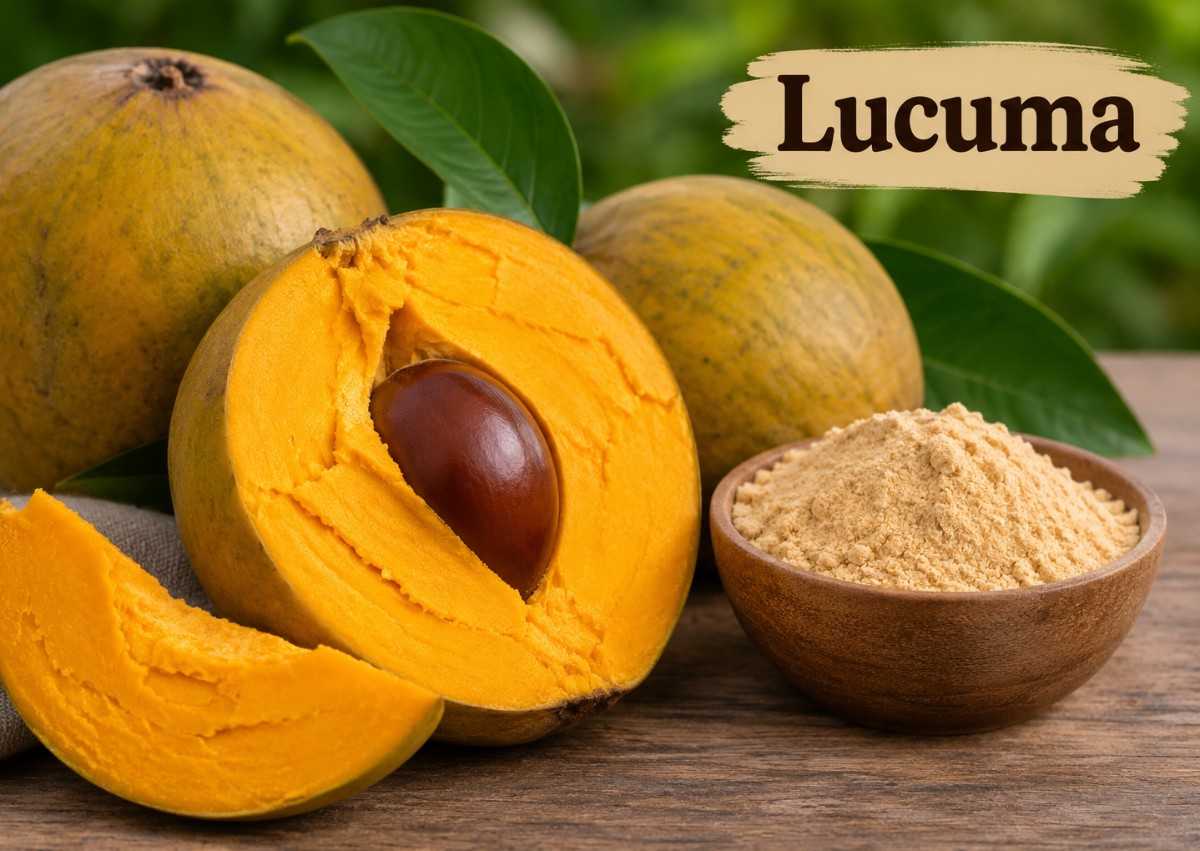
Lucuma is a naturally sweet, nutrient-containing tropical fruit that has gained attention as an alternative sweetener and an ingredient in smoothies, desserts, and healthy recipes. Often called the “Gold of the Incas,” this South American fruit is known for its golden-yellow flesh, mild sweetness, and distinctive flavor.
Lucuma is particularly popular in powdered form because it can add natural sweetness to foods without relying on refined sugar. It also contains dietary fiber, carbohydrates, and several naturally occurring plant compounds.
This guide explores its nutrition facts, potential health benefits, possible side effects, uses, and precautions to help you understand how to include it in your diet.
What Is Lucuma?
Lucuma ( Pouteria lucuma ) is a tropical fruit native to the Andean valleys of South America, particularly Peru, Ecuador, and Bolivia. It belongs to the Sapotaceae family and has been an important food in traditional South American diets for centuries.
The fruit has greenish-yellow to brown skin and bright yellow-orange flesh. Its texture is dry, creamy, and slightly floury, while its flavor is often compared to a combination of caramel, maple syrup, and sweet potato.
Lucuma is sometimes called the “Gold of the Incas” because of its historical importance and golden-colored flesh. Today, it is commonly available in fresh, frozen, dried, and powdered forms.
Lucuma powder is especially popular in the United States as a natural flavoring and sweetening ingredient. It is made by drying the fruit pulp and grinding it into a fine powder.
What Makes Lucuma Special?
- Natural Sweetness: Adds a mild caramel-like flavor to foods and beverages.
- Dietary Fiber: Provides fiber that supports digestive health.
- Antioxidants: Contains naturally occurring polyphenols and carotenoids.
- Minerals: Provides small amounts of potassium, iron, calcium, and other minerals.
- Versatility: Works well in smoothies, yogurt, oatmeal, and baked goods.
Nutrition Facts of Lucuma Fruit
Lucuma contains carbohydrates, natural sugars, dietary fiber, and small amounts of protein and fat. The following is an approximate nutritional profile of lucuma powder per 100 grams.
| Nutrient | Approximate Amount |
|---|---|
| Calories | 320 kcal |
| Carbohydrates | 58.6 g |
| Dietary Fiber | 27.5 g |
| Natural Sugars | 27.8 g |
| Protein | 3.8 g |
| Total Fat | 1.6 g |
| Saturated Fat | 1.1 g |
| Calcium | 61 mg |
| Iron | 1.8 mg |
| Magnesium | 32 mg |
| Phosphorus | 70.3 mg |
| Potassium | 970 mg |
| Sodium | 95 mg |
| Zinc | 0.4 mg |
Note: Values vary depending on the fruit, processing method, and product brand. These figures represent one powder specification.
20 Potential Health Benefits of Lucuma
- Provides Antioxidants: Contains polyphenols and carotenoids that help protect cells against oxidative stress.
- Supports Digestive Health: Its dietary fiber contributes to normal digestion.
- Promotes Regular Bowel Movements: Fiber helps add bulk to stool and support bowel regularity.
- Supports Gut Health: Dietary fiber can nourish beneficial gut bacteria.
- Supports Immune Function: Provides nutrients and plant compounds involved in normal immune function.
- Contributes to Heart Health: Its fiber and potassium content complement a heart-conscious diet.
- Supports Healthy Blood Pressure: Potassium helps maintain normal blood pressure.
- Supports Bone Health: Contains calcium and phosphorus, which contribute to bone maintenance.
- Supports Muscle Function: Potassium helps muscles contract and function normally.
- Provides Energy: Its carbohydrates provide energy for everyday activities.
- Supports Skin Health: Its antioxidant compounds may help protect cells from oxidative damage.
- Supports Eye Health: Contains carotenoids, which are associated with eye health.
- Provides Plant-Based Nutrients: Adds fiber, minerals, and plant compounds to a balanced diet.
- May Support Healthy Cholesterol: Fiber-rich foods can help maintain healthy cholesterol levels.
- Supports Blood Sugar Management: Its fiber may influence carbohydrate digestion, although specific effects of lucuma remain unproven.
- May Promote Fullness: Dietary fiber can help increase feelings of fullness.
- Supports Nerve Function: Potassium contributes to normal nerve signaling.
- Contributes to Red Blood Cell Production: Its iron content supports hemoglobin production.
- Adds Dietary Variety: Provides different nutrients and plant compounds to everyday meals.
- Offers an Alternative Sweetener: Its naturally sweet flavor can replace some refined sugar in recipes, although it still contains carbohydrates.
10 Possible Side Effects of Lucuma
Lucuma is generally consumed as a food, but excessive intake may cause digestive discomfort or other concerns.
- Digestive Discomfort: Eating too much may cause stomach discomfort or gas.
- Diarrhea: A sudden increase in fiber intake may lead to loose stools.
- Constipation: Insufficient water intake alongside high fiber may worsen constipation.
- Abdominal Bloating: Its fiber may cause temporary gas and bloating.
- Allergic Reactions: Sensitive individuals may experience itching, swelling, or other allergic symptoms.
- Increased Calorie Intake: Large portions of powdered lucuma can add significant calories.
- High Carbohydrate Intake: Excessive consumption may increase daily carbohydrate intake.
- Blood Sugar Concerns: People with diabetes should monitor its carbohydrate content.
- Food Sensitivity: Some individuals may experience nausea or digestive discomfort.
- Product Contamination: Improperly stored powder may develop mold or become contaminated.
How to Eat Lucuma?
Lucuma can be enjoyed fresh or in powdered form.
- Smoothies: Blend lucuma powder with bananas, milk, or yogurt.
- Oatmeal: Mix it into warm oatmeal for natural sweetness.
- Milkshakes: Combine with milk, ice, and fruit.
- Yogurt: Stir into plain yogurt with nuts or fresh fruit.
- Baking: Add it to cookies, cakes, muffins, and pancakes.
- Ice Cream: Use it to prepare homemade ice cream.
- Chia Pudding: Mix with chia seeds and milk.
- Protein Shakes: Add a small amount for extra flavor.
- Dessert Bowls: Sprinkle over smoothie bowls and puddings.
- Fresh Fruit: Enjoy the ripe flesh after removing the skin and seeds.
Tips for Consuming Lucuma
- Start Small: Begin with one teaspoon of lucuma powder.
- Choose Pure Powder: Look for products without unnecessary additives.
- Check Nutrition Labels: Review sugar, carbohydrate, and fiber content.
- Combine With Protein: Mix it with yogurt or milk.
- Add Healthy Fats: Pair it with nuts or seeds.
- Avoid Extra Sweeteners: Taste your recipe before adding sugar.
- Drink Enough Water: Maintain adequate hydration when increasing fiber.
- Store Properly: Keep powder away from moisture and sunlight.
- Choose Quality Products: Purchase from reputable manufacturers.
- Eat in Moderation: Treat lucuma as a food ingredient, not a supplement or medicine.
Other Uses of Lucuma
- Natural Food Sweetener: Adds sweetness to homemade recipes.
- Ice Cream Ingredient: Provides a distinctive flavor to frozen desserts.
- Smoothie Ingredient: Enhances smoothies and smoothie bowls.
- Baking Ingredient: Can be used in cookies, cakes, and muffins.
- Chocolate Products: Adds flavor to chocolate bars and dessert fillings.
- Yogurt Flavoring: Makes plain yogurt naturally sweeter.
- Plant-Based Desserts: Works in vegan puddings and dairy-free ice creams.
- Protein Snacks: Can be included in homemade energy bars.
- Traditional Cuisine: Features in several Peruvian desserts.
- Food Manufacturing: Used in specialty food products and flavored beverages.
How Much Lucuma Can You Eat in a Day?
There is no scientifically established daily recommended intake of lucuma. However, beginners can start with approximately one teaspoon of powder (3–5 grams).
If tolerated well, a serving of approximately 1–2 tablespoons (8–16 grams) may be suitable as a recipe ingredient.
| Amount | Suggested Use |
|---|---|
| 1 teaspoon | Starting portion |
| 2 teaspoons | Smoothies or yogurt |
| 1 tablespoon | Everyday recipes |
| 2 tablespoons | Larger recipe portions |
These are practical serving suggestions, not medically established dosage recommendations.
Best Time to Eat Lucuma
Lucuma can be consumed at different times of the day depending on your preferences.
- Morning: Add it to oatmeal or breakfast smoothies.
- Before or After Exercise: Include it in a balanced smoothie.
- After Lunch: Mix it into yogurt or a homemade dessert.
- Afternoon: Enjoy it in chia pudding or fruit smoothies.
- Evening: Use a small amount in homemade desserts.
There is no scientifically proven best time to consume lucuma.
Who Should Eat Lucuma?
- Plant-Based Diet Followers: Can enjoy it as a naturally plant-derived ingredient.
- People Seeking Alternative Sweeteners: Can use it to add sweetness to recipes.
- Fiber-Conscious Individuals: Can include it as an additional source of dietary fiber.
- Antioxidant-Focused Eaters: May enjoy its naturally occurring plant compounds.
- Smoothie Lovers: Can add it to homemade fruit smoothies.
- Home Bakers: Can experiment with lucuma in baked goods.
- Tropical Fruit Enthusiasts: Can explore its distinctive flavor.
- People Seeking Dietary Variety: Can include it in a balanced eating pattern.
Who Should Not Eat Lucuma?
- People With Lucuma Allergies: Should avoid the fruit and its powder.
- People With Food Sensitivities: Should avoid it if it triggers digestive symptoms.
- People With Diabetes: Should monitor its carbohydrate and sugar content.
- People on Low-Carbohydrate Diets: Should account for its carbohydrates.
- People With Digestive Disorders: May need smaller portions due to its fiber content.
- People With Kidney Disease: Should check its potassium content with their healthcare professional.
- People on Restricted Diets: Should confirm that it fits their dietary requirements.
Pregnant and breastfeeding women can generally enjoy ordinary foods as part of a balanced diet, but concentrated lucuma supplements should be discussed with a healthcare professional because safety research is limited.
How to Store Lucuma?
- Airtight Container: Keep lucuma powder in a tightly sealed container.
- Away From Sunlight: Store it in a dark cupboard.
- Avoid Moisture: Always use a dry spoon.
- Cool Location: Keep powder away from heat sources.
- Check Expiry Dates: Follow the manufacturer’s storage instructions.
- Refrigerate Fresh Fruit: Refrigerate ripe lucuma if not eating it immediately.
- Freeze the Flesh: Store fresh lucuma pulp in freezer-safe containers.
- Check for Spoilage: Discard products with mold, unusual odors, or moisture damage.
Precautions and Interactions
- Check Ingredients: Choose pure lucuma powder without unnecessary additives.
- Monitor Portions: Avoid excessive calories and carbohydrates.
- Increase Fiber Gradually: Start with small servings to reduce bloating.
- Stay Hydrated: Drink enough water to support normal digestion.
- Monitor Blood Sugar: People with diabetes should account for its carbohydrates.
- Check Potassium Restrictions: People with kidney disease should seek medical guidance.
- Watch for Allergies: Stop consumption if allergic symptoms develop.
- Avoid Medical Substitution: Never replace prescribed treatment with lucuma.
- Check Product Quality: Buy from reputable manufacturers.
- Seek Medical Advice: Consult a healthcare professional if you have a medical condition or take regular medication.
Drug Interactions: There is insufficient human research to establish specific drug interactions with lucuma. People taking medication for diabetes, blood pressure, or other chronic conditions should discuss regular consumption of concentrated powder with their healthcare professional.
FAQ’s
What is Lucuma good for?
Lucuma provides dietary fiber, minerals, and antioxidant compounds that can complement a balanced diet.
What does Lucuma taste like?
Lucuma has a naturally sweet flavor similar to caramel, maple syrup, and sweet potato.
Is Lucuma good for weight loss?
Its fiber may promote fullness, but lucuma has not been proven to cause weight loss.
Is Lucuma safe for diabetics?
People with diabetes should monitor its carbohydrate content and blood sugar response.
Can you eat Lucuma every day?
Yes, moderate amounts can be included in a balanced diet if well tolerated.
Is Lucuma high in sugar?
Yes, lucuma contains natural sugars, particularly in its powdered form.
Is Lucuma healthier than sugar?
Lucuma powder provides fiber and some minerals, while refined sugar mainly provides calories from carbohydrates.
Is Lucuma good for digestion?
Its dietary fiber supports normal digestion and bowel regularity.
Where does Lucuma come from?
Lucuma is native to South America, particularly Peru, Ecuador, and Bolivia.
Can you eat Lucuma during pregnancy?
Fresh lucuma can generally be enjoyed as a food, but pregnant women should consult their healthcare professional before using concentrated supplements.
Can Lucuma be eaten raw?
Yes, ripe lucuma flesh can be eaten raw after removing the skin and seeds.
Is Lucuma powder vegan?
Yes, pure lucuma powder is naturally vegan because it is made from fruit.
Can you add Lucuma to coffee?
Yes, lucuma powder can be mixed into coffee for a mild caramel-like sweetness.
Does Lucuma contain caffeine?
No, lucuma is naturally caffeine-free.
Is Lucuma good for skin?
Lucuma contains antioxidant compounds that may help protect cells against oxidative stress, although direct skin benefits have not been established.
What is the difference between Lucuma and Mamey?
Both are tropical fruits from the Sapotaceae family, but they are different species with distinct flavors, textures, and nutritional profiles.
Is Lucuma a natural sweetener?
Yes, lucuma powder is commonly used as a natural sweetening and flavoring ingredient in recipes.
Does Lucuma Taste Like Mango?
Lucuma has a sweet, creamy flavor, but it does not taste exactly like mango. Its taste is more similar to caramel, maple syrup, and sweet potato.
Does Lucuma Spike Blood Sugar?
Lucuma contains natural sugars and carbohydrates, which can affect blood glucose levels. Its impact depends on portion size, overall diet, and individual blood sugar response.
Where Can I Find Lucuma Fruit?
Lucuma is commonly available in Peru and other parts of South America. Outside these regions, you may find it in specialty grocery stores, Latin American markets, and online shops, often in powdered or frozen form.
Does Lucuma Taste Like Caramel?
Yes, lucuma has a naturally sweet, mild caramel-like flavor with hints of maple syrup and sweet potato.
What Flavour Is Lucuma?
Lucuma has a creamy, mildly sweet flavor often described as a combination of caramel, maple syrup, and sweet potato.
Is Lucuma Safe for Children?
Yes, ripe lucuma can generally be enjoyed by children as part of a balanced diet. Introduce small portions and check for possible allergic reactions.
Conclusion
Lucuma is a nutritious tropical fruit known for its sweet flavor, dietary fiber, minerals, and antioxidant compounds. It can be enjoyed fresh or added to smoothies, oatmeal, yogurt, and desserts.
Although it offers promising nutritional properties, many claimed health benefits still need further scientific research. Enjoy lucuma in moderate amounts as part of a varied and balanced diet.
Sources / References:
Disclaimer:
This article is for educational purposes only and does not replace professional medical advice, diagnosis, or treatment. Consult a qualified healthcare professional before making significant dietary changes.
Also Read: