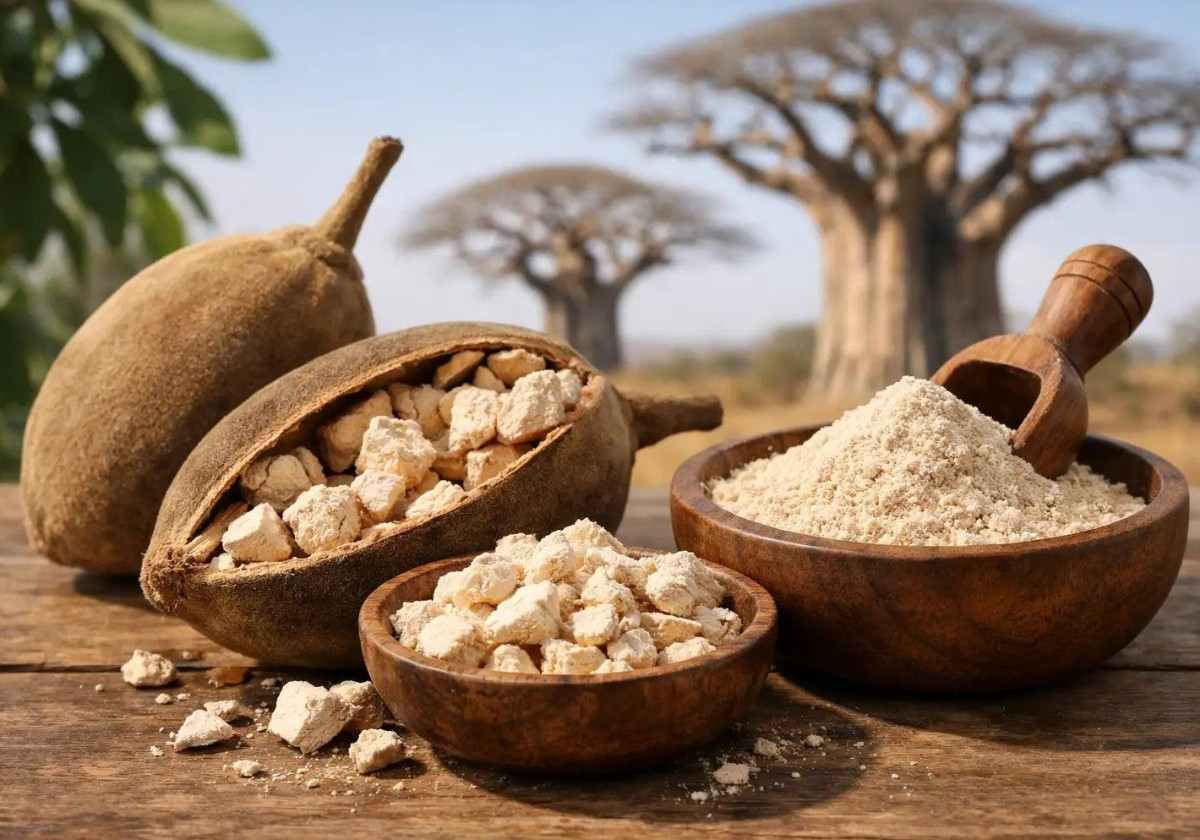
Baobab fruit is gaining attention as a nutrient-rich tropical fruit because of its impressive vitamin C content, dietary fibre, minerals, and natural antioxidants. Often called the superfruit of Africa, it comes from the baobab tree, which grows in several parts of Africa and is known for its enormous trunk and long lifespan.
The fruit has a hard outer shell and a dry, naturally tangy pulp that can be eaten directly or added to smoothies, juices, yoghurt, and other recipes. Its slightly sweet and sour flavour makes it an interesting addition to everyday meals.
Baobab fruit is particularly valued for its vitamin C and fibre content. These nutrients play important roles in immune function, digestion, collagen production, and overall health.
But is baobab fruit really as healthy as people claim? What nutrients does it contain, and are there any side effects to consider? Let’s explore its nutrition facts, potential health benefits, possible side effects, and the best ways to include it in your diet.
What Is Baobab Fruit?
Baobab fruit is the edible fruit of the baobab tree, scientifically known as Adansonia digitata. It is native to Africa and grows in warm, dry regions.
The fruit is oval or elongated, with a hard, woody outer shell. Inside, it contains a dry, powdery pulp surrounding several seeds. Unlike many juicy tropical fruits, baobab pulp naturally dries while still inside the fruit.
Its flavour is mildly sweet, citrus-like, and tangy, making it suitable for sweet and savoury preparations.
Baobab fruit is commonly available in dried pulp or powdered form because fresh fruit is not widely available in many countries.
- Common Names: African baobab fruit, monkey bread fruit, and Adansonia fruit.
- Scientific Name: Adansonia digitata
- Family: Malvaceae
- Origin: Africa
- Taste: Tangy, mildly sweet, and citrus-like.
- Available Forms: Whole dried fruit, dried pulp, and powder.
Nutrition Facts of Baobab Fruit
Baobab pulp contains vitamin C, fibre, calcium, potassium, magnesium, iron, and plant compounds such as polyphenols. However, its nutritional composition can vary depending on growing conditions, geographical origin, and processing methods.
The following is an approximate nutritional values per 100 grams of baobab pulp.
| Nutrient | Amount |
|---|---|
| Calories | 327 kcal |
| Protein | 2.4 g |
| Total Fat | 0.5 g |
| Carbohydrates | 75 g |
| Crude Fibre | 6.2 g |
| Calcium | 275 mg |
| Iron | 6.1 mg |
| Potassium | 1,730 mg |
| Magnesium | 232 mg |
| Phosphorus | 51 mg |
| Copper | 0.82 mg |
| Zinc | 1.36 mg |
| Vitamin C | 269 mg |
| Vitamin B1 | 0.31 mg |
| Vitamin B2 | 0.18 mg |
| Vitamin B3 | 1.5 mg |
| Folate | 50 mcg |
Note: Values are approximate and vary depending on the fruit’s origin and processing. Crude fibre is not equivalent to total dietary fibre.
20 Potential Health Benefits of Baobab Fruit
1. Supports Immune Function: Its vitamin C content helps maintain normal immune system function.
2. Supports Digestive Health: Dietary fibre helps promote regular bowel movements and healthy digestion.
3. Provides Antioxidants: Polyphenols and other plant compounds help protect cells against oxidative stress.
4. Supports Healthy Skin: Vitamin C contributes to collagen production and normal skin health.
5. Supports Strong Bones: Calcium, magnesium, and phosphorus contribute to bone maintenance.
6. Improves Iron Absorption: Vitamin C helps the body absorb iron from plant-based foods.
7. Supports Heart Health: Its potassium content contributes to healthy blood pressure regulation.
8. Supports Energy Metabolism: B vitamins help the body convert food into usable energy.
9. Promotes Gut Health: Its fibre may support beneficial bacteria in the digestive system.
10. Supports Blood Formation: Iron and folate contribute to normal red blood cell production.
11. Maintains Electrolyte Balance: Potassium and magnesium help maintain normal electrolyte levels.
12. Supports Muscle Function: Its minerals contribute to normal muscle contraction and function.
13. Protects Cells: Antioxidant compounds help protect cells from free radical damage.
14. Promotes Fullness: Dietary fibre may help you feel satisfied after meals.
15. May Support Blood Sugar Management: Preliminary research suggests baobab may influence post-meal blood glucose responses.
16. Supports Collagen Formation: Vitamin C is essential for collagen production in skin, bones, and blood vessels.
17. Supports Healthy Teeth: Calcium and phosphorus contribute to normal dental health.
18. Supports Nervous System Function: Magnesium and B vitamins help maintain normal nervous system function.
19. Improves Nutrient Intake: Adding baobab to meals provides additional vitamins, minerals, and fibre.
20. Supports Overall Health: Its combination of nutrients and antioxidants makes it a useful addition to a varied diet.
10 Possible Side Effects of Baobab Fruit
Baobab fruit is generally consumed as food, but excessive intake may cause digestive discomfort in some individuals.
1. Bloating: Excessive fibre intake may cause abdominal bloating.
2. Gas: Its fermentable carbohydrates may increase gas production.
3. Diarrhea: Eating too much baobab powder may cause loose stools.
4. Stomach Cramps: Some people may experience abdominal discomfort after consuming large quantities.
5. Constipation: Increasing fibre without drinking enough water may worsen constipation.
6. Allergic Reactions: Sensitive individuals may experience itching, rashes, or swelling.
7. Acidic Discomfort: Its tangy nature may aggravate heartburn in some people.
8. Blood Sugar Changes: Its potential effects on blood glucose may require caution among people taking diabetes medication.
9. Excess Vitamin C Intake: Large quantities may contribute to nausea, diarrhoea, and stomach discomfort.
10. Medication Concerns: Its fibre content and possible effects on nutrient absorption may complicate the timing of certain medicines.
How to Eat Baobab Fruit?
Baobab fruit can be enjoyed in several simple ways.
- Smoothies: Add baobab powder to banana or berry smoothies.
- Juice: Mix the powder with water for a refreshing drink.
- Yoghurt: Stir it into plain yoghurt with fresh fruits.
- Oatmeal: Sprinkle it over breakfast oatmeal.
- Energy Drinks: Mix it with water and a little honey.
- Fruit Bowls: Add it to chopped fruits for extra flavour.
- Salad Dressing: Combine it with olive oil and seasonings.
- Baking: Use it in muffins, pancakes, and homemade energy bars.
Tips for Consuming Baobab Fruit
- Start Small: Begin with a small serving to check your tolerance.
- Choose Pure Powder: Look for products without unnecessary additives.
- Drink Water: Maintain adequate hydration when increasing fibre intake.
- Combine With Fruits: Mix it with bananas, berries, or mangoes.
- Check Labels: Read nutritional information and serving instructions.
- Avoid Excess: Consume reasonable quantities rather than large servings.
- Store Properly: Keep the powder away from moisture and sunlight.
- Choose Quality Products: Purchase from reputable manufacturers.
- Eat Balanced Meals: Include baobab alongside other nutritious foods.
- Monitor Your Body: Reduce intake if digestive discomfort develops.
Other Uses of Baobab Fruit
Apart from eating it directly, baobab fruit has several food and commercial uses.
1. Smoothie Ingredient: Used to add tangy flavour and nutrients to smoothies.
2. Juice Preparation: Mixed with water to prepare refreshing fruit beverages.
3. Yoghurt Production: Added to yoghurt for flavour and nutritional value.
4. Bakery Products: Used in cakes, biscuits, bread, and muffins.
5. Fruit Spreads: Incorporated into jams and fruit-based spreads.
6. Food Fortification: Used to increase vitamin C and fibre content in certain foods.
7. Nutritional Supplements: Available as dried pulp powder in nutritional products.
8. Traditional Beverages: Used in traditional African fruit drinks.
9. Sauces and Dressings: Added to sauces and salad dressings for a tangy flavour.
10. Natural Food Ingredient: Used in food products as a source of fibre and natural acidity.
How Much Baobab Fruit Can You Eat in a Day?
There is no officially established daily recommended amount for baobab fruit.
If you are trying baobab powder for the first time, start with approximately 1 teaspoon (3–5 grams) daily and observe how your body responds.
Follow the product’s serving instructions and avoid excessive consumption.
Best Time to Eat Baobab Fruit
There is no scientifically established best time to eat baobab fruit. You can enjoy it whenever it suits your eating habits.
- Morning: Add it to smoothies or oatmeal.
- Afternoon: Mix it into yoghurt or fruit bowls.
- After Exercise: Include it in a fruit smoothie.
- Evening: Add a small amount to yoghurt or another light snack.
Who Should Eat Baobab Fruit?
Baobab fruit can be a useful addition to a balanced diet for several groups of people.
1. People Seeking Vitamin C: Those looking to increase their vitamin C intake may enjoy baobab.
2. People Following Plant-Based Diets: Its vitamin C helps improve iron absorption from plant foods.
3. People Seeking Fibre: Its fibre content can help increase daily fibre intake.
4. Health-Conscious Individuals: It provides several nutrients and naturally occurring plant compounds.
5. Antioxidant-Focused Diets: Its polyphenols make it an interesting plant-based food choice.
6. Vegetarians: It provides vitamin C and minerals that complement vegetarian meals.
7. People Exploring New Foods: Its unique flavour makes it useful in different recipes.
8. People Seeking Nutritional Variety: It offers another way to include different plant foods in everyday meals.
Who Should Not Eat Baobab Fruit?
Certain individuals should exercise caution, particularly when consuming concentrated baobab supplements.
1. People With Allergies: Anyone allergic to baobab should avoid it.
2. People With Sensitive Digestion: Its fibre may worsen bloating or diarrhoea.
3. People With IBS: Individuals sensitive to fermentable carbohydrates should introduce it cautiously.
4. People With Kidney Stones: Those with certain types of kidney stones should seek advice before regularly consuming concentrated vitamin C products.
5. People Taking Diabetes Medication: Consult a healthcare professional before using concentrated baobab supplements.
6. People Taking Prescription Medicines: Check with a doctor or pharmacist about possible interactions.
7. People With Severe Digestive Disorders: Those with bowel obstruction or intestinal narrowing should seek medical advice before increasing fibre intake.
8. Pregnant and Breastfeeding Women: Safety information for concentrated baobab supplements is limited, so professional advice is recommended.
How to Store Baobab Fruit?
Proper storage helps maintain baobab fruit’s quality and freshness.
1. Airtight Container: Store dried powder in a tightly sealed container.
2. Avoid Sunlight: Keep it in a dark place to protect its quality.
3. Prevent Moisture: Always use a clean, dry spoon.
4. Cool Storage: Keep it away from heat sources.
5. Refrigeration: Refrigerate only when recommended by the manufacturer.
6. Whole Fruit Storage: Keep intact fruits in a clean, dry, ventilated place.
7. Check Expiry Dates: Follow the best-before date on the packaging.
8. Check for Spoilage: Discard products showing mould, unusual smells, or moisture damage.
Precautions and Interactions
Keep these precautions in mind before consuming baobab regularly.
1. Avoid Excessive Intake: Large quantities may cause digestive problems.
2. Check Medications: Consult a healthcare professional about possible interactions.
3. Monitor Blood Sugar: People taking diabetes medicines should monitor their glucose levels.
4. Consider Kidney Health: Seek advice before using concentrated vitamin C-rich supplements if you have kidney problems.
5. Start Gradually: Introduce baobab in small amounts.
6. Watch for Allergies: Stop consumption if allergic symptoms develop.
7. Pregnancy Precautions: Avoid concentrated supplements without medical guidance.
8. Read Product Labels: Check for added sugars and unnecessary ingredients.
9. Do Not Replace Treatment: Baobab is not a substitute for prescribed medicines.
10. Choose Quality Products: Buy food-grade products from reputable suppliers.
FAQ’s
What is baobab fruit good for?
Baobab fruit provides vitamin C, dietary fibre, minerals, and antioxidants that support overall health and nutrition.
Is baobab fruit high in vitamin C?
Yes, baobab fruit is naturally rich in vitamin C, which supports immune function and collagen production.
Can you eat baobab fruit every day?
Yes, most people can consume moderate amounts daily as part of a balanced diet, provided they tolerate it well.
Does baobab fruit help with digestion?
Yes, its dietary fibre may support regular bowel movements and healthy digestion.
Is baobab fruit good for skin?
Baobab contains vitamin C, which helps collagen production and supports normal skin health.
Can baobab fruit help with weight loss?
Its fibre may promote fullness, but there is insufficient scientific evidence that baobab directly causes weight loss.
What does baobab fruit taste like?
Baobab fruit has a tangy, mildly sweet, citrus-like flavour with a slightly powdery texture.
Is baobab fruit safe during pregnancy?
Normal food quantities may be acceptable, but pregnant women should consult a healthcare professional before using concentrated baobab supplements.
Can baobab fruit help control blood sugar?
Some preliminary studies suggest it may influence post-meal blood glucose levels, but more human research is needed.
Is baobab fruit good for gut health?
Its dietary fibre may support beneficial gut bacteria and contribute to digestive health.
Does baobab fruit contain antioxidants?
Yes, baobab pulp contains polyphenols and other antioxidant compounds that help protect cells against oxidative stress.
Can you eat baobab fruit on an empty stomach?
Yes, but people with sensitive stomachs may prefer consuming it with food to reduce digestive discomfort.
Is baobab fruit good for hair?
Baobab provides vitamin C and minerals that support normal body functions, but there is insufficient scientific evidence that eating it directly improves hair growth.
Is Baobab Fruit Safe for Children?
Yes, children can consume small food quantities if tolerated well. Consult a paediatrician before giving supplements.
What Is Baobab Called in India?
Baobab is commonly known as the African baobab tree in India.
Which Is Better, Moringa or Baobab?
Moringa is rich in plant nutrients, while baobab provides vitamin C and fibre. Both offer nutritional benefits.
Is Baobab Good for Kidneys?
Baobab contains minerals and antioxidants, but its kidney health benefits are not scientifically established.
Does Baobab Reduce Belly Fat?
No, there is insufficient evidence that baobab directly reduces belly fat.
Sources / References:
Disclaimer:
This article is for educational purposes only and does not replace professional medical advice. Consult a qualified healthcare professional before making significant dietary changes.
Also Read: