Hair loss can affect more than just your appearance. For many people, thinning hair, a receding hairline, or bald spots can affect confidence and self-esteem. When hair loss treatments no longer provide the desired results, a hair transplant may seem like an appealing option.
However, before scheduling a consultation, one important question comes to mind: How much does a hair transplant cost in the USA?
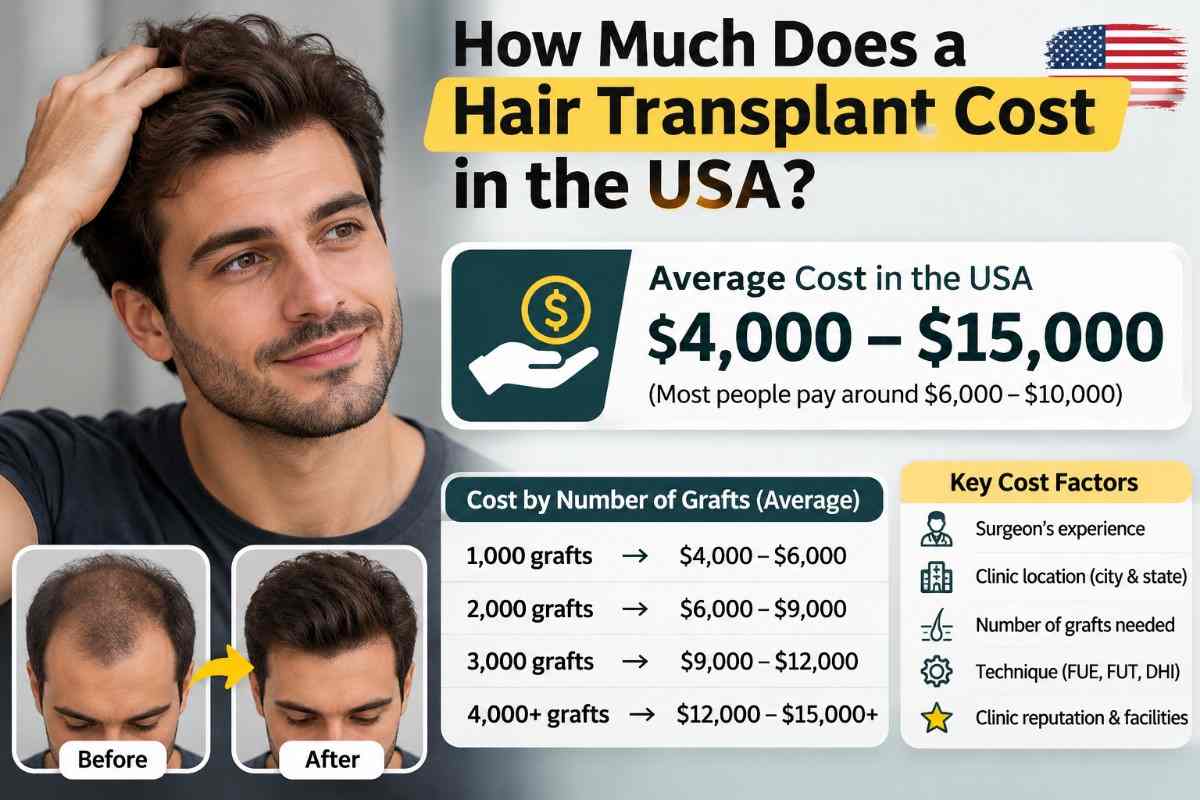
The cost of a hair transplant in the United States generally ranges from $5,000 to $15,000 or more, although smaller procedures may cost less and extensive hair restoration can exceed $20,000. The final price depends on the number of grafts needed, the surgical technique, the surgeon’s experience, and the clinic’s location.
In this guide, we will explore average hair transplant prices in the USA, costs by procedure type and graft count, factors affecting the price, insurance coverage, and ways to make hair restoration more affordable.
How Much Does a Hair Transplant Cost in the USA?
A hair transplant in the USA typically costs between $5,000 and $15,000, with more extensive procedures sometimes exceeding $20,000.
According to 2026 cost estimates, the average procedure cost is approximately $6,344 for Follicular Unit Extraction (FUE) and $5,675 for Follicular Unit Transplantation (FUT).
However, these are general estimates rather than guaranteed prices. Your actual cost will depend on your hair loss pattern, donor hair availability, treatment goals, and the surgeon’s recommendations.
Average Hair Transplant Cost in the USA
| Hair Transplant Type | Estimated Average Cost |
|---|---|
| FUE Hair Transplant | $6,000–$15,000 |
| FUT Hair Transplant | $4,000–$10,000 |
| Robotic Hair Transplant | $7,000–$20,000+ |
| Small Hair Transplant | $3,000–$6,000 |
| Large Hair Transplant | $10,000–$20,000+ |
| Hairline Restoration | $3,000–$8,000 |
Note: These are approximate market estimates, not fixed national prices. Individual clinic quotes can vary considerably.
Hair Transplant Cost by Number of Grafts
One of the biggest factors affecting hair transplant costs is the number of grafts required.
A graft is a small group of hair follicles naturally growing together. Each graft generally contains one to four individual hairs.
People with mild hairline recession may need fewer grafts, while those with significant thinning across the scalp may require several thousand.
Here is an approximate breakdown of hair transplant costs based on graft count.
| Number of Grafts | Estimated Cost in the USA |
|---|---|
| 500 grafts | $2,000–$5,000 |
| 1,000 grafts | $3,000–$8,000 |
| 1,500 grafts | $4,500–$10,000 |
| 2,000 grafts | $6,000–$14,000 |
| 2,500 grafts | $7,500–$17,500 |
| 3,000 grafts | $9,000–$21,000 |
| 4,000 grafts | $12,000–$25,000+ |
| 5,000 grafts | $15,000–$30,000+ |
These figures are illustrative estimates based on commonly reported per-graft pricing. Actual quotes depend on the technique, clinic, surgeon, and complexity of the procedure.
For example, someone who needs approximately 1,000 grafts to restore a receding hairline may pay considerably less than someone who needs 3,000 grafts to cover extensive thinning.
Remember that more grafts do not always mean better results. A qualified surgeon should determine the appropriate number based on your donor hair supply and long-term hair restoration goals.
Hair Transplant Cost by Procedure Type
There are different hair transplant techniques available in the USA. The two most common surgical approaches are FUE and FUT.
Each technique has its own advantages, recovery considerations, and pricing structure.
1. FUE Hair Transplant Cost
Follicular Unit Extraction (FUE) is one of the most popular hair restoration techniques.
During this procedure, individual hair follicles are extracted from a donor area, usually the back or sides of the scalp, and implanted into areas experiencing hair loss.
The estimated FUE hair transplant cost in the USA is approximately $6,000 to $15,000, although larger procedures can cost considerably more.
Why does FUE cost more?
- Individual follicles are extracted carefully.
- The procedure can be time-consuming.
- Specialized instruments and equipment may be required.
- The surgeon’s experience can influence the overall price.
- Larger sessions may require additional surgical time.
FUE generally avoids the long linear scar associated with FUT, although tiny extraction scars can remain.
2. FUT Hair Transplant Cost
Follicular Unit Transplantation (FUT), also known as strip surgery, is another established hair restoration technique.
During FUT, the surgeon removes a narrow strip of hair-bearing skin from the donor area. Individual follicular units are then separated and transplanted into thinning or bald areas.
The estimated FUT hair transplant cost in the USA is approximately $4,000 to $10,000.
Why may FUT be less expensive?
- Follicles are harvested from a strip of scalp.
- Multiple grafts can be prepared from the donor strip.
- The extraction process differs from individual FUE harvesting.
FUT typically leaves a linear scar at the donor site and may require more care when wearing very short hairstyles.
3. Robotic Hair Transplant Cost
Robotic hair transplantation uses specialized technology to assist with certain parts of the hair follicle extraction process.
Some clinics use robotic systems to improve consistency and precision during harvesting.
The estimated cost may range from $7,000 to $20,000 or more, depending on the clinic, technology, and number of grafts.
Robotic assistance does not automatically guarantee better results. The surgeon’s judgment, experience, and treatment planning remain important.
10 Factors That Affect Hair Transplant Costs in the USA
Hair transplant prices can vary significantly between patients, even when they visit the same clinic.
Here are ten important factors that influence the overall cost.
1. Number of Grafts Required: The more hair grafts needed to cover thinning areas, the higher the overall procedure cost may be.
2. Hair Transplant Technique: FUE, FUT, and robotic-assisted procedures have different equipment, labor, and surgical requirements.
3. Surgeon’s Experience: Highly experienced hair restoration surgeons may charge higher fees because of their training, expertise, and reputation.
4. Clinic Location: Clinics in expensive metropolitan areas such as New York City, Los Angeles, and San Francisco may charge more than clinics in smaller cities.
5. Hair Loss Severity: Extensive baldness or advanced hair thinning may require more grafts and longer procedures.
6. Donor Hair Availability: Limited donor hair can make treatment planning more complicated and may affect the number of grafts that can safely be transplanted.
7. Technology and Equipment: Specialized extraction tools, robotic systems, and advanced surgical facilities may increase treatment costs.
8. Anesthesia and Medical Fees: Local anesthesia, facility charges, medical supplies, and other surgical services may be included in or added to the quoted price.
9. Additional Treatments: Some patients may choose complementary treatments, such as platelet-rich plasma (PRP), when medically appropriate. These can increase the total expense.
10. Follow-Up and Aftercare: Postoperative appointments, prescribed medications, and additional care may contribute to the overall treatment budget.
Hair Transplant Cost by Location in the USA
The location of your hair transplant clinic can also influence the final price.
Clinics in major cities often have higher operating expenses, which may be reflected in their treatment fees.
Here are some general budgeting estimates for popular US locations.
| City | Approximate Budget |
|---|---|
| New York City | $7,000–$18,000+ |
| Los Angeles | $6,500–$16,000+ |
| San Francisco | $7,000–$17,000+ |
| Miami | $5,000–$13,000 |
| Chicago | $5,000–$13,000 |
| Houston | $4,500–$12,000 |
| Dallas | $5,000–$13,000 |
| Atlanta | $5,000–$12,000 |
| Boston | $6,000–$15,000 |
| Las Vegas | $5,000–$13,000 |
These are broad illustrative budgeting ranges, not verified city-specific average prices or individual clinic quotes. Always request a personalized estimate.
Does Health Insurance Cover Hair Transplants in the USA?
In most cases, health insurance does not cover hair transplant surgery because it is generally considered a cosmetic procedure.
Most patients pay for treatment out of pocket.
However, there may be exceptions when hair loss results from certain medical conditions, injuries, burns, or reconstructive needs. Coverage depends on the circumstances and the individual insurance policy.
Before scheduling surgery, contact your insurance provider and ask whether your particular situation qualifies for coverage.
Are Hair Transplants Worth the Cost?
For some people, a hair transplant can be a worthwhile long-term investment in their appearance and confidence.
Unlike temporary cosmetic solutions, transplanted hair follicles can continue growing after successful transplantation.
However, a hair transplant is not a guaranteed solution for every type of hair loss.
The results depend on several factors, including:
- The quality and availability of donor hair.
- The surgeon’s skill and experience.
- The underlying cause of hair loss.
- The patient’s overall health.
- Proper postoperative care.
- Whether existing hair continues to thin.
It is also important to understand that transplanted hair does not prevent natural hair loss in surrounding areas. Some patients may need ongoing medical treatment to maintain their overall hair density.
Discuss your expectations and long-term treatment plan with a qualified hair restoration specialist before making a decision.
How to Make a Hair Transplant More Affordable
Hair restoration surgery can be expensive, but there are several ways to manage the financial commitment without compromising safety.
1. Compare Multiple Clinics: Request consultations and written estimates from at least two or three qualified clinics.
2. Ask About Per-Graft Pricing: Understanding the cost per graft can help you compare different treatment plans more accurately.
3. Check Financing Options: Some clinics offer monthly payment plans or work with medical financing providers.
4. Understand What Is Included: Ask whether consultations, anesthesia, medications, follow-up appointments, and aftercare are included in the quoted price.
5. Avoid Choosing Only by Price: Extremely cheap procedures may involve inexperienced providers or inadequate medical support.
6. Consider Different Techniques: Ask your surgeon whether FUE or FUT is more suitable for your hair loss pattern and budget.
7. Plan for Long-Term Hair Care: Discuss whether medications or additional treatments may be needed to maintain your results.
A lower price should never be more important than proper medical qualifications, patient safety, and realistic treatment outcomes.
What Should You Ask Before Getting a Hair Transplant?
Before choosing a hair transplant clinic, make sure you understand the procedure and its total financial commitment.
Here are some useful questions to ask during your consultation:
- How many grafts do I actually need?
- Which hair transplant technique is suitable for me?
- What is the total cost, including additional fees?
- Who will perform the surgery and extract the grafts?
- What qualifications and experience does the surgeon have?
- Are medications and follow-up appointments included?
- What are the possible risks and complications?
- Will I need additional hair restoration treatments?
- What happens if the transplanted hair does not grow as expected?
- Can I see before-and-after results from patients with similar hair loss?
The American Society of Plastic Surgeons recommends discussing your medical history, expectations, surgical options, risks, and costs during the initial consultation.
Potential Risks and Side Effects of Hair Transplant Surgery
Although hair transplant surgery is generally considered safe when performed by qualified professionals, it is still a surgical procedure and carries potential risks.
Possible side effects include:
- Swelling around the forehead and scalp.
- Temporary redness and tenderness.
- Itching in the donor or recipient areas.
- Scabbing around transplanted follicles.
- Temporary shedding of transplanted hair.
- Infection or bleeding.
- Scarring at the donor site.
- Uneven hair growth or unnatural-looking results.
- Reduced sensation or numbness in treated areas.
Some patients also experience temporary shock loss, which refers to shedding of existing hair around the transplanted area.
Discuss all potential complications, recovery expectations, and warning signs with your surgeon before undergoing the procedure.
FAQ’s
Is FUE more expensive than FUT?
FUE is often more expensive than FUT because individual follicles are extracted separately. However, actual prices vary between clinics.
How long do hair transplant results last?
Successfully transplanted hair follicles can produce hair for many years and are generally considered permanent. However, surrounding natural hair may continue thinning.
How many grafts are needed for a full head of hair?
The number varies depending on existing hair density, scalp size, donor hair availability, and the extent of hair loss. A qualified surgeon must determine the appropriate graft count.
Is a hair transplant painful?
The procedure is generally performed under local anesthesia, so patients should experience limited pain during surgery. Some discomfort, tenderness, or swelling may occur afterward.
What is the cheapest hair transplant method?
FUT is often less expensive than FUE because of differences in the harvesting process. However, the most suitable method depends on individual medical needs.
Can I finance a hair transplant in the USA?
Yes. Some clinics offer payment plans or medical financing options. Interest rates, eligibility, and repayment terms vary between providers.
What is the cheapest state for a hair transplant in the USA?
There is no officially established cheapest state. Prices vary by clinic, surgeon, treatment technique, and local operating costs.
How much does a hair transplant cost in New York?
Hair transplant procedures in New York may cost approximately $7,000–$18,000 or more, depending on the treatment plan and clinic.
Can I pay for a hair transplant in monthly installments?
Yes, some US clinics offer financing options or monthly payment plans. Interest rates and eligibility requirements vary.
Are hair transplants cheaper in Turkey than in the USA?
Hair transplant procedures are often less expensive in Turkey than in the USA. However, patients should also consider travel expenses, medical standards, surgeon qualifications, and follow-up care.
What is included in a hair transplant cost?
The price may include the surgeon’s fee, graft extraction, implantation, anesthesia, and facility charges. Medications and follow-up visits may cost extra.
Can women get hair transplants in the USA?
Yes. Women can undergo hair transplantation if they have an appropriate hair loss pattern, sufficient donor hair, and are medically suitable candidates.
Does a hair transplant require multiple sessions?
Some patients achieve their desired results in one session, while others may require additional procedures depending on hair loss severity and treatment goals.
How much do 3,000 hair grafts cost in the USA?
A 3,000-graft hair transplant may cost approximately $10,000–$25,000 or more, depending on the clinic and technique.
What happens 10 years after a hair transplant?
Transplanted hair generally continues growing, but surrounding natural hair may become thinner.
How much do 5,000 hair grafts cost in the USA?
A 5,000-graft procedure may cost approximately $15,000–$30,000 or more.
Is 1 graft equal to 1 hair?
No. One graft usually contains 1–4 individual hairs.
What happens 20 years after a hair transplant?
Transplanted hair can remain permanent, although natural aging and hair loss may change overall density.
Is hair transplant 100% safe?
No. It is generally safe when performed by a qualified surgeon, but complications are possible.
How risky are hair transplants?
Most procedures have a low risk of serious complications, but infection, scarring, and poor growth can occur.
What is the best age for a hair transplant?
Many surgeons prefer patients in their mid-to-late 20s or older, depending on hair loss stability.
How many hair transplants fail?
There is no universal failure rate. Results depend on the surgeon, technique, and individual health.
What disqualifies you from a hair transplant?
Insufficient donor hair, active scalp conditions, certain medical problems, and unstable hair loss may make someone unsuitable.
How much does a hair transplant cost in usa for women?
A hair transplant for women in the USA typically costs between $4,000 and $15,000 or more, depending on the number of grafts, surgical technique, clinic, and surgeon’s experience.
Final Thoughts
A hair transplant in the USA can cost anywhere from a few thousand dollars to more than $20,000, depending on the number of grafts, surgical technique, clinic location, and surgeon’s experience.
Although price is an important consideration, choosing a qualified and experienced surgeon should always come first. A detailed consultation, transparent pricing, and realistic expectations can help you make a more informed decision.
Sources / References:
- American Society of Plastic Surgeons – Hair Transplantation and Restoration
- CareCredit – Hair Transplant Cost and Procedure Guide
- RealSelf – Hair Transplant Cost Guide
- International Society of Hair Restoration Surgery (ISHRS)
- Advanced Hair Restoration – Hair Transplant Cost Guide 2026
Disclaimer
This article is for educational purposes only and should not replace professional medical advice, diagnosis, or treatment. Consult a qualified healthcare professional before undergoing any hair restoration procedure.
Also Read: