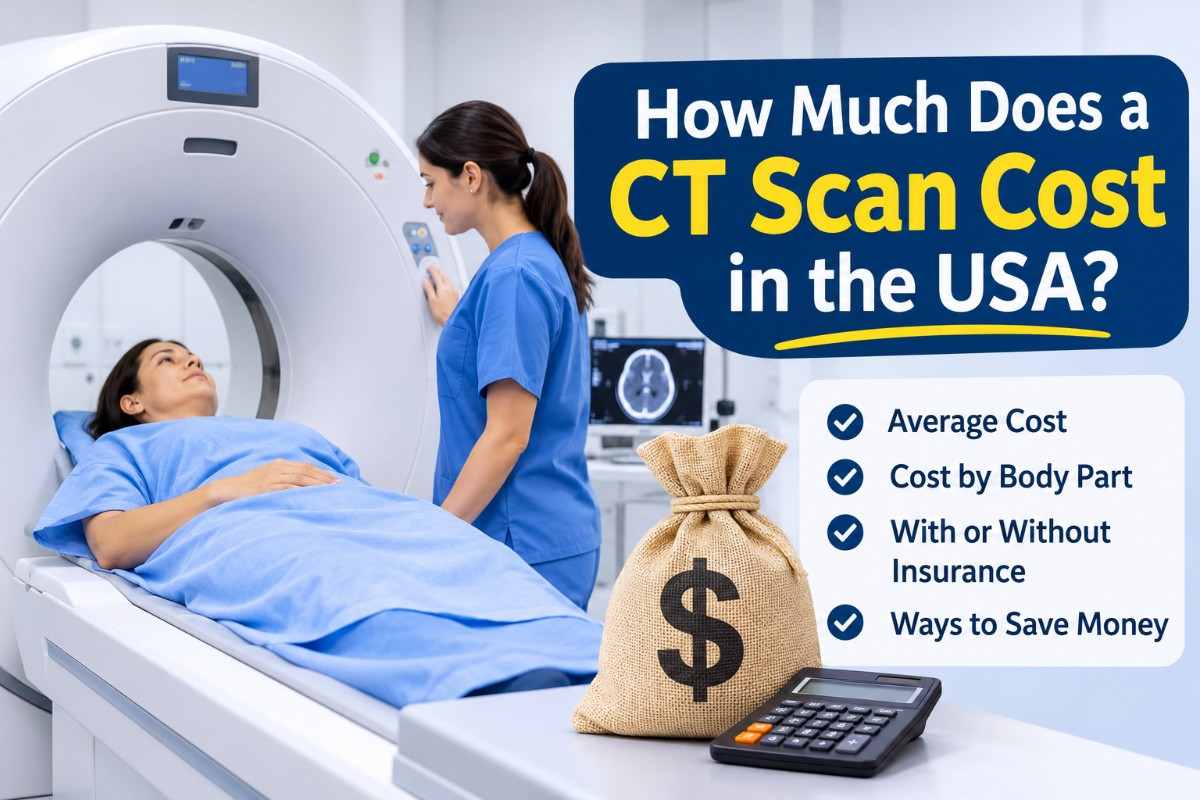
The cost of a CT scan in the USA can range from a few hundred dollars to several thousand dollars, depending on the body part being examined, the type of scan, insurance coverage, and the medical facility. A CT scan at an independent imaging center is often less expensive than one performed at a hospital.
For patients without health insurance, understanding the expected cost before scheduling an appointment can help avoid unexpected medical bills. Patients with insurance may also have out-of-pocket expenses, including deductibles, copayments, and coinsurance.
This guide explains average CT scan costs in the United States, prices by body part, insurance coverage, additional fees, and practical ways to save money.
What Is a CT Scan?
A CT scan, also known as a computed tomography scan or CAT scan, is a medical imaging test that uses X-rays and computer technology to create detailed cross-sectional pictures of the inside of the body.
Unlike a traditional X-ray, which produces a flat image, a CT scan creates multiple images from different angles. These images help doctors examine bones, organs, blood vessels, and soft tissues.
Healthcare professionals may recommend a CT scan to investigate:
- Head injuries and brain abnormalities.
- Internal bleeding and traumatic injuries.
- Abdominal pain and digestive problems.
- Lung conditions and chest abnormalities.
- Kidney stones.
- Certain cancers and tumors.
- Bone fractures and spinal problems.
- Blood vessel abnormalities.
The procedure is generally quick and noninvasive. Some examinations require contrast material to improve image visibility.
How Much Does a CT Scan Cost in the USA? 2026 Cost Estimate
A CT scan in the United States generally costs between $300 and $6,750 without insurance, although some facilities may charge considerably more. The price depends on the type of examination, location, imaging center, and whether contrast dye is required.
Here is a general cost overview:
| CT Scan Expense | Estimated Cost |
|---|---|
| Basic CT scan | $300–$700 |
| CT scan of the head | $300–$1,500 |
| CT scan of the chest | $400–$2,200 |
| CT scan of the abdomen | $450–$2,800 |
| CT scan of the pelvis | $450–$2,800 |
| CT scan with contrast | Varies by examination |
| Complex or multiple-region CT scan | $1,000–$6,750+ |
These figures are broad estimates, not guaranteed national prices. Actual cash prices and insurance-negotiated rates can differ substantially.
Average CT Scan Cost by Body Part in the USA
The cost of a CT scan depends partly on which part of the body needs examination. A head CT may cost less than a more complicated abdominal or pelvic scan.
Below are approximate average prices reported for common CT examinations:
| Type of CT Scan | Average Estimated Cost |
|---|---|
| CT scan of the brain | $446 |
| CT scan of the neck | $530 |
| CT scan of the chest | $711 |
| CT scan of the lumbar spine | $540 |
| CT scan of the abdomen | $450–$1,500+ |
| CT scan of the pelvis | $450–$1,500+ |
| CT scan of the abdomen and pelvis | $700–$3,000+ |
Note: These are indicative estimates compiled from published pricing information. They are not directly comparable quotes, and some prices may exclude contrast, facility fees, or radiologist interpretation.
How Much Does a CT Scan Cost Without Insurance?
Without health insurance, a CT scan can cost approximately $300 to $6,750 or more in the United States.
Patients paying out of pocket are generally responsible for the facility’s self-pay price unless they qualify for a discount, financial assistance, or a payment arrangement.
The price also depends on where the scan is performed:
| Medical Facility | Estimated Self-Pay Cost |
|---|---|
| Independent imaging center | $300–$1,000 |
| Hospital outpatient department | $800–$3,275+ |
| Emergency department | $1,000–$6,750+ |
These are broad illustrative ranges rather than fixed national averages.
Can you get a cheaper CT scan without insurance?
Yes. Many independent imaging centers offer lower self-pay prices than hospitals. Some facilities also provide discounted cash rates for patients who pay directly.
Before scheduling, ask whether the quoted price includes the scan, contrast materials, and radiologist’s interpretation. Request a written estimate to avoid unexpected charges.
How Much Does a CT Scan Cost With Insurance?
With health insurance, the amount you pay depends on your insurance plan, deductible, copayment, coinsurance, and whether the imaging facility is in your insurance network.
For example:
- If your insurance has a $100 copayment, you may pay $100 for an eligible scan.
- If you have a 20% coinsurance requirement and your insurer’s negotiated rate is $800, your share may be $160 after meeting your deductible.
- If you have not met your deductible, you may have to pay a larger portion of the negotiated cost.
Some insurance plans require prior authorization before covering an expensive imaging procedure.
Important: Always contact your insurance company before scheduling a CT scan. Confirm that the examination is medically necessary, the facility is in-network, and the radiologist’s services are covered.
CT Scan Cost at a Hospital vs. an Imaging Center
Where you get your CT scan can make a significant difference in the final bill. Hospitals and independent imaging centers may charge different prices for the same examination.
| Feature | Hospital | Independent Imaging Center |
|---|---|---|
| Average price | Usually higher | Usually lower |
| Emergency services | Available | Generally unavailable |
| Appointment | May offer walk-ins or scheduled visits | Usually appointment-based |
| Self-pay discounts | May be available | Often available |
| Best suited for | Emergency and hospital-based care | Scheduled outpatient scans |
Independent imaging centers can be a more affordable option for non-emergency CT scans. However, make sure the center has appropriate accreditation, qualified staff, and the equipment needed for your examination.
CT Scan Cost With Contrast vs. Without Contrast
Another important factor affecting CT scan prices is whether the examination requires contrast material.
Contrast is a special substance, commonly an iodine-based dye, that helps make certain organs, blood vessels, and tissues easier to see on CT images.
CT Scan Without Contrast: A CT scan without contrast does not require contrast dye. It may be used to examine conditions such as kidney stones, certain head injuries, and some bone problems.
CT Scan With Contrast: A CT scan with contrast uses contrast material, which may be administered through an IV or taken orally. It can help doctors examine blood vessels, abdominal organs, tumors, infections, and other abnormalities.
| Type of CT Scan | General Price Difference |
|---|---|
| Without contrast | Usually less expensive |
| With IV contrast | Usually more expensive |
| With oral contrast | May involve additional costs |
| With and without contrast | Often more expensive than a single-phase scan |
The additional cost varies by facility and examination. Your doctor determines whether contrast is medically necessary.
10 Factors That Affect CT Scan Costs in the USA
Several factors influence how much you will pay for a CT scan. Understanding these factors can help you compare prices and plan your medical expenses.
1. Body Part Being Scanned: A head CT may cost less than a complex examination involving the abdomen, pelvis, or multiple body regions.
2. Use of Contrast Dye: CT scans requiring contrast materials may involve additional charges for the dye, administration, and related services.
3. Hospital vs. Imaging Center: Hospital-based imaging often costs more because of facility overhead and additional hospital-related charges.
4. Health Insurance Coverage: Your insurance plan determines how much of the approved cost you must pay.
5. Geographic Location: CT scan prices can differ between states, cities, and even facilities within the same neighborhood.
6. Radiologist Fees: A radiologist reviews the images and prepares a report. This professional interpretation may be billed separately.
7. Emergency vs. Scheduled Scan: Emergency department imaging can involve additional facility and emergency-care charges.
8. Type of CT Technology: Specialized examinations, such as cardiac CT angiography, may cost more than routine CT scans.
9. Additional Medical Tests: Some patients may need blood tests, particularly before certain contrast-enhanced examinations.
10. Facility Fees: Hospitals and some outpatient facilities charge separate fees for equipment, staff, and use of their facilities.
Does Medicare Cover CT Scans?
Yes. Medicare Part B generally covers medically necessary diagnostic CT scans when they are ordered by an eligible healthcare provider to diagnose or evaluate a medical problem.
After meeting the applicable Part B deductible, patients generally pay 20% of the Medicare-approved amount for covered diagnostic tests performed in a doctor’s office or independent diagnostic testing facility.
If the CT scan is performed in a hospital outpatient department, a hospital copayment may also apply.
Medicare coverage requirements and patient costs depend on the type of examination and where it is performed.
Important: For advanced diagnostic imaging performed outside a hospital, Medicare requires the provider to meet applicable accreditation requirements. Check with the imaging facility before scheduling.
Does Medicaid Cover CT Scans?
Medicaid may cover medically necessary CT scans for eligible patients. However, coverage rules, prior authorization requirements, and patient costs vary by state and Medicaid program.
Some Medicaid plans require a doctor’s referral or approval before scheduling an imaging examination.
Contact your state Medicaid office or managed care plan to confirm:
- Whether the CT scan is covered.
- Whether prior authorization is required.
- Which imaging centers are in-network.
- Whether you have any patient responsibility.
How to Save Money on a CT Scan in the USA
A CT scan can be expensive, particularly for patients without insurance or those with high deductibles. Fortunately, there are several ways to reduce the cost.
1. Compare Multiple Imaging Centers: Contact at least two or three facilities and compare their self-pay prices for the same CT examination.
2. Ask for Cash-Pay Discounts: Some facilities offer discounted rates to patients who pay without using insurance.
3. Choose an Independent Imaging Center: For non-emergency examinations, an accredited outpatient imaging center may offer a lower price than a hospital.
4. Check Your Insurance Network: Use an in-network facility whenever possible to avoid higher out-of-network costs.
5. Ask for an Upfront Estimate: Request a written estimate that includes facility charges, contrast, and radiologist fees.
6. Check Financial Assistance Programs: Some hospitals provide financial assistance or reduced prices to eligible patients.
7. Discuss Payment Plans: Ask whether the facility offers interest-free payment arrangements or other affordable payment options.
8. Check Whether Prior Authorization Is Needed: Confirm insurance approval before the procedure to reduce the risk of an unexpected bill.
9. Compare the Cash Price With Your Insurance Cost: If you have a high deductible, ask whether the facility’s self-pay price is lower than your estimated insurance responsibility. Check how paying cash may affect your deductible and out-of-pocket maximum.
10. Avoid Unnecessary Repeat Scans: Keep copies of previous imaging reports and ask your doctor whether existing images can answer the medical question.
Never delay an emergency CT scan or medically necessary examination just to find a cheaper provider.
What Is Included in a CT Scan Bill?
A CT scan bill may include several separate charges. Understanding them can help you identify what you are actually paying for.
- Technical Component: Covers the CT scanner, technologist, equipment, supplies, and facility resources.
- Professional Component: Covers the radiologist’s interpretation of the images and written report.
- Contrast Material: Covers contrast dye and, in some cases, its administration.
- Facility Fee: Covers the use of the hospital or imaging facility.
- Additional Testing: May include blood work or other medically necessary services.
Some facilities combine these charges into one package price, while others bill them separately.
How Long Does a CT Scan Take?
Most CT scans take approximately 10 to 30 minutes, although preparation and contrast administration can make the appointment longer.
The actual scanning process may take only a few minutes. Patients may need to lie still on a movable examination table while the scanner captures images.
After the examination, a radiologist reviews the images and sends a report to the referring healthcare provider. The time required to receive results varies by facility and medical circumstances.
Is a CT Scan Safe?
CT scans are widely used diagnostic procedures and are generally considered safe when medically appropriate.
However, they use ionizing radiation, which can slightly increase the lifetime risk of developing cancer. The risk from an individual examination is generally small, but it depends on factors such as radiation dose, age, and the number of scans performed.
Contrast materials can also cause side effects in some patients. Rarely, serious allergic-like reactions can occur. Certain patients with kidney problems may require additional evaluation before receiving IV contrast.
Inform your healthcare provider if you:
- Have kidney disease or reduced kidney function.
- Have previously experienced a reaction to CT contrast.
- Are pregnant or think you may be pregnant.
- Have other relevant medical conditions or allergies.
Your doctor will consider the potential benefits and risks before recommending the examination.
FAQ’s
Is a CT scan cheaper at a hospital or imaging center?
An independent imaging center is often cheaper than a hospital outpatient department for a scheduled CT scan.
Do I need a doctor’s order for a CT scan?
In most medical settings, a CT scan requires an order from an authorized healthcare provider. Requirements can vary by facility and state.
Is a CT scan covered by health insurance?
Most health insurance plans cover medically necessary CT scans when their coverage requirements are met. Prior authorization and in-network provider rules may apply.
How long does it take to get CT scan results?
Results may be available within hours or a few days, depending on the facility, urgency, and radiologist’s workload.
Can I negotiate the price of a CT scan?
Yes. Some imaging centers and hospitals offer self-pay discounts, financial assistance, or payment plans. Ask for the lowest available price before scheduling.
Is a CT scan with contrast more expensive?
Yes, contrast materials and their administration can increase the cost.
Can I get a CT scan without insurance?
Yes, many hospitals and imaging centers offer self-pay options.
Why are CT scans so expensive in the USA?
Equipment, medical staff, facility fees, and radiologist services affect pricing.
How can I find an affordable CT scan?
Compare prices at independent imaging centers and ask about cash discounts.
Are CT scans safe?
Generally, yes, when medically necessary, but they involve radiation exposure.
Does Medicare require a referral for a CT scan?
A healthcare provider’s order is generally required for Medicare coverage.
Does insurance cover emergency CT scans?
Most health insurance plans cover medically necessary emergency CT scans, subject to plan terms.
How much does a CT scan cost with Blue Cross Blue Shield?
The cost depends on your specific plan, deductible, copayment, and in-network imaging facility.
How much does a CT scan cost at a hospital?
A hospital CT scan may cost $800 to $3,275 or more without insurance.
How much does an abdominal CT scan cost without insurance?
An abdominal CT scan may cost approximately $450 to $2,800 or more.
How much does a brain CT scan cost without insurance?
A brain CT scan may cost approximately $300 to $1,500 or more.
How much does a CT scan cost with Medicare?
Medicare Part B generally covers medically necessary CT scans. Patients typically pay 20% of the Medicare-approved amount after meeting the deductible.
Is a CT scan cheaper than an MRI?
Generally, CT scans are less expensive than MRI scans, although prices depend on the examination and facility.
Does a CT scan detect all cancers?
No. CT scans can detect many cancers, but some tumors require other imaging tests or biopsies for diagnosis.
Is a CT scan more expensive than an MRI?
Generally, MRI scans cost more than routine CT scans, but prices vary by facility and examination.
Why do doctors prefer CT scans over MRI?
CT scans are faster and particularly useful for emergencies, internal injuries, bleeding, and bone fractures.
What is the most expensive medical scan?
Advanced PET/CT, specialized MRI, and complex nuclear medicine scans can be among the most expensive imaging procedures.
Final Thoughts
The cost of a CT scan in the USA varies considerably, with typical self-pay prices ranging from a few hundred dollars to several thousand dollars. The body part being examined, use of contrast, insurance coverage, and choice of medical facility all influence the final bill.
For scheduled, non-emergency examinations, comparing prices at accredited independent imaging centers may help reduce expenses. Always request a complete cost estimate and confirm insurance coverage before your appointment.
Sources / References:
- RadiologyInfo – Medical Imaging Costs
- GoodRx
- Medicare.gov – Diagnostic Non-Laboratory Tests
- Medicare.gov – Outpatient Medical Services and Supplies
- CareCredit
Disclaimer: This article is for informational and educational purposes only. CT scan prices and insurance coverage vary by provider and location. Consult a qualified healthcare professional for medical advice and contact your insurer or imaging facility for an accurate cost estimate.
Also Read: