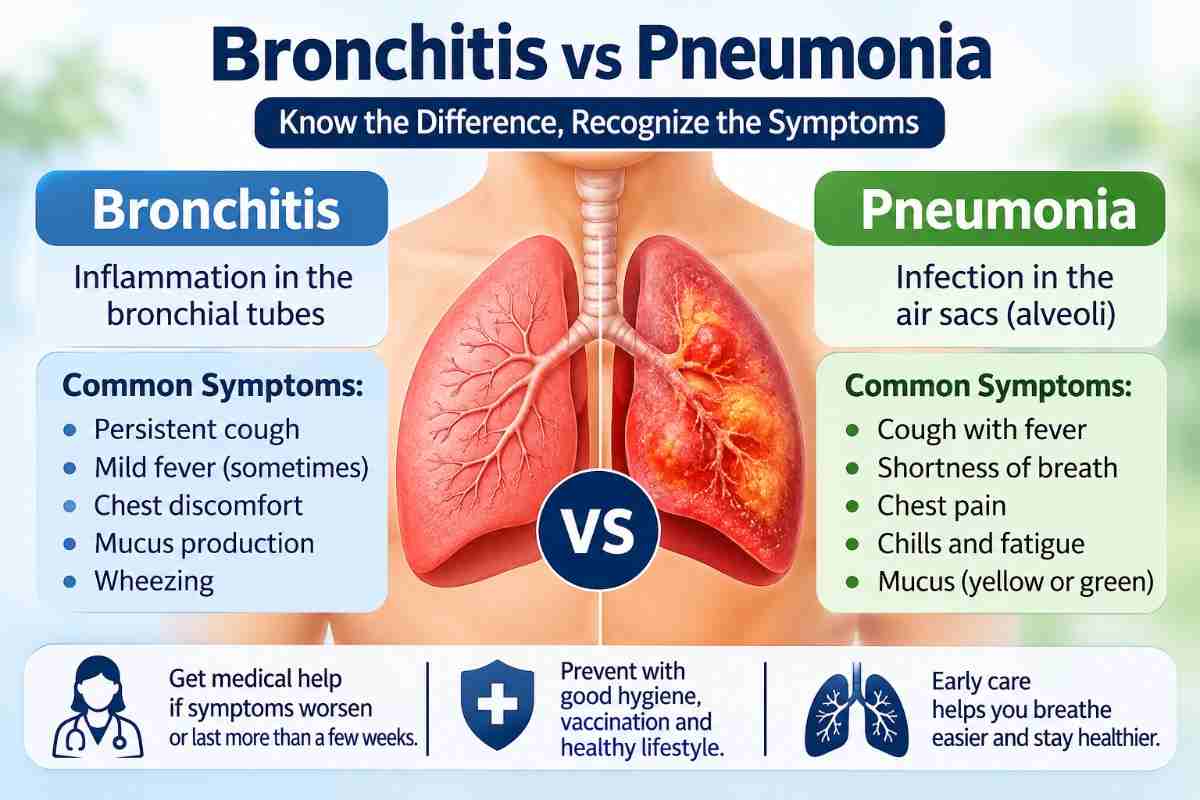
Bronchitis and pneumonia are two common respiratory illnesses that can cause coughing, chest discomfort, breathing difficulties, and fatigue. Because their symptoms often overlap, it can be difficult to tell which condition someone may have.
However, bronchitis and pneumonia are not the same. Bronchitis mainly affects the bronchial tubes that carry air into the lungs, while pneumonia affects the air sacs inside the lungs, causing inflammation and sometimes fluid or pus buildup.
Understanding the difference between bronchitis vs pneumonia can help you recognize warning signs, understand available treatments, and know when to seek medical attention.
In this guide, we explain their symptoms, causes, risk factors, diagnosis, treatment options, recovery time, and key differences.
What Is Bronchitis?
Bronchitis is a respiratory condition in which the bronchial tubes become inflamed. These tubes carry air to and from the lungs. When they become irritated or swollen, they may produce extra mucus, leading to persistent coughing.
Bronchitis is generally divided into two main types:
- Acute Bronchitis: A short-term condition, commonly caused by viruses such as those responsible for colds and flu. It usually improves within a few weeks.
- Chronic Bronchitis: A long-term condition involving a persistent mucus-producing cough. It is a type of chronic obstructive pulmonary disease (COPD) and is commonly associated with smoking and long-term exposure to lung irritants.
Acute bronchitis is sometimes called a chest cold because it often develops after an upper respiratory infection.
What Is Pneumonia?
Pneumonia is a lung infection that causes inflammation in one or both lungs. It affects the tiny air sacs called alveoli, which normally fill with air when you breathe.
When pneumonia develops, these air sacs may fill with fluid or pus, making it harder for oxygen to enter the bloodstream.
Pneumonia can be caused by different microorganisms, including bacteria, viruses, and fungi.
The severity can range from mild symptoms that improve with home care to serious infections requiring hospitalization. Older adults, young children, and people with weakened immune systems or existing health conditions may be at greater risk of complications.
Bronchitis vs Pneumonia: Key Differences
Although both conditions affect the respiratory system, they differ in the part of the lungs they affect, their causes, symptoms, and treatment.
| Feature | Bronchitis | Pneumonia |
|---|---|---|
| Main affected area | Bronchial tubes | Air sacs (alveoli) |
| Main cause | Usually viruses in acute cases | Bacteria, viruses, or fungi |
| Common symptom | Persistent cough | Cough with fever and breathing difficulties |
| Fever | Usually absent or mild | More common; can be high |
| Chest discomfort | Often caused by frequent coughing | May cause sharp pain when breathing or coughing |
| Mucus | May produce clear, yellow, or green mucus | May produce mucus that is yellow, green, or blood-streaked |
| Breathing problems | Sometimes wheezing or mild breathlessness | Can cause significant shortness of breath |
| Diagnosis | Usually based on symptoms and examination | Often requires examination and chest X-ray |
| Treatment | Mainly supportive care for acute cases | Depends on the organism causing infection |
| Recovery | Acute cases often improve within a few weeks | May take several weeks or longer |
The biggest difference: Bronchitis affects the airways leading to the lungs, whereas pneumonia affects the air sacs where oxygen exchange takes place. Pneumonia can be more serious and may require hospital treatment.
10 Major Differences Between Bronchitis and Pneumonia
1. Difference in Affected Lung Areas
Bronchitis causes inflammation in the bronchial tubes, which carry air into the lungs. Pneumonia affects the alveoli, the tiny air sacs responsible for transferring oxygen into the bloodstream.
2. Difference in Causes
Acute bronchitis is usually caused by viral infections, including viruses associated with the common cold and flu. Pneumonia can develop from bacterial, viral, or fungal infections.
3. Difference in Cough
Both conditions can cause persistent coughing. However, bronchitis commonly causes a cough that may continue for several weeks, while pneumonia may cause a cough accompanied by fever, chills, and breathing difficulties.
4. Difference in Fever
People with acute bronchitis may experience no fever or only a mild fever. Pneumonia is more commonly associated with fever and chills, although some people, particularly older adults, may not develop a noticeable fever.
5. Difference in Chest Pain
Bronchitis may cause chest soreness because of repeated coughing and irritation in the airways. Pneumonia can cause sharper chest pain, especially when taking a deep breath or coughing.
6. Difference in Breathing Problems
Bronchitis may cause wheezing, chest tightness, and mild shortness of breath. Pneumonia can interfere with oxygen exchange, potentially causing more significant breathing difficulties.
7. Difference in Severity
Acute bronchitis is usually a mild illness that improves without specific treatment. Pneumonia can range from mild to life-threatening, depending on the infection, age, and overall health.
8. Difference in Diagnosis
Doctors generally diagnose acute bronchitis through symptoms and a physical examination. Pneumonia may require a chest X-ray, oxygen-level measurement, blood tests, or other investigations.
9. Difference in Treatment
Acute bronchitis usually requires rest, fluids, and symptom management. Pneumonia treatment depends on its cause and may involve antibiotics, antiviral or antifungal medication, oxygen therapy, or hospitalization.
10. Difference in Recovery Time
Most people with acute bronchitis recover within a few weeks, although coughing may last longer. Pneumonia recovery varies considerably and can take several weeks or months, particularly after a severe infection.
Symptoms of Bronchitis vs Pneumonia
Recognizing the symptoms can help you understand when a respiratory illness needs medical attention. However, symptoms alone cannot reliably confirm which condition you have.
Common Symptoms of Bronchitis
The symptoms of acute bronchitis often develop after a cold or another respiratory infection.
- Persistent Cough: A cough that may be dry or produce mucus and sometimes continues for several weeks.
- Mucus Production: Coughing up clear, white, yellowish, or green mucus.
- Chest Discomfort: Mild soreness or irritation caused by repeated coughing.
- Fatigue: Feeling unusually tired or lacking energy during the infection.
- Sore Throat: Throat irritation that may occur alongside coughing and congestion.
- Mild Fever: A slight increase in body temperature in some cases.
- Wheezing: A whistling sound while breathing because of narrowed or irritated airways.
- Shortness of Breath: Mild difficulty breathing, especially during physical activity.
Common Symptoms of Pneumonia
Pneumonia symptoms can appear suddenly or develop gradually. Their severity depends on the type of infection and the person’s overall health.
- Persistent Cough: A cough that may produce mucus or sometimes remain dry.
- High Fever: Fever that may occur alongside sweating and chills.
- Shortness of Breath: Difficulty breathing during everyday activities or even while resting.
- Chest Pain: Sharp or stabbing discomfort that becomes worse with deep breathing or coughing.
- Chills: Shivering or feeling unusually cold during the infection.
- Fatigue: Significant tiredness and weakness that may interfere with daily activities.
- Rapid Breathing: Breathing faster than usual because the lungs are struggling to supply sufficient oxygen.
- Confusion: New confusion or changes in alertness, particularly in older adults.
- Low Oxygen Levels: Reduced oxygen in the blood in more serious cases.
Causes of Bronchitis vs Pneumonia
Understanding what causes these conditions can help explain why they sometimes develop after similar respiratory infections.
What Causes Bronchitis?
Acute bronchitis usually develops when a virus infects and irritates the bronchial tubes.
Common causes and triggers include:
- Viral Infections: Viruses responsible for colds, influenza, and other respiratory infections.
- Cigarette Smoking: Tobacco smoke irritates the bronchial tubes and increases the risk of respiratory problems.
- Air Pollution: Exposure to polluted air can irritate the airways.
- Chemical Fumes: Regular exposure to workplace chemicals, dust, and irritating gases may contribute to bronchial inflammation.
- Secondhand Smoke: Breathing in smoke from other people’s cigarettes can damage and irritate the respiratory system.
- Bacterial Infections: Some bacterial infections can cause bronchitis, although they are less common causes of acute cases.
What Causes Pneumonia?
Pneumonia develops when infectious microorganisms reach the lungs and cause inflammation in the air sacs.
Common causes include:
- Bacterial Infections: Bacteria such as Streptococcus pneumoniae are important causes of bacterial pneumonia.
- Viral Infections: Influenza, respiratory syncytial virus (RSV), and COVID-19 can cause viral pneumonia.
- Fungal Infections: Certain fungi can cause pneumonia, particularly in people with weakened immune systems or those exposed to specific environmental fungi.
- Aspiration: Breathing food, liquids, saliva, or stomach contents into the lungs can cause aspiration pneumonia.
- Weakened Immune System: Reduced immune defenses can make it easier for infections to develop in the lungs.
Risk Factors for Bronchitis and Pneumonia
Some people are more likely to develop respiratory infections or experience complications.
Risk factors for bronchitis include:
- Smoking cigarettes or using tobacco products.
- Regular exposure to dust, chemical fumes, and air pollution.
- Having asthma or COPD.
- Frequent exposure to respiratory infections.
- Working in environments with airborne irritants.
Risk factors for pneumonia include:
- Being younger than five years or older than 65 years.
- Having a weakened immune system.
- Smoking or excessive alcohol consumption.
- Having chronic lung or heart conditions.
- Having diabetes or certain other long-term health conditions.
- Recent hospitalization, particularly when receiving breathing support.
- Difficulty swallowing or an increased risk of aspiration.
Can Bronchitis Turn Into Pneumonia?
Bronchitis does not usually turn into pneumonia directly. They are different conditions affecting different parts of the respiratory system.
However, a respiratory infection can sometimes involve the bronchial tubes and the lungs. A person initially diagnosed with bronchitis may later develop pneumonia, or pneumonia may have been present but not recognized during the early stages.
For example, someone who develops a viral respiratory infection may experience bronchitis-like symptoms. The same infection or a secondary infection can sometimes affect the lung air sacs and cause pneumonia.
Seek medical advice if a cough becomes worse, fever develops or persists, or breathing becomes difficult.
How Are Bronchitis and Pneumonia Diagnosed?
Doctors use symptoms, medical history, and physical examinations to distinguish bronchitis from pneumonia. Since both conditions can cause similar symptoms, additional tests may sometimes be necessary.
1. Physical Examination
The doctor may ask about your cough, fever, mucus production, chest discomfort, and breathing problems. A stethoscope is used to listen for unusual lung sounds, including wheezing or crackling.
2. Chest X-Ray
A chest X-ray can help identify pneumonia by showing areas of inflammation or infection in the lungs. It may also help rule out other causes of respiratory symptoms.
3. Blood Tests
Blood tests may help identify signs of infection and assess the body’s response to illness. They are not always necessary for uncomplicated bronchitis.
4. Sputum Test
A sputum test examines mucus coughed up from the lungs. It may help identify the microorganism responsible for an infection when determining the cause could change treatment.
5. Pulse Oximetry
A pulse oximeter is a small device placed on a finger to estimate blood oxygen saturation. It helps doctors assess whether a respiratory illness is affecting oxygen levels.
6. Other Respiratory Tests
Depending on the symptoms, doctors may recommend testing for influenza, COVID-19, RSV, or other respiratory infections.
Treatment for Bronchitis vs Pneumonia
Treatment depends on the cause, severity, age, and general health of the patient. Not every respiratory infection requires antibiotics.
How Is Bronchitis Treated?
Most cases of acute bronchitis improve without specific medication because they are usually caused by viruses.
Common treatment approaches include:
- Rest: Getting enough sleep and avoiding strenuous activities can support recovery.
- Fluids: Drinking enough water helps prevent dehydration and may make mucus easier to clear.
- Humidifier: Using a clean cool-mist humidifier may help relieve airway irritation.
- Cough Medication: Certain over-the-counter cough medicines may provide temporary relief when appropriate.
- Pain and Fever Relief: Medicines such as acetaminophen or ibuprofen may help relieve discomfort and fever when medically appropriate.
- Inhalers: A healthcare professional may recommend an inhaler if wheezing or narrowed airways are present.
- Avoid Smoking: Avoiding cigarettes, secondhand smoke, and other airway irritants can reduce irritation.
Do antibiotics treat bronchitis?
Usually, no. Antibiotics do not work against viruses, which cause most cases of acute bronchitis. A healthcare professional may prescribe them for a specific bacterial infection when appropriate.
How Is Pneumonia Treated?
Pneumonia treatment depends on the microorganism responsible for the infection.
Common treatment options include:
- Antibiotics: Used for bacterial pneumonia. The choice of antibiotic depends on the suspected bacteria, patient characteristics, and local treatment guidelines.
- Antiviral Medicines: May be prescribed for certain viral infections, depending on the virus and how early treatment begins.
- Antifungal Medicines: Used when pneumonia is caused by a fungal infection.
- Fever and Pain Medication: May help manage fever, headaches, and chest discomfort.
- Oxygen Therapy: May be necessary when blood oxygen levels become too low.
- Hospital Treatment: Severe pneumonia may require intravenous medication, oxygen support, and close medical monitoring.
It is important to complete prescribed medication as directed and avoid taking leftover antibiotics without medical advice.
Bronchitis vs Pneumonia: Which Is More Serious?
Pneumonia is generally more serious than acute bronchitis because it affects the air sacs responsible for oxygen exchange.
In pneumonia, inflammation and fluid buildup can make it difficult for the lungs to deliver enough oxygen to the bloodstream. Severe cases may lead to respiratory failure, sepsis, or other serious complications.
Acute bronchitis is usually less serious and often resolves on its own. However, chronic bronchitis is a long-term condition associated with COPD and can cause significant breathing problems.
The severity of either condition depends on the person’s age, underlying health, and symptoms. A mild case of pneumonia may be less concerning than a severe respiratory exacerbation in someone with chronic lung disease.
How Long Does Bronchitis vs Pneumonia Last?
Recovery time varies from person to person. The type of infection, treatment, and overall health can influence how quickly symptoms improve.
| Recovery factor | Bronchitis | Pneumonia |
|---|---|---|
| Initial improvement | Often within several days | Depends on severity and treatment |
| Typical recovery | A few weeks | Several weeks or longer |
| Cough duration | May continue for 3 weeks or more | Can persist for several weeks |
| Severe cases | May require additional evaluation | May require hospitalization |
| Long-term recovery | Usually complete in acute cases | Fatigue and reduced stamina may persist |
People with chronic bronchitis may experience ongoing symptoms rather than a short recovery period.
Can You Have Bronchitis and Pneumonia at the Same Time?
Yes. Although they are different conditions, bronchitis and pneumonia can occur together.
For example, a respiratory infection may cause inflammation in the bronchial tubes while also affecting the air sacs in the lungs.
A person experiencing both conditions may have a persistent cough, mucus production, fever, chest discomfort, and difficulty breathing.
A medical examination and appropriate investigations can help determine whether pneumonia is also present.
How to Prevent Bronchitis and Pneumonia
Although it is not possible to prevent every respiratory infection, certain everyday habits can reduce your risk.
- Wash Your Hands: Wash your hands regularly with soap and water to reduce the spread of infectious microorganisms.
- Avoid Smoking: Smoking damages the respiratory system and increases the risk of bronchitis and pneumonia.
- Stay Up to Date With Vaccines: Follow recommended influenza, COVID-19, and pneumococcal vaccination guidance based on your age and health.
- Avoid Sick Contacts: Limit close contact with people who have contagious respiratory infections when possible.
- Cover Coughs and Sneezes: Use a tissue or your elbow to reduce the spread of respiratory droplets.
- Improve Indoor Air Quality: Maintain good ventilation and avoid exposure to indoor smoke and harmful fumes.
- Manage Existing Conditions: Properly managing asthma, COPD, diabetes, and other chronic conditions can reduce complications.
- Maintain Good Nutrition: Eat a balanced diet to support normal immune function.
- Get Enough Sleep: Adequate sleep supports general health and recovery from infections.
When Should You See a Doctor?
Do not ignore respiratory symptoms that become severe, persistent, or progressively worse.
Contact a healthcare professional if you experience:
- A cough lasting longer than three weeks.
- Fever that persists or returns after initially improving.
- Coughing up blood or blood-streaked mucus.
- Wheezing or worsening shortness of breath.
- Persistent chest pain.
- Unusual weakness or fatigue.
- Symptoms that worsen instead of improving.
Seek emergency medical attention
Get immediate medical help if you experience severe difficulty breathing, bluish or gray lips or skin, persistent chest pain, sudden confusion, fainting, or difficulty staying awake. These may indicate a serious respiratory or cardiovascular problem.
Older adults, infants, pregnant individuals, and people with weakened immune systems or chronic medical conditions should seek medical advice promptly when respiratory symptoms develop.
FAQ’s
How can you tell if you have bronchitis or pneumonia?
Bronchitis commonly causes a persistent cough and mucus production, while pneumonia is more likely to cause fever, chills, chest pain, and shortness of breath. A medical examination is needed to distinguish them reliably.
Is bronchitis contagious?
Acute bronchitis can be contagious when caused by viruses or certain bacteria. The infection can spread through respiratory droplets and close contact.
Is pneumonia contagious?
Some infections that cause pneumonia are contagious, including influenza and certain bacterial infections. However, pneumonia itself is not always contagious.
Does bronchitis cause fever?
Yes. Acute bronchitis can cause a mild fever, although many people experience coughing without developing a fever.
Can pneumonia go away without antibiotics?
Some viral pneumonia cases improve without antibiotics. However, bacterial pneumonia generally requires antibiotics, so medical evaluation is important.
How long does bronchitis last compared to pneumonia?
Acute bronchitis usually improves within two to three weeks, although coughing may last longer. Pneumonia recovery can take several weeks or months, depending on its severity.
What does a pneumonia cough sound like?
A pneumonia cough may sound wet or chesty and can produce mucus. However, some people have a dry cough, so the sound alone cannot diagnose pneumonia.
Do you need a chest X-ray to diagnose pneumonia?
A chest X-ray is commonly used to confirm pneumonia, although the need for imaging depends on symptoms, examination findings, and clinical judgment.
Can you have pneumonia without a fever?
Yes. Pneumonia can occur without fever, particularly in older adults and people with weakened immune systems.
Does pneumonia cause more coughing than bronchitis?
Not necessarily. Both conditions can cause persistent coughing. The frequency and severity of coughing vary depending on the infection.
Which is more painful, bronchitis or pneumonia?
Pneumonia can cause sharper chest pain, especially when breathing deeply or coughing. Bronchitis more commonly causes soreness from repeated coughing.
Can bronchitis cause breathing problems?
Yes. Inflamed and narrowed bronchial tubes can cause wheezing, chest tightness, and shortness of breath.
Does pneumonia require hospitalization?
Not always. Mild pneumonia can often be treated at home, while severe cases may require hospitalization, oxygen therapy, and intravenous medication.
Final Thoughts
Bronchitis and pneumonia are respiratory conditions that share several symptoms, including coughing, mucus production, fatigue, and chest discomfort. However, they affect different parts of the lungs and may require different treatments.
Acute bronchitis usually improves with rest and supportive care, while pneumonia may require specific medication and sometimes hospitalization.
The most important thing is not to diagnose yourself based on coughing or mucus color alone. If you experience persistent fever, chest pain, worsening cough, or breathing difficulties, consult a healthcare professional for an accurate diagnosis and appropriate treatment.
Sources / References:
Disclaimer:
This article is for educational purposes only and does not replace professional medical advice, diagnosis, or treatment. Consult a qualified healthcare professional for concerns about respiratory symptoms or treatment.
Also Read: