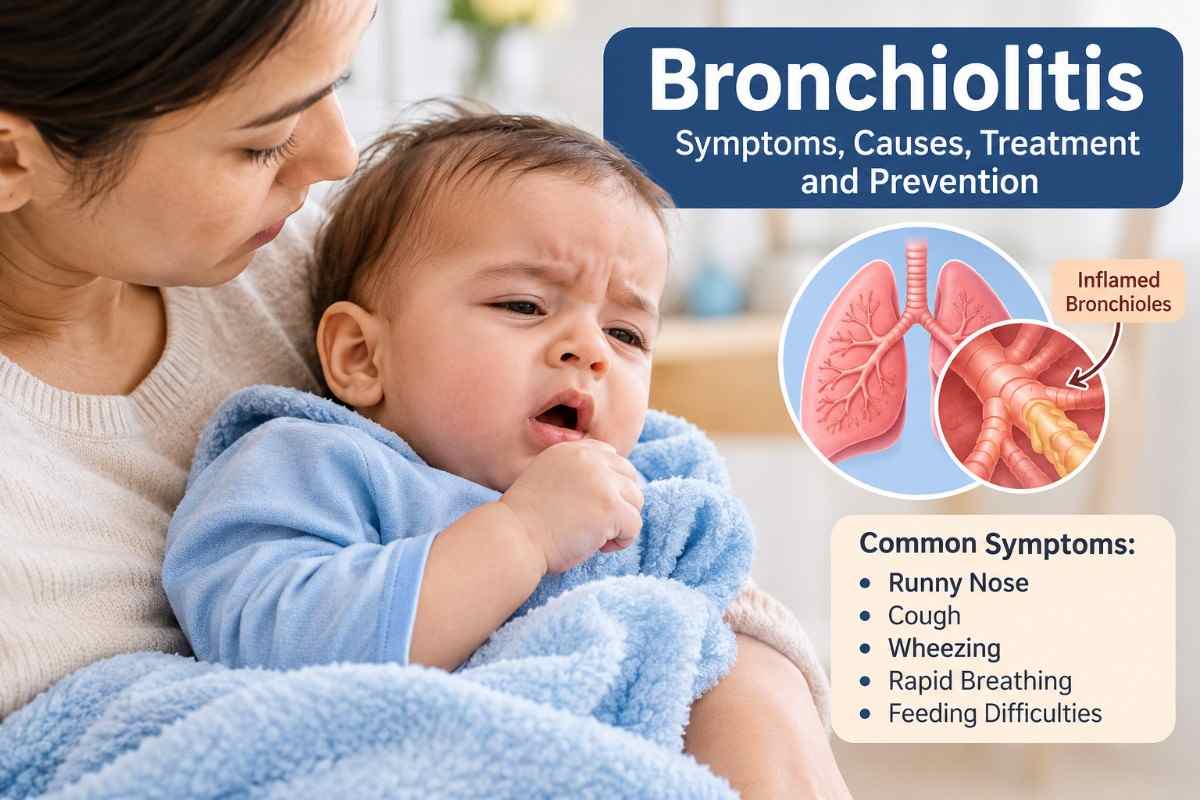
Bronchiolitis is a common respiratory infection that affects the small airways in the lungs, particularly in babies and children under two years of age. It usually begins with symptoms similar to a common cold, such as a runny nose, sneezing, and a mild cough. However, as the infection progresses, it can cause breathing difficulties, wheezing, and trouble feeding.
For many babies, bronchiolitis is a mild illness that improves with proper home care and time. However, some infants, especially newborns and premature babies, may develop more serious breathing problems and need hospital treatment.
In this guide, we explain everything you need to know about bronchiolitis, including its symptoms, causes, diagnosis, treatment, recovery, and potential complications.
What Is Bronchiolitis?
Bronchiolitis is a viral infection that causes inflammation and swelling in the bronchioles, which are the tiny air passages inside the lungs. These small airways carry air to the lungs, helping the body receive the oxygen it needs.
When a baby develops bronchiolitis, the bronchioles become swollen and may fill with mucus. This makes it harder for air to move in and out of the lungs, sometimes resulting in wheezing, coughing, and rapid breathing.
Bronchiolitis mainly affects infants and children younger than two years, with the highest risk of severe illness occurring in babies under three months old.
The infection is more common during fall and winter in many parts of the United States. Respiratory syncytial virus (RSV) is the most common cause, although other respiratory viruses can also trigger the condition.
What Causes Bronchiolitis?
Bronchiolitis is usually caused by a viral infection. The virus enters the respiratory system through the nose or mouth and spreads to the small airways in the lungs.
The infection causes inflammation, swelling, and increased mucus production. As a result, the tiny airways become narrower, making breathing more difficult.
Common viruses responsible for bronchiolitis include:
- Respiratory Syncytial Virus (RSV): The most common cause of bronchiolitis in infants and young children.
- Rhinovirus: A common cold virus that can sometimes cause lower respiratory infections.
- Influenza Virus: The virus responsible for seasonal flu can also lead to bronchiolitis.
- Human Metapneumovirus (HMPV): A respiratory virus that can cause infections ranging from mild cold symptoms to more serious lung problems.
- Parainfluenza Virus: A respiratory virus that can cause different airway infections in children.
- Adenovirus: A virus that can affect the respiratory tract and sometimes cause bronchiolitis.
Not every child exposed to these viruses develops bronchiolitis. The severity depends on several factors, including the child’s age, immune system, and overall health.
15 Common Symptoms of Bronchiolitis
Bronchiolitis often starts like an ordinary cold. Symptoms may become more noticeable after two to three days as the infection spreads into the smaller airways.
Common symptoms include:
- Runny Nose: A baby may develop a watery or congested nose during the early stages of infection.
- Nasal Congestion: Swelling and mucus in the nasal passages can make breathing and feeding uncomfortable.
- Frequent Sneezing: Sneezing may occur as the respiratory system reacts to the viral infection.
- Persistent Cough: A dry or mucus-producing cough may develop and gradually become more noticeable.
- Wheezing: A whistling sound may be heard when the baby breathes, particularly while breathing out.
- Rapid Breathing: The baby may breathe faster than usual because the small airways are narrowed.
- Difficulty Breathing: Chest muscles may work harder to help the baby breathe.
- Fever: Some babies develop a mild fever, although fever is not always present.
- Poor Feeding: Nasal congestion and breathing difficulties may make breastfeeding or bottle-feeding challenging.
- Irritability: Babies may become unusually fussy because of discomfort and interrupted sleep.
- Reduced Activity: An infected baby may appear less active or more tired than usual.
- Difficulty Sleeping: Coughing and breathing discomfort can interrupt normal sleep.
- Dehydration: Reduced milk intake may lead to fewer wet diapers and other signs of dehydration.
- Chest Retractions: The skin between or beneath the ribs may pull inward during breathing.
- Apnea: Some young infants, particularly premature babies, may experience short pauses in breathing.
Symptoms vary from child to child. Not every baby experiences all these signs.
Early Signs of Bronchiolitis in Babies
Recognizing bronchiolitis early can help parents seek medical advice before symptoms become severe.
The first signs often appear similar to a common cold. A baby may have a runny nose, mild cough, sneezing, or reduced interest in feeding.
Over the next few days, the infection may affect the lower airways. Parents might notice faster breathing, wheezing, persistent coughing, or difficulty drinking milk.
One important warning sign is a change in the baby’s normal breathing pattern. If the baby is breathing unusually fast, pulling in the skin around the ribs, or struggling to feed because of breathing difficulties, seek prompt medical assessment.
Babies younger than three months deserve particular attention because their symptoms can worsen quickly.
How Does Bronchiolitis Spread?
Bronchiolitis is contagious because the viruses responsible for the infection can spread easily from one person to another.
The infection can spread through several routes:
- Respiratory Droplets: When an infected person coughs or sneezes, virus-containing droplets can enter another person’s nose, mouth, or eyes.
- Direct Contact: Touching an infected person’s hands or face and then touching the baby’s face can spread the virus.
- Contaminated Surfaces: Viruses can survive on certain surfaces, toys, doorknobs, and frequently touched objects.
- Close Contact: Hugging, kissing, and spending time near someone with a respiratory infection can increase the risk of transmission.
A child with bronchiolitis may spread the virus to other children and adults, even when their symptoms initially appear mild.
Risk Factors for Bronchiolitis
Although any infant can develop bronchiolitis, certain factors increase the likelihood of severe infection.
- Young Age: Babies younger than six months have a greater risk of developing serious symptoms.
- Premature Birth: Babies born prematurely may have less developed lungs and immune systems.
- Low Birth Weight: Some babies with low birth weight may be more vulnerable to respiratory infections.
- Chronic Lung Conditions: Existing lung problems can increase the risk of complications.
- Congenital Heart Disease: Certain heart conditions can make respiratory infections more difficult to manage.
- Weakened Immune System: Babies with immune deficiencies may have difficulty fighting viral infections.
- Exposure to Tobacco Smoke: Secondhand smoke can irritate the respiratory system and increase the risk of severe respiratory illness.
- Crowded Living Conditions: Close contact with infected individuals can increase exposure to respiratory viruses.
- Lack of Breastfeeding: Breast milk provides immune protection, although breastfed babies can also develop bronchiolitis.
When Is Bronchiolitis Most Common?
Bronchiolitis can occur throughout the year, but infections often increase during fall and winter in the United States.
RSV is a major cause of seasonal bronchiolitis. The timing of RSV activity can vary by region and year.
The condition is most common in infants during their first year of life, particularly between three and six months of age.
Parents should remain alert during respiratory virus season, especially if their baby was born prematurely or has an underlying heart or lung condition.
How Is Bronchiolitis Diagnosed?
Doctors usually diagnose bronchiolitis by examining the baby, reviewing symptoms, and checking breathing patterns.
The diagnostic process may include:
1. Medical History: The doctor asks about the baby’s symptoms, when they started, feeding habits, fever, and any recent contact with someone who has a respiratory infection.
2. Physical Examination: The doctor examines the baby’s chest and listens to the lungs using a stethoscope to identify wheezing or crackling sounds.
3. Breathing Assessment: The doctor checks the baby’s breathing rate and looks for signs of respiratory distress, such as chest retractions or nasal flaring.
4. Oxygen Level Measurement: A pulse oximeter may be used to measure the amount of oxygen in the baby’s blood.
5. Hydration Assessment: The doctor checks whether the baby is drinking enough milk and producing an appropriate number of wet diapers.
6. Additional Tests: Blood tests, chest X-rays, and viral testing are not routinely necessary for typical bronchiolitis. A doctor may recommend additional investigations when the diagnosis is uncertain or another condition is suspected.
Treatment for Bronchiolitis
There is no specific medicine that cures ordinary viral bronchiolitis. Most babies recover naturally as their immune system fights the infection.
Treatment mainly focuses on keeping the baby comfortable, maintaining hydration, and monitoring breathing.
1. Nasal Saline Drops
Saline nasal drops can help loosen mucus inside the baby’s nose. This may make breathing and feeding more comfortable, particularly before breastfeeding or bottle-feeding.
2. Gentle Nasal Suctioning
A doctor may recommend using a nasal aspirator or bulb syringe to gently remove mucus when nasal congestion interferes with feeding or breathing.
Avoid aggressive or deep suctioning unless specifically directed by a healthcare professional.
3. Maintaining Hydration
Babies need sufficient fluids while recovering. Breast milk or formula should continue to be offered.
If the baby struggles to finish a regular feed, smaller and more frequent feeds may be easier.
4. Fever Management
If the baby develops a fever or appears uncomfortable, a healthcare professional may recommend an appropriate fever-relieving medicine based on the child’s age and weight.
Never give aspirin to children, and do not give cough or cold medicines to infants without medical advice.
5. Oxygen Therapy
Babies with low oxygen levels may require supplemental oxygen in a hospital. Doctors monitor their breathing and oxygen levels to determine whether additional support is necessary.
6. Intravenous or Tube Feeding
If a baby cannot drink enough milk because of breathing difficulties, healthcare professionals may provide fluids through a feeding tube or an intravenous line.
7. Breathing Support
In severe cases, babies may need additional respiratory support, such as high-flow oxygen or mechanical ventilation.
The type of treatment depends on the baby’s breathing, oxygen levels, hydration, and overall condition.
Important: Antibiotics do not treat viral bronchiolitis. Medicines such as bronchodilators and corticosteroids are also not routinely recommended for typical bronchiolitis. A doctor may prescribe other treatments if a separate condition or complication is identified.
10 Home Care Tips for Babies With Bronchiolitis
Most babies with mild bronchiolitis can recover at home with appropriate care and regular monitoring.
The following measures may help:
- Offer Smaller, Frequent Feeds: Give breast milk or formula in smaller amounts more frequently if your baby becomes tired during feeding.
- Use Saline Nasal Drops: Ask your pediatrician about saline drops to help relieve nasal congestion.
- Keep the Nose Clear: Gentle suctioning before feeding may make it easier for your baby to drink milk.
- Monitor Wet Diapers: Keep track of your baby’s urine output to identify possible dehydration.
- Avoid Tobacco Smoke: Keep your baby away from cigarette smoke, vaping aerosols, and other respiratory irritants.
- Wash Your Hands Frequently: Clean your hands before feeding, holding, or touching your baby.
- Clean Frequently Touched Surfaces: Regularly clean toys, feeding equipment, and household surfaces.
- Allow Adequate Rest: Give your baby plenty of opportunities to sleep and recover.
- Monitor Breathing: Watch for unusually fast breathing, chest retractions, wheezing, or pauses in breathing.
- Follow Medical Advice: Attend recommended follow-up appointments and contact your doctor if symptoms worsen.
Safe sleeping reminder: Even when a baby has a blocked nose or cough, always place them on their back on a firm, flat, non-inclined sleep surface. Do not use pillows, wedges, or inclined sleepers to make breathing easier.
When to Seek Medical Help for Bronchiolitis?
Knowing when to seek medical help is essential because bronchiolitis can sometimes become serious, particularly in very young infants.
Emergency warning signs
Seek emergency medical care immediately if your baby:
- Has severe difficulty breathing or is struggling to breathe.
- Has pauses in breathing (apnea).
- Develops blue or grey lips, tongue, or skin.
- Has severe chest retractions or grunting while breathing.
- Becomes unusually floppy, unresponsive, or difficult to wake.
Contact a healthcare professional promptly if your baby:
- Is feeding significantly less than usual.
- Has noticeably fewer wet diapers.
- Shows signs of dehydration.
- Has worsening coughing or breathing symptoms.
- Is unusually tired, irritable, or less active.
- Is younger than three months and has a temperature of 38°C (100.4°F) or higher.
Do not wait for all symptoms to appear before seeking medical attention. If your baby looks seriously unwell, seek emergency help.
How Long Does Bronchiolitis Last?
Most babies with bronchiolitis begin to improve within one to two weeks, although some symptoms can last longer.
The illness generally follows this pattern:
| Stage | What to Expect |
|---|---|
| Days 1–2 | Runny nose, sneezing, and mild cough may appear. |
| Days 3–5 | Coughing, wheezing, and breathing difficulties may become more noticeable. |
| Days 5–7 | Many babies begin showing gradual improvement. |
| Days 7–14 | Breathing and feeding generally improve as the infection resolves. |
| Up to 3 weeks | A lingering cough may continue in some babies. |
Symptoms often become most severe between days three and five. However, recovery varies depending on the baby’s age, overall health, and severity of infection.
If symptoms continue to worsen rather than improve, contact a healthcare professional.
Can Bronchiolitis Cause Complications?
Most babies recover without serious complications. However, severe bronchiolitis can sometimes lead to health problems that require hospital treatment.
Possible complications include:
- Dehydration: Difficulty feeding can cause babies to receive insufficient fluids.
- Low Blood Oxygen: Narrowed airways and lung inflammation may reduce oxygen levels.
- Apnea: Some young infants may experience temporary pauses in breathing.
- Respiratory Failure: Severe inflammation and breathing difficulties can prevent the lungs from supplying enough oxygen.
- Pneumonia: A separate or additional lung infection may sometimes develop.
- Hospitalization: Babies with severe breathing difficulties or dehydration may need hospital monitoring and treatment.
Early medical assessment can help identify complications and ensure appropriate care.
How to Prevent Bronchiolitis in Babies
There is no guaranteed way to prevent every case of bronchiolitis, but several precautions can reduce the risk of respiratory infections.
- Wash Hands Regularly: Wash your hands with soap and water before touching or feeding your baby.
- Avoid Sick Contacts: Keep newborns away from people who have coughs, colds, or other respiratory symptoms.
- Clean Toys and Surfaces: Disinfect frequently touched household items and baby toys appropriately.
- Avoid Sharing Personal Items: Do not share feeding utensils, cups, or towels with someone who is sick.
- Avoid Secondhand Smoke: Maintain a smoke-free home and car.
- Continue Breastfeeding: Breast milk provides antibodies and other immune-supporting components.
- Practice Respiratory Hygiene: Cover coughs and sneezes and dispose of used tissues properly.
- Discuss RSV Protection: Ask your healthcare provider about available RSV immunization options for pregnant women and preventive antibody products for eligible infants.
RSV Prevention for Babies
In the United States, the CDC recommends protecting infants against severe RSV through one of two main options:
- Maternal RSV Vaccination: An RSV vaccine during pregnancy can help transfer protective antibodies to the baby.
- Infant RSV Antibody Protection: Eligible infants can receive a preventive antibody product that helps reduce the risk of severe RSV illness.
Most infants do not need both options, although certain circumstances may require individual medical assessment. These preventive measures protect against severe RSV disease, not every virus that can cause bronchiolitis.
Difference Between Bronchiolitis and Bronchitis
Although their names sound similar, bronchiolitis and bronchitis affect different parts of the respiratory system.
| Feature | Bronchiolitis | Bronchitis |
|---|---|---|
| Affected area | Small airways (bronchioles) | Larger airways (bronchi) |
| Common age group | Babies and children under 2 | Children and adults |
| Main cause | Usually viral infections | Usually viral infections |
| Common symptoms | Wheezing, coughing, rapid breathing | Coughing, mucus production |
| Common treatment | Supportive care | Supportive care |
| Serious concerns | Breathing difficulties and dehydration | Persistent cough and breathing discomfort |
Who Is at Higher Risk of Severe Bronchiolitis?
Some babies need closer monitoring because their developing respiratory systems may be more vulnerable to viral infections.
The following groups have a higher risk of severe illness:
- Premature Babies: Babies born before 37 weeks of pregnancy may have less developed lungs.
- Newborns: Very young infants have a higher risk of developing serious respiratory symptoms.
- Babies With Heart Conditions: Certain congenital heart conditions can increase the risk of complications.
- Babies With Chronic Lung Disease: Existing lung problems may make recovery more difficult.
- Immunocompromised Babies: Babies with weakened immune systems may have difficulty fighting infections.
Parents of high-risk infants should discuss preventive measures and early treatment plans with their pediatrician.
FAQ’s
Is bronchiolitis contagious?
Yes, bronchiolitis is contagious because the viruses that cause it can spread through respiratory droplets, direct contact, and contaminated surfaces.
Can adults get bronchiolitis?
Bronchiolitis mainly affects babies and young children. Adults can become infected with the same viruses, although the illness usually presents as a cold or another respiratory infection.
Is bronchiolitis dangerous for babies?
Most babies recover without serious problems, but severe cases can cause breathing difficulties, dehydration, and low oxygen levels.
Can bronchiolitis go away on its own?
Yes, most cases resolve naturally as the baby’s immune system fights the viral infection. Supportive care helps manage symptoms during recovery.
Does bronchiolitis require antibiotics?
No, antibiotics do not work against the viruses responsible for bronchiolitis. They are only used when a bacterial infection is also suspected or diagnosed.
Can bronchiolitis turn into pneumonia?
Bronchiolitis and pneumonia are different respiratory conditions. A baby with worsening symptoms may need medical evaluation to check for pneumonia or another complication.
Can babies get bronchiolitis more than once?
Yes, babies can develop bronchiolitis more than once because several different viruses can cause the infection.
Is wheezing normal with bronchiolitis?
Wheezing is a common symptom caused by inflammation and mucus in the small airways. However, severe or worsening wheezing requires medical assessment.
Can breastfeeding help babies with bronchiolitis?
Breast milk provides immune-supporting antibodies and nutrition. Continuing breastfeeding during recovery can help maintain hydration and nutritional intake.
Can bronchiolitis cause long-term lung problems?
Most babies recover completely. Some children who experience severe RSV infections may have recurrent wheezing later in childhood, although this does not mean every affected child develops asthma.
How can I help my baby recover from bronchiolitis?
Offer frequent breast milk or formula feeds, use saline nasal drops when appropriate, gently clear nasal mucus, and monitor breathing.
How long is bronchiolitis contagious?
Bronchiolitis can be contagious for several days, and some viruses, such as RSV, may spread for three to eight days or longer in certain individuals.
Can a baby go outside with bronchiolitis?
Yes, a baby with mild bronchiolitis may go outside if they feel comfortable, breathe normally, and have no fever. Avoid crowded places and contact with sick people.
Can a baby survive bronchiolitis?
Yes, most babies recover completely from bronchiolitis. However, severe cases may require hospital treatment and breathing support.
Do babies sleep a lot with bronchiolitis?
Yes, babies may sleep more than usual because of tiredness and illness. However, unusual sleepiness or difficulty waking a baby requires immediate medical attention.
What are the worst days of bronchiolitis?
Symptoms are usually worst between days three and five after they begin, although the timing can vary between babies.
What is the peak age for bronchiolitis?
Bronchiolitis is most common in babies under one year, particularly those between three and six months old.
What happens if bronchiolitis is left untreated?
Most mild cases improve naturally, but severe bronchiolitis can lead to dehydration, low oxygen levels, and serious breathing difficulties if medical care is delayed.
How is bronchiolitis cured?
There is no specific cure for viral bronchiolitis. Most babies recover with supportive care, including adequate fluids, nasal saline, and breathing support when necessary.
Is bronchiolitis more serious than bronchitis?
Bronchiolitis can be more concerning in young babies because it affects their tiny airways and may cause breathing difficulties. The seriousness of either condition depends on the patient’s age and overall health.
Sources / References:
Disclaimer:
This article is intended for educational purposes only and should not replace professional medical advice, diagnosis, or treatment. Always consult a qualified healthcare professional regarding your baby’s symptoms or medical condition.
Also Read: