A missing tooth can affect much more than your smile. It may make chewing uncomfortable, change the way you speak, and cause nearby teeth to shift into the empty space. Over time, these changes can also affect your bite and overall oral health.
One common way to replace missing teeth is with a dental bridge. It is a fixed dental restoration that fills the gap left by one or more missing teeth using artificial teeth supported by neighboring natural teeth or dental implants.
In this guide, you will learn what dental bridges are, their types, benefits, procedure, cost, potential side effects, and how to care for them.
What Is a Dental Bridge?
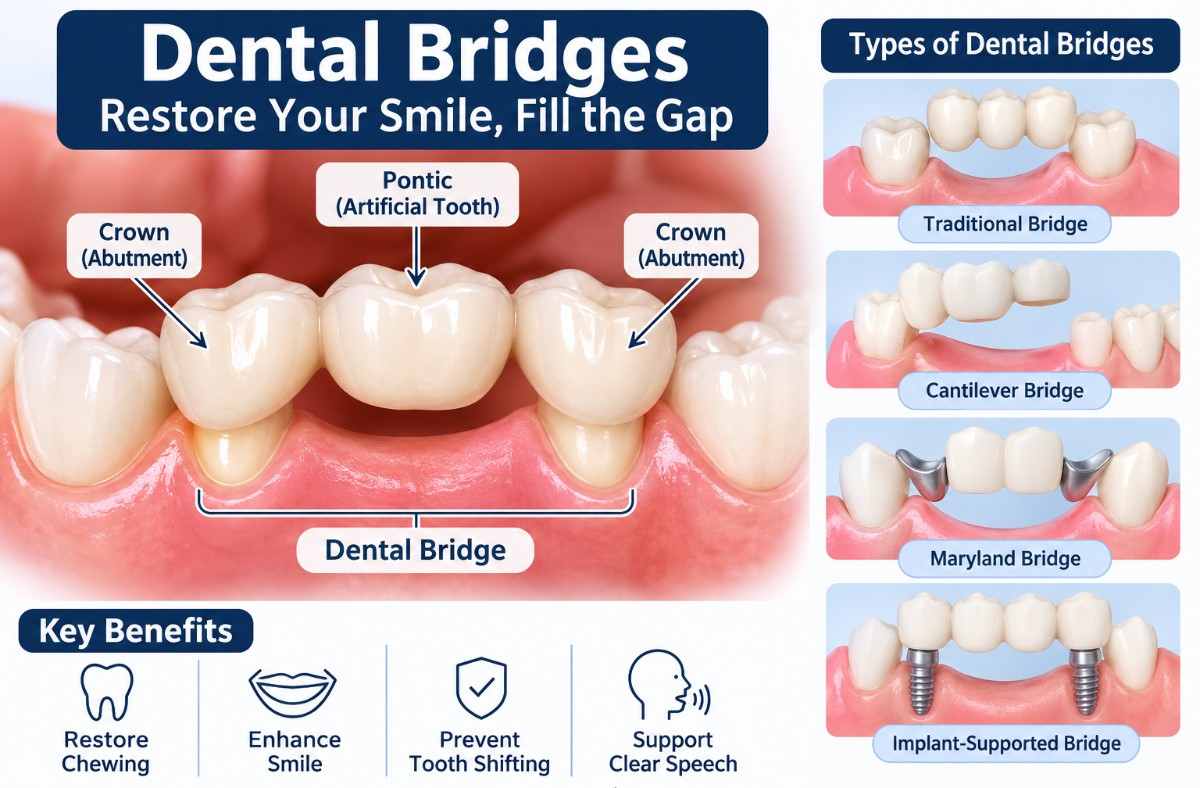
A dental bridge is a custom-made dental restoration used to replace one or more missing teeth. It consists of one or more artificial teeth, called pontics, that fill the gap between existing teeth.
The artificial teeth are supported by natural teeth or dental implants on either side of the gap. These supporting structures are known as abutments.
Unlike removable dentures, most traditional dental bridges are fixed in place and cannot be taken out by the patient.
A dental bridge can help:
- Replace one or more missing teeth.
- Restore your ability to chew food comfortably.
- Improve the appearance of your smile.
- Support clearer speech when missing teeth affect pronunciation.
- Prevent nearby teeth from drifting into the empty space.
- Maintain a more balanced bite.
Dental bridges are available in different materials and designs. Your dentist will recommend an option based on your oral health, the location of the missing tooth, and your budget.
How Does a Dental Bridge Work?
A dental bridge works by filling the empty space created by missing teeth. The artificial tooth is held in position by crowns attached to neighboring supporting teeth or by dental implants.
For example, if you lose one tooth between two healthy teeth, your dentist may prepare the neighboring teeth for crowns and connect an artificial tooth between them.
The result is a continuous restoration that looks and functions like natural teeth.
Types of Dental Bridges
There are several types of dental bridges. Each design has a different structure and is suitable for particular dental situations.
1. Traditional Dental Bridge
A traditional dental bridge is one of the most commonly used options. It consists of an artificial tooth held between two dental crowns placed over natural teeth on either side of the gap.
Best for: People who have healthy supporting teeth on both sides of the missing tooth.
Main advantage: It provides strong support and is suitable for replacing missing teeth in different areas of the mouth.
Limitation: The supporting natural teeth usually need to be reshaped to accommodate the crowns.
2. Cantilever Dental Bridge
A cantilever dental bridge is supported by a crown attached to only one natural tooth rather than two.
It may be considered when there is only one suitable supporting tooth next to the missing tooth.
Best for: Selected cases where a suitable supporting tooth is available on one side.
Main advantage: It does not require a supporting tooth on both sides of the gap.
Limitation: It can place additional pressure on the supporting tooth, so it is not appropriate for every location, particularly areas exposed to heavy chewing forces.
3. Maryland Dental Bridge
A Maryland dental bridge, also called a resin-bonded bridge, uses a metal or ceramic framework with small wings attached to the back of neighboring teeth.
Unlike traditional bridges, it generally requires little or no removal of healthy tooth structure.
Best for: Replacing certain missing front teeth, especially when neighboring teeth are healthy.
Main advantage: It is more conservative because it usually requires less preparation of surrounding teeth.
Limitation: The bridge may become loose or detach, particularly if the bonding is affected by biting forces.
4. Implant-Supported Dental Bridge
An implant-supported dental bridge uses dental implants placed in the jawbone to support artificial teeth.
Instead of relying on natural teeth, the bridge is attached to implants that act as artificial tooth roots.
Best for: People who are missing several teeth in a row and have sufficient bone support or are suitable for additional bone procedures.
Main advantage: It does not require reshaping neighboring natural teeth and provides stable support.
Limitation: Treatment involves oral surgery, a longer healing period, and generally higher costs.
Dental Bridge Materials
Dental bridges can be made from several materials. The choice depends on appearance, strength, location, and cost.
| Material | Main Features |
|---|---|
| Porcelain | Natural-looking appearance and good color matching |
| Zirconia | Strong, durable, and tooth-colored |
| Porcelain-Fused-to-Metal (PFM) | Combines a metal framework with a porcelain outer layer |
| Metal Alloys | Strong and resistant to wear, but less natural-looking |
| Composite Resin | Used in selected restorations and temporary applications |
Which dental bridge material is best?
Zirconia and porcelain-based bridges are popular choices because they can provide a natural appearance. Metal-based options may be considered when strength is especially important. Your dentist can help select the most suitable material for your situation.
Benefits of Dental Bridges
Dental bridges offer several functional and cosmetic advantages when properly planned and maintained.
1. Replace Missing Teeth: Dental bridges fill empty spaces and restore the appearance of a complete smile.
2. Improve Chewing Ability: They help restore the ability to bite and chew many foods more comfortably.
3. Enhance Your Smile: A well-made bridge can blend with surrounding teeth and improve smile appearance.
4. Support Clear Speech: Replacing missing teeth may help improve pronunciation when the gap affects speech.
5. Prevent Tooth Shifting: A bridge can help prevent adjacent teeth from drifting into the empty space.
6. Maintain Bite Alignment: It helps preserve the relationship between upper and lower teeth when appropriately designed.
7. Provide Fixed Tooth Replacement: Most dental bridges remain in place and do not need to be removed daily.
8. Restore Facial Appearance: Replacing missing teeth can help maintain normal dental support for the lips and cheeks.
9. Improve Confidence: Restoring visible missing teeth may make some people feel more comfortable smiling and speaking.
10. Offer Natural-Looking Results: Tooth-colored materials can be matched to surrounding teeth.
11. Reduce Food Trapping in the Gap: Filling an empty space may reduce food accumulation in that particular area, although proper cleaning remains essential.
12. Restore Dental Function: A bridge can help restore everyday activities such as eating and speaking.
13. Provide a Relatively Quick Treatment: Traditional bridges can often be completed in a few dental appointments.
14. Offer Different Treatment Options: Traditional, cantilever, Maryland, and implant-supported bridges provide different solutions.
15. Avoid Removable Dentures: Fixed bridges offer an alternative for people who prefer not to wear removable tooth replacements.
16. Support Long-Term Oral Function: A properly maintained bridge can provide years of useful service.
17. Protect the Empty Space: It replaces the missing tooth rather than leaving the gap untreated.
18. Improve Tooth Appearance: Bridges can restore the shape and visible structure of the missing tooth.
19. Provide Stable Support: Fixed bridges are designed to remain securely in position during normal activities.
20. Offer a Customized Solution: Dental bridges are made to fit the patient’s bite, tooth shape, and smile.
How Much Do Dental Bridges Cost?
The cost of a dental bridge depends on the type of bridge, number of replacement teeth, materials, dentist’s experience, location, and additional dental procedures required.
The cost of dental bridges in the USA generally ranges from $500 to $5,000 or more, depending on the type, materials, number of missing teeth, and dental clinic.
Average Cost of Dental Bridges by Type
| Type of Dental Bridge | Estimated Cost |
|---|---|
| Traditional Bridge | $2,000–$5,000 |
| Cantilever Bridge | $2,000–$5,000 |
| Maryland Bridge | $1,500–$2,500 |
| Implant-Supported Bridge | $5,000–$15,000+ |
Factors Affecting Dental Bridge Costs
- Bridge Type: Implant-supported bridges usually cost more.
- Materials: Zirconia and porcelain may affect the price.
- Missing Teeth: Replacing multiple teeth increases costs.
- Location: Dental prices vary by city and clinic.
- Additional Treatment: Extractions, root canals, or bone grafting may add expenses.
Does Insurance Cover Dental Bridges?
Many dental insurance plans cover part of the cost of dental bridges. Coverage depends on your policy, annual limits, deductibles, and waiting periods.
Tip: Compare dental clinic prices and request a complete treatment estimate before choosing a dental bridge.
Dental Bridge Procedure: Step-by-Step
Getting a dental bridge usually requires two or more dental appointments, depending on the type of bridge and the complexity of your treatment.
Here is what you can generally expect when getting a traditional dental bridge.
Step 1: Dental Examination
Your dentist examines your teeth, gums, and jaw. Dental X-rays may be taken to check the supporting teeth and surrounding bone.
The dentist will determine whether a traditional bridge, Maryland bridge, or implant-supported bridge is appropriate.
Step 2: Preparing the Supporting Teeth
For a traditional bridge, the dentist reshapes the neighboring teeth so that dental crowns can fit over them.
Local anesthesia is generally used to make the procedure comfortable.
This preparation involves removing some natural tooth enamel, which cannot grow back.
Step 3: Taking Dental Impressions
Your dentist takes digital scans or physical impressions of your teeth. These measurements help a dental laboratory create a bridge that fits your mouth and bite.
The shade of the artificial teeth is also selected to match your natural teeth.
Step 4: Placing a Temporary Bridge
A temporary bridge may be placed while your permanent restoration is being prepared.
It protects the prepared teeth and helps maintain appearance and function during the waiting period.
Step 5: Fitting the Permanent Bridge
Once the final bridge is ready, your dentist removes the temporary restoration and checks the fit, shape, color, and bite.
If everything looks correct, the permanent bridge is attached using dental cement or the appropriate attachment system.
Step 6: Final Adjustments
Your dentist checks whether the bridge feels comfortable when you bite and chew.
Small adjustments may be made to improve the fit and prevent excessive pressure.
10 Possible Side Effects and Risks of Dental Bridges
Dental bridges are generally well-tolerated, but like other dental treatments, they have some potential disadvantages and complications.
1. Tooth Sensitivity: Supporting teeth may become temporarily sensitive to hot, cold, or sweet foods after preparation.
2. Gum Irritation: The gums surrounding the bridge may become irritated, especially during the initial adjustment period.
3. Tooth Decay: Bacteria and plaque can accumulate around supporting crowns, increasing the risk of cavities if cleaning is inadequate.
4. Gum Disease: Poor oral hygiene may cause inflammation or infection of the gums around the bridge.
5. Bridge Loosening: Dental cement can weaken over time, causing the bridge to become loose or detach.
6. Supporting Tooth Damage: The natural teeth supporting a traditional bridge may become damaged, fractured, or weakened.
7. Difficulty Cleaning: Food particles and plaque can collect underneath the artificial tooth, making cleaning more challenging.
8. Bite Discomfort: An improperly adjusted bridge may cause discomfort or excessive pressure when chewing.
9. Chipping or Cracking: Porcelain and other ceramic materials can chip or fracture under excessive biting pressure.
10. Need for Replacement: Dental bridges do not last forever and may eventually require repair or replacement.
Not everyone experiences these problems. Proper treatment planning, regular dental checkups, and good oral hygiene can help reduce the risks.
How Long Do Dental Bridges Last?
A dental bridge generally lasts around 5 to 15 years, although some may last longer with proper care.
Its lifespan depends on several factors, including:
- The type and material of the bridge.
- The strength of the supporting teeth.
- Your oral hygiene habits.
- The health of your gums.
- Your eating and chewing habits.
- Regular dental examinations.
- Whether you grind or clench your teeth.
A bridge that becomes loose, cracked, painful, or uncomfortable should be examined by a dentist rather than ignored.
How to Care for a Dental Bridge
Proper maintenance is essential for protecting your dental bridge and the natural teeth supporting it.
Here are some practical care tips:
1. Brush Twice Daily: Brush your teeth twice a day using fluoride toothpaste and a soft-bristled toothbrush.
2. Clean Under the Bridge: Use a floss threader or special bridge floss to remove food particles and plaque underneath the artificial tooth.
3. Use an Interdental Brush: An appropriately sized interdental brush can help clean difficult-to-reach areas.
4. Avoid Very Hard Foods: Avoid biting directly into extremely hard foods that could damage the bridge.
5. Limit Sticky Foods: Be careful with sticky foods that may place additional stress on the restoration.
6. Visit Your Dentist Regularly: Schedule professional dental examinations and cleanings as recommended.
7. Avoid Using Teeth as Tools: Never use your teeth to open packages, crack nuts, or bite non-food objects.
8. Manage Teeth Grinding: If you grind your teeth during sleep, ask your dentist whether a night guard is appropriate.
9. Maintain Healthy Gums: Keep the surrounding gum tissue clean to reduce the risk of inflammation.
10. Check for Changes: Contact your dentist if the bridge becomes loose, painful, cracked, or uncomfortable.
Who Is a Good Candidate for Dental Bridges?
Dental bridges may be suitable for people who:
- Have one or more missing teeth.
- Have healthy supporting teeth or suitable dental implants.
- Have generally healthy gums.
- Want a fixed option for replacing missing teeth.
- Have difficulty chewing because of missing teeth.
- Want to restore the appearance of their smile.
- Have sufficient support for the proposed restoration.
Your dentist may recommend treating cavities, gum disease, or other oral health problems before placing a bridge.
Who Should Avoid or Delay Getting a Dental Bridge?
A dental bridge may not be the right option for everyone.
People with the following conditions may need additional treatment or an alternative restoration:
- Severe Gum Disease: Active periodontal disease may weaken the support around natural teeth.
- Weak Supporting Teeth: Teeth with extensive damage may not be strong enough to support a traditional bridge.
- Untreated Tooth Decay: Cavities should generally be treated before bridge placement.
- Poor Oral Hygiene: Difficulty maintaining proper cleaning may increase the risk of complications.
- Insufficient Bone Support: This may affect suitability for an implant-supported bridge.
- Uncontrolled Teeth Grinding: Excessive biting forces may damage or loosen the restoration.
Having one of these conditions does not automatically mean you can never get a dental bridge. Your dentist can assess your oral health and discuss appropriate treatment options.
Can You Eat Normally With a Dental Bridge?
Yes. Most people can eat a wide variety of foods after adjusting to their dental bridge.
A dental bridge restores chewing function, but it is important to be careful during the initial adjustment period.
Foods you can generally eat:
- Cooked vegetables.
- Soft fruits.
- Eggs.
- Fish.
- Rice.
- Yogurt.
- Pasta.
- Soft bread.
- Cooked chicken.
Foods to be careful with:
- Hard candies.
- Ice cubes.
- Very sticky caramel.
- Hard nuts.
- Extremely chewy foods.
- Tough meat.
Cutting food into smaller pieces and chewing evenly can make eating more comfortable.
What Happens If You Do Not Replace a Missing Tooth?
Leaving a missing tooth untreated may lead to several dental problems, although the risks vary depending on the location and number of missing teeth.
Possible consequences include:
- Shifting Teeth: Neighboring teeth may move toward the empty space.
- Bite Changes: Changes in tooth position can affect how the upper and lower teeth meet.
- Chewing Difficulties: Missing teeth may make it harder to chew certain foods.
- Food Accumulation: Food may become trapped around the gap.
- Opposing Tooth Movement: The tooth opposite the empty space may gradually move into it.
- Changes in Appearance: Missing front teeth can affect the appearance of your smile.
A dentist can determine whether replacing the missing tooth is necessary and which treatment is most suitable.
FAQ’s
Are dental bridges permanent?
Dental bridges are fixed restorations, but they are not permanent for life. They may need replacement because of normal wear, damage, or problems with supporting teeth.
Is dental bridge painful?
The procedure is generally comfortable because local anesthesia is used when necessary. Some sensitivity or mild gum discomfort may occur afterward.
How many teeth can a dental bridge replace?
A dental bridge commonly replaces one to three missing teeth in a row. Some cases may allow longer bridges, depending on the available support and bite forces.
Can a dental bridge look like natural teeth?
Yes. Porcelain and zirconia bridges can be customized to match the color, shape, and size of surrounding natural teeth.
Can you brush your teeth with a dental bridge?
Yes. Brush twice daily using fluoride toothpaste and a soft-bristled toothbrush. You should also clean underneath the bridge using suitable dental floss or interdental cleaning tools.
Can a dental bridge fall out?
Yes. A bridge may become loose or detach if the dental cement weakens, supporting teeth become damaged, or the restoration experiences excessive pressure.
Can you get a dental bridge with gum disease?
Active gum disease should generally be treated before bridge placement. Healthy gums and supporting structures are important for successful treatment.
Is a dental bridge better than an implant?
Neither option is universally better. Bridges may offer a quicker treatment without implant surgery, while implants can avoid reshaping neighboring healthy teeth. Your dentist can recommend an option based on your oral health.
Can a dental bridge be whitened?
Most porcelain, zirconia, and metal-based bridge materials do not respond to traditional tooth-whitening treatments like natural teeth. Your dentist can discuss professional cleaning or replacement if the color no longer matches.
How do you know if your dental bridge needs replacement?
A loose bridge, visible cracks, persistent pain, changes in your bite, or recurring gum problems may indicate that your restoration needs professional evaluation.
Is it better to have a bridge or denture?
A dental bridge is fixed and does not need daily removal, while dentures are removable and may be more affordable. The better option depends on the number of missing teeth, oral health, and budget.
Which is more painful, a bridge or an implant?
Dental implants generally involve more discomfort because they require surgery. Dental bridges usually involve less invasive treatment, although both procedures can be performed with local anesthesia.
Can I bite an apple with a bridge?
Yes, you can eat apples with a dental bridge after adjusting to it. However, cutting apples into smaller pieces is safer than biting directly into hard foods.
What can cause a dental bridge to fail?
A dental bridge can fail due to tooth decay, gum disease, weak supporting teeth, poor oral hygiene, excessive biting pressure, or damage to the bridge.
Can food get stuck under a dental bridge?
Yes, food particles can collect underneath a dental bridge, especially around the artificial tooth. Use a floss threader or interdental brush to clean the area.
Can a tooth rot under a bridge?
Yes, supporting teeth can develop cavities beneath or around dental crowns if bacteria and plaque accumulate. Regular brushing, flossing, and dental checkups help reduce this risk.
Sources / References:
Disclaimer:
This article is for informational purposes only and should not replace professional dental advice, diagnosis, or treatment. Consult a qualified dentist for personalized recommendations.
Also Read: