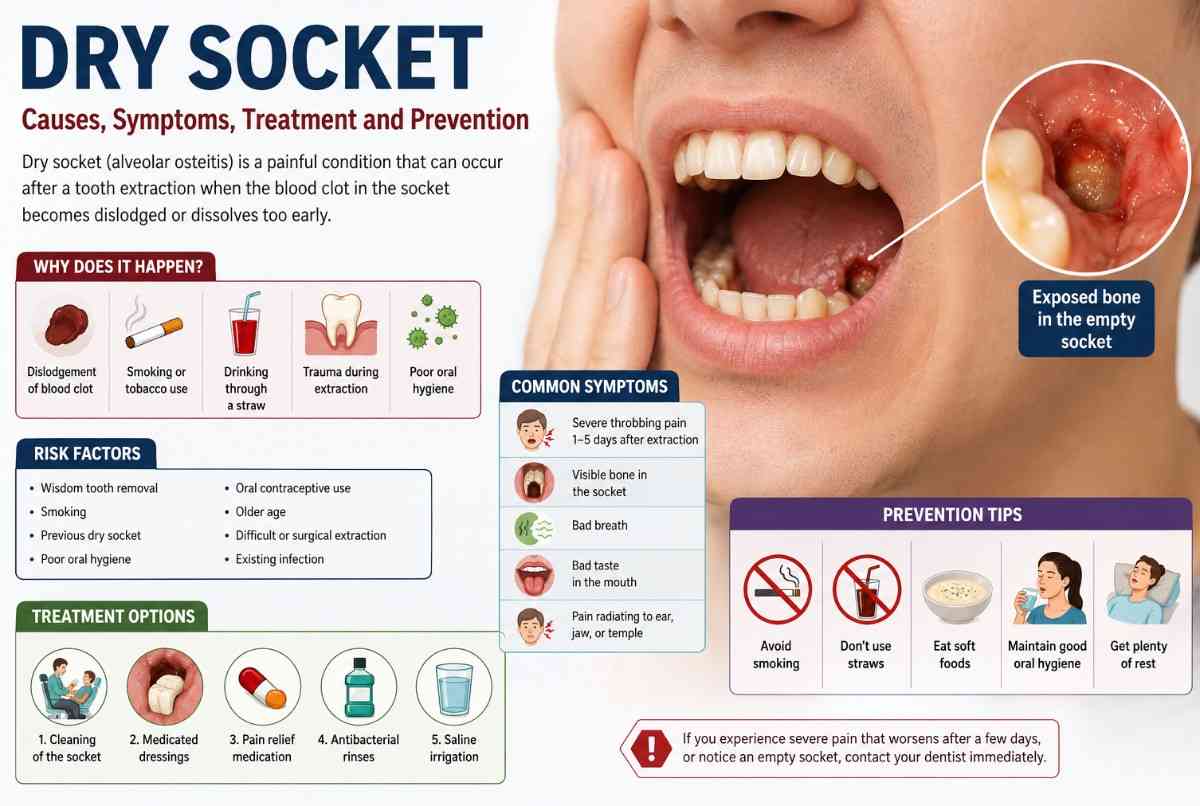
Dry socket is one of the most common complications that can occur after a tooth extraction, especially following the removal of wisdom teeth. Although it affects only a small percentage of people, the pain can be intense and may interfere with eating, speaking, and sleeping. Fortunately, dry socket is treatable, and with prompt dental care, most people recover quickly.
Understanding what causes dry socket, recognizing its symptoms, and knowing how to reduce your risk can help you heal more comfortably after a tooth extraction. This guide explains everything you need to know about dry socket, from its causes and warning signs to diagnosis and treatment.
What Is Dry Socket?
Dry socket, medically known as alveolar osteitis, is a painful condition that can develop after a permanent tooth is removed. Normally, a blood clot forms in the empty socket after an extraction. This clot acts as a protective covering over the underlying bone and nerves while the gum tissue heals.
When the blood clot fails to form properly, dissolves too early, or becomes dislodged, the bone and nerve endings become exposed. As a result, the extraction site becomes extremely sensitive, leading to severe pain and delayed healing.
Dry socket usually develops one to five days after a tooth extraction, with wisdom tooth removal carrying the highest risk.
Why Does Dry Socket Happen?
After a tooth is extracted, the body naturally creates a blood clot to begin the healing process. This clot serves several important purposes:
- Protects exposed bone and nerves
- Stops excessive bleeding
- Provides a foundation for new tissue growth
- Reduces the risk of infection
- Promotes faster healing
If the clot is lost too soon, food particles, bacteria, and air can reach the bone beneath the socket, causing inflammation and significant discomfort.
How Common Is Dry Socket?
Dry socket is relatively uncommon after routine tooth extractions but becomes more frequent after difficult or surgical extractions.
The risk is approximately:
| Tooth Extraction Type | Estimated Risk |
|---|---|
| Simple tooth extraction | 1–3% |
| Wisdom tooth extraction | 5–30% |
| Surgical extraction | Higher than routine extraction |
Most people heal normally without developing this complication.
What Causes Dry Socket?
Several factors can interfere with normal blood clot formation or cause the clot to become dislodged before the socket heals.
1. Premature Loss of the Blood Clot
The most common cause is the accidental removal of the protective blood clot during the first few days after extraction.
2. Smoking and Tobacco Use
Smoking significantly increases the risk because:
- Suction while inhaling can pull out the clot.
- Nicotine reduces blood flow.
- Chemicals in tobacco slow tissue healing.
- Smoking increases bacterial contamination.
Dentists usually recommend avoiding smoking for at least 48–72 hours after extraction, although a longer period is even better.
3. Drinking Through a Straw
The suction created while drinking through a straw may disturb the blood clot before healing has begun.
4. Poor Oral Hygiene
Excess bacteria around the extraction site may interfere with proper healing and increase inflammation.
5. Difficult Tooth Extractions
Surgical removal of impacted wisdom teeth causes greater tissue trauma, increasing the chance of dry socket.
6. Previous History of Dry Socket
People who have experienced dry socket once are more likely to develop it again after another extraction.
7. Hormonal Factors
Research suggests that higher estrogen levels, such as those associated with oral contraceptive use, may slightly increase the risk.
8. Existing Infection
A tooth removed because of severe infection or gum disease may have a slightly higher chance of developing dry socket.
9. Trauma During Surgery
Long, complicated extraction procedures can damage surrounding tissues, making clot formation less stable.
Who is Most at Risk for Developing Dry Socket?
Anyone can develop dry socket, but certain factors increase the likelihood.
These include:
- Wisdom tooth removal
- Smoking or vaping
- Tobacco chewing
- Poor oral hygiene
- Previous dry socket
- Oral contraceptive use
- Older age
- Difficult surgical extraction
- Existing gum infection
- Not following post-extraction instructions
Understanding these risk factors can help patients take extra precautions after dental surgery.
Symptoms of Dry Socket
Pain is the hallmark symptom of dry socket. Unlike normal post-extraction discomfort, dry socket pain becomes progressively worse instead of improving. Common symptoms include:
1. Severe Pain
Pain often starts one to five days after extraction and may become intense enough to interfere with daily activities.
2. Visible Bone
Instead of seeing a dark blood clot inside the socket, the bone may appear white or yellowish.
3. Bad Breath
Food debris and bacteria trapped inside the socket can produce unpleasant breath.
4. Bad Taste in the Mouth
Many patients notice a persistent unpleasant or bitter taste.
5. Pain Radiating to Other Areas
The discomfort may spread to:
- Ear
- Jaw
- Temple
- Neck
- Eye on the affected side
6. Empty Socket
The extraction site may appear hollow because the blood clot is missing.
7. Mild Swelling
Unlike infection, swelling is usually minimal.
8. Tender Surrounding Gum
The gums around the socket may feel sensitive when touched.
What Does Dry Socket Feel Like?
Many patients describe dry socket pain as:
- Sharp
- Deep
- Throbbing
- Constant
- Radiating
- Difficult to control with regular pain medication
The pain often becomes worse during eating or drinking because exposed nerves are highly sensitive.
Dry Socket vs. Normal Healing
Knowing the difference between normal healing and dry socket can help you decide when to contact your dentist.
| Normal Healing | Dry Socket |
|---|---|
| Pain gradually improves | Pain suddenly worsens |
| Blood clot remains visible | Blood clot is missing |
| Mild soreness | Severe throbbing pain |
| Healing progresses daily | Healing slows significantly |
| No exposed bone | Bone becomes visible |
| Mild discomfort while eating | Severe pain while eating |
If your pain becomes worse instead of better after two or three days, it is important to seek dental advice.
How Is Dry Socket Diagnosed?
Dentists usually diagnose dry socket through a clinical examination. Diagnosis may include:
Medical History
Your dentist will ask:
- When was the tooth removed?
- When did the pain begin?
- Has the pain become worse?
- Are you smoking?
- Have you experienced dry socket before?
Oral Examination
The dentist checks for:
- Missing blood clot
- Exposed bone
- Empty socket
- Signs of infection
- Food debris
Dental X-rays
An X-ray may be recommended to rule out:
- Retained tooth fragments
- Bone infection
- Fractured bone
- Other complications
Treatment for Dry Socket
Although dry socket usually heals naturally over time, treatment focuses on reducing pain, protecting the socket, and promoting healing.
1. Cleaning the Socket
The dentist gently flushes the socket with a sterile solution to remove food particles, bacteria, and debris that may be causing irritation. This cleaning helps create a healthier environment for healing and reduces discomfort.
2. Medicated Dressings
One of the most effective treatments is placing a medicated dressing inside the socket.
These dressings may contain ingredients that:
- Relieve pain
- Protect exposed bone
- Reduce inflammation
- Support healing
Depending on your symptoms, the dressing may need to be changed every few days until the pain improves.
3. Pain Relief Medications
Your dentist may recommend over-the-counter or prescription pain relievers based on the severity of your symptoms. These medications help control discomfort while the socket continues to heal.
4. Antibacterial Mouth Rinses
In some cases, your dentist may advise using an antiseptic mouth rinse to help reduce bacteria around the extraction site and lower the risk of infection. It should only be used as directed, since vigorous rinsing too soon after an extraction can disturb healing.
5. Saline Irrigation
Once your dentist confirms it is appropriate, gently rinsing the mouth with warm salt water may help keep the area clean and remove trapped food particles. Care should be taken to avoid forceful swishing, especially during the early stages of recovery.
Home Care Tips for Dry Socket
Professional treatment is the most effective way to manage dry socket, but proper home care can also help reduce discomfort and support healing. Always follow your dentist’s instructions, as they know the details of your extraction and recovery.
1. Take Medications as Prescribed
If your dentist recommends pain relievers or other medications, take them exactly as directed. Avoid exceeding the recommended dose, even if the pain is significant.
2. Rinse Gently with Warm Salt Water
After your dentist advises it is safe, gently rinse your mouth with warm salt water several times a day, especially after meals. This helps remove food particles and keeps the extraction site cleaner.
A simple saltwater rinse can be made by mixing:
- 1/2 teaspoon of salt
- 1 cup of warm water
Avoid vigorous swishing, which may further irritate the healing socket.
3. Keep the Area Clean
Continue brushing and flossing the rest of your teeth while being careful around the extraction site. Good oral hygiene helps reduce bacteria that could delay healing.
4. Stay Hydrated
Drink plenty of water throughout the day to support your body’s natural healing process. Avoid carbonated beverages and alcohol until your dentist says they are safe.
5. Apply a Cold Compress
If mild swelling is present, placing a cold pack on the outside of your cheek for 10–15 minutes at a time during the first 24 hours after extraction may help reduce discomfort.
6. Get Enough Rest
Your body heals more efficiently when you get adequate sleep and avoid strenuous physical activity during the first few days after the procedure.
Foods to Eat with Dry Socket
Choosing soft, nutritious foods can make eating more comfortable while protecting the healing socket.
Good options include:
- Yogurt
- Mashed potatoes
- Oatmeal
- Applesauce
- Smooth soups (not extremely hot)
- Scrambled eggs
- Cottage cheese
- Smoothies eaten with a spoon instead of a straw
- Soft pasta
- Well-cooked rice
- Mashed bananas
- Avocado
Eat slowly and chew on the opposite side of your mouth whenever possible.
Foods to Avoid With Dry Socket
Certain foods may irritate the socket, become trapped in the wound, or increase pain.
Avoid:
- Nuts
- Seeds
- Popcorn
- Chips
- Crackers
- Hard bread
- Sticky candy
- Chewy meats
- Spicy foods
- Very hot foods or drinks
- Crunchy vegetables
- Carbonated beverages during early healing
- Alcohol
Also avoid drinking through a straw until your dentist confirms it is safe.
Dry Socket Recovery Time
Dry socket can be painful, but it usually improves with proper treatment.
A typical recovery timeline is:
| Time After Treatment | What to Expect |
|---|---|
| 24–48 hours | Pain usually begins to decrease |
| 3–5 days | Significant improvement in comfort |
| 7–10 days | Soft tissue continues healing |
| 2–4 weeks | Complete healing of the extraction site in most cases |
Recovery time varies depending on the complexity of the extraction, your overall health, and how closely you follow post-operative instructions.
How to Prevent Dry Socket?
While dry socket cannot always be prevented, taking the following precautions can greatly reduce your risk.
1. Follow Your Dentist’s Instructions
Carefully follow all aftercare instructions provided after your tooth extraction. These recommendations are designed to protect the blood clot and support healing.
2. Avoid Smoking
Smoking is one of the strongest risk factors for dry socket. If possible, avoid smoking for several days after the extraction, or longer if advised by your dentist.
3. Don’t Use a Straw
Drink directly from a cup instead of using a straw to avoid creating suction that could dislodge the blood clot.
4. Eat Soft Foods
Choose soft foods for the first few days and gradually return to your normal diet as healing progresses.
5. Practice Good Oral Hygiene
Brush and floss your teeth regularly, but avoid disturbing the extraction site. Your dentist may recommend a gentle mouth rinse after the first day.
6. Avoid Vigorous Rinsing
During the first 24 hours, avoid forceful rinsing or spitting, as these actions may loosen the blood clot.
7. Limit Strenuous Activity
Heavy exercise may increase bleeding during the early stages of healing. Rest for the first day or two and gradually resume normal activities.
8. Stay Hydrated
Drinking enough water supports healing and helps keep your mouth clean.
Possible Complications of Dry Socket
Dry socket itself is not usually dangerous, but delaying treatment can lead to prolonged pain and slower healing.
Possible complications include:
- Persistent severe pain
- Delayed wound healing
- Difficulty eating and drinking
- Reduced quality of life during recovery
- Secondary bacterial infection in some cases
Seeking prompt dental care can help minimize these risks.
When Should You Contact a Dentist for Dry Socket??
Contact your dentist if you experience:
- Severe pain that begins or worsens a few days after extraction
- Visible bone inside the socket
- Bad breath that does not improve
- A persistent unpleasant taste in your mouth
- Pain that spreads to your ear, jaw, or temple
- Fever or increasing swelling
- Pus or foul-smelling discharge from the extraction site
- Difficulty opening your mouth or swallowing
These symptoms may indicate dry socket or another complication that requires professional evaluation.
FAQs
How do I know if I have a dry socket?
Common signs include severe throbbing pain a few days after tooth extraction, visible bone in the socket, bad breath, an unpleasant taste in the mouth, and pain that radiates to the ear or jaw.
How many days after tooth extraction can dry socket occur?
Dry socket usually develops 1 to 5 days after a tooth extraction, most commonly within the first three days.
How painful is a dry socket?
Dry socket pain is often much more severe than normal post-extraction discomfort. It can be constant, throbbing, and may spread to the ear, temple, or neck.
Can a dry socket heal on its own?
Yes, it can heal naturally over time. However, dental treatment can relieve pain, clean the socket, and promote faster healing.
Is dry socket an infection?
No. Dry socket is not an infection. It is a healing complication caused by the loss of the blood clot, although an infection can sometimes develop if left untreated.
Can smoking cause a dry socket?
Yes. Smoking increases the risk because the suction and nicotine can interfere with blood clot formation and delay healing.
Can using a straw cause a dry socket?
Yes. The suction created while drinking through a straw can dislodge the blood clot during the early healing period.
How long does a dry socket last?
With proper treatment, pain usually improves within 24–48 hours, and most dry sockets heal within 7–10 days.
Can food get stuck in a dry socket?
Yes. Food particles can become trapped in the empty socket, causing irritation and discomfort. Gentle rinsing, as advised by your dentist, can help keep the area clean.
Can I brush my teeth with a dry socket?
Yes. Continue brushing your teeth, but avoid brushing directly over the extraction site until your dentist says it is safe.
Can dry socket happen after any tooth extraction?
Yes, but it is much more common after lower wisdom tooth extractions than after routine tooth removals.
Will antibiotics cure a dry socket?
Not usually. Since dry socket is not primarily an infection, antibiotics are only prescribed if a bacterial infection is present or suspected.
Is dry socket more common after wisdom tooth removal?
Yes. Dry socket is more frequently associated with lower wisdom tooth extractions because these procedures are often more complex and involve greater tissue trauma.
Can food cause dry socket?
Food does not directly cause dry socket, but hard or crunchy foods may disturb the blood clot if eaten too soon after an extraction. Following your dentist’s dietary recommendations can help protect the healing socket.
Is dry socket dangerous?
Dry socket is not usually dangerous, but it can be very painful and delay the healing process. If left untreated, it may increase the risk of infection and prolong recovery, so it’s important to see your dentist if you suspect you have a Alveolar Osteitis.
How do you heal a dry socket?
A Alveolar Osteitis is treated by a dentist, who may clean the socket, place a medicated dressing, and recommend pain relievers or antiseptic rinses. At home, follow your dentist’s instructions, rinse gently with warm salt water if advised, eat soft foods, and avoid smoking or using straws.
Does salt water heal a dry socket?
Warm salt water does not cure a dry socket, but it can help keep the extraction site clean, reduce bacteria, and remove food particles. Use gentle saltwater rinses only after your dentist advises it is safe, as vigorous rinsing may delay healing.
Key Takeaways
- Dry socket is a painful complication that can occur after a tooth extraction when the protective blood clot is lost.
- It most commonly develops within one to five days after surgery.
- Smoking, using a straw, poor oral hygiene, and difficult extractions increase the risk.
- Severe pain, exposed bone, bad breath, and a foul taste are common warning signs.
- Prompt dental treatment can significantly reduce pain and improve healing.
- Following proper aftercare instructions is the best way to lower your risk of developing dry socket.
Sources / References:
- National Institute of Dental and Craniofacial Research (NIDCR)
- American Dental Association (ADA)
- Cleveland Clinic
- MSD Manual Consumer Version
- Cochrane Library
- MedlinePlus
- National Library of Medicine (PubMed)
About the Author:
Written by: Kirti Solanki (Health Content Researcher)
Kirti Solanki is a health content researcher who specializes in creating evidence-based, reader-friendly articles on health, nutrition, wellness, and oral care. Her work focuses on translating reliable medical information into practical guidance to help readers make informed health decisions.
Disclaimer:
This guide is intended for educational and informational purposes only and should not be considered medical advice. Always consult a qualified dentist or healthcare professional for diagnosis, treatment, or personalized recommendations regarding your oral health.
Also Read: