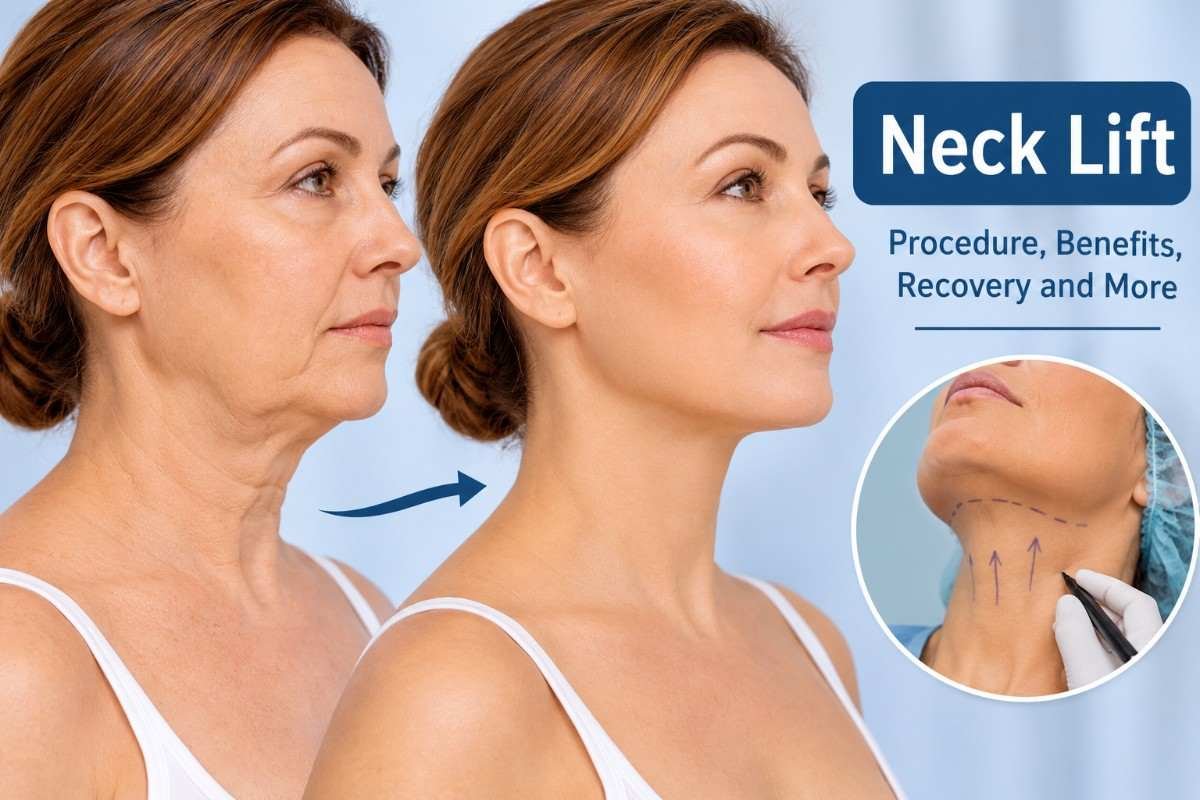
Aging is a natural part of life, but changes around the neck can sometimes become noticeable earlier than expected. Loose skin, wrinkles, vertical neck bands, and a double chin can affect the appearance of the jawline and neck. Even people who maintain a healthy lifestyle may experience these changes because of genetics, aging, weight fluctuations, and reduced skin elasticity.
A neck lift is a cosmetic surgical procedure designed to improve the appearance of the neck by removing excess skin, reducing unwanted fat, and tightening underlying muscles when necessary. It can create a smoother neckline and a more defined jawline.
In this guide, we explain everything you need to know about neck lift surgery, including its benefits, types, procedure, cost considerations, and alternatives.
What Is a Neck Lift?
A neck lift, medically known as lower rhytidectomy, is a cosmetic surgical procedure that improves the appearance of the neck and jawline.
The procedure focuses on reducing visible signs of aging, such as loose skin, excess fat beneath the chin, wrinkles, and prominent vertical muscle bands.
Depending on an individual’s concerns, a plastic surgeon may remove excess skin, reshape fat deposits, tighten the underlying platysma muscle, or reposition tissues to create a smoother neck contour.
A neck lift can be performed alone or combined with other cosmetic procedures, such as a facelift or chin surgery. It is important to understand that a neck lift does not stop the natural aging process. However, its results can last for many years.
Why Do People Consider a Neck Lift?
The neck is one of the areas where signs of aging can become noticeable. Over time, the skin loses elasticity, muscles may become less firm, and fat distribution can change.
Common reasons people consider neck lift surgery include:
- Loose Neck Skin: Aging and reduced collagen production can cause the skin around the neck to become loose and saggy.
- Double Chin: Excess fat beneath the chin can make the jawline appear less defined.
- Turkey Neck: Loose skin and visible muscle bands can create a hanging appearance beneath the chin.
- Vertical Neck Bands: The platysma muscle can become more noticeable, creating vertical lines along the neck.
- Neck Wrinkles: Fine lines and deeper wrinkles may develop due to aging and sun exposure.
- Poor Jawline Definition: Excess skin and fat around the lower face can make the jawline appear less defined.
- Changes After Weight Loss: Significant weight loss can leave behind loose skin around the neck.
Types of Neck Lift Procedures
Not everyone needs the same type of neck lift. The appropriate technique depends on skin quality, the amount of excess fat, muscle condition, and the desired outcome.
Here are some common approaches.
1. Traditional Neck Lift
A traditional neck lift is designed for people with more noticeable loose skin, excess fat, or muscle laxity.
The surgeon typically makes incisions around the ears and sometimes extends them into the hairline. Excess fat may be removed or repositioned, underlying muscles may be tightened, and loose skin is trimmed.
This technique can improve significant sagging and create a more defined neck contour.
2. Limited-Incision Neck Lift
A limited-incision neck lift uses smaller incisions, usually around the ears.
It may be suitable for individuals who need less extensive correction and have relatively mild signs of aging.
Although the incisions are smaller, the procedure may not provide the same degree of improvement as a traditional neck lift.
3. Submental Neck Lift
A submental neck lift involves an incision beneath the chin.
Through this incision, a surgeon may remove excess fat, tighten underlying muscles, and improve the contour between the chin and neck.
It may be appropriate for selected people with concerns concentrated beneath the chin.
4. Platysmaplasty
Platysmaplasty focuses on tightening or repositioning the platysma muscle, which extends across the front of the neck.
This muscle can develop visible vertical bands as people age.
The procedure may be performed as part of a traditional neck lift or through an incision beneath the chin.
5. Liposuction-Assisted Neck Contouring
Neck liposuction removes unwanted fat deposits beneath the chin and around the neck using a small suction tube called a cannula.
It may improve a double chin and create a more defined profile.
However, liposuction alone does not remove significant loose skin. People with poor skin elasticity may need another procedure to achieve their desired contour.
20 Potential Benefits of a Neck Lift
A neck lift can improve several visible concerns associated with aging and changes in the neck area. The results depend on the surgical technique, skin condition, and individual anatomy.
- Reduces Loose Skin: Removes excess skin that creates a sagging appearance around the neck.
- Improves Jawline Definition: Creates a more defined transition between the chin and neck.
- Reduces Double Chin: Can remove or reposition excess fat beneath the chin.
- Improves Neck Contour: Helps create a smoother and more balanced neck profile.
- Tightens Neck Muscles: Addresses visible muscle laxity through techniques such as platysmaplasty.
- Reduces Turkey Neck: Improves the appearance of hanging skin and prominent muscle bands.
- Smooths Neck Wrinkles: Can reduce wrinkles associated with loose skin.
- Improves Side Profile: Creates a more defined appearance when viewed from the side.
- Addresses Vertical Neck Bands: Can reduce prominent muscle bands through muscle tightening.
- Removes Excess Skin: Eliminates skin that cannot be adequately corrected through fat reduction alone.
- Creates a Firmer Appearance: Helps improve the overall firmness and contour of the neck.
- Improves Facial Balance: Can make the lower face and neck appear more proportionate.
- Provides Long-Lasting Results: Surgical improvements can remain noticeable for many years.
- Can Be Combined With a Facelift: Allows surgeons to address aging changes in both the face and neck.
- Improves Skin Contour: Redraping the remaining skin can create a smoother appearance.
- Addresses Age-Related Changes: Targets several visible signs of aging in one surgical procedure.
- Improves Neck Appearance After Weight Loss: May remove excess skin that remains after significant weight reduction.
- Offers Customized Treatment: Surgical techniques can be selected according to individual concerns.
- May Improve Self-Confidence: Some people feel more comfortable with their appearance after achieving their desired results.
- Creates a More Refreshed Appearance: Can make the lower face and neck appear less aged.
Who Is a Good Candidate for a Neck Lift?
A neck lift may be appropriate for adults who are concerned about loose skin, excess fat, or visible muscle bands around their neck.
Generally, suitable candidates include people who:
- Have noticeable loose or sagging neck skin.
- Have excess fat beneath the chin.
- Have visible vertical neck bands.
- Want a more defined jawline.
- Are in generally good physical health.
- Do not have medical conditions that significantly interfere with healing.
- Do not smoke or are willing to stop smoking as advised by their surgeon.
- Have realistic expectations about surgical results.
- Understand the potential risks and recovery requirements.
There is no single ideal age for a neck lift. The decision depends more on individual anatomy, skin condition, health, and cosmetic concerns than on age alone.
Who Should Avoid or Delay Neck Lift Surgery?
A neck lift is not suitable for everyone. Certain health conditions and lifestyle factors may increase surgical risks or interfere with recovery.
People who may need to avoid or postpone the procedure include:
- People With Uncontrolled Medical Conditions: Uncontrolled diabetes, high blood pressure, or certain heart conditions may increase surgical risks.
- Active Smokers: Smoking can interfere with blood circulation and wound healing.
- People With Bleeding Disorders: Certain blood-clotting problems can increase the risk of complications.
- People With Active Infections: Surgery may need to be postponed until an infection has been treated.
- People With Poor Wound Healing: A history of significant healing problems may require additional assessment.
- People Taking Certain Medications: Blood-thinning medicines and some supplements may affect bleeding risk. Never stop prescribed medication without medical advice.
- People With Unrealistic Expectations: Surgery cannot create perfect symmetry or completely stop aging.
- People With Significant Anesthesia Risks: Certain medical conditions may make anesthesia less appropriate.
A qualified surgeon should evaluate your medical history before deciding whether surgery is suitable.
Neck Lift Procedure: How Is a Neck Lift Performed?
A neck lift is performed by a qualified plastic surgeon using an appropriate surgical technique. The exact procedure depends on the amount of skin laxity, fat deposits, and muscle changes.
Here is a general overview of the process.
1. Initial Consultation
Before surgery, the surgeon evaluates your neck, jawline, skin elasticity, and overall health.
You will discuss your cosmetic concerns, desired results, medical history, medications, allergies, and previous surgeries.
The surgeon will recommend an appropriate technique and explain its limitations.
2. Anesthesia
Neck lift surgery is generally performed under general anesthesia or intravenous sedation, depending on the procedure and individual circumstances.
The anesthesia plan is discussed before surgery.
3. Making Incisions
The surgeon makes incisions according to the selected technique.
Traditional neck lifts generally involve incisions around the ears, sometimes extending into the hairline. An additional incision beneath the chin may also be required.
4. Removing or Repositioning Fat
If excess fat is contributing to a double chin or an uneven neck contour, the surgeon may remove or reposition it. Liposuction may also be used in selected cases.
5. Tightening the Neck Muscles
When muscle laxity is present, the surgeon may tighten or reposition the platysma muscle to improve the appearance of vertical bands and neck contours.
6. Removing Excess Skin
The surgeon carefully redrapes the remaining skin over the improved neck contour and removes excess skin where necessary.
7. Closing the Incisions
The incisions are closed using sutures or skin adhesives.
Dressings or a compression garment may be applied to support the treated area and help manage swelling.
8. Post-Surgery Monitoring
After surgery, medical staff monitor your recovery from anesthesia and check for early complications.
Depending on the procedure and your condition, you may return home the same day or require additional observation.
How Long Does a Neck Lift Take?
The duration of neck lift surgery depends on the surgical technique and whether additional procedures are performed.
A straightforward neck lift may take a few hours, while more extensive surgery or a combination of procedures may take longer.
Your surgeon can provide a more accurate estimate after examining your neck and discussing your treatment plan.
Neck Lift Recovery: What to Expect
Recovery is an important part of the neck lift process. Although improvements may become noticeable relatively early, swelling and bruising can take time to settle.
Here is a general recovery timeline.
| Recovery Period | What You May Experience |
|---|---|
| First 24–48 hours | Swelling, bruising, tightness, and discomfort |
| First week | Gradual improvement in swelling and bruising |
| 7–14 days | Many people can resume some routine activities, depending on healing |
| 2–3 weeks | More comfortable movement and gradual return to normal activities |
| 4–6 weeks | Continued healing and improvement in the neck contour |
| Several months | Remaining swelling gradually settles and results become clearer |
Recovery varies from person to person. Your surgeon will provide instructions based on the exact procedure performed.
Tips for a Smooth Neck Lift Recovery
- Keep Your Head Elevated: Sleep with your head elevated if recommended by your surgeon to help manage swelling.
- Follow Wound Care Instructions: Keep incision sites clean and follow your prescribed care routine.
- Wear Compression Garments: Use recommended compression garments for the duration advised by your surgeon.
- Avoid Strenuous Activities: Stay away from heavy lifting and intense exercise until medically cleared.
- Avoid Smoking: Smoking can slow healing and increase the risk of complications.
- Attend Follow-Up Appointments: Regular visits help your surgeon monitor healing.
- Take Prescribed Medication: Follow instructions for pain relief and other prescribed medicines.
- Avoid Excessive Neck Movement: Limit movements that put unnecessary strain on healing tissues.
- Protect Your Skin From Sun Exposure: Follow your surgeon’s advice about sun protection and incision care.
Contact your surgical team immediately if you experience sudden or rapidly increasing swelling, significant bleeding, fever, worsening pain, breathing difficulties, or other concerning symptoms.
10 Possible Side Effects and Risks of a Neck Lift
Like other surgical procedures, a neck lift carries potential side effects and complications. Some are temporary, while others may require medical treatment.
- Swelling: Swelling around the neck and jawline is common during the initial recovery period.
- Bruising: Temporary discoloration may develop around the surgical area.
- Pain and Discomfort: Some people experience soreness, tightness, or tenderness.
- Numbness: Changes in skin sensation may occur around the treated area.
- Scarring: Surgical incisions can leave permanent scars, although they are generally placed in less noticeable locations.
- Infection: Bacteria entering the surgical wound can cause an infection.
- Bleeding or Hematoma: Blood may collect beneath the skin and sometimes require additional treatment.
- Nerve Injury: Rarely, nerve damage can cause weakness or changes in movement around the lower face.
- Poor Wound Healing: Some people experience delayed healing or problems with incision closure.
- Unsatisfactory Results: Uneven contours, asymmetry, or dissatisfaction with the cosmetic outcome may occur and sometimes require revision surgery.
Discuss all possible complications with your surgeon before making a decision.
How Long Does a Neck Lift Last?
Neck lift results can last for many years, but they are not permanent.
The longevity of the results depends on several factors, including:
- Age at the time of surgery.
- Skin quality and elasticity.
- Genetics.
- Lifestyle habits.
- Sun exposure.
- Weight fluctuations.
- The surgical technique used.
Natural aging continues after surgery. Your neck may gradually develop additional wrinkles, skin laxity, and other age-related changes.
Maintaining a stable weight, protecting your skin from the sun, and following a healthy lifestyle may help preserve the results.
How Much Does a Neck Lift Cost?
The cost of a neck lift depends on the surgeon, location, surgical facility, anesthesia, and complexity of the procedure.
There is no single price that applies to everyone.
The following factors can influence the total cost:
| Cost Factor | How It Affects the Price |
|---|---|
| Surgeon’s Fee | Depends on experience, qualifications, and location |
| Anesthesia Fee | Varies according to the anesthesia method |
| Hospital or Facility Fee | Depends on the surgical setting |
| Procedure Complexity | More extensive surgery may cost more |
| Additional Procedures | Combining a facelift or liposuction can increase the cost |
| Follow-Up Care | Postoperative appointments and additional care may affect total expenses |
Is a Neck Lift Covered by Insurance?
A neck lift is generally considered elective cosmetic surgery because its primary purpose is to improve appearance.
Therefore, health insurance typically does not cover the procedure.
However, coverage policies depend on the insurer and the medical circumstances. Check directly with your insurance provider if you believe there may be a medical reason for treatment.
Neck Lift vs. Facelift: What Is the Difference?
A neck lift and facelift are related cosmetic procedures, but they focus on different areas.
| Feature | Neck Lift | Facelift |
|---|---|---|
| Main Focus | Neck and jawline | Lower and middle face |
| Loose Neck Skin | Yes | May improve when included in the treatment area |
| Double Chin | Can address excess fat beneath the chin | Not its primary focus |
| Neck Muscle Bands | Can tighten underlying neck muscles | May be addressed when combined with a neck procedure |
| Jowls | May improve lower-face contour | Commonly targets jowls |
| Facial Wrinkles | Limited improvement | Improves selected facial wrinkles and folds |
| Incisions | Around ears and sometimes beneath the chin | Usually around the ears and hairline |
Some people benefit from combining both procedures to create a more balanced appearance between the face and neck.
The right option depends on which areas need improvement.
Surgical Neck Lift vs. Non-Surgical Neck Lift
People who want to improve their neck appearance do not always need surgery. Several nonsurgical treatments may help address specific concerns.
However, nonsurgical treatments generally cannot remove significant excess skin or produce the same degree of correction as surgery.
| Treatment | Main Purpose | Surgical Procedure? |
|---|---|---|
| Surgical Neck Lift | Removes excess skin, reduces fat, and tightens muscles | Yes |
| Botox | Temporarily reduces certain muscle-related neck bands | No |
| Dermal Fillers | Restore volume and improve selected contours | No |
| Radiofrequency Treatments | Use heat to stimulate collagen remodeling | No |
| Ultrasound-Based Treatments | Target deeper tissues to encourage collagen production | No |
| Laser Treatments | Improve skin texture and selected signs of aging | No |
| Neck Liposuction | Removes localized fat beneath the chin and neck | Minimally invasive surgery |
The suitability and effectiveness of these options vary. Some treatments may have limited results, and not all are appropriate for every type of neck aging.
How to Maintain Your Neck Lift Results
Taking care of your skin and maintaining healthy habits can help support your results after surgery.
Consider the following practices:
- Use Sunscreen: Apply broad-spectrum sunscreen to protect the neck from UV damage.
- Maintain a Stable Weight: Significant weight fluctuations may affect your neck contour.
- Follow a Skincare Routine: Use suitable moisturizers and skincare products to maintain skin hydration.
- Avoid Smoking: Smoking contributes to skin aging and can negatively affect skin health.
- Stay Hydrated: Drink sufficient water to support normal body functions and skin health.
- Eat a Balanced Diet: Include fruits, vegetables, protein, and healthy fats in your diet.
- Follow Medical Advice: Attend recommended follow-up appointments and follow your surgeon’s instructions.
Remember that skincare and healthy habits cannot completely prevent natural aging.
Questions to Ask Your Surgeon Before a Neck Lift
Choosing the right surgeon is one of the most important decisions before undergoing cosmetic surgery.
Consider asking these questions during your consultation:
- Am I a suitable candidate for a neck lift?
- Which surgical technique would be best for my neck?
- Are you board-certified in plastic surgery?
- How many neck lift procedures have you performed?
- What results can I realistically expect?
- Where will the surgery be performed?
- What type of anesthesia will be used?
- How long will my recovery take?
- What complications should I know about?
- Will I have visible scars?
- How long are the results expected to last?
- What is included in the total treatment cost?
Ask to see appropriate before-and-after photographs of previous patients and discuss whether their results are comparable to what may be achievable in your case.
FAQ’s
Is a neck lift painful?
The procedure is performed under anesthesia, so you should not feel pain during surgery. Some discomfort, swelling, and tightness may occur during recovery.
Does a neck lift remove a double chin?
Yes, a neck lift can reduce a double chin by removing or repositioning excess fat beneath the chin.
What is the best age for a neck lift?
There is no specific ideal age. The procedure depends on skin laxity, neck appearance, overall health, and individual cosmetic goals.
Does a neck lift leave scars?
Yes, neck lift surgery leaves scars, but incisions are usually placed around the ears, hairline, or beneath the chin to make them less noticeable.
Is a neck lift better than a facelift?
A neck lift focuses on sagging skin, fat, and muscles around the neck, while a facelift primarily addresses aging changes in the lower and middle face.
Can a neck lift be done without surgery?
Non-surgical treatments such as radiofrequency, ultrasound, and certain injectable treatments may improve mild concerns but cannot provide the same results as surgical skin removal.
Will a neck lift make me look younger?
A neck lift can create a firmer, smoother neck and more defined jawline, which may give the lower face a younger appearance.
Can loose neck skin return after a neck lift?
Yes, skin can gradually become loose again due to aging, genetics, and lifestyle factors.
Is a neck lift permanent?
A neck lift provides long-lasting improvements but does not permanently stop aging or prevent future skin changes.
Can I combine a neck lift with a facelift?
Yes. A neck lift is often combined with a facelift to improve the appearance of both the lower face and neck.
Is a Neck Lift Risky?
Yes, it carries risks such as infection, bleeding, scarring, and nerve injury.
What Is the Best Alternative to a Neck Lift?
Radiofrequency, ultrasound, and laser treatments are popular non-surgical alternatives.
How Long Does It Take to Look Normal After a Neck Lift?
Most people look more presentable within 2–3 weeks.
Is a Neck Lift a Big Surgery?
Yes, it is a cosmetic surgery that may involve skin removal, fat reduction, and muscle tightening.
Sources / References:
- American Society of Plastic Surgeons
- Cleveland Clinic
- Mayo Clinic
- International Society of Aesthetic Plastic Surgery
Disclaimer:
This article is for educational and informational purposes only and does not replace professional medical advice, diagnosis, or treatment. Consult a qualified plastic surgeon before considering neck lift surgery.
Also Read: