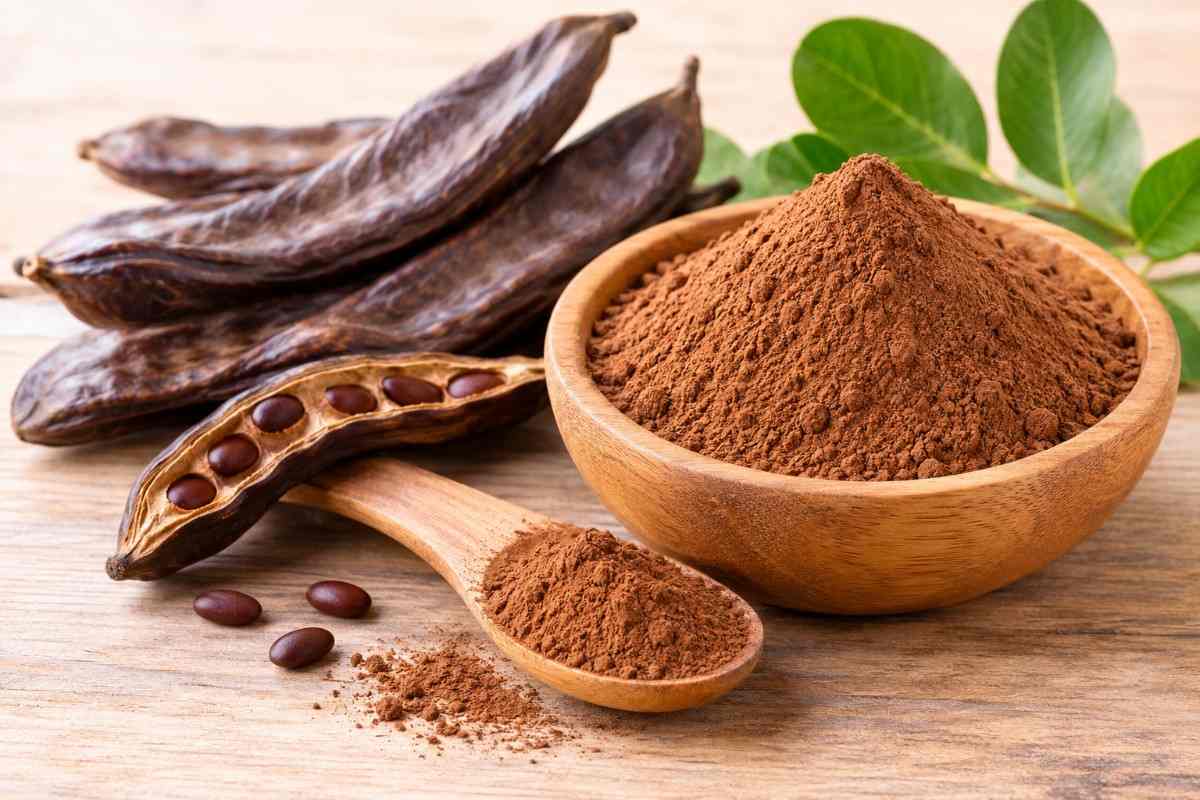
Carob powder is a naturally sweet, cocoa-like ingredient made from the dried and roasted pods of the carob tree. It has a mild chocolate flavor, making it a popular alternative to cocoa powder in smoothies, baked goods, desserts, and homemade drinks.
Many people choose carob powder because it is naturally caffeine-free and contains less fat than traditional cocoa powder. It also provides dietary fiber and several plant compounds that contribute to its nutritional value.
If you enjoy chocolate-flavored foods but want to try something different, carob powder can be a useful ingredient to keep in your kitchen.
In this guide, you will learn what carob powder is, its nutrition facts, potential health benefits, side effects, and how to use it in everyday recipes.
What Is Carob Powder?
Carob powder is made from the pods of the carob tree (Ceratonia siliqua), an evergreen tree native to the Mediterranean region.
The tree produces long, dark brown pods that contain a sweet pulp and hard seeds. To make carob powder, the pods are harvested, dried, and often roasted before the pulp is ground into a fine powder.
Carob powder is sometimes called carob flour. It is naturally sweet and has a flavor that resembles cocoa, although it is usually milder and less bitter.
Unlike cocoa powder, carob powder does not naturally contain caffeine or theobromine, two stimulant compounds found in cocoa.
Carob is used in:
- Cakes, cookies, and brownies
- Smoothies and milk-based drinks
- Puddings and homemade desserts
- Breakfast cereals and oatmeal
- Chocolate-flavored snack recipes
Carob powder is also different from carob gum, which is made from the seeds and is used as a thickening agent in some food products.
Nutrition Facts of Carob Powder
The following is an approximate nutrition values for 100 grams of unsweetened carob powder. Values can vary by brand and processing method.
| Nutrient | Amount per 100 g |
|---|---|
| Calories | 222 kcal |
| Carbohydrates | 88.88 g |
| Dietary Fiber | 39.8 g |
| Total Sugars | 49.08 g |
| Protein | 4.62 g |
| Total Fat | 0.65 g |
| Saturated Fat | 0.09 g |
| Calcium | 348 mg |
| Potassium | 827 mg |
| Magnesium | 54 mg |
| Iron | 2.94 mg |
| Phosphorus | 79 mg |
| Sodium | 35 mg |
| Zinc | 0.92 mg |
| Vitamin C | 0.2 mg |
20 Potential Health Benefits of Carob Powder
Carob powder can be a nutritious addition to a balanced diet. Many of its potential benefits come from its fiber, low fat content, and naturally occurring plant compounds.
1. Supports Digestive Health
Carob powder contains dietary fiber, which helps support regular bowel movements. Fiber adds bulk to stool and can help maintain normal digestive function when consumed with enough water.
2. May Help Support Healthy Bowel Movements
The fiber in carob may help improve stool consistency. However, the effect depends on the amount consumed and your overall diet.
3. Contains Antioxidant Compounds
Carob contains polyphenols, including tannins and flavonoids. These compounds have antioxidant activity in laboratory studies and may help protect cells from oxidative damage.
4. Naturally Low in Fat
Carob powder is naturally low in fat, making it a useful ingredient in recipes where you want a chocolate-like flavor without adding much fat from cocoa powder.
5. Provides Dietary Fiber
Adding carob powder to oatmeal, smoothies, or baked goods can contribute to your daily fiber intake. Fiber is important for digestive health and overall dietary quality.
6. May Support Heart-Healthy Eating
Carob can fit into a heart-healthy eating pattern when used in place of ingredients that are high in saturated fat or added sugar. The benefit depends on the complete recipe, not carob alone.
7. Contains Plant-Based Minerals
Carob pods contain minerals such as calcium, potassium, magnesium, and iron. The amount in a serving of powder varies, so carob should not be treated as a concentrated mineral supplement.
8. May Help You Feel Satisfied
The fiber in carob powder may contribute to fullness when included in meals or snacks. This can be useful when you combine it with other filling foods such as yogurt, oats, nuts, or seeds.
9. A Caffeine-Free Cocoa Alternative
Carob powder does not naturally contain caffeine or theobromine, which are found in cocoa. It can be a suitable alternative for people who prefer to avoid these stimulant compounds.
10. Adds Natural Sweetness to Recipes
Carob has a naturally sweet flavor. You may be able to use less added sugar in some recipes when replacing unsweetened cocoa with carob, although the amount depends on your taste and recipe.
11. May Support a Balanced Diet
Carob powder can add fiber and plant compounds to everyday foods. It works well in meals that also contain protein, healthy fats, fruits, and whole grains.
12. Offers a Different Flavor for Baking
Carob has a mild, roasted flavor that can make cakes, cookies, muffins, and brownies taste chocolate-like without using cocoa.
13. Can Be Used in Dairy-Free Recipes
Carob powder mixes well with plant-based milk, including almond, oat, and soy milk. It can be used to make dairy-free drinks and desserts, depending on the other ingredients.
14. May Help Reduce Reliance on Cocoa
If you want to reduce your cocoa intake because of caffeine or theobromine, carob can provide a similar flavor in many recipes.
15. Contains Naturally Occurring Polyphenols
Carob contains several phenolic compounds, including gallic acid and catechin-related compounds. Research continues to explore their possible effects on health.
16. Can Be Added to Breakfast Foods
A small amount of carob powder can add flavor to oatmeal, porridge, yogurt, or breakfast smoothies without requiring a separate sweetened chocolate product.
17. May Help Improve the Nutritional Profile of Some Snacks
Replacing some refined ingredients with fiber-containing carob powder may improve the fiber content of certain homemade snacks. The final nutritional value still depends on the recipe.
18. Suitable for Many Plant-Based Diets
Carob powder comes from a plant and can be included in vegetarian and vegan recipes. Check the product label if you have allergies or need to avoid cross-contamination.
19. Can Be Used in Homemade Drinks
Carob powder can be stirred into warm milk or plant-based milk to make a caffeine-free drink. It can also be blended into cold smoothies.
20. Provides a Versatile Pantry Ingredient
Carob powder can be used in sweet recipes, breakfast foods, drinks, and some sauces. Its versatility makes it easy to add variety to your regular meals.
Carob Powder vs. Cocoa Powder
Carob powder and cocoa powder look similar, but they have different nutritional properties and flavors.
| Feature | Carob Powder | Cocoa Powder |
|---|---|---|
| Source | Carob tree pods | Cacao beans |
| Flavor | Mild, naturally sweet | Rich, bitter chocolate flavor |
| Caffeine | Naturally caffeine-free | Contains caffeine |
| Theobromine | Naturally absent | Naturally present |
| Fat | Usually low | Varies; often higher |
| Natural sweetness | Higher | Usually less sweet |
| Best use | Sweet baking, drinks, desserts | Chocolate recipes, baking, drinks |
Carob is a useful alternative when you want a naturally sweet, caffeine-free ingredient. Cocoa is usually better when you want a strong chocolate flavor.
How to Use Carob Powder
Carob powder is easy to add to your daily meals. Start with a small amount because its flavor can be quite distinctive.
1. Make a Carob Drink
Mix 1 teaspoon of carob powder into a little warm milk or plant-based milk until smooth. Add more milk and adjust sweetness to taste.
2. Add It to Smoothies
Blend 1 teaspoon of carob powder with banana, milk, yogurt, and a few ice cubes for a simple smoothie.
3. Use It in Baking
Add carob powder to muffins, cookies, brownies, or cakes. Because carob is sweeter than cocoa, you may need to adjust the sugar in your recipe.
4. Mix It With Oatmeal
Stir a small amount into cooked oatmeal. Add sliced banana, nuts, or seeds for extra flavor and texture.
5. Add It to Yogurt
Mix carob powder into plain yogurt and add fresh fruit. This makes a quick breakfast or snack.
6. Use It in Homemade Energy Balls
Combine carob powder with oats, nut butter, dates, and seeds. Roll the mixture into small balls and refrigerate.
7. Add It to Pancake Batter
Mix carob powder into pancake batter for a mild chocolate-like flavor. It works well with banana or vanilla.
8. Make Carob Pudding
Blend carob powder with yogurt or a suitable pudding base. Add fruit or a small amount of sweetener if needed.
Carob Powder’s Hidden Kitchen Secret: How It Changes Your Recipes
One interesting thing about carob powder is that it behaves differently from cocoa powder when used in cooking. Its natural sweetness, low fat content, and lighter brown color can change the taste, texture, and appearance of your favorite recipes.
A 2026 food science study found that replacing cocoa with carob in chocolate spreads increased sweetness and lightness while changing the texture and spreadability.
Here are some useful ways to work with these differences:
- Reduce Added Sugar: Carob powder has a naturally sweet flavor, so you may need less sugar when using it in cakes, muffins, or cookies.
- Expect a Lighter Color: Carob may give baked goods a lighter, warmer brown color than cocoa.
- Try Partial Replacement First: Start by replacing about one-third of the cocoa powder with carob. This lets you enjoy carob’s sweetness while keeping some of cocoa’s stronger flavor.
- Adjust the Flavor: Carob is usually less bitter than cocoa, so ingredients such as vanilla, cinnamon, or a small amount of coffee can help create a richer flavor.
- Test Small Batches: Before changing a full recipe, prepare a small batch and adjust the sweetness and texture according to your taste.
A study on muffins found that carob-based muffins had a sweeter, less bitter taste than cocoa-based muffins, showing how carob can change the flavor of familiar baked foods.
Practical tip: Keep a small recipe note when experimenting with carob powder. Record how much cocoa you replaced, how much sugar you reduced, and whether the final recipe tasted sweeter or felt drier. This simple testing method can help you develop your own carob recipes instead of relying on a standard substitution ratio.
How Much Carob Powder Can You Eat Per Day?
There is no established recommended daily intake for carob powder.
For everyday use, you can start with 1 teaspoon per day and increase it according to your taste and digestive comfort. Many recipes use around 1 to 2 tablespoons, but the amount depends on the dish.
If you are increasing your fiber intake, do so gradually and drink enough water. Eating a large amount of carob powder at once may cause digestive discomfort.
Best Time to Eat Carob Powder
You can eat carob powder at any time of the day.
- In the morning: Add it to oatmeal, yogurt, or a smoothie.
- During the afternoon: Use it in a homemade snack or drink.
- After dinner: Add it to a dessert or warm milk.
Since carob powder is naturally caffeine-free, it can be a useful choice for people who prefer to avoid caffeine in the evening. However, a carob drink may still contain caffeine if you combine it with coffee, tea, or cocoa.
10 Possible Side Effects of Carob Powder
Carob powder is generally used as a food ingredient, but consuming large amounts may cause problems for some people.
1. Digestive Discomfort
Eating too much carob powder may cause bloating, gas, or stomach discomfort because it contains dietary fiber.
2. Constipation
A sudden increase in fiber without enough fluid may make constipation worse in some people.
3. Diarrhea
Some people may experience loose stools after consuming large amounts, especially if they are sensitive to fiber.
4. Allergic Reactions
Although uncommon, an allergy to carob is possible. Stop eating it if you develop itching, swelling, hives, or other signs of an allergic reaction.
5. Extra Sugar Intake
Carob powder contains natural sugars. Sweetened carob products, carob syrups, and desserts may contain additional sugar.
6. Possible Blood Sugar Effects
Carob-containing foods can affect blood glucose, particularly when they contain significant amounts of carbohydrates or added sugar. People with diabetes should consider the total carbohydrate content of the product.
7. Calorie Intake
Carob powder contains calories. Large portions or recipes made with sugar, butter, or nut butter can add substantial calories to your diet.
8. Food Sensitivity
Some people may experience stomach discomfort after eating carob. If you notice symptoms repeatedly, reduce your intake or avoid it.
9. Interaction With Special Diets
Carob powder may not fit every dietary plan. Check the ingredient list if you follow a medically prescribed diet or need to monitor specific nutrients.
10. Product Contamination or Added Ingredients
Some carob products may contain added sugar, flavorings, or other ingredients. Choose a product with a clear ingredient list and follow its storage instructions.
Who Should Eat Carob Powder?
Carob powder may be a suitable ingredient for:
- People who want a caffeine-free cocoa alternative
- People looking for a naturally sweet baking ingredient
- Adults who want to add more fiber-containing foods to their diet
- People following vegetarian or vegan diets
- Home cooks who enjoy making smoothies, desserts, and breakfast recipes
Who Should Avoid or Limit Carob Powder?
You may need to avoid or limit carob powder if:
- You have a known allergy to carob.
- You experience digestive discomfort after eating it.
- You need to carefully manage your carbohydrate intake.
- You have been advised to follow a specific medical diet.
- You are consuming a sweetened carob product and need to limit added sugar.
People with diabetes can generally include suitable foods in their diet, but they should check the total carbohydrate content and monitor their individual response.
How to Choose Good-Quality Carob Powder
When buying carob powder, look for these qualities:
- Unsweetened carob powder: Choose plain powder if you want to control the amount of added sugar.
- Clear ingredient list: Ideally, the ingredients should list carob powder only.
- Fresh aroma: Good-quality carob powder should have a pleasant, mild roasted smell.
- Dry texture: Avoid powder that appears damp or has signs of mold.
- Reliable packaging: Choose a sealed package from a reputable food manufacturer.
Carob powder is available in health food stores, specialty grocery stores, and online food retailers.
How to Store Carob Powder
Store carob powder in an airtight container in a cool, dry place away from direct sunlight.
Keep it away from moisture, heat, and strong odors. Always use a dry spoon when taking powder from the container.
Check the package for its best-before date. If the powder develops an unusual smell, changes in texture, or visible mold, discard it.
FAQ’s
What is carob powder made from?
Carob powder is made from the dried and ground pulp of carob tree pods.
Is carob powder healthier than cocoa powder?
Carob powder is naturally caffeine-free, sweeter, and generally lower in fat than cocoa powder. Both can be part of a balanced diet.
Does carob powder contain caffeine?
No, pure carob powder is naturally caffeine-free and does not contain theobromine.
Can carob powder help with weight loss?
Carob powder is not a weight-loss treatment. Its fiber may help you feel satisfied, but weight management depends on your overall diet and lifestyle.
Can you eat carob powder every day?
Yes, most people can enjoy moderate amounts of carob powder daily as part of a balanced diet.
Is carob powder good for digestion?
Carob powder contains dietary fiber, which supports regular bowel movements and normal digestive function.
Does carob powder taste like chocolate?
Carob powder has a mild, roasted, naturally sweet flavor similar to cocoa, but it is usually less bitter and less intense.
Can I use carob powder instead of cocoa powder?
Yes, carob powder can replace cocoa powder in many recipes. You may need to reduce added sugar because carob is naturally sweeter.
Is carob powder safe during pregnancy?
Carob powder used in normal food amounts is generally considered a food ingredient, but pregnant women should consult their healthcare professional if they have dietary concerns.
Is carob powder gluten-free?
Pure carob powder is naturally gluten-free. Choose a product labeled gluten-free if you need to avoid cross-contamination.
Is carob powder suitable for children?
Carob powder can be used in age-appropriate food portions for children. Check the product for added sugar and possible allergens.
What is the difference between carob powder and carob gum?
Carob powder is made from the pod pulp and used in foods for flavor. Carob gum is made from the seeds and is mainly used as a thickening agent.
What does carob powder taste like?
Carob powder has a mild, roasted, naturally sweet flavor that is often compared with cocoa. It is usually less bitter and less intense than chocolate.
What is carob powder used for?
Carob powder is used in baking, smoothies, desserts, and drinks as a naturally sweet, caffeine-free cocoa alternative.
Is carob powder safe for kidneys?
Carob powder may be safe in small amounts, but people with kidney disease should consult their healthcare professional because it contains potassium and phosphorus.
Sources / References:
Disclaimer:
This article is for educational purposes only and does not replace professional medical advice. Consult a qualified healthcare professional for personalized dietary guidance.
Also Read: