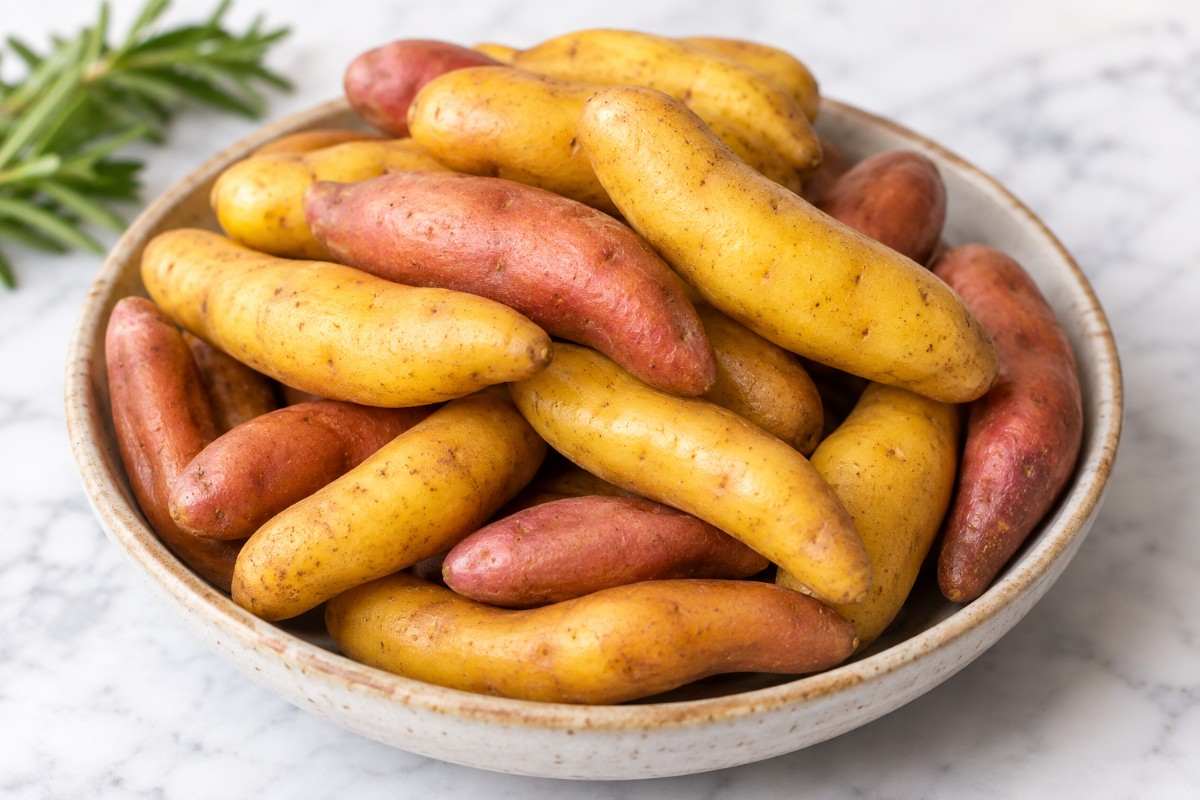
Fingerling potatoes are small, finger-shaped potatoes with thin skin, a creamy texture, and a naturally buttery flavor. They come in different colors, including yellow, red, and purple, making them a popular choice for roasting, grilling, salads, and everyday meals.
These potatoes contain carbohydrates, potassium, vitamin C, vitamin B6, and dietary fiber. They provide energy and several nutrients that support normal body functions.
You can enjoy fingerling potatoes in many ways, whether roasted with garlic, boiled with fresh herbs, or added to a vegetable salad. Let’s explore their nutrition facts, potential health benefits, side effects, and different ways to enjoy them.
What Are Fingerling Potatoes?
Fingerling potatoes are small, naturally elongated potatoes named after their resemblance to human fingers. They have thin skin, firm flesh, and a slightly nutty or buttery flavor.
Unlike regular round potatoes, fingerling varieties naturally grow in narrow shapes. Their skin and flesh can be yellow, red, white, or purple.
Popular types of fingerling potatoes include:
- Russian Banana: Yellow skin and creamy flesh with a buttery flavor.
- French Fingerling: Red-pink skin with yellow flesh and a nutty taste.
- Purple Peruvian: Purple skin and flesh containing natural anthocyanin pigments.
- Red Thumb: Red skin and pinkish-red flesh.
- Austrian Crescent: Golden skin with a smooth, creamy texture.
- La Ratte: A French variety known for its nutty flavor.
Fingerling potatoes are naturally gluten-free and can be included in a balanced diet.
Nutrition Facts of Fingerling Potatoes
| Nutrient | Approximate amount per 100 g |
|---|---|
| Calories | 87 kcal |
| Carbohydrates | 20.1 g |
| Protein | 1.9 g |
| Total fat | 0.1 g |
| Dietary fiber | 1.8 g |
| Sugar | 0.9 g |
| Potassium | 379 mg |
| Vitamin C | 13 mg |
| Vitamin B6 | 0.3 mg |
| Magnesium | 22 mg |
| Phosphorus | 44 mg |
| Iron | 0.3 mg |
| Calcium | 5 mg |
| Sodium | 4 mg |
Note: These are approximate general cooked-potato reference values, not specific laboratory measurements for every fingerling variety. Cooking methods and added ingredients change the nutritional values.
20 Proven Health Benefits of Fingerling Potatoes
Fingerling potatoes contain nutrients that support everyday health. Here are 20 potential benefits of including them in your diet.
- Provides Energy: Their carbohydrates provide energy for daily activities.
- Supports Digestion: Dietary fiber helps maintain regular bowel movements.
- Supports Heart Health: Potassium helps maintain healthy blood pressure.
- Helps Control Blood Pressure: Potassium supports the body’s sodium balance.
- Supports Immunity: Vitamin C helps maintain normal immune function.
- Promotes Healthy Skin: Vitamin C supports collagen production and skin health.
- Supports Muscle Function: Potassium helps muscles contract properly.
- Maintains Fluid Balance: Potassium helps regulate fluid levels inside cells.
- Supports Brain Function: Vitamin B6 helps produce important brain chemicals.
- Supports Red Blood Cells: Vitamin B6 helps the body produce hemoglobin.
- Provides Antioxidants: Vitamin C and plant compounds help protect cells from oxidative damage.
- Supports Strong Bones: Magnesium and phosphorus contribute to bone health.
- Supports Nerve Health: Potassium and vitamin B6 help maintain normal nerve function.
- Supports Gut Health: Resistant starch in cooled potatoes can nourish beneficial gut bacteria.
- Helps You Feel Full: Their fiber and carbohydrate content can contribute to fullness.
- Supports Metabolism: Vitamin B6 helps the body process nutrients for energy.
- Supports Nutrient Utilization: Vitamin B6 participates in normal protein and carbohydrate metabolism.
- Provides Plant Compounds: Colored varieties contain natural compounds such as anthocyanins.
- Supports Wound Healing: Vitamin C helps the body produce collagen for tissue repair.
- Naturally Low in Fat: Plain fingerling potatoes contain very little fat.
10 Possible Side Effects of Fingerling Potatoes
Fingerling potatoes are generally safe to eat, but excessive portions and improper storage can cause problems.
- Blood Sugar Spikes: Their starch content can increase blood sugar levels.
- Weight Gain: Large portions with butter or oil can add extra calories.
- Digestive Discomfort: Eating too many may cause bloating or stomach discomfort.
- Allergic Reactions: Some people may experience itching, swelling, or other allergy symptoms.
- High Potassium Levels: People with kidney disease may need to limit their potassium intake.
- Solanine Poisoning: Green or bitter potatoes may contain harmful levels of natural toxins.
- Extra Calorie Intake: Deep-frying can significantly increase their calorie content.
- Acrylamide Exposure: Very high-temperature cooking can produce acrylamide.
- Excess Sodium: Adding too much salt can increase daily sodium intake.
- Medication Concerns: Certain medications can increase potassium levels in the blood.
10 Populer Types of Fingerling Potatoes
Fingerling potatoes come in different varieties, each with its own skin color, flesh color, flavor, and texture. Some have buttery yellow flesh, while others feature red or purple coloring. Here are 10 varieties of fingerling potatoes.
1. Russian Banana Potatoes: These potatoes have yellow skin, golden flesh, and a creamy, buttery flavor. They are excellent for roasting and potato salads.
2. French Fingerling Potatoes: Known for their pinkish-red skin and yellow flesh, these potatoes have a slightly nutty flavor and firm texture.
3. Purple Peruvian Potatoes: These potatoes have deep purple skin and flesh. They contain anthocyanins, natural pigments with antioxidant properties.
4. Red Thumb Potatoes: Red Thumb potatoes have red skin and pinkish-red flesh with a mild, earthy flavor.
5. Austrian Crescent Potatoes: These long, curved potatoes have golden skin, yellow flesh, and a smooth, creamy texture.
6. La Ratte Potatoes: This French variety is famous for its delicate nutty flavor and firm, buttery flesh.
7. Rose Finn Apple Potatoes: These potatoes have rosy pink skin and yellow flesh, with a rich, slightly nutty taste.
8. Ozette Potatoes: Also known as Makah Ozette, this heritage variety has a creamy texture and earthy flavor.
9. German Butterball Potatoes: These golden potatoes have rich, buttery flesh and work well for roasting, baking, and mashing.
10. Pink Fir Apple Potatoes: This distinctive heritage variety has pinkish skin, an irregular elongated shape, and a firm, waxy texture.
Which Fingerling Potatoes Are Best for Cooking?
| Potato variety | Best use |
|---|---|
| Russian Banana | Roasting and salads |
| French Fingerling | Roasting and grilling |
| Purple Peruvian | Baking and salads |
| Red Thumb | Roasting |
| Austrian Crescent | Boiling and salads |
| La Ratte | Roasting and steaming |
| Rose Finn Apple | Potato salads |
| Ozette | Roasting and boiling |
| German Butterball | Mashing and baking |
| Pink Fir Apple | Salads and boiling |
How to Eat Fingerling Potatoes?
Fingerling potatoes are easy to add to everyday meals. Here are some simple ways to enjoy them:
- Boiled: Serve with olive oil, parsley, and black pepper.
- Roasted: Toss with garlic, rosemary, and olive oil.
- Grilled: Cut lengthwise and grill until tender.
- Potato Salad: Mix with cucumber, onions, and mustard dressing.
- Mashed: Mash cooked potatoes with milk or olive oil.
- Baked: Bake whole with your favorite herbs.
- Soup: Add sliced potatoes to homemade vegetable soup.
- Breakfast Bowl: Combine with eggs and sautéed vegetables.
- Stir-Fried: Cook with onions, peppers, and spices.
- Air-Fried: Cook with a little oil until golden and tender.
Tips for Consuming Fingerling Potatoes
- Keep the Skin: Wash thoroughly and enjoy the edible skin.
- Choose Fresh Potatoes: Pick firm potatoes without green patches or rot.
- Watch Portions: Avoid eating excessively large servings.
- Choose Healthy Cooking: Prefer boiling, baking, or air-frying.
- Limit Salt: Use garlic, herbs, and black pepper for flavor.
- Add Protein: Pair with eggs, beans, fish, or chicken.
- Include Vegetables: Serve with spinach, broccoli, or carrots.
- Avoid Burning: Cook until tender and lightly golden.
- Try Different Colors: Enjoy yellow, red, and purple varieties.
- Store Leftovers Safely: Refrigerate cooked potatoes promptly.
How to Cook Fingerling Potatoes?
Roasting is one of the easiest ways to cook fingerling potatoes. It gives them crispy edges and a soft, creamy center.
Ingredients:
- 500 grams fingerling potatoes
- 1 tablespoon olive oil
- 2 garlic cloves, minced
- 1 teaspoon dried rosemary
- ½ teaspoon black pepper
- Salt to taste
- Fresh parsley for garnish
Instructions:
- Wash: Rinse the potatoes under running water.
- Cut: Slice larger potatoes lengthwise.
- Preheat: Set the oven to 425°F (220°C).
- Season: Mix olive oil, garlic, rosemary, pepper, and salt.
- Coat: Toss the potatoes in the seasoning mixture.
- Arrange: Spread them in a single layer on a baking tray.
- Roast: Bake for 25 to 35 minutes until tender and golden.
- Check: Insert a fork to check whether they are fully cooked.
- Garnish: Sprinkle fresh parsley on top.
- Serve: Enjoy warm with your favorite main dish.
Other Uses of Fingerling Potatoes
Fingerling potatoes can be used in several recipes beyond ordinary side dishes.
- Potato Skewers: Add them to vegetable skewers for grilling.
- Breakfast Hash: Mix diced potatoes with eggs and vegetables.
- Casseroles: Add sliced potatoes to baked vegetable dishes.
- Cold Potato Salads: Use boiled potatoes in creamy or mustard salads.
- Creamy Soups: Blend cooked potatoes into soups for a thicker texture.
- Party Appetizers: Serve small roasted potatoes as bite-sized snacks.
- Stuffed Potatoes: Fill cooked potato halves with cheese and vegetables.
- Grain Bowls: Add roasted potatoes to rice or quinoa bowls.
- Vegetable Wraps: Combine potato slices with lettuce and beans.
- Meal Prep: Cook them ahead of time for quick weekday meals.
How Much Fingerling Potato Can You Eat Daily?
For most healthy adults, 150 to 200 grams of cooked fingerling potatoes can be a reasonable serving as part of a balanced meal.
Here are some simple serving ideas:
- 100 grams: A small side portion.
- 150 grams: A moderate serving with vegetables and protein.
- 200 grams: A larger serving when potatoes are your main carbohydrate source.
Your ideal portion depends on your activity level, dietary needs, and health conditions. People with diabetes or kidney disease may need individualized portion guidance.
Best Time to Eat Fingerling Potatoes
You can enjoy fingerling potatoes at any time of the day. There is no specific time when they provide greater health benefits.
- Breakfast: Serve with eggs and vegetables.
- Lunch: Add roasted potatoes to your regular meal.
- Afternoon: Enjoy a small portion as part of a balanced meal.
- Dinner: Pair with fish, chicken, tofu, or vegetables.
Who Should Eat Fingerling Potatoes?
Fingerling potatoes can be included in many different eating patterns.
- Active Individuals: Their carbohydrates help provide energy for physical activities.
- Growing Children: They provide energy and useful nutrients for everyday meals.
- Older Adults: They provide potassium, vitamin C, and carbohydrates.
- Vegetarians: They offer a convenient plant-based carbohydrate source.
- People Following Gluten-Free Diets: Naturally gluten-free potatoes can fit into gluten-free meals.
- People Seeking Low-Fat Foods: Plain fingerling potatoes contain very little fat.
- People with Higher Energy Needs: Their carbohydrates help meet daily energy requirements.
- People Seeking Food Variety: Different varieties add color and flavor to meals.
- People Following Balanced Diets: They pair well with vegetables and protein-rich foods.
- Home Cooks: Their small size makes them convenient for quick recipes.
Who Should Not Eat Fingerling Potatoes?
Most people can safely eat fingerling potato, but certain individuals may need to limit or avoid them.
- People with Potato Allergies: Those with confirmed potato allergies should avoid them.
- People with Advanced Kidney Disease: They may need to limit potassium-rich foods.
- People with Poor Blood Sugar Control: Large portions may make blood sugar management harder.
- People with Potato Intolerance: Those who experience repeated digestive symptoms may need to avoid them.
- People Following Low-Potassium Diets: They should follow their prescribed dietary limits.
- People with Specific Food Restrictions: Those following medical diets should check whether potatoes are suitable.
- People Eating Green Potatoes: Avoid extensively green potatoes because they may contain elevated natural toxins.
- People Eating Bitter Potatoes: Bitter potatoes should be discarded rather than eaten.
How to Store Fingerling Potatoes?
Proper storage helps fingerling potato stay fresh for longer.
- Choose a Cool Place: Keep raw potatoes in a cool, dry location.
- Avoid Sunlight: Store away from direct light to prevent greening.
- Use Paper Bags: Choose breathable bags or ventilated containers.
- Keep Them Dry: Avoid washing potatoes before storing.
- Remove Damaged Potatoes: Separate rotten or spoiled potatoes.
- Avoid Airtight Containers: Allow air to circulate around them.
- Store Away from Onions: Keep potatoes and onions in separate storage areas.
- Refrigerate Cooked Potatoes: Place leftovers in covered containers within two hours.
- Use Leftovers Promptly: Eat refrigerated cooked potatoes within 3 to 4 days.
- Check Before Cooking: Discard potatoes that are rotten, extensively green, or heavily sprouted.
Precautions and Interactions
Keep these precautions in mind when buying, preparing, and eating fingerling potatoes.
- Check Green Skin: Avoid extensively green potatoes because they may contain higher glycoalkaloid levels.
- Remove Small Green Areas: Cut away small affected areas generously; discard potatoes with extensive greening.
- Avoid Bitter Potatoes: Never eat potatoes that taste bitter or cause a burning sensation.
- Check Sprouts: Discard heavily sprouted potatoes.
- Wash Thoroughly: Remove dirt before cooking.
- Cook Properly: Boil, bake, or roast until tender.
- Monitor Carbohydrates: People with diabetes should consider their carbohydrate intake.
- Watch Potassium: People with kidney problems should follow medical dietary advice.
- Check Medication Interactions: Some blood pressure medicines and potassium-sparing diuretics can increase blood potassium levels.
- Limit Deep-Frying: Choose healthier cooking methods more often.
- Store Leftovers Safely: Refrigerate cooked potatoes promptly.
- Consider Allergies: Avoid fingerling potato if you have a confirmed potato allergy.
FAQ’s
Are fingerling potatoes healthy?
Yes, they provide carbohydrates, potassium, vitamin C, and fiber.
Are fingerling potatoes good for weight loss?
They can fit into a weight-management diet when eaten in moderate portions.
Can you eat fingerling potato skin?
Yes, the skin is edible when the potatoes are fresh and properly washed.
Are fingerling potatoes good for diabetics?
They can be eaten in controlled portions, but their carbohydrates can raise blood sugar.
Are fingerling potatoes gluten-free?
Yes, plain fingerling potatoes are naturally gluten-free.
Do fingerling potatoes contain potassium?
Yes, they provide potassium, which supports normal muscle and nerve function.
Can you eat fingerling potatoes daily?
Yes, most healthy adults can enjoy moderate portions as part of a varied diet.
Are purple fingerling potatoes healthier?
Purple varieties contain anthocyanins, while yellow varieties provide other beneficial nutrients.
Can you eat fingerling potatoes raw?
Cook them before eating for better texture and easier digestion.
Can you freeze fingerling potatoes?
Yes, cooked fingerling potatoes can be frozen, although their texture may change.
What are fingerling potatoes good for?
Fingerling potato provide energy, potassium, vitamin C, and fiber for everyday nutritional needs.
Are fingerling potatoes healthier than regular potatoes?
They offer similar nutrients, but their flavor, texture, and plant compounds vary by variety.
Are purple fingerling potatoes better than yellow ones?
Purple varieties contain anthocyanins, while yellow varieties also provide beneficial nutrients.
Do fingerling potatoes need to be peeled?
No, their thin skin is edible when properly washed.
What is the healthiest way to cook fingerling potatoes?
Boiling, steaming, baking, and roasting with a small amount of oil are good options.
Are fingerling potatoes good for heart health?
Their potassium content supports healthy blood pressure, which contributes to heart health.
How long do fingerling potatoes last?
Raw potatoes can last for several weeks under suitable cool, dark, and dry storage conditions.
Can you eat green fingerling potatoes?
Avoid extensively green potatoes because they may contain elevated levels of natural glycoalkaloids.
What is the difference between fingerling potatoes and baby potatoes?
Fingerling potatoes naturally grow in elongated shapes, while baby potatoes are simply immature or small-sized potatoes.
Are fingerling potatoes safe for pregnant women?
Yes, properly washed and thoroughly cooked fingerling potatoes are generally safe during pregnancy.
Are fingerling potatoes safe for children?
Yes, children can eat cooked fingerling potatoes in age-appropriate portions and sizes to reduce choking risks.
What do fingerling potatoes taste like?
They have a mild, earthy, slightly nutty flavor with a creamy and buttery texture.
What is another name for fingerling potatoes?
They are commonly called finger potatoes because of their naturally long, narrow shape.
Do I need to soak fingerling potatoes before roasting?
No, soaking is not necessary. Washing and drying them thoroughly is usually enough.
Can fingerling potatoes be pan-fried?
Yes, slice them lengthwise and cook in a little olive oil until golden brown and tender.
How do I wash fingerling potatoes before cooking them?
Rinse them under running water and gently scrub their thin skin with a vegetable brush to remove dirt.
Sources / References:
- Health Canada
- World Health Organization
- European Food Safety Authority
- USDA Agricultural Research Service
- Harvard T.H. Chan School of Public Health
- USDA Food Safety and Inspection Service
Disclaimer:
This article is for educational purposes only and should not replace professional medical advice. Consult your healthcare provider for personalized dietary recommendations.
Also Read: